Water-Damaged Drywall: When to Dry It, When to Cut It, When to Replace It
Tyler McClelland leads mitigation operations for Advanced DRI across New York's Hudson Valley, directing water, mold, and large-loss response in the field. He holds IICRC Water Restoration Technician (WRT) and Applied Microbial Remediation Technician (AMRT) certifications and a New York State Mold Supervisor certification, and is trained in IRCA hospital safe construction practices recognized by The Joint Commission.

Does wet drywall have to come out? How long it takes to dry, the swelling-and-seam test, how high to flood cut, and what repair costs.
Most wet drywall from a clean leak can stay, if it's dried fast and the board still holds its shape. With dehumidifiers and air movers running, a wall like that typically dries in 3 to 5 days. What changes the answer is the water and the board itself: sewage or floodwater, a panel that sags or crumbles, or mold mean it comes out. Use the three outcomes below to sort your wall, then read the section that matches.
- Dry it: clean water, source stopped, drying started promptly, no obvious swelling, seams tight.
- Cut it: water got into the cavity or soaked the insulation. A flood cut opens the lower wall so the framing can dry.
- Replace it: sewage, rising floodwater or other contaminated water; board that sags, crumbles or lets screws pull through; visible mold or a musty smell that stays.
Save, cut or replace: how we decide
Wet drywall doesn't automatically have to be replaced. Board wet from clean water can often be dried in place if it isn't swollen, the seams are intact and it's dried promptly (EPA advises drying wet materials within 24 to 48 hours to prevent mold). Replace it if the water was sewage or floodwater, the board sags or crumbles, mold or a musty smell shows up, or wet insulation behind it can't be dried.
What happens when drywall gets wet
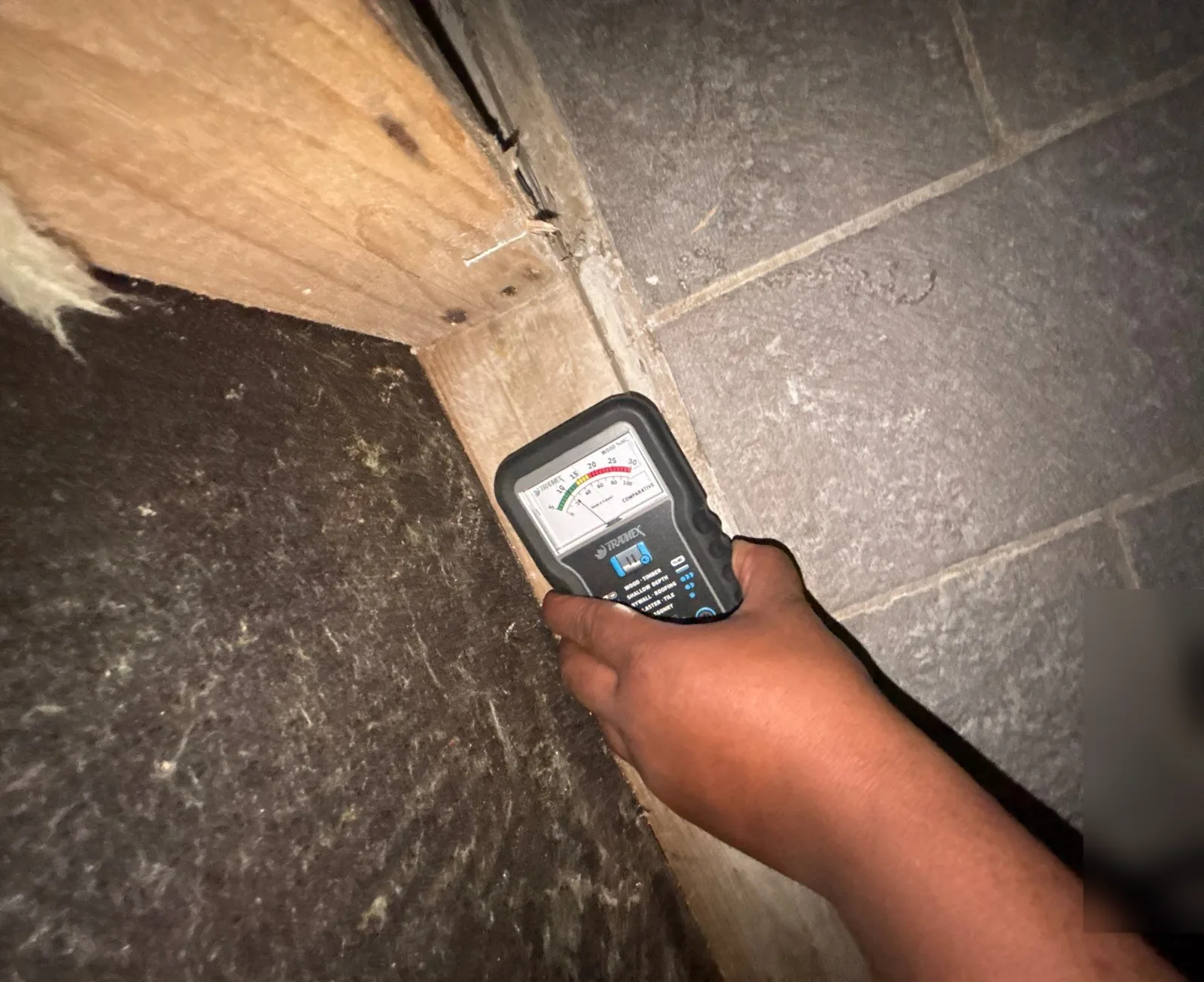
Gypsum board is a mineral core wrapped in paper, and both take on water. The core wicks moisture upward, so the wet zone usually reaches higher than the stain. That's why crews map the wall with a meter instead of trusting the tide line. The paper softens first; left wet, the core stops holding screws and the joints open. Walls usually stay standing; ceilings sag (more below).
Drywall that can usually be dried in place
EPA's mold guidance for schools and commercial buildings puts it plainly: wallboard "may be dried in place if there is no obvious swelling and the seams are intact. If not, remove, discard, and replace" (EPA, Table 1). In a house we also want a fixed clean source, firm board and no odor or growth.
Drywall that has to come out
- Category 3 water. Under ANSI/IICRC S500 this is grossly contaminated water: sewage, rising water from rivers or streams, and seawater. Rain driven in by a storm isn't automatically Category 3; IICRC clarified in 2026 that weather-related water is categorized by inspection, and it counts as Category 3 when it has picked up contamination (IICRC position statement). Category 3 board comes out, and a sewage backup in particular is a job for a sewage cleanup crew.
- Clean water that sat. S500 treats water categories as something that worsens with time and temperature, so a supply-line leak left for days can end up handled like a dirtier one.
- Board that sags, crumbles or lets fasteners pull through.
- Mold, or a musty smell that stays.
- Wet batt or loose-fill insulation behind it (more on wet insulation).
If you're looking at sewage water or a bulging ceiling, don't open it yourself. Call (845) 294-8919, 24/7.
| Category | Typical sources | What it means for the drywall |
|---|---|---|
| 1 (clean) | Supply line, sink or tub overflow caught fast | Small areas caught quickly are often a homeowner job with fans and a dehumidifier. Call if readings don't drop. |
| 2 (gray) | Washer, dishwasher, sump overflow | Pro recommended. Saturated board is often removed; what stays is cleaned and disinfected before drying. |
| 3 (black) | Sewage, rising floodwater, seawater, contaminated storm water | Pro only. The drywall comes out. |
Categories follow ANSI/IICRC S500. Here's more on the IICRC water categories.
Mold: where it starts and when it's a pro job
Mold can grow on the back of the paper where you can't see it; EPA lists the back side of drywall among common hidden spots. If the moldy area is less than about 10 square feet, EPA says you can usually handle it yourself; for larger areas it points to its professional remediation guidance (EPA). New York's mold program under Labor Law Article 32 covers projects larger than ten square feet (LAB §930) and requires licensed assessors and remediation contractors, with limited exceptions such as owners working on their own property (NYS DOL). Professional mold remediation follows ANSI/IICRC S520.
How long does drywall take to dry?
With dehumidifiers and air movers, drywall wet from a clean-water leak typically dries in 3 to 5 days. Walls with wet insulation behind them, and ceilings, take longer and often have to be opened. A meter reading compared against a dry wall, not touch, confirms it's done.
What slows it down:
- What's behind the board. An empty cavity breathes. Insulation holds water against the back of the drywall.
- The finish. Vinyl wallpaper and glossy or oil-based paint slow evaporation from the face.
- Indoor air. A humid Northeast summer week stalls drying unless a dehumidifier is pulling water out of the air. Here's how structural drying works.
- Plaster and lath. Common in older homes across NY, NJ, PA and CT, and often dried in place, but old finish coats can contain asbestos (see the flood-cut section before anyone cuts).
How we know it's dry (and why there's no magic percentage)
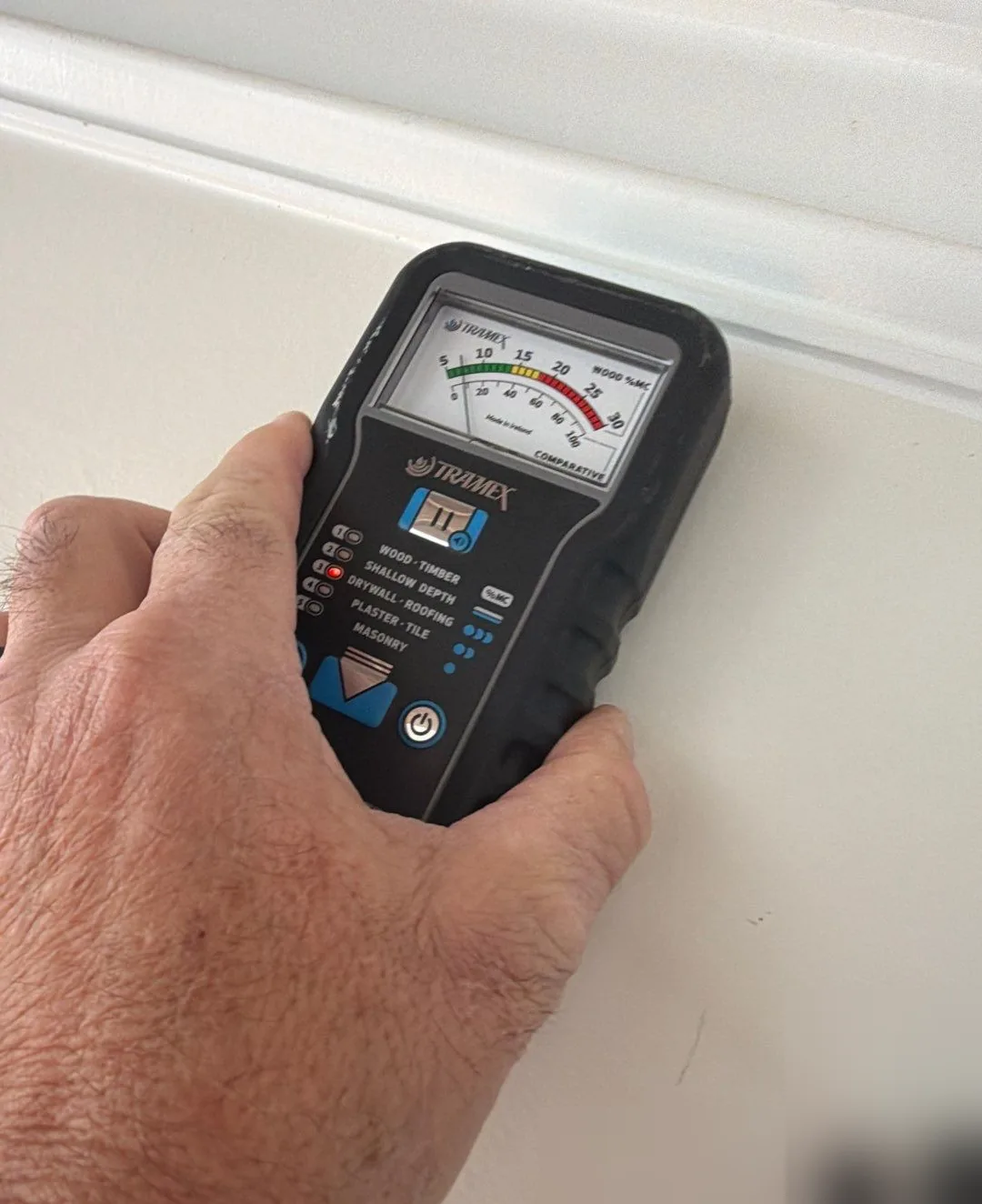
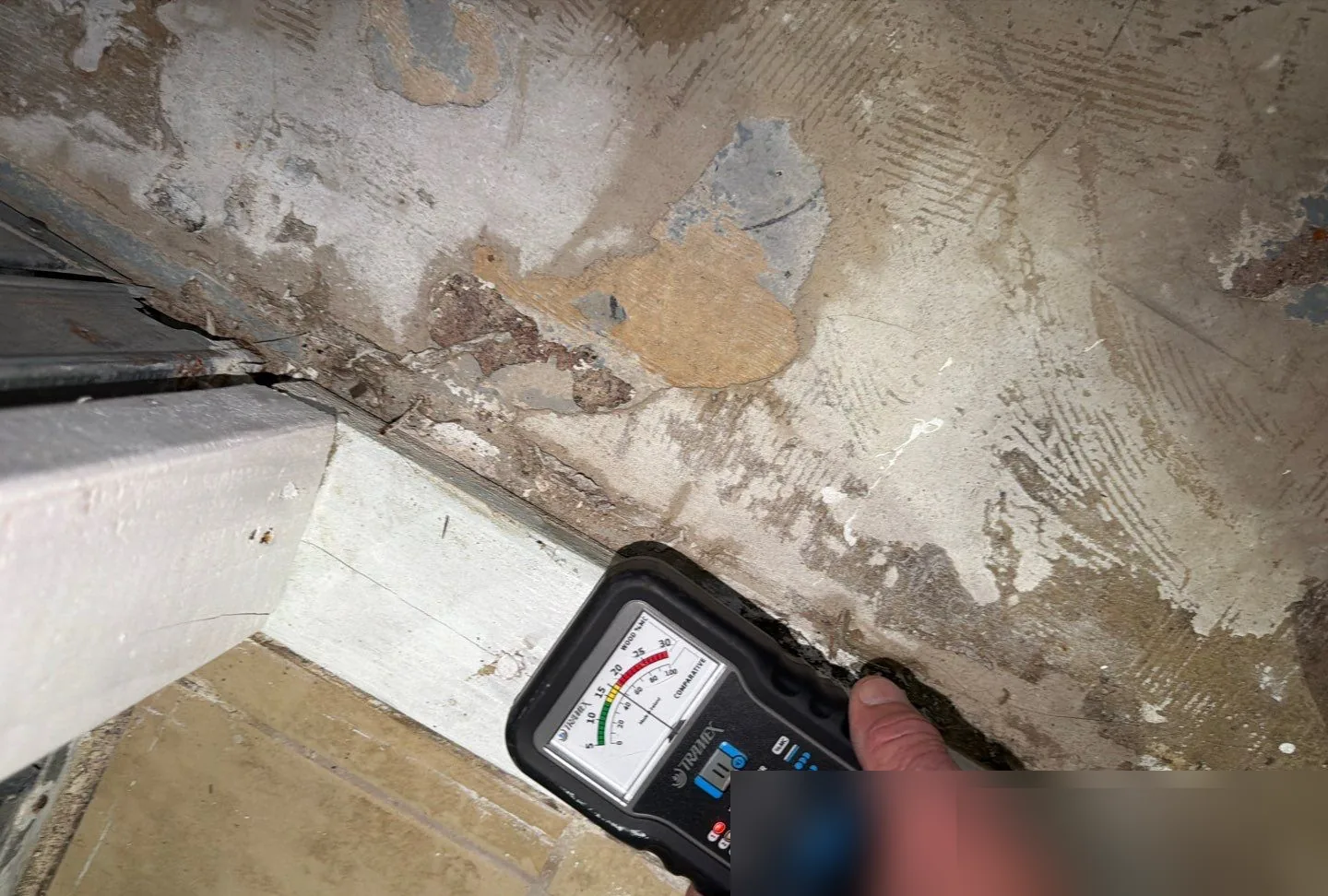
There's no single "under 1%" number for every wall. Under the IICRC S500 approach, the goal comes from readings on similar, unaffected material in the same building, called the dry standard; the meter shows relative wetness against it. Pin meters read between two probes pushed into the board; pinless meters scan a patch of surface without marking it. Either way, the number only means something next to a reading from a dry wall.
How to dry drywall after a small clean-water leak
- Stop the water and turn off power at the panel to any wet outlets or fixtures.
- Pull the baseboards so air reaches the bottom of the wall.
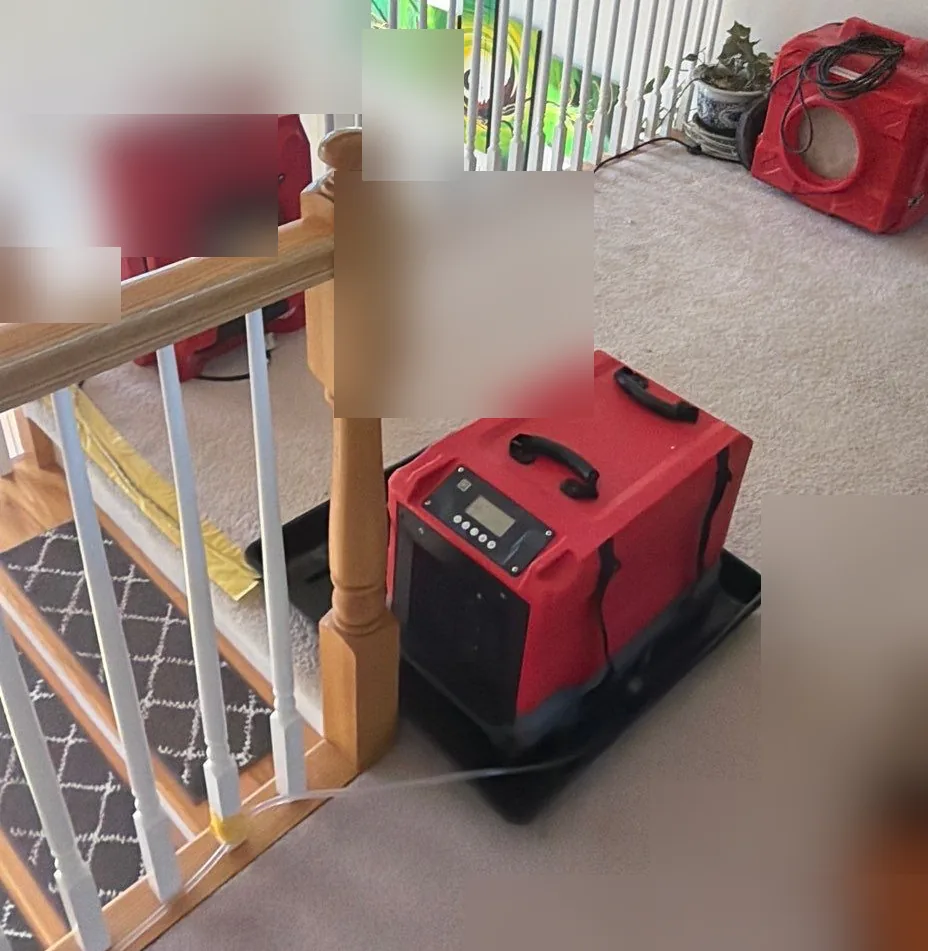
- Close the room and run dehumidifiers with fans across the wet area. If you see mold, or the water was gray or black, skip the fans: moving air spreads spores and contamination. Close the area off and call a pro. Don't count on a space heater alone.
- If readings aren't dropping, the cavity needs opening. In an older home, have the finish sampled first and keep power to that wall off.
- Don't close the wall to see if it dries, and don't prime or paint until readings match a dry wall elsewhere in the house.
Check your drywall: a 5-step assessment
- Photograph everything before anything is moved or cut.
- Find the wet line by touch, stain and a meter, comparing with a dry wall elsewhere.
- Look for failure signs: swelling, open seams, bubbling paint, popped screws, paper peeling off the core.
- Press test with a screwdriver handle. Spongy or crumbling board is past saving.
- Check from behind where you can: an unfinished basement ceiling, the attic, the back of a closet.
A musty smell or swelling baseboards with no stain are among the signs of water damage behind walls. If outlets or cords got wet, kill the power at the panel first; here's what to do in the first hours.
Flood cuts: how high to cut and why
The Gypsum Association's general recommendation is to cut 12 to 24 inches above the highest water line. A cut about 24 inches above the floor clears outlets, which usually sit 12 to 16 inches up, and a cut around 4 feet up is often more practical when wet insulation has to be replaced. Moisture readings, not the stain, set the final line.
What a flood cut is
A straight, level cut that removes the wet lower strip of drywall and leaves the dry upper wall in place. It opens the cavity so the framing can dry and be checked.

How high to cut
Those figures come from Brooke Fishel of the Gypsum Association in Walls & Ceilings (March 31, 2026), which also says panels exposed to contaminated floodwater should typically be removed. We start from the meter: readings show where the board turns dry, and the cut goes above that. A 4-foot line also matches the width of a standard 4-by-8 sheet hung horizontally, so the rebuild goes in as full pieces with one seam.
Why we cut instead of just drying
A closed wall with wet insulation can look dry on the face while the framing stays wet for weeks. Opening it speeds drying and shows what's growing on the back of the paper. Cuts aren't only for floods: when a window or an in-wall pipe leaks, the cut follows the water, which may be under a window frame rather than along the floor.
Older homes: asbestos and lead paint before you cut
EPA lists textured paint and patching compounds used on walls and ceilings among materials that may contain asbestos (EPA, Learn About Asbestos). Its advice is to leave suspect material alone and have a trained, accredited professional take samples (EPA, Protect Your Family). We can arrange asbestos testing and abatement before demolition.
Homes built before 1978 may also have lead-based paint, and contractors disturbing it must be certified under EPA's Renovation, Repair and Painting rule. An emergency provision exempts firms from certain requirements after a disaster, but the paint is no safer to cut (EPA, RRP Program).
Wet ceiling drywall: a decision of its own
A wet wall panel is screwed flat to studs and mostly just gets soft. A ceiling panel hangs from its screws and has to carry the water, plus any soaked insulation, on top of it. That's how a stain becomes a bulge.
- A stain on firm board with dry insulation above can usually be dried, stain-blocked and repainted.
- A sagging or bulging ceiling: keep people and pets out from under it and turn off power to fixtures or fans in it. If a bulge holds water, a professional may drain it into a container in a controlled way; don't do it from underneath yourself.
- Wet insulation above has to come out, which usually means opening the ceiling.
These warning signs of ceiling water damage help you tell which you have.
Drywall repair after water damage: patch, panel or rebuild
Saved drywall
Stain-blocking primer goes on first, since stains bleed through ordinary paint. Loose tape is re-taped and texture rebuilt to match. Let the primer cure fully before finish paint, and feather new texture past the stain edge so the patch doesn't show under raking light.
Patch or panel
Cut damaged sections back to stud centers so the new piece has backing on both edges; small holes can be backed with a wood strip screwed in behind. In basements and bathrooms, moisture-resistant board is the usual replacement. Then prevent a repeat: fix the source for good, and keep indoor humidity below 60 percent, ideally 30 to 50 percent, as EPA recommends.
When DIY is reasonable
Our rule of thumb, not an industry standard: clean water, caught within a day, a small area, firm board, no odor and no wet insulation behind it. Otherwise, get the wall read first.
Do restoration companies replace drywall?
The work comes in two stages. Mitigation stops the water, removes what can't be saved and dries the structure to its dry standard. Reconstruction hangs new board, tapes, finishes and paints. Our water damage restoration crews handle the first stage, and reconstruction services cover the second.
What drywall water damage repair costs
National ranges from the HomeAdvisor drywall repair cost guide (2025 data, page updated June 17, 2026):
| Job | Typical range |
|---|---|
| Drywall repair, all types (average $613) | $296 to $930 |
| Water damage repair | $600 to $1,550 |
| Ceiling repair | $220 to $1,300 |
| Painting and texturing to blend (added) | +$150 to $900 |
HomeAdvisor's water-damage figure is for jobs where sections of drywall are replaced. Drywall that dries in place usually needs only stain-blocking and repainting. Cost rises with wet square footage, ceilings, texture, insulation, water category, mold, asbestos or lead testing, and drying days (billed as mitigation, separate from the rebuild). If the water came from below, see our basement flood cleanup costs.
Will insurance pay for it?
It depends on the source and your policy wording. Many policies treat a sudden leak, like a burst supply line, differently from water that seeped over time, which is why photos and the date you found it matter. See burst pipe insurance claims.
Flood is separate: FEMA notes that most homeowners insurance does not cover flood damage (FEMA). In a basement, the NFIP Dwelling Form covers drywall only as board nailed to the framing, "unfinished and unfloated and not taped" (44 CFR Part 61, App. A(1), III.A.8.a(3)). Renters: the drywall belongs to the building, so tell your landlord in writing right away. Rules vary; check your lease and policy, and keep photos and moisture readings from above and below any cut line for the adjuster.
Frequently Asked Questions About Water-Damaged Drywall
How long can drywall stay wet before mold becomes a risk?
There is no fixed deadline for replacing drywall, but timing matters. EPA advises drying water-damaged materials within 24 to 48 hours to prevent mold growth. In practice that means removing the water and starting drying inside that window, since a soaked wall cavity rarely reaches its dry standard that fast. Drywall that stayed wet longer, or where drying started late, should be opened and checked for growth on the back side. See how long drying takes.
Will wet drywall dry out on its own?
The painted face can feel dry in a day while the back of the paper and the insulation stay wet. Small spots of clean water sometimes dry with fans and a dehumidifier, but only meter readings matched against a dry wall confirm it.
Can a wet drywall ceiling be saved?
Often, if the board is still firm and the insulation above is dry: dry it, seal the stain and repaint. If it sags, bulges or has wet insulation on top, that section comes down. Keep people out from under a sagging ceiling and shut off power to fixtures in it.
Does wet drywall always grow mold?
No. What decides it is how long the board stayed wet and whether the inside of the cavity dried, not just the face. A wall closed up wet, or left for days, is the one most likely to grow mold on the back of the paper. More on how mold starts after water damage.
How do I know if there's water damage behind my drywall?
Typical clues are a musty smell, bubbling or peeling paint, swollen baseboards and flooring that cups near a wall. A moisture meter on the suspect wall, compared with a dry wall elsewhere, usually confirms it without cutting. See the full list of signs of water damage behind walls.
Can I paint over a water stain on drywall?
Only after readings match a dry wall in the same house. Seal the stain with a stain-blocking primer first, because ordinary paint lets it bleed through. Never paint over mold or damp board; that traps moisture and the problem comes back.
Get the walls read before anything comes out
A technician reads the walls with a meter, compares them with a dry wall and tells you what can stay. We follow IICRC S500 and S520 procedures; see our certifications.
Advanced DRI has done this since 2000 from 11 offices in NY, NJ, PA and CT. The 24/7 line is (845) 294-8919, and in nearby service areas we typically respond within 90 minutes.
Or call the closest office: New York City (917) 781-1944 (776A 6th Avenue, 2nd Floor, New York, NY 10001), Hudson Valley (same 24/7 number), Northern New Jersey (862) 702-3311, Jersey Shore (732) 228-7582, Harrisburg, PA (717) 232-5444, Connecticut (860) 295-8790.
Categories
Need Restoration Services?
Our team is available 24/7 for emergency response. Call us today for a free phone consultation.

Questions About Restoration?
Our experts are ready to help. Contact us for a free consultation.