
Tyler McClelland leads mitigation operations for Advanced DRI across New York's Hudson Valley, directing water, mold, and large-loss response in the field. He holds IICRC Water Restoration Technician (WRT) and Applied Microbial Remediation Technician (AMRT) certifications and a New York State Mold Supervisor certification, and is trained in IRCA hospital safe construction practices recognized by The Joint Commission.
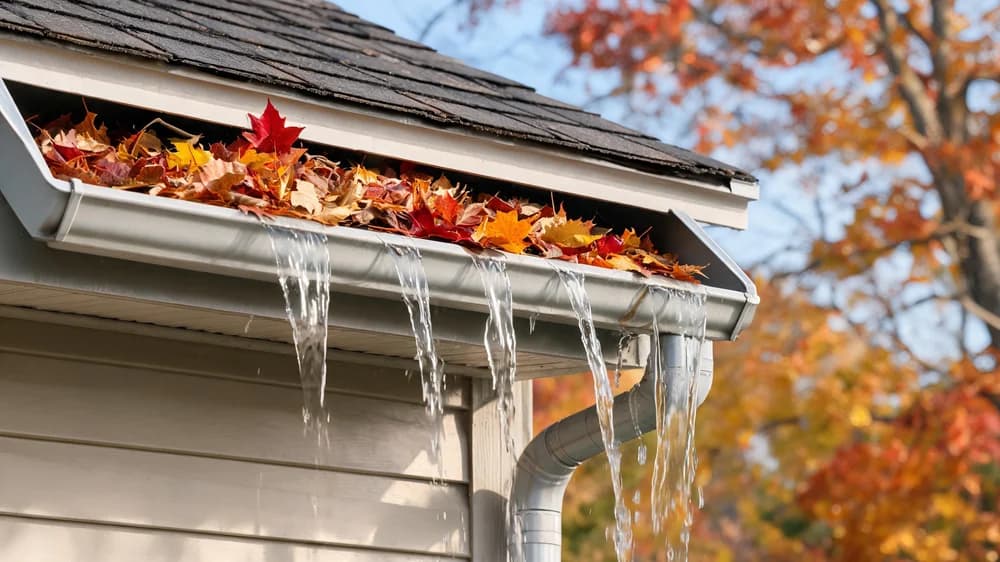
Advanced DRI reveals the data behind fall leaf clog and gutter damage in the Northeast. How clogged gutters lead to water damage and foundation problems.
Fall Leaf Clog and Gutter Damage Statistics
Every fall, billions of leaves drop from the mature hardwood trees that define the Northeast landscape. For property owners, this annual event is more than a yard maintenance task. It is the beginning of a damage chain that, left unaddressed, leads directly to water intrusion, foundation damage, ice dams, and mold growth. At Advanced DRI, we track the causes behind every restoration project we complete, and gutter-related water damage consistently ranks among the most common and most preventable categories throughout our service area.
The data is compelling: properties with clogged or damaged gutter systems account for a disproportionate share of the water damage calls we receive from October through March. This article presents the statistics, explains the damage mechanisms, and provides the timeline property owners need to break the cycle.
The Scale of the Problem
The average residential property in the wooded suburban areas of New York, New Jersey, Pennsylvania, and Connecticut has 150 to 200 linear feet of gutter. A single mature oak tree can drop 200,000 to 500,000 leaves per season. A property with 4-6 mature deciduous trees within canopy range of the roofline can deposit enough leaf material to completely obstruct every gutter and downspout within 2-3 weeks of peak leaf fall if gutters are not cleaned.
The consequences of this obstruction cascade through the building envelope in predictable and measurable ways.
| Damage Type from Gutter Failure | Avg. Repair Cost | Frequency (% of Gutter-Related Calls) | Typical Discovery Timeline | Insurance Coverage |
|---|---|---|---|---|
| Basement water intrusion | $3,000 - $12,000 | 38% | Days to weeks | Often denied (maintenance) |
| Fascia and soffit rot | $1,500 - $6,000 | 27% | Months | Typically denied |
| Ice dam water damage | $2,000 - $15,000 | 22% | Weeks to months | Usually covered |
| Foundation erosion/cracking | $5,000 - $20,000 | 18% | Months to years | Typically denied |
| Mold from hidden moisture | $2,000 - $10,000 | 31% | Weeks to months | Often excluded |
| Gutter system collapse/detachment | $800 - $4,000 | 15% | Immediate | Varies |
Source: Advanced DRI restoration project data 2020-2025, Insurance Information Institute claim statistics
Note: Percentages total more than 100% because many projects involve multiple damage types originating from the same gutter failure.
The Damage Chain: How Clogged Gutters Destroy Properties
Understanding the step-by-step damage chain helps explain why something as simple as leaf-filled gutters produces such expensive consequences.
Step 1: Overflow. When gutters fill with leaves, twigs, and decomposed organic matter, water can no longer flow to downspouts. Instead, it overtops the gutter edge and cascades down the exterior wall and directly onto the soil at the foundation line. This concentrated water flow at the foundation is the most damaging outcome.
Step 2: Foundation saturation. The soil adjacent to your foundation absorbs the overflow water, becoming saturated. This saturated soil exerts hydrostatic pressure against the foundation wall. Over time, this pressure forces water through cracks, mortar joints, and porous concrete into the basement or crawl space. Even tiny cracks that were previously dry become active water entry points under sustained hydrostatic pressure.
Step 3: Fascia and soffit damage. Water that backs up in clogged gutters also flows behind the gutter, saturating the fascia board and soffit panels. These wood components begin to rot from sustained moisture exposure. The rot progresses inward, eventually reaching the rafter tails and roof deck edge, compromising the structural connection between the roof and the wall.
Step 4: Ice dam formation (winter). Leaf debris trapped in gutters during fall provides a dam that traps water and snow during winter. When this water freezes, it forms an ice dam at the eave that prevents snowmelt from draining off the roof. The trapped water backs up under shingles and enters the building through the roof deck and into wall cavities, ceilings, and interior spaces.
Step 5: Mold colonization. Each of the preceding damage types introduces moisture into building assemblies. Wall cavities, basement spaces, and attic areas that receive this moisture become colonization sites for mold. Because the moisture source is often hidden, the mold grows undetected for weeks or months before symptoms appear. By the time a homeowner notices musty odors, staining, or health effects, the remediation required is far more extensive and expensive than it would have been with early detection.
Seasonal Timeline: When to Act
Early October: First cleaning window. Early-dropping species like ash, birch, and locust begin shedding leaves in late September and early October. If your property has these species, a first cleaning in the first or second week of October prevents early clogging that can cause problems during October rainstorms.
Late October to Mid-November: Peak leaf fall. Oaks, maples, and beeches drop the majority of their leaves during this period. This is the critical cleaning window. Gutters should be cleaned after the majority of leaves have fallen but before the heavy rains and first freezes of late November.
Late November to Early December: Final cleaning. Oaks often retain leaves into December, and remaining leaf material, pine needles, and small debris accumulate after the primary cleaning. A final cleaning in early December ensures gutters are clear before winter storms and freeze cycles begin. This is the most important cleaning of the year.
March: Post-winter inspection and cleaning. Winter storms deposit additional debris into gutters, and freeze-thaw cycling can damage gutter brackets, seams, and connections. A spring cleaning and inspection ensures the gutter system is ready for spring rains and identifies any winter damage that needs repair.
Tree Species and Leaf Volume in the Northeast
Not all trees create equal gutter problems. Understanding which species cause the most issues helps property owners prioritize maintenance.
- Pin Oak: Produces massive leaf volume and retains leaves well into winter, continuously depositing material long after other trees are bare. The small, lobed leaves pack tightly in gutters.
- Silver Maple: Drops leaves early and in huge quantities. Also produces seed helicopters in spring that create a secondary clogging event.
- White Pine and other conifers: Shed needles year-round. Pine needles pass through many gutter guards and form dense mats that are difficult to remove and hold moisture against the gutter surface.
- Sweet Gum: Drops both leaves and spiky seed balls (gum balls) that are perfect at catching other debris and creating stubborn clogs.
- Sycamore: Produces very large leaves that bridge gutter openings and form flat mats that completely stop water flow.
Gutter Protection Systems: What the Data Shows
Gutter guard and protection systems reduce but do not eliminate maintenance requirements. Based on our field observations, here is what works and what does not:
- Micro-mesh screens: The most effective option. They block virtually all debris while allowing water flow. However, they still require periodic surface cleaning as debris accumulates on top of the mesh and can reduce flow capacity. Pine needles can penetrate some mesh designs.
- Solid covers with slots: Effective for large leaves but can be overwhelmed by heavy rainfall. Water sheets over the cover and onto the ground instead of entering the gutter, creating the same foundation saturation problem as a clogged gutter.
- Foam inserts: Deteriorate within 2-3 years and actually trap decomposing organic material inside the gutter, creating a worse problem than no protection at all.
- Brush inserts: Similar issues to foam. Debris tangles in the bristles and decomposes in place. Difficult to clean and eventually create a solid clog.
When Gutter Damage Leads to Restoration
If gutter failure has already caused water damage to your property, the restoration process depends on the type and extent of damage. Our water damage restoration team addresses basement flooding from foundation saturation, while our storm damage team handles ice dam damage and exterior structural deterioration. When hidden moisture has been present long enough for mold growth, our mold remediation team steps in to assess, contain, and eliminate colonies that formed in wall cavities, attic spaces, and behind finished surfaces.
The key in all cases is identifying the root cause and ensuring it is corrected as part of the restoration. Restoring water damage without fixing the gutter problem that caused it guarantees the damage will recur.
Frequently Asked Questions
How often should gutters be cleaned in the Northeast?
For properties with deciduous trees within canopy range of the roofline, we recommend a minimum of three cleanings per year: late spring (after seed drop from maples and other early-season debris), mid-to-late November (after peak leaf fall), and early December (final pre-winter cleaning). Properties with heavy tree coverage, particularly pine trees that shed year-round, may need four to six cleanings per year. A spring inspection after winter should also be performed to identify and repair any damage from ice and snow loading.
Can clogged gutters really cause foundation damage?
Yes, and it is one of the most expensive consequences. When gutters overflow, water concentrates at the foundation perimeter instead of being directed away through downspouts. This concentrated water saturates the soil, creates hydrostatic pressure against foundation walls, and accelerates erosion of the backfill material around the foundation. Over multiple seasons of overflow, this process can cause foundation wall cracking, inward bowing, and persistent basement water intrusion. Foundation repairs typically cost $5,000 to $20,000 or more, making them far more expensive than regular gutter maintenance.
Why do insurance companies deny claims for gutter-related water damage?
Insurance policies are designed to cover sudden and accidental damage, not damage resulting from deferred maintenance. Clogged gutters are classified as a maintenance responsibility of the homeowner. When an adjuster determines that water damage resulted from gutter neglect rather than a sudden event like a storm, the claim is typically denied under the maintenance exclusion clause. This is why we emphasize preventive gutter maintenance so strongly. The one exception is ice dam damage, which is often covered because ice dams can form even on well-maintained gutter systems during severe weather events. However, if the insurer can demonstrate that clogged gutters contributed to ice dam formation, coverage may still be disputed.
Do Not Let Leaves Destroy Your Property
The connection between fall leaves and costly property damage is direct, documented, and entirely preventable. Regular gutter cleaning costs a few hundred dollars per year. The water damage, foundation damage, and mold remediation that result from neglected gutters cost thousands to tens of thousands of dollars, and insurance often will not cover it.
If gutter-related water damage has already affected your property, contact Advanced DRI for professional assessment and restoration. Our team identifies the full extent of damage, including hidden moisture and mold that you cannot see, and restores your property while addressing the root cause to prevent recurrence. We serve property owners across New York, New Jersey, Pennsylvania, and Connecticut.
Categories
Need Restoration Services?
Our team is available 24/7 for emergency response. Call us today for a free phone consultation.



Questions About Restoration?
Our experts are ready to help. Contact us for a free consultation.