Sewage Contamination Health Risks: Symptoms, Sewer Gas & What to Do
Tyler McClelland leads mitigation operations for Advanced DRI across New York's Hudson Valley, directing water, mold, and large-loss response in the field. He holds IICRC Water Restoration Technician (WRT) and Applied Microbial Remediation Technician (AMRT) certifications and a New York State Mold Supervisor certification, and is trained in IRCA hospital safe construction practices recognized by The Joint Commission.

Raw sewage can carry E. coli, norovirus, hepatitis A and Giardia. See when symptoms start, what to do after exposure, and when sewer gas is dangerous.
The main sewage contamination health risks are stomach and intestinal infections, hepatitis A, infected cuts and, less often, irritation from sewer gas; most of them are preventable with prompt washing.
Sewage is dangerous because it carries germs from human waste, including E. coli, Salmonella, Shigella, norovirus, hepatitis A, Giardia and Cryptosporidium, and gives off gases such as hydrogen sulfide. Most illness comes from swallowing tiny amounts through hands, food or splashes, or from germs entering cuts, which is why sewage is treated as Category 3 water.
The amounts are small: CDC says hepatitis A spreads "even in very small amounts." Your risk depends on how much sewage you touched, whether any reached your mouth, eyes or a cut, and your health. Prompt washing with soap and water lowers it.
This guide is general information, not medical advice. If you feel ill after sewage contact, call your doctor and mention the exposure.
Diseases You Can Get From Sewage Water
Most of these spread fecal-oral, so the main risk is hand to mouth: eating, drinking, smoking or touching your face before washing.
| Illness (germ) | Typical symptoms | When symptoms usually start |
|---|---|---|
| Norovirus | Diarrhea, vomiting, nausea, stomach pain; sometimes fever, headache, body aches | 12 to 48 hours (CDC) |
| Salmonellosis (Salmonella) | Watery diarrhea that may contain blood or mucus, stomach cramps; usually lasts 4 to 7 days | 6 hours to 6 days (CDC) |
| Shigellosis (Shigella) | Diarrhea that can be bloody, fever, stomach pain; usually lasts 5 to 7 days | 1 to 2 days (CDC) |
| Campylobacteriosis (Campylobacter) | Bloody diarrhea, cramping, nausea, vomiting, fever | 2 to 5 days (Indiana Department of Health) |
| E. coli infection (diarrhea-causing types) | Diarrhea that can be bloody or watery, severe stomach cramps, sometimes vomiting or a low fever | Varies by type |
| Hepatitis A | Tiredness, nausea, stomach pain, dark urine, yellow skin or eyes; usually under 2 months, sometimes up to 6 | 2 to 7 weeks (CDC) |
| Giardiasis (Giardia) | Diarrhea, gas, greasy stools, nausea, stomach cramps, dehydration; typically 2 to 6 weeks | 1 to 2 weeks (CDC) |
| Cryptosporidiosis (Cryptosporidium) | Frequent watery diarrhea, cramps, nausea, vomiting, fever | 2 to 10 days, average 7 (CDC) |
| Leptospirosis (animal urine in flood or backup water) | Fever, headache, muscle aches, jaundice; untreated, it can damage the kidneys or liver | 2 to 30 days (CDC) |
Timings from CDC disease pages; Campylobacter from the Indiana Department of Health.
CDC names children younger than 5, adults 65 and older and people with weakened immune systems as higher-risk groups for E. coli, and chronic liver disease raises the risk of serious hepatitis A. Keep anyone in these groups away from the affected area.
Symptoms After Sewage Exposure, and How Soon They Appear
It depends on the germ. CDC says norovirus symptoms usually start 12 to 48 hours after exposure, Shigella 1 to 2 days, and Salmonella 6 hours to 6 days. Campylobacter typically takes 2 to 5 days (Indiana Department of Health), and hepatitis A usually 2 to 7 weeks (CDC). That long gap is why your doctor needs to hear about the sewage contact even weeks later.
Common symptoms in the first days
Diarrhea (sometimes bloody), vomiting, nausea, stomach cramps, fever, headache, body aches and tiredness. Yellow skin or eyes and dark urine, sometimes weeks later, are hepatitis A symptoms (CDC).
Call a doctor or urgent care if…
- diarrhea or vomiting lasting more than 2 days (CDC)
- bloody poop or pee
- a fever higher than 102°F
- signs of dehydration: little or no peeing, very dark pee, strong thirst, a dry mouth or throat, dizziness, crying without tears
- yellow skin or eyes (CDC hepatitis A)
- a cut that turns red, swollen, warm or starts to drain
- any symptoms at all in someone from the higher-risk groups above
Tell the clinician the date of the sewage contact, and whether you've had the hepatitis A vaccine, which CDC calls the best prevention.
Signs in children
CDC notes that dehydration can happen quickly in young children. Hemolytic uremic syndrome (HUS), a complication of some E. coli infections, is a medical emergency. CDC lists its signs as little or no peeing, losing pink color in the cheeks and inside the lower eyelids, unexplained bruising or a rash of tiny red spots, blood in the pee, being very tired or irritable, and decreased alertness.
Am I contagious?
Some of these pass from person to person. CDC says you can still spread norovirus for 2 weeks or more after you feel better, and recommends waiting at least 48 hours after symptoms stop before preparing food or caring for others. Hepatitis A can spread up to 2 weeks before symptoms appear (CDC). Wash your hands with soap and water.
Exposed to Sewage? What to Do Right Now
Wash exposed skin with soap and clean water right away, rinse eyes with clean running water, and rinse and spit if sewage got in your mouth. Clean and cover any cut, and ask a clinician whether you need a tetanus booster. Change and wash clothes separately, and call a doctor if diarrhea, fever or vomiting follow.
- On your skin. Wash with soap and clean water as soon as you can. Skip hand sanitizer: CDC says it does not work well against norovirus.
- In your eyes. Rinse with clean running water; get care if redness or pain persists.
- In your mouth, or you swallowed some. Rinse and spit with clean water. If you are unsure what to do, Poison Help at 1-800-222-1222 is free, confidential and open 24/7. Call your doctor if symptoms appear.
- A cut or scrape. Clean it with soap and water and cover it. CDC counts wounds containing feces or soil as dirty wounds; a clinician decides on a tetanus booster from your vaccine history. Keep working only with a waterproof bandage over it (CDC).
- Clothes and shoes. Take them off before you walk into clean rooms. Handle them with gloves and without shaking them, wash with detergent and hot water on the longest cycle, and machine-dry on the highest heat (CDC norovirus guidance).
Don't eat, drink or smoke in the affected area.
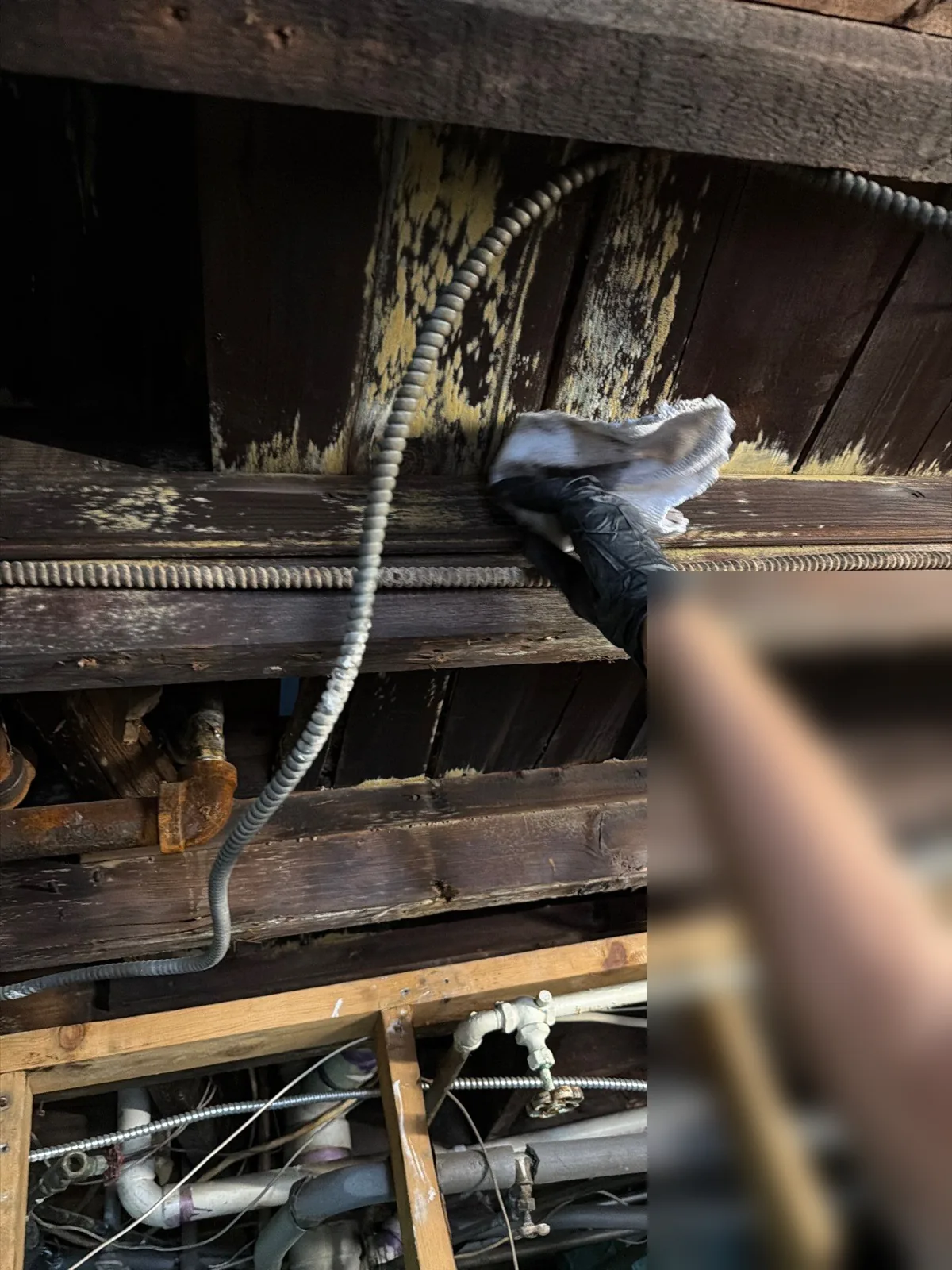
That Newark photo from a 2026 water loss shows the rule we'd give anyone at home: gloves on before you touch anything the water reached, and wash up afterward even if the gloves held.
Sewer Gas and Sewage Smell: When It Is Dangerous
What sewer gas is
Sewer gas is a mix: Wisconsin's Department of Health Services names hydrogen sulfide and ammonia among the most toxic parts, plus carbon dioxide, methane and others. Hydrogen sulfide smells like rotten eggs, and ATSDR says people notice it at 0.0005 to 0.3 ppm, far below harmful levels. A smell usually means a plumbing problem, not an emergency.
| Hydrogen sulfide level | What ATSDR and NIOSH say |
|---|---|
| 0.0005 to 0.3 ppm | Most people can smell it |
| Around 10 ppm or less, longer term | Can cause eye irritation, headache and fatigue |
| 20 ppm | OSHA workplace ceiling |
| About 100 ppm | Sense of smell fades within 2 to 15 minutes; NIOSH calls this immediately dangerous to life or health |
| Above 500 ppm | Can cause sudden unconsciousness or death |
Can sewer gas make you sick?
Yes, with enough exposure. Long-term exposure to low levels of hydrogen sulfide can irritate the eyes, nose and throat (ATSDR), and Wisconsin DHS lists headaches, dizziness, drowsiness and nausea as possible signs of sewer gas exposure. The same agency points out a catch: those symptoms also fit methane and carbon monoxide, which have no smell. Check that your carbon monoxide alarm works, and if you feel better whenever you leave the house, tell your doctor.
Can sewer gas kill you in your sleep?
Very unlikely from a typical household sewer smell. ATSDR says household exposures are unlikely to approach the levels that sicken people at work. The real warning sign: at about 100 ppm people stop smelling it within 2 to 15 minutes. If anyone feels dizzy or faint, get everyone out and call 911.
Hydrogen sulfide is heavier than air and collects low (ATSDR), so a basement is where sewer gas builds up. Methane is flammable and highly explosive (Wisconsin DHS): with a strong smell, don't flip switches or light anything. Leave and call the fire department.
Why your house or bathroom smells like sewage
- A dry trap. Unused guest baths and floor drains lose their water seal. Pour water in.
- A failed toilet wax ring. A smell right around the base of one toilet.
- A blocked or leaking roof vent. Gurgling drains, or a smell when other fixtures drain.
- A cracked drain or vent line inside a wall, or cracks in the foundation.
- Residue after a backup soaked into subfloor, drywall or carpet pad.
Rule out natural gas first. Natural gas is given a rotten-egg odor too. Con Edison's advice: leave immediately, take others with you, and call 911 or your gas utility once you're away, without using switches or your phone near the smell. Not sure which gas it is? Treat it as a gas leak.
When to call whom
| What you notice | Who to call |
|---|---|
| Smell only, nobody feels ill | Refill traps; if it stays, a plumber |
| Not sure if it's natural gas | Leave, then call 911 or the gas utility from outside |
| Dizziness, confusion or fainting, or a strong smell in the basement | Get everyone out and call 911 |
| Smell keeps coming back after a backup was cleaned | A restoration company to find residue in porous materials |
On sewage jobs our technicians check drains, traps and toilet seals before deodorizing, because a returning odor has a source. More on persistent odor after a backup.
Sewage Backup in Your Home: Health Risks and Who Should Leave
A backup puts Category 3 water into living space: contact and hand-to-mouth spread, contaminated food and surfaces, gases in a closed basement, and later mold in materials that never dried (handled under ANSI/IICRC S520).
Who should stay out entirely: anyone in the higher-risk groups listed earlier, anyone with open cuts, and pets. CDC lists dogs among the animals that can carry the bacteria that cause leptospirosis, so keep them off wet floors.
| Situation | Is it safe to stay? |
|---|---|
| Small overflow on tile in one room, cleaned with gloves and disinfectant | Generally yes. Keep others away until it's done. |
| Sewage on carpet or drywall, or in a finished basement | Seal the area off. Higher-risk people stay elsewhere. |
| Sewage on living-level floors, HVAC running through the area, or strong odor throughout | Stay elsewhere until removal and drying are finished. |
How our crews advise households; general guidance, not a medical or code requirement. When in doubt, stay out.
If sewage reached carpet, drywall or a finished basement, call our 24/7 line at (845) 294-8919. We'll tell you on the phone whether your household should stay elsewhere.
Do and don't while you wait
- Do turn off HVAC serving the affected area. On sewage jobs our crews shut it down and set up containment before removal.
- Don't run fans before contaminated material is out; they move contaminated droplets and dust around the house.
- Don't pour bleach into standing sewage. Disinfectant works on cleaned surfaces, CDC's guidelines for cleaning safely after a disaster say never to mix bleach with ammonia or any other cleaner, and sewer gas contains ammonia (Wisconsin DHS).
- Don't try to save soaked carpet or pad.
- Do throw out any food or medicine the water touched.
About 60% of New York City drains to combined sewers that carry sewage and stormwater in one pipe (NYC DEP). Hartford is one of four Connecticut cities with combined sewers, and they make up nearly half of its 217 miles of pipe (CT Public; The Clean Water Project). In both places heavy rain can push sewage into low basements, sometimes repeatedly. NYC DEP suggests considering a backwater valve, and Hartford homes may qualify for MDC's Backwater Valve Program.
Our New York City sewer backup crews and our team for sewer backup cleanup in the Hartford area take these calls. For the mechanics, see why sewage backs up during heavy rain; for the full checklist, our step-by-step sewage backup emergency response.
How Long Sewage Contamination Lasts, and When It Is Safe to Move Back In
Sewage contamination doesn't wear off on a schedule. Parasites such as Giardia and Cryptosporidium have an outer shell that lets them survive outside the body for long periods, and Cryptosporidium is very resistant to chlorine (Indiana Department of Health). CDC says the hepatitis A virus can live outside the body for months, depending on conditions, and that leptospirosis bacteria survive in contaminated water or soil for weeks to months.
The hazard ends when the work is done: soaked porous materials removed, surfaces cleaned, disinfected, then dried. For hard surfaces, CDC's norovirus guidance gives 5 to 25 tablespoons of household bleach per gallon of water (1,000 to 5,000 ppm), left on at least 5 minutes, or an EPA-registered disinfectant per its label. Spraying disinfectant over residue doesn't replace removing it.
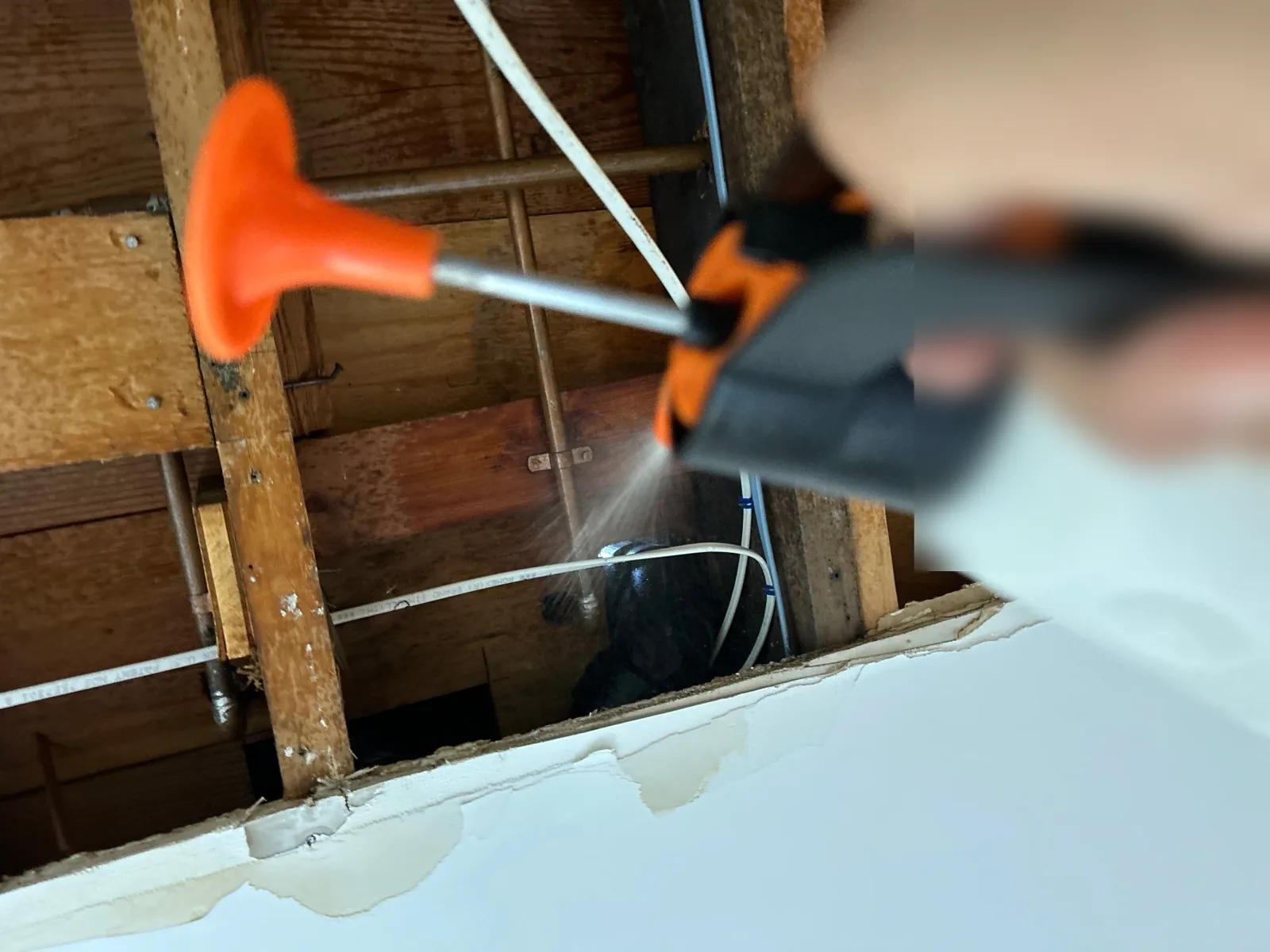
Note the order in that Westport photo: drywall out first, antimicrobial second.
Signs the space is ready
- Soaked carpet, pad, drywall and insulation are out and bagged.
- Surfaces were cleaned, then disinfected for the product's full dwell time.
- Framing and subfloor read as dry as unaffected materials.
- HVAC in the affected area was inspected or cleaned before restart.
- No sewage odor remains.
- Optional: third-party clearance sampling for high-risk households or an insurer.
Is Sewage a Biohazard? How Category 3 Water Is Classified
In practical terms, yes. Sewage carries infectious bacteria, viruses and parasites from human waste, and the ANSI/IICRC S500 water damage standard classifies it as Category 3, the most contaminated category of water. Removed materials are bagged and disposed of under local rules.
| Category | Typical sources | Porous materials |
|---|---|---|
| Category 1 | Supply line, faucet | Often dried in place |
| Category 2 | Washer or dishwasher discharge | Assessed case by case |
| Category 3 | Sewer backup, toilet backflow from beyond the trap, rising floodwater | Generally removed |
"Category" means contamination; "Class" in S500 means how much water must evaporate. As an IICRC Certified Firm, we follow S500 procedures on every sewage loss, and our Category 3 cleanup protocols page walks through them. Mixed hazards fall under biohazard cleanup.
When to Call a Professional Sewage Cleanup Team
CDC's minimum for sewage cleanup is rubber boots, goggles and gloves, with cuts under a waterproof bandage. Once sewage soaks into carpet, drywall or a finished basement, crews need impermeable suits, eye and respiratory protection matched to the job, and containment so dust and droplets stay put.
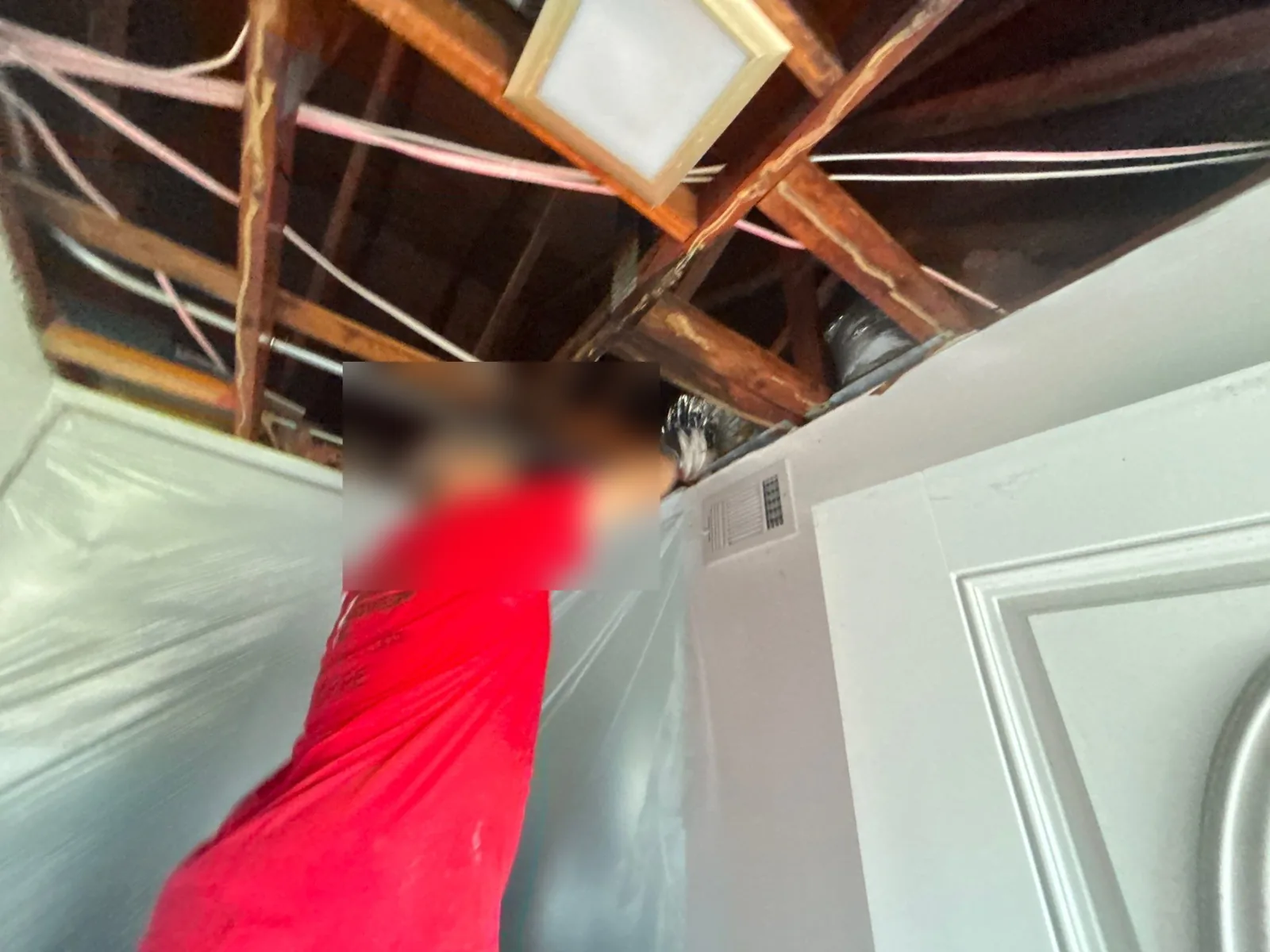
Sewage losses get the same plastic containment before anything comes down.
The order: assess, extract, remove porous materials, clean and disinfect, dry and verify, rebuild. If sewage has reached porous materials, our IICRC-certified sewage cleanup crews answer 24/7 at (845) 294-8919, and we typically arrive within 90 minutes in nearby service areas.
Frequently Asked Questions
Can you get sick from smelling sewage?
Usually the smell is a warning, not the cause. People notice hydrogen sulfide far below harmful levels (ATSDR), though lower, longer-term exposure can cause eye irritation, headache and fatigue (ATSDR), and Wisconsin DHS lists headaches, dizziness and nausea as signs of sewer gas exposure. Fix the source, and if anyone feels ill, get them outside and call a doctor.
What should I do if sewage got in my mouth?
Rinse and spit with clean water. If you are unsure what to do next, call Poison Help, which is free and open 24/7. Watch for diarrhea, vomiting or fever over the following days and weeks, and call your doctor if they appear. Infants, older adults and people with weakened immune systems should get prompt care.
Poison Help: 1-800-222-1222.
Do I need a tetanus shot after sewage exposure?
It depends on whether you have a wound and on your vaccine history. CDC treats wounds containing dirt, soil or feces as dirty wounds, and for those a clinician decides on a booster, often if your last tetanus shot was 5 or more years ago. Clean the wound, cover it and call your doctor or urgent care the same day.
Am I contagious if I get sick from sewage?
You can be. CDC says you can still spread norovirus for 2 weeks or more after you feel better, and hepatitis A can spread up to 2 weeks before symptoms. Wash hands with soap and water, don't share towels, and don't cook for others until 48 hours after symptoms stop.
Can I clean up a small sewage overflow myself?
For a small spill on hard floors, often yes, though cleanup can make you sick. Wear rubber boots, goggles and gloves, cover cuts, remove the waste, then disinfect with 5 to 25 tablespoons of bleach per gallon or an EPA-registered product. Never mix bleach with other cleaners. Call a pro if sewage reached carpet, drywall or a finished basement.
What should I do if I think I have sewer gas poisoning?
Get to fresh air. Call 911 for dizziness, confusion or fainting. Tell the clinician what you smelled and for how long. Have a plumber or the fire department find the source before you go back in, and check your carbon monoxide alarm, since Wisconsin DHS notes that odorless carbon monoxide causes similar headaches, dizziness and nausea.
Does homeowners insurance cover sewage backup?
Usually not by default. The Insurance Information Institute says a typical homeowners policy doesn't cover sewer backups; coverage is added as an endorsement or a separate product. Flood insurance has its own rules for backups caused by flooding, so ask your agent. Renters should check their own policy. Terms vary by insurer and state.
For what the work itself tends to involve, see our breakdown of sewage cleanup cost.
We have 12 offices across New York, New Jersey, Pennsylvania and Connecticut. Find the one nearest you.
Sources
Health facts on this page come from the CDC, ATSDR and state health departments. Sources reviewed October 2026.
- CDC: Hepatitis A Basics
- CDC: Clinical Overview of Hepatitis A
- CDC: About Norovirus
- CDC: How Norovirus Spreads
- CDC: How to Prevent Norovirus
- CDC: Salmonella Signs and Symptoms
- CDC: Signs and Symptoms of Shigella
- CDC: Symptoms of E. coli Infection
- CDC: About E. coli Infection
- CDC: Symptoms of Giardia
- CDC: Symptoms of Crypto
- CDC: About Leptospirosis
- CDC: Tetanus Clinical Guidance
- CDC: Clean Up Safely After a Natural Disaster
- CDC: Guidelines for Cleaning Safely After a Disaster
- ATSDR: ToxFAQs for Hydrogen Sulfide
- Indiana Department of Health: Diseases Involving Sewage
- Wisconsin DHS: Sewer Gas
- America's Poison Centers: Get Poison Help
- Con Edison: Gas Safety
- Insurance Information Institute: Which Disasters Are Covered by Homeowners Insurance?
- NYC DEP: Combined Sewer Overflows
- NYC DEP: Flood Preparedness Flyer
- CT Public: Combined Sewers in Connecticut
- The Clean Water Project (MDC): Hartford
- City of Hartford / MDC: Sewer Backup Prevention
Categories
Need Restoration Services?
Our team is available 24/7 for emergency response. Call us today for a free phone consultation.


Questions About Restoration?
Our experts are ready to help. Contact us for a free consultation.