Asbestos Testing and Removal in Pennsylvania: State Rules, Costs and Lead Paint Basics
Elsa Boyer is a Regional Operations Manager for Advanced Disaster Recovery, based in Harrisburg, Pennsylvania, overseeing commercial and healthcare restoration projects. She holds a Bachelor of Arts from Valparaiso University and a deep certification portfolio, including ICRA Certified Healthcare Remediator Supervisor and multiple IICRC designations across commercial drying, structural drying, water, and fire & smoke restoration.

Who can test and remove asbestos in PA, when L&I and DEP notices apply, the homeowner exemption, typical costs, and what to do if water damage exposes it.
Water through a ceiling, a kitchen fire, a basement floor that finally has to come up: in a Pennsylvania rowhouse, twin or office built before about 1980, any of these can disturb material that may contain asbestos, or trim coated in lead paint. The short answer: have suspect material sampled by an inspector certified by the Department of Labor & Industry (L&I). Friable asbestos is removed by an L&I-certified contractor, and whether a state notice is needed depends on the building and the amount.
Advanced DRI is a restoration company working since 2000, with Pennsylvania offices in Harrisburg, Allentown and Peckville. When a damaged building needs it, we make the property safe, bring in independent testing and certified lead and asbestos abatement services, then dry and rebuild.
Just found suspect material?
- Stop work. Don't sweep, vacuum, sand or drill it, and shut off the HVAC serving that area.
- Have a PA L&I-certified asbestos inspector sample it.
- Removing more than 3 square feet or 3 linear feet of friable asbestos requires at least 5 days' notice. Demolition or larger renovation of commercial buildings and apartment buildings with five or more units also needs DEP's 10-working-day federal notice.
Exposed by a leak, fire or storm? Call (845) 294-8919, 24/7.
Asbestos testing in Pennsylvania: how it works and who can do it
A Pennsylvania L&I-certified asbestos inspector walks the building and takes small bulk samples of each suspect material. An accredited lab analyzes them, usually by polarized light microscopy (PLM), and you get a written report listing each material's location, condition and asbestos content. Under federal rules, material with more than 1% asbestos counts as asbestos-containing. Test before any remodel, demolition or damage tear-out.
If a leak, fire or storm exposed the material, call before cleanup starts. We stabilize the building, bring in an independent certified inspector and keep abatement, drying and rebuild on one schedule.
Who can test
L&I enforces the Asbestos Occupations Accreditation and Certification Act of 1990 and certifies six occupations: contractor, inspector, management planner, project designer, supervisor and worker (PA DEP). Its asbestos occupations page lists certified contractors and inspectors.
Skip the home kit. Taking a sample means cutting into the material you're trying not to disturb, and EPA tells homeowners not to saw, sand, scrape or drill it.
What a survey includes
One test covers one material. A survey covers every area the work will disturb, with samples of each distinct material, and federal rules require one before work on commercial buildings and apartment buildings with five or more units. For old floor tile and black mastic, ask whether a negative PLM result should be confirmed by TEM.
When you don't need to test, and when removal isn't the only option
EPA says that if material isn't damaged and won't be disturbed, you don't need to test it (EPA). If it is damaged, repair can mean sealing it (encapsulation) or covering it (enclosure). EPA warns that improper removal can increase exposure.
Use separate firms for testing and removal
EPA's advice: "It is better to use two different firms so there is no conflict of interest." That's how we set up jobs. The inspector is independent, and the report goes to you and the abatement contractor.
Pennsylvania asbestos rules in plain English
Two state agencies share the work, and two counties run their own programs. This summary follows the PA DEP asbestos page and the federal asbestos NESHAP (40 CFR 61.145). Rules change, so confirm with the agency before a project.
| Agency | What it requires | When it applies |
|---|---|---|
| PA L&I | Certified people in all six occupations; at least 5 days' notice | Any project abating more than 3 sq ft or 3 linear ft of friable asbestos |
| PA DEP (federal NESHAP) | A thorough inspection first; at least 10 working days' notice | Every demolition, even with no asbestos found; renovations disturbing 260 linear ft, 160 sq ft or 35 cu ft or more of regulated material. Not homes with four or fewer units. |
| Philadelphia and Allegheny counties | Their own notice programs (Philadelphia Air Management Services; Allegheny County Health Department) | Projects in those counties |
Notices are filed through DEP's online system. Ask any contractor for its L&I certification number and check it on L&I's certified contractor list. The "3-5-7 rule" you may see online isn't a term in federal or Pennsylvania asbestos rules; the numbers that matter are 3 square or linear feet, L&I's 5 days and DEP's 10 working days.
The homeowner exemption, and its limits
Homeowners get a partial exemption, not a free pass. DEP's federal notice rules don't cover private homes or apartment buildings with four or fewer units. L&I's 5-day notice covers any project that abates more than 3 square feet or 3 linear feet of friable asbestos, and if you hire anyone to remove it, the workers must be L&I-certified and employed by a certified contractor. Check your township or borough for local rules. An exemption from paperwork doesn't make do-it-yourself removal safe.
Disposal
Federal rules (40 CFR 61.150) require asbestos waste to be kept wet, sealed in leak-tight containers, labeled, and shipped with a waste shipment record to an approved disposal site. Not every landfill accepts it; DEP keeps a list of Pennsylvania landfills that take asbestos.
Check that the notice was filed
DEP's Air Quality Reports page has a public search of every online asbestos notification received since March 9, 2018. Owners and landlords can confirm their contractor filed before work began.
When asbestos turns up during water, fire or storm damage
Emergencies are when asbestos gets disturbed by accident. A wet ceiling sags, someone starts tearing, and nobody asks what the texture is made of. In a building from before about 1980, the first day matters most.
In the first 24 hours, don't:
- rip out wet ceiling texture, pipe wrap or old 9"×9" floor tile
- run a shop vac or broom over the debris
- leave the HVAC running in the affected zone
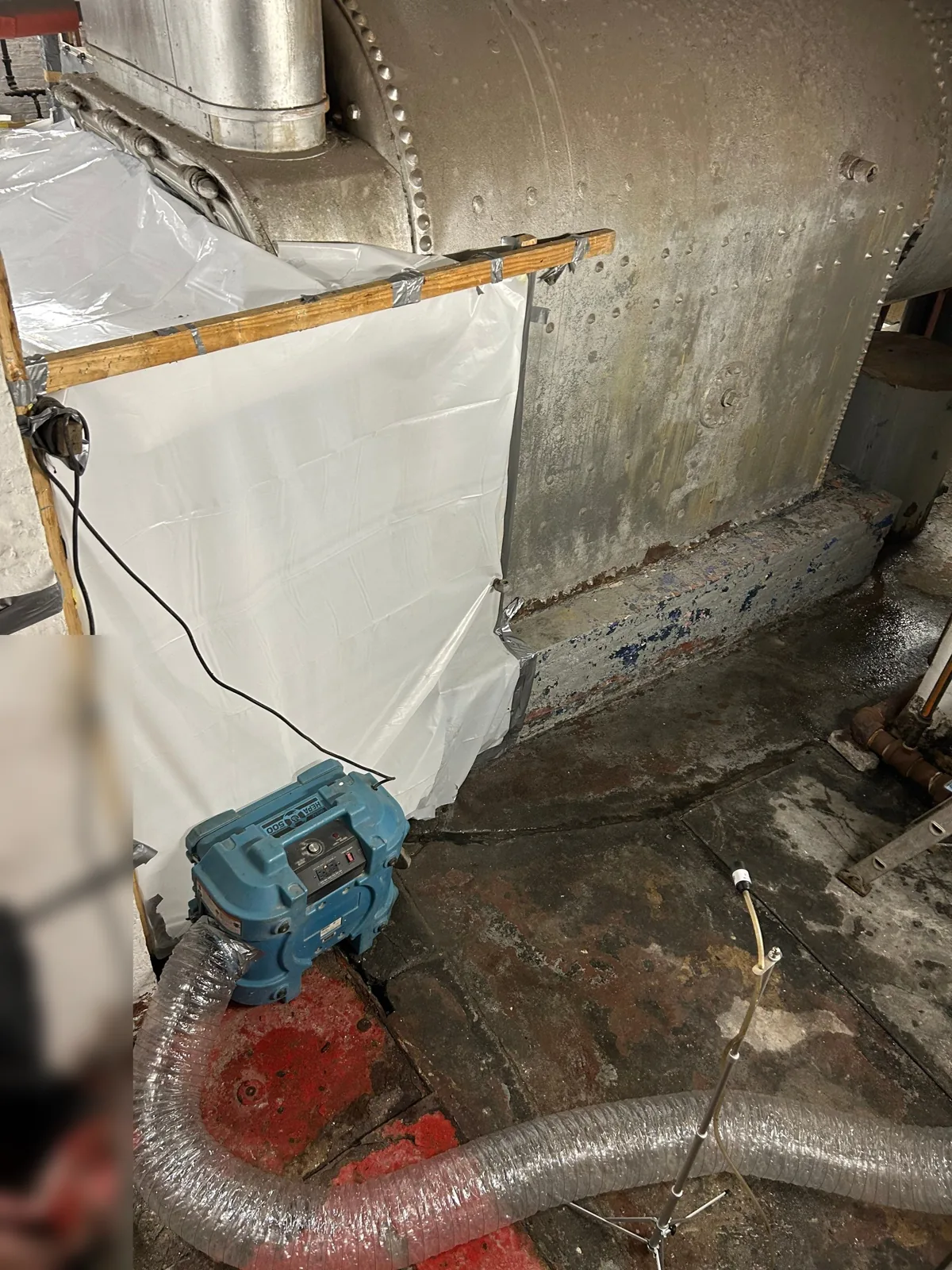
In this New York basement, poly on a wood frame walls off a riveted boiler, with a HEPA vacuum and flex duct staged on the floor. When drying equipment has to run near old insulation or tile, crews isolate that area first so moving air doesn't carry dust from suspect material through the building.
How our crews sequence a damaged older building:
- Stop the water source and make the building safe.
- Control moisture without disturbing suspect material where possible.
- Sample suspect materials before any demolition.
- Have an L&I-certified contractor abate anything that tests positive.
- Finish structural drying, then rebuild.
We follow IICRC S500 and S520 procedures for water and mold work, and on older buildings demolition waits until suspect materials are assessed by certified professionals. Waiting on lab results beats decontaminating a whole house. The rule holds for water damage restoration, fire damage restoration and storm damage repairs: test first, demolish second.
Why older Pennsylvania buildings still hide asbestos and lead, and where to look
Pennsylvania's cities are full of pre-war rowhouses, twins and old commercial blocks. Lead paint was banned for residential use in 1978, and EPA estimates about three-quarters of U.S. homes built before then still contain some lead-based paint (EPA). Asbestos shows up in many building products from the decades before 1980, and it stays in place until someone disturbs it.
That's the risk: disturbance, not presence. Breathing asbestos fibers raises the risk of lung cancer, mesothelioma and asbestosis, and symptoms can take many years to appear (EPA). For lead, the CDC says no safe blood lead level in children has been identified (CDC).
| Material | Where you find it | Asbestos or lead |
|---|---|---|
| 9"×9" floor tile and black mastic | Basements, kitchens, attic rooms | Asbestos |
| Boiler and pipe insulation | Basements, steam heat systems | Asbestos |
| Textured ceilings, patching compound | Ceilings and walls | Asbestos |
| Vermiculite insulation | Attics and wall cavities | Asbestos |
| Roofing and siding shingles | Exteriors, garages | Asbestos |
| Furnace and door gaskets | Old oil and coal furnaces | Asbestos |
| Painted sills, trim, doors, porches | Pre-1978 homes, rowhouse fronts | Lead |
Sources: EPA. Only lab analysis confirms what a material contains. EPA also says to assume vermiculite insulation contains asbestos, leave it alone, and not store boxes in an attic that has it (EPA vermiculite guidance).
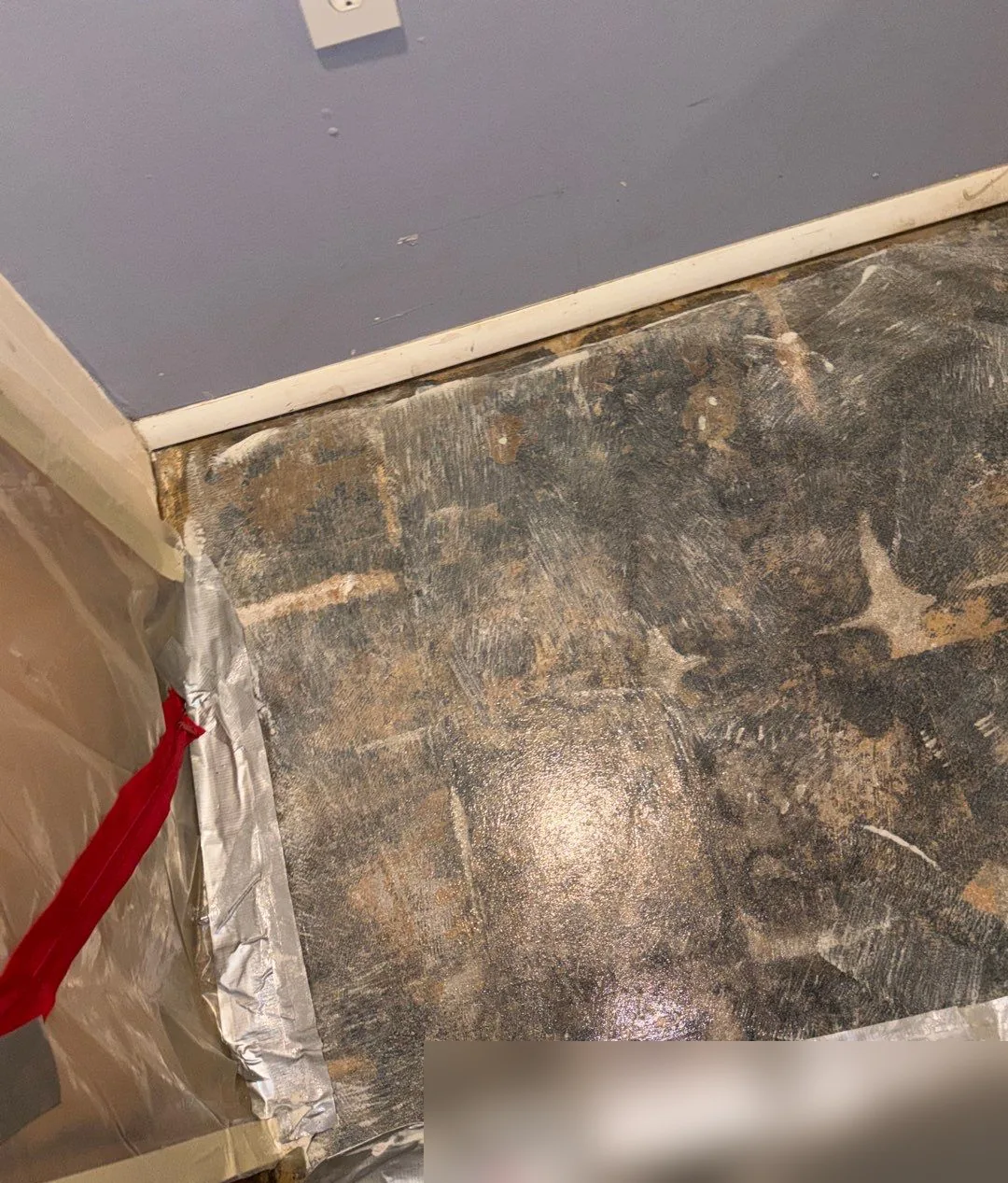
In the North Plainfield photo, dark tile and mastic sit inside poly sealed with tape. The New Windsor attic room below has the classic checkerboard pattern.
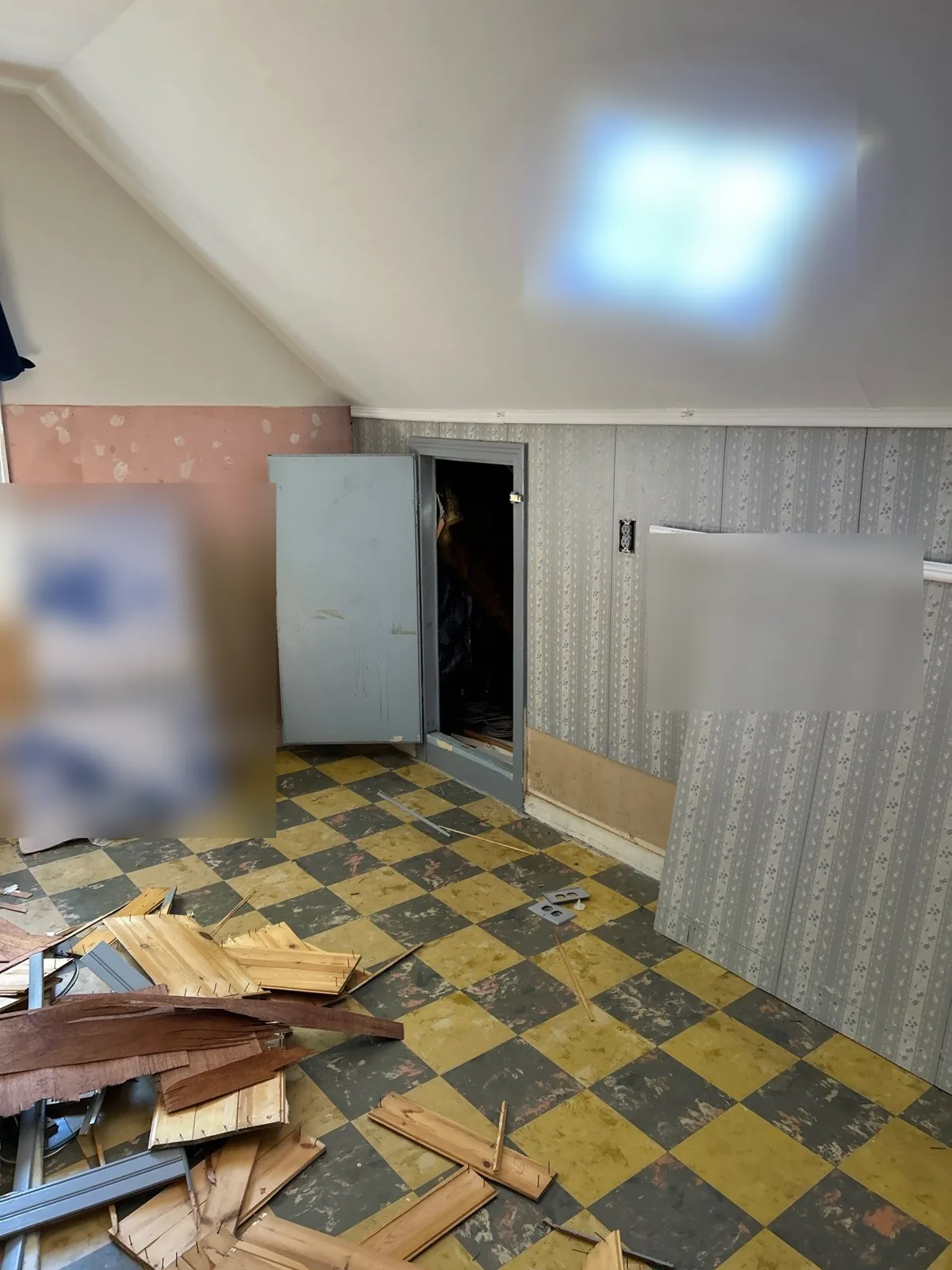
Neither look proves anything; the lab decides. For more, see how to identify asbestos in older homes and why older Scranton buildings need careful restoration.
Lead paint is a separate job: abatement vs. lead-safe renovation
Lead abatement is work meant to permanently remove lead-based paint hazards. In Pennsylvania it falls under the Lead Certification Act (Act 44 of 1995), and L&I certifies the contractors, workers, supervisors, project designers, inspectors and risk assessors who do it (L&I). Lead-safe renovation covers repairs and remodeling that disturb paint, done so lead dust doesn't spread.
Renovation falls under EPA's Renovation, Repair and Painting (RRP) rule for homes, childcare facilities and preschools built before 1978. Pennsylvania isn't on EPA's list of states running their own RRP program, so the federal program applies (EPA RRP). Paid contractors must be certified; homeowners working on their own homes are generally exempt unless they rent it out, run a childcare center there, or renovate homes to sell for profit.
For abatement in covered housing, such as pre-1978 homes or housing where children under 6 live, L&I's LIBI-600L notice is due at least five days before work. Lead removal done as part of a renovation doesn't need this notice. Afterward, ask the inspector which clearance levels they use: EPA lowered its post-abatement dust-lead levels to 5, 40 and 100 micrograms per square foot for floors, sills and troughs, with compliance from January 12, 2026 where EPA runs the program (EPA).
Philadelphia landlords also need lead-safe or lead-free certification for many pre-1978 rentals; see the city's resources for landlords.
What asbestos testing and removal cost
We don't publish a price list; every job is scoped after testing. National figures give a starting point.
| Item | National range | What moves it |
|---|---|---|
| Typical indoor project | About $1,200–$3,300 (avg. about $2,250; full range roughly $460–$6,200) | Friable vs. non-friable, access, method |
| Indoor, per sq ft | $5–$20 | Containment, location |
| Exterior roof or siding, per sq ft | $50–$150 | Height, waste volume |
| Whole home | $5,700 or more | Scope |
Source: Angi (2026 data), accessed October 2026. Pennsylvania labor and disposal costs can differ.
Testing cost depends on sample count, lab method and turnaround; get it quoted in writing. On commercial and larger multifamily projects, DEP's asbestos page says its notification fee rose to $400 in January 2026 outside Philadelphia and Allegheny counties.
Insurance depends on policy wording, including any pollutant exclusion and whether you carry Ordinance or Law coverage, which helps pay the extra cost of meeting code during repairs. Talk to your adjuster before tear-out and keep the lab report. Our PA water damage insurance claim guide covers the rest.
What a properly run PA abatement job looks like, and the paperwork you should get
- Survey by an independent L&I-certified inspector.
- Written work plan and required L&I and DEP notices.
- Containment: poly sheeting, sealed openings, HEPA-filtered negative air, a decon area.
- Wet removal by L&I-certified workers in protective gear.
- Cleanup: HEPA vacuuming and wet wiping, then a visual inspection.
- Independent clearance testing: air sampling for asbestos, dust wipes for lead.
- Waste packed, labeled and shipped to an approved landfill, with records to the owner.
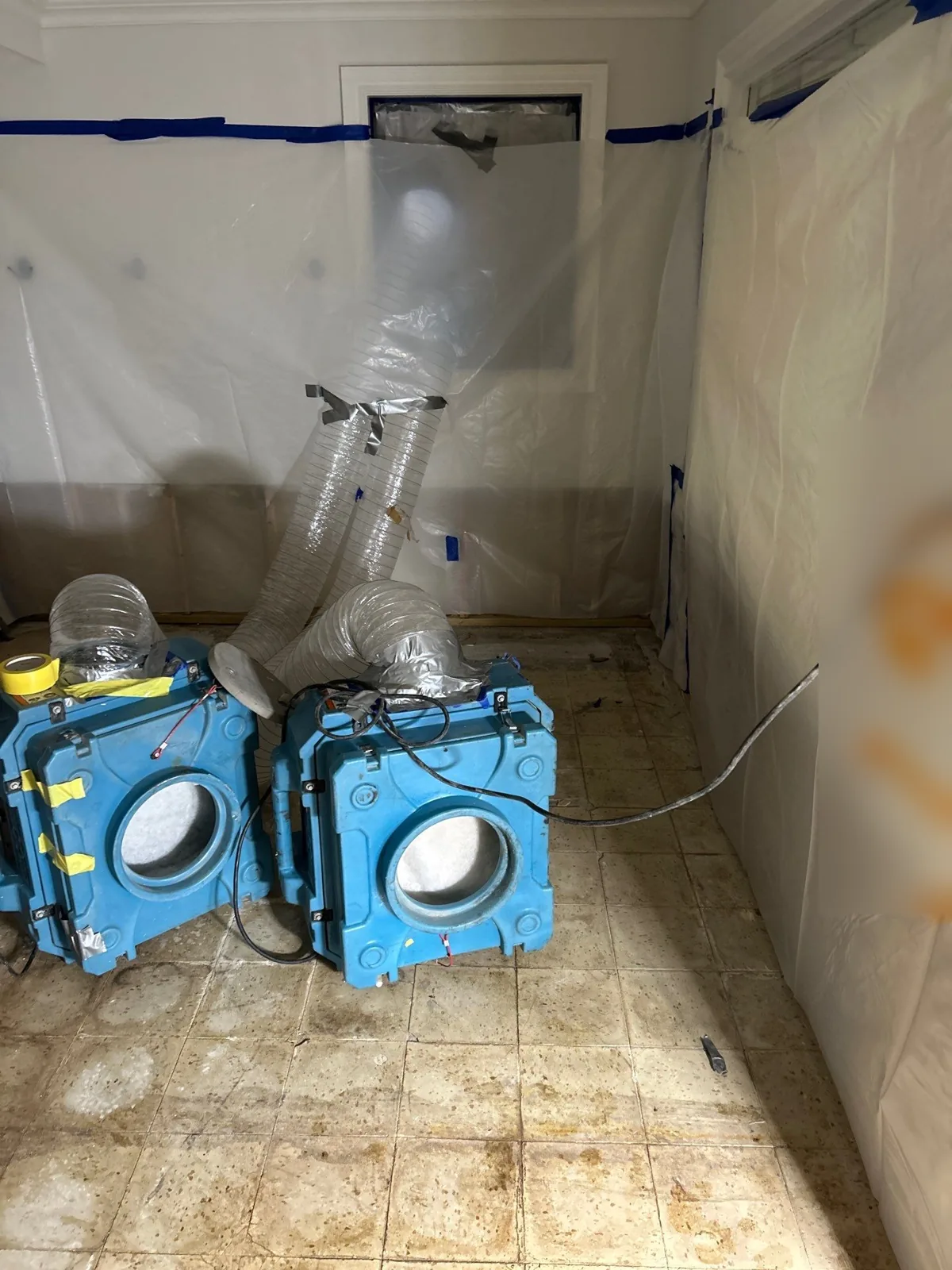
Step 3 in practice: walls and windows under poly and two negative air machines with ducting. They pull air through HEPA filters so the work area stays at lower pressure and air leaks in, not out.
Paperwork and vetting checklist:
- L&I asbestos contractor number, checked on L&I's list
- Certified supervisor and workers on site
- For lead: an EPA-certified RRP firm for renovation, or an L&I-certified lead abatement contractor for abatement
- Pollution liability insurance
- Written scope and work plan
- A copy of the DEP notice when required, checkable in DEP's public search
- Independent clearance report
- Waste shipment records
- Two or three written bids
Multifamily, schools and occupied buildings
Apartment buildings with five or more units fall under DEP's notice rules, and K-12 schools have their own federal asbestos management requirements under AHERA. In occupied offices and clinics, work is often phased by floor or done after hours, with the HVAC for the work area isolated. We plan the restoration around that for commercial property restoration and healthcare facilities.
Frequently Asked Questions
Can I remove asbestos myself in Pennsylvania?
Federal law doesn't require accreditation for work in a detached single-family home, but EPA recommends trained, accredited professionals. DEP's notice rules don't cover homes with four or fewer units, though local rules may apply and the waste must still go to a landfill that accepts asbestos. Anyone you hire must be L&I-certified. Never sand, drill, scrape or dry-sweep suspect material.
How much does asbestos testing cost?
It depends on the number of samples, the lab method (PLM or the more detailed TEM), turnaround time, and whether you need one material tested or a full pre-renovation survey. Ask for a written quote listing the sample count and lab method before sampling starts.
How much does asbestos removal cost?
Angi's 2026 national data puts a typical indoor project at roughly $1,200 to $3,300, averaging about $2,250. Indoor removal runs about $5 to $20 per square foot, exterior roofing or siding $50 to $150. Friable material, heavier containment, hard access and disposal volume push prices up, and Pennsylvania prices can differ.
Does homeowners insurance pay for asbestos testing or removal?
It depends on your policy, including pollutant exclusions and Ordinance or Law coverage. Routine remodeling usually isn't covered. If a covered loss such as a burst pipe or fire disturbed the material, talk to your adjuster before tear-out, document everything, and keep the lab report.
Does the government pay for asbestos removal?
Generally not for private homes. Some cities and counties run lead hazard control programs for qualifying households, but availability changes. Ask your city or county health department or housing agency what is open.
How do you dispose of asbestos in Pennsylvania?
A certified contractor keeps the waste wet, seals and labels it in leak-tight containers, and ships it with a waste shipment record to a landfill approved to accept it. DEP lists the Pennsylvania landfills that do. Ask for copies of the records.
Talk to a Pennsylvania restoration team before you disturb it
When you call, we'll ask what the material is, how it was exposed and whether a leak or fire is still active, then tell you the next step, even if that step is an independent inspector. In nearby service areas, crews typically arrive within 90 minutes.
- Harrisburg restoration team: (717) 232-5444
- Lehigh Valley restoration team: (610) 365-4011
- Northeast PA restoration team: (570) 704-0297
- 24/7 emergency line: (845) 294-8919
Advanced DRI has worked in restoration since 2000, and our crews follow IICRC standards. See our Pennsylvania service area for the towns we cover. Regulatory details are current as of October 2026.
Categories
Need Restoration Services?
Our team is available 24/7 for emergency response. Call us today for a free phone consultation.
Questions About Restoration?
Our experts are ready to help. Contact us for a free consultation.