
Elsa Boyer is a Regional Operations Manager for Advanced Disaster Recovery, based in Harrisburg, Pennsylvania, overseeing commercial and healthcare restoration projects. She holds a Bachelor of Arts from Valparaiso University and a deep certification portfolio, including ICRA Certified Healthcare Remediator Supervisor and multiple IICRC designations across commercial drying, structural drying, water, and fire & smoke restoration.
Spot mold on baseboards before it spreads. Advanced DRI explains the early warning signs, causes, and when to call a professional for inspection.
Why Baseboards Reveal Hidden Moisture Problems
Baseboards might seem like a minor decorative feature, but at Advanced DRI, we consider them one of the most valuable diagnostic clues in a home. When moisture enters a wall cavity or migrates across a floor, baseboards are often where the evidence first appears. They sit at the exact intersection where hidden water tends to collect before anywhere else becomes noticeably damaged.
Most homeowners notice paint peeling, a faint discoloration, or a musty smell long before they see actual mold. By the time visible mold appears on the baseboard, the problem has usually been developing behind the wall for weeks or months. Learning to read the earliest warning signs can save you from a major restoration project.
The Most Common Early Warning Signs
Our technicians have inspected thousands of homes, and the same subtle indicators show up again and again. If you see any of these, do not dismiss them.
Paint That Is Bubbling or Peeling
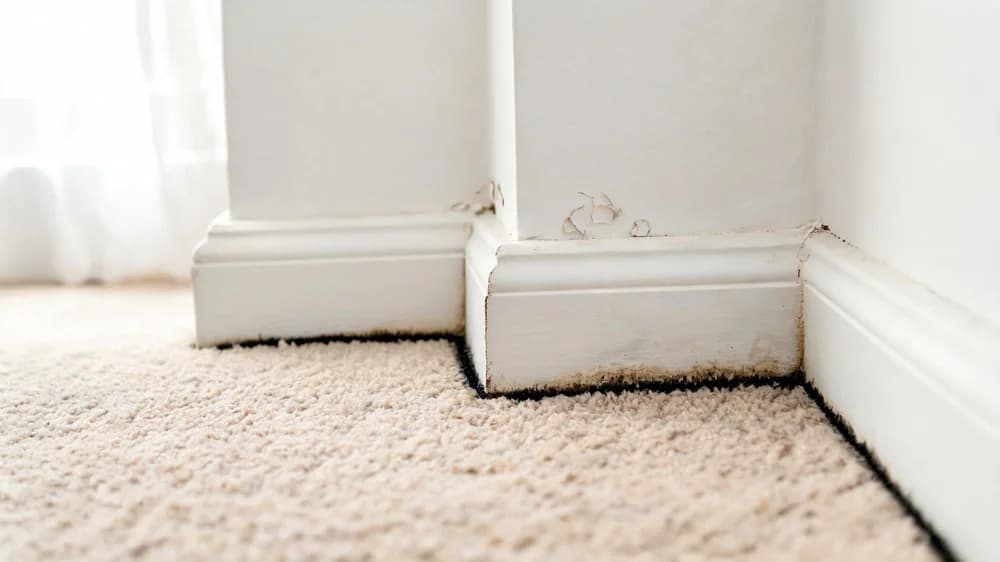
When moisture pushes through a wall from behind, it forces paint away from the surface. On baseboards, this often starts as tiny bubbles along the top edge or near corners. Peeling paint where one wall meets another is particularly telling.
Soft or Warped Baseboards
Press gently on your baseboards, especially near bathrooms, kitchens, and exterior walls. They should feel firm and solid. If a section gives slightly under pressure or bows outward from the wall, water has likely saturated the material.
Discoloration Without an Obvious Source
Yellowish, brown, or grayish streaks appearing on white baseboards are not dust. These tannin stains often come from water moving through wood or drywall behind the baseboard, carrying dissolved minerals that deposit on the visible surface.
A Musty or Earthy Odor
Mold produces volatile organic compounds that we recognize as a musty, earthy, or damp smell. If a specific room or even a specific corner smells off, get down low near the baseboards and see if the smell intensifies.
Gaps Where the Baseboard Meets the Floor or Wall
Wood and composite baseboards expand and contract with moisture. If your baseboards have pulled away from the wall, developed new gaps, or cracked at seams, moisture cycling is the likely cause.
Carpet Darkening Along the Baseboard
In carpeted rooms, the pile along the baseboards can darken noticeably before the baseboard itself shows obvious damage. This is often the earliest visible sign of moisture wicking up from the subfloor.
Where Baseboard Mold Most Often Appears
Not every wall in your home is equally at risk. When we arrive at a mold call, we head first to these high-probability locations:
- Bathrooms: Behind toilets, next to tubs and showers, and along the wall shared with a bathroom on another floor.
- Kitchens: Under and beside dishwashers, refrigerators, and sinks, where appliance leaks often drain downward and outward.
- Basements: Along exterior foundation walls where hydrostatic pressure or condensation causes chronic dampness.
- Laundry rooms: Near washing machines and supply lines.
- Exterior walls: Especially below windows, around sliding doors, and near chimneys.
- Under HVAC units: Where condensate drains can back up or leak into surrounding walls.
Common Root Causes
Visible mold on a baseboard is a symptom, not the problem itself. Addressing the mold without finding the source guarantees it will come back. Here are the underlying causes we identify most often:
- Plumbing leaks inside the wall, including slow drips from drain pipes, supply lines, or fittings hidden behind drywall.
- Foundation moisture, where water seeps through basement or crawl space walls and wicks upward through the structure.
- Roof leaks migrating down, traveling along framing members until the water exits at the baseboard level.
- Window and door flashing failures, letting rainwater enter the wall and pool at the bottom plate.
- HVAC condensation, particularly from improperly insulated supply ducts in humid months.
- Carpet cleaning or water spills that saturated the padding and were never fully dried.
What You Can Do on Your Own
If you have noticed any of the warning signs but the issue looks minor and confined to one small area, there are a few things you can safely investigate yourself before calling in help.
Check for Obvious Moisture Sources
Look above and outside the affected wall. Is there a bathroom, kitchen, or HVAC unit upstairs? Is the wall on the exterior of the house? Does it share space with a sprinkler, gutter downspout, or landscape irrigation?
Use a Moisture Meter
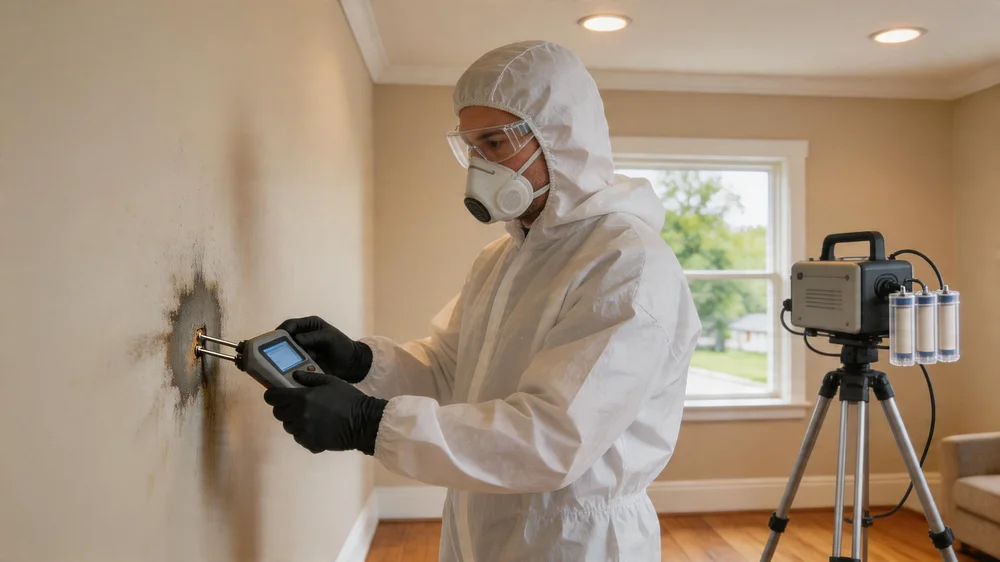
Inexpensive pin-type moisture meters are available at hardware stores. Press the pins into the baseboard and adjacent drywall. Elevated readings confirm what your eyes are telling you and help pinpoint where the moisture is strongest.
Remove a Small Section of Baseboard
If you are comfortable with minor demolition, carefully prying off a short section of baseboard lets you see the condition of the drywall, sheathing, and bottom plate directly. If you see staining, mold growth, or softened material, stop and call a professional.
When to Bring in Advanced DRI
Surface mold on a baseboard may look like a small job, but the visible growth is often less than ten percent of the total mold in the wall assembly. Our mold remediation team should be involved if you encounter any of these:
- Mold is visible on more than a small localized area.
- Moisture meter readings are elevated several inches above the floor.
- The affected room connects to a bathroom, kitchen, or laundry area above or beside it.
- Family members are experiencing unexplained respiratory symptoms, headaches, or allergy flare-ups.
- You have already cleaned the baseboard once and the problem has returned.
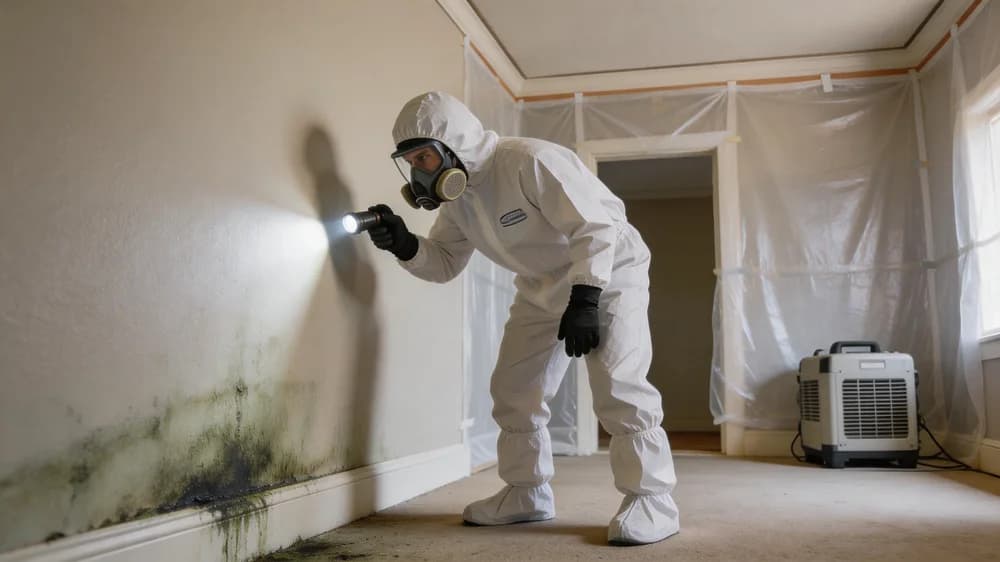
We approach every baseboard mold call the same way: identify the moisture source first, contain the affected area to prevent spore spread, remove contaminated materials, dry the assembly, treat with antimicrobial agents, and verify the air quality before rebuilding. Skipping any of these steps leads to recurrence.
Prevent Future Problems
Once the root cause is fixed, a few habits keep your baseboards clean long-term:
- Inspect the base of your walls during seasonal cleaning, looking for paint changes or gaps.
- Keep indoor humidity between thirty and fifty percent, using dehumidifiers in basements and lower levels.
- Ensure bathroom exhaust fans vent to the exterior and run during and after showers.
- Check under sinks and behind appliances every few months for small leaks.
- Maintain proper grading and gutter drainage to keep water away from foundation walls.
If any of the warning signs described here sound familiar, do not wait for the problem to worsen. Contact Advanced DRI for a professional moisture and mold evaluation. Catching baseboard mold early is one of the most cost-effective decisions a homeowner can make.
Frequently Asked Questions
Can I just replace the baseboard and paint over the mold?
Replacing baseboards without addressing the moisture source and the mold inside the wall is one of the most expensive mistakes we see. The mold continues to grow on the drywall, insulation, and framing behind your new baseboard, returning within weeks or months. A proper remediation removes the contamination at the source.
How much of the wall will need to be opened to fix mold behind baseboards?
It depends on how far the moisture has traveled. In minor cases, we may only need to remove the bottom twelve inches of drywall, which is sometimes called a flood cut. In more severe cases, larger portions of the wall may need to be opened. Advanced DRI uses moisture mapping and thermal imaging to minimize demolition while ensuring all affected material is addressed.
Is mold on baseboards a health risk?
Any indoor mold growth can affect air quality, especially for people with asthma, allergies, or weakened immune systems. Even non-toxic mold species can irritate the respiratory system. If household members are experiencing symptoms that improve when they leave the home, that is a strong signal to schedule a professional inspection.
Categories
Need Restoration Services?
Our team is available 24/7 for emergency response. Call us today for a free phone consultation.
Questions About Restoration?
Our experts are ready to help. Contact us for a free consultation.