Pre-1980 Homes in NJ: Asbestos and Lead Risk by Town
Elsa Boyer is a Regional Operations Manager for Advanced Disaster Recovery, based in Harrisburg, Pennsylvania, overseeing commercial and healthcare restoration projects. She holds a Bachelor of Arts from Valparaiso University and a deep certification portfolio, including ICRA Certified Healthcare Remediator Supervisor and multiple IICRC designations across commercial drying, structural drying, water, and fire & smoke restoration.
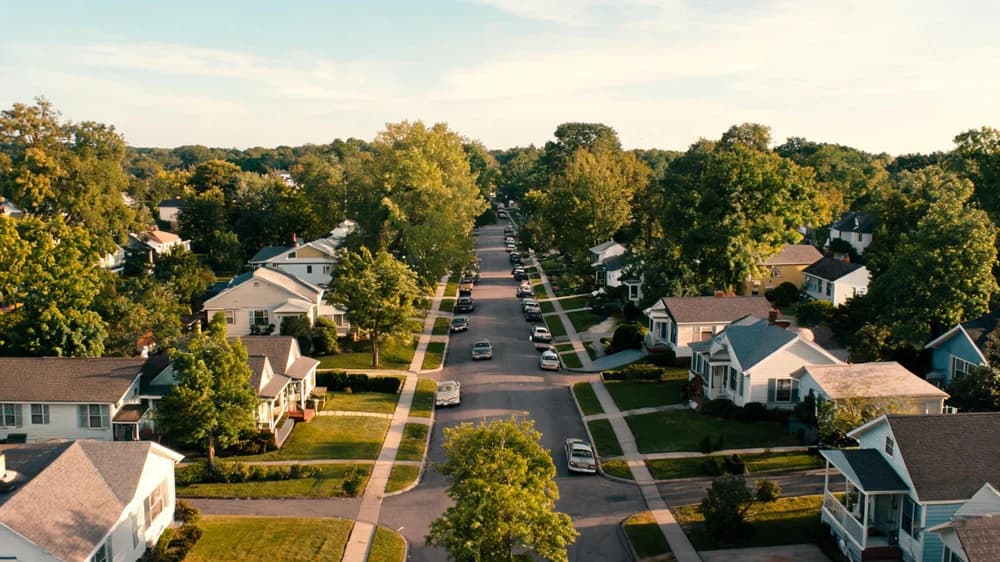
Explore asbestos and lead paint risks in pre-1980 New Jersey homes. Town-by-town data on building age, hazardous materials, and safe restoration practices.
Why Pre-1980 Homes in New Jersey Demand Special Attention
If your New Jersey home was built before 1980, there is a significant probability that it contains asbestos-containing materials (ACMs) and lead-based paint. The federal ban on lead paint took effect in 1978, and asbestos use in residential construction was not fully restricted until the mid-1980s. For homeowners in the Garden State, where a substantial portion of the housing stock predates these regulations, understanding the risks is not optional -- it is essential.
At Advanced DRI, our restoration teams encounter asbestos and lead hazards on a weekly basis across northern and central New Jersey. We have compiled local housing data to help homeowners identify their risk level before any renovation, restoration, or damage repair project begins.
NJ Town-by-Town Pre-1980 Housing Data
| Town / Area | % Homes Built Pre-1980 | Estimated Asbestos Risk | Lead Paint Likelihood |
|---|---|---|---|
| Paterson (07501-07514) | 82% | Very High | Very High |
| Newark (07101-07114) | 79% | Very High | Very High |
| Passaic (07055) | 78% | Very High | Very High |
| Hackensack (07601) | 74% | High | High |
| Clifton (07011-07015) | 71% | High | High |
| Wayne (07470) | 68% | High | Moderate-High |
| Fairfield (07004) | 65% | High | Moderate-High |
| Toms River (08753-08757) | 58% | Moderate | Moderate |
| Brick Township (08723-08724) | 55% | Moderate | Moderate |
Sources: U.S. Census Bureau American Community Survey (2020-2024), NJ Department of Community Affairs housing records, EPA asbestos exposure databases
Where Asbestos Hides in Older NJ Homes
Asbestos was prized for its fire resistance, insulating properties, and low cost. In pre-1980 New Jersey homes, you may find asbestos in:
- Floor tiles and adhesives -- Particularly the 9x9-inch tiles common in homes built between 1940 and 1975
- Pipe and duct insulation -- Especially in boiler rooms and basements
- Vermiculite attic insulation -- Often contaminated with tremolite asbestos from the Libby, Montana mine
- Popcorn ceilings -- Applied heavily in homes built during the 1960s and 1970s
- Siding and roofing shingles -- Cement-asbestos shingles were extremely popular in northern NJ
- Joint compound and plaster -- Used in drywall finishing through 1978
Lead Paint: Still a Present Danger
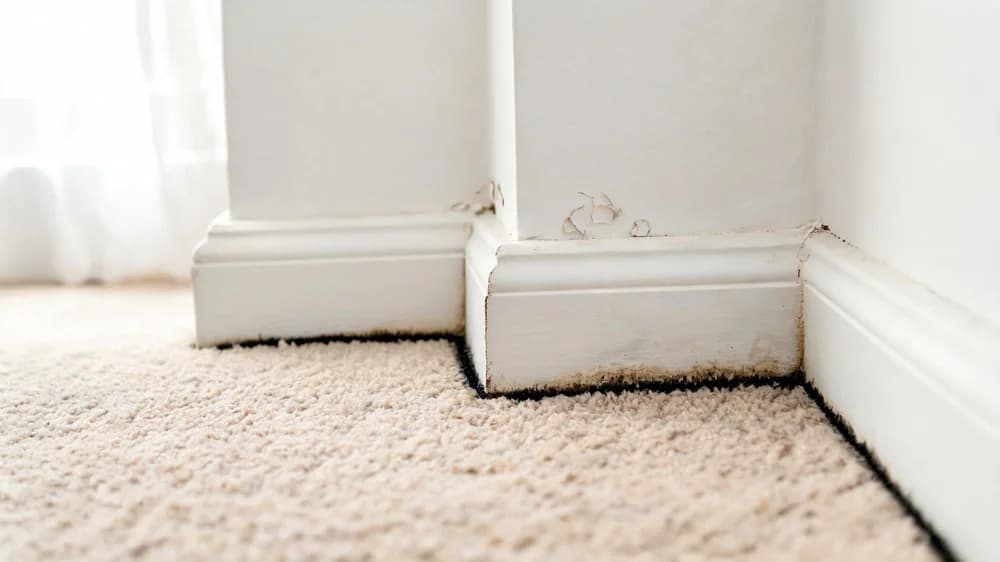
New Jersey consistently ranks among the top states for childhood lead exposure. The NJ Department of Health reported that in 2023, over 3,200 children tested with elevated blood lead levels, with the highest concentrations in Essex, Passaic, and Hudson Counties. The primary source remains deteriorating lead-based paint in older housing.
For restoration work, this means every pre-1980 home should be presumed to contain lead paint until proper testing proves otherwise. At Advanced DRI, we follow EPA RRP (Renovation, Repair, and Painting) Rule protocols on every project involving older homes in our service areas.
What This Means for Restoration and Renovation
When your pre-1980 home experiences water damage, fire damage, or storm damage, the restoration process becomes significantly more complex. Disturbing asbestos or lead paint without proper containment and abatement protocols can create health hazards far worse than the original damage.
Here is what Advanced DRI does differently for older NJ homes:
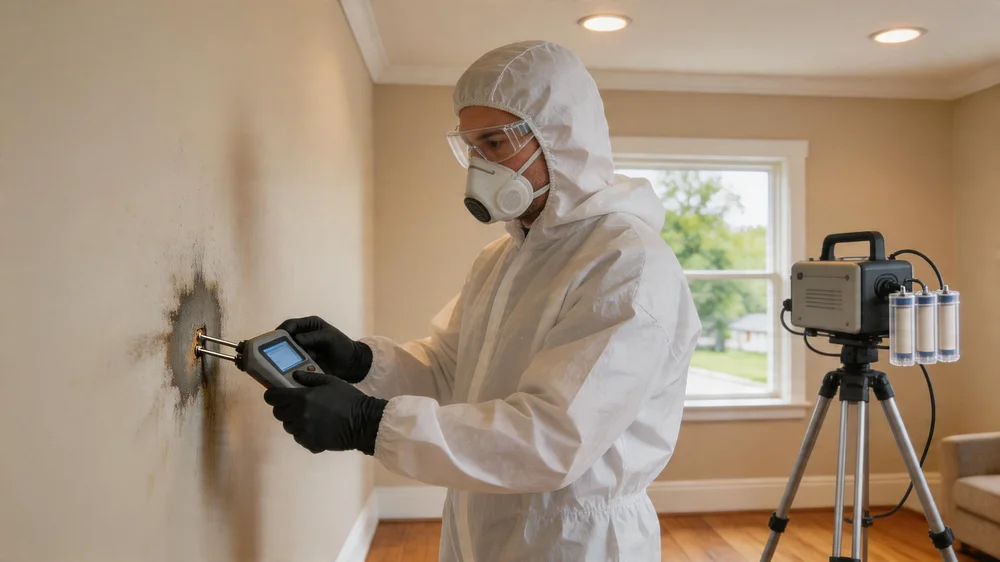
- Pre-project hazardous materials assessment -- Before any demolition or restoration begins, we test suspect materials for asbestos and lead content
- Licensed abatement coordination -- When ACMs or lead paint are confirmed, we coordinate with licensed abatement contractors who hold NJ DCA permits
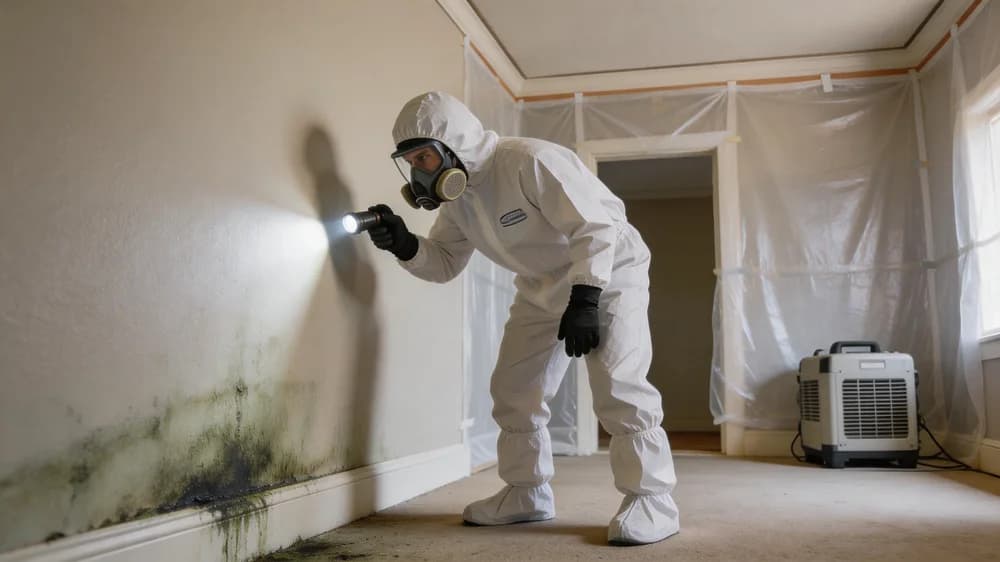
- Proper containment and HEPA filtration -- Our teams establish negative air pressure containment zones per OSHA 1926.1101 standards
- Compliant waste disposal -- All hazardous materials are disposed of at NJ-approved facilities with proper manifesting
- Post-abatement clearance testing -- Independent air monitoring confirms the work area is safe before reconstruction begins
Cost Implications for NJ Homeowners
Hazardous material abatement adds cost to any restoration project. Based on our experience across northern and central New Jersey:
- Asbestos floor tile removal: $8 to $15 per square foot
- Asbestos pipe insulation removal: $15 to $30 per linear foot
- Lead paint abatement (per room): $1,500 to $4,000
- Full asbestos survey and testing: $400 to $1,200
These costs are often covered by homeowner's insurance when the abatement is necessitated by a covered loss such as water damage or fire damage. Our team works directly with insurance adjusters to document the need for hazardous material handling in the scope of work.
NJ Regulations You Should Know
New Jersey has some of the strictest asbestos and lead regulations in the country:
- NJ Asbestos Control and Licensing Act -- Requires licensed contractors for any asbestos removal
- NJ Lead Paint Abatement Code (N.J.A.C. 5:17) -- Mandates certified workers and clearance testing
- EPA RRP Rule -- Requires EPA-certified firms for renovation work disturbing lead paint in pre-1978 homes
- NJDEP notification requirements -- Asbestos removal projects over certain thresholds require 10 working days advance notice to the DEP
Frequently Asked Questions
How do I know if my NJ home has asbestos or lead paint?
The only way to confirm the presence of asbestos or lead paint is through laboratory testing. For asbestos, bulk samples of suspect materials are analyzed using polarized light microscopy (PLM). For lead paint, XRF (X-ray fluorescence) testing or paint chip analysis can determine lead content. Advanced DRI can arrange testing as part of any restoration project assessment. Contact us through our consultation page to schedule an evaluation.
Is it safe to stay in my home during asbestos or lead abatement?
In most cases, we recommend that residents temporarily relocate during active abatement work. Even with proper containment, the vibration and disruption of construction can distribute fine particles. This is especially important for households with children under six, pregnant women, or individuals with respiratory conditions. Our team can help coordinate temporary housing arrangements as part of your restoration plan.
Does homeowner's insurance cover asbestos or lead abatement?
Homeowner's insurance typically does not cover voluntary asbestos or lead removal. However, when abatement is required as part of a covered insurance claim -- such as removing asbestos-containing materials damaged by a burst pipe or removing lead paint disturbed by fire -- the abatement costs are generally included in the claim. Advanced DRI documents these situations carefully to support your insurance claim.
Concerned About Hazardous Materials in Your Older NJ Home?
Advanced DRI provides hazardous material assessments and safe restoration services across New Jersey. Our certified teams know the unique challenges of working with pre-1980 housing stock.
Categories
Need Restoration Services?
Our team is available 24/7 for emergency response. Call us today for a free phone consultation.
Questions About Restoration?
Our experts are ready to help. Contact us for a free consultation.