
Elsa Boyer is a Regional Operations Manager for Advanced Disaster Recovery, based in Harrisburg, Pennsylvania, overseeing commercial and healthcare restoration projects. She holds a Bachelor of Arts from Valparaiso University and a deep certification portfolio, including ICRA Certified Healthcare Remediator Supervisor and multiple IICRC designations across commercial drying, structural drying, water, and fire & smoke restoration.
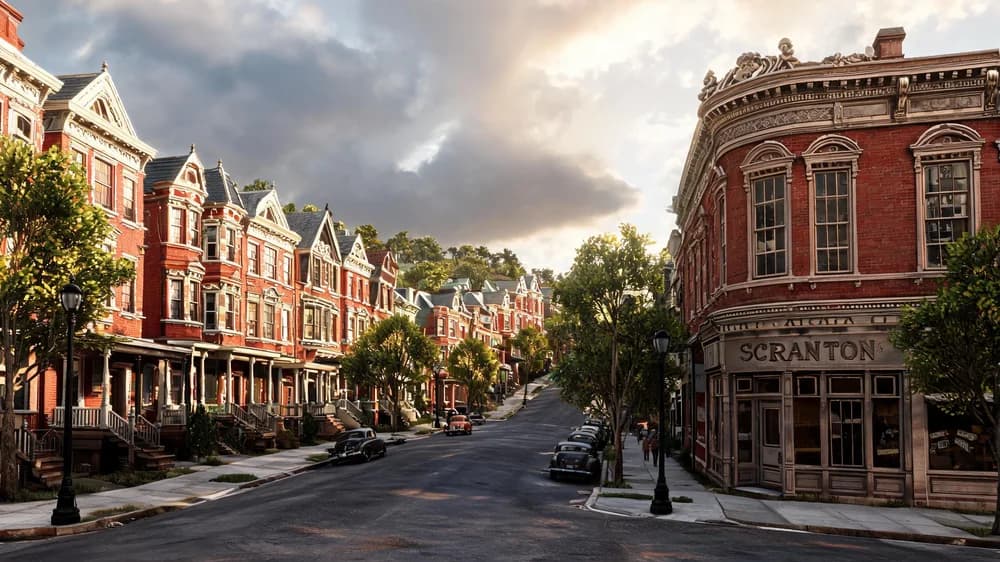
Scranton PA's aging building stock creates unique restoration challenges. Data on building age by neighborhood and common damage patterns.
Scranton's Built Heritage and Modern Challenges
Scranton, Pennsylvania -- the Electric City -- was once one of the most prosperous cities in the northeastern United States, built on the wealth of anthracite coal mining and the industrial revolution. That era of prosperity left behind a remarkable architectural legacy: thousands of solidly built homes, commercial buildings, churches, and civic structures dating from the 1860s through the 1930s.
Today, that same building stock presents significant restoration challenges. At Advanced DRI, our teams work across Scranton and Lackawanna County restoring properties that were built with construction techniques and materials very different from modern standards. Understanding the relationship between building age and damage vulnerability is essential for every Scranton property owner.
Scranton Building Age by Neighborhood
| Neighborhood | Median Build Year | % Built Before 1940 | Dominant Construction | Restoration Priority |
|---|---|---|---|---|
| Hill Section (18510) | 1905 | 88% | Brick/Stone Row Houses | Critical |
| South Side (18505) | 1912 | 82% | Wood Frame / Mixed | High |
| West Side (18504) | 1918 | 78% | Wood Frame Doubles | High |
| North Scranton (18508) | 1920 | 75% | Wood Frame / Brick | High |
| Downtown / Central City | 1908 | 91% | Commercial Masonry | Critical |
| Green Ridge (18509) | 1935 | 62% | Mixed Residential | Moderate |
| Minooka (18510) | 1928 | 70% | Wood Frame Workers' Housing | High |
Sources: U.S. Census Bureau ACS 2020-2024, Lackawanna County Assessment Office building records, Scranton Historical Society archives
How Building Age Drives Damage Patterns
Scranton's older buildings face a specific set of vulnerabilities that modern construction does not:
Foundation and Basement Issues
Pre-1940 Scranton homes typically have rubble stone or unreinforced block foundations. These foundations were not waterproofed by modern standards, and many sit on or near former mine workings. Foundation seepage and basement flooding are chronic problems, particularly in the South Side, West Side, and Minooka neighborhoods where coal mining was active directly beneath residential areas.
Roofing and Water Penetration
Many Scranton homes retain their original slate or clay tile roofs. While these materials can last 100 years or more, the underlying wooden roof decks, flashing, and valley connections deteriorate over time. When these elements fail, water enters the building envelope silently, causing damage that may not become visible for months or years.
Plumbing System Failures
Galvanized steel and even lead plumbing remain in active service throughout Scranton's older neighborhoods. These systems are well past their expected service life and fail with increasing frequency. Our water damage restoration teams respond to plumbing failures in pre-war Scranton homes multiple times per month.
Electrical Fire Risk
Knob-and-tube wiring, installed in homes through the 1940s, remains present in many Scranton properties. While not inherently dangerous when undisturbed, this wiring becomes a fire hazard when insulation is added around it, when circuits are overloaded by modern appliance demands, or when the rubber insulation deteriorates with age.
Restoration Considerations for Scranton Properties
Restoring older Scranton buildings requires knowledge that goes beyond standard restoration protocols:
- Hazardous materials -- Pre-1940 buildings almost certainly contain lead paint, and many contain asbestos in various forms. Proper testing and abatement protocols are mandatory before any demolition or reconstruction
- Structural assessment -- Load-bearing walls, balloon framing, and unreinforced masonry all require careful evaluation before reconstruction begins
- Code compliance -- Bringing damaged older buildings back to habitable condition often triggers modern code requirements for electrical, plumbing, and structural elements
- Historic preservation -- Properties in Scranton's historic districts may be subject to preservation guidelines that affect restoration material choices and methods
- Insurance documentation -- Older properties often have unique construction features that must be documented precisely for insurance claims to be properly valued
What Advanced DRI Brings to Scranton Restoration
Our experience across Scranton and Lackawanna County means we understand the specific challenges that older buildings present. When you call Advanced DRI for restoration services in Scranton, our team arrives with knowledge of local building construction patterns, hazardous material protocols, and the relationships with local code officials and historical review boards that complex restorations require.
We serve the entire Scranton metro area, including Dunmore, Throop, Old Forge, Taylor, and surrounding Lackawanna County communities. Visit our service areas page for full coverage details.
Frequently Asked Questions
Does building age affect insurance coverage in Scranton?
Building age itself does not typically exclude a property from coverage, but it can affect premium costs and the type of policy available. Older Scranton homes with outdated electrical, plumbing, or heating systems may be required to carry an Actual Cash Value (ACV) policy rather than Replacement Cost Value (RCV), which means depreciation reduces your claim payout. Updating critical systems can qualify you for better coverage terms.
How do I know if my Scranton property is affected by mine subsidence?
The Pennsylvania Department of Environmental Protection maintains maps of known mine workings in the Scranton area. Signs of subsidence include new cracks in foundation walls or basement floors, doors and windows that suddenly stick or will not close properly, and uneven floors. If subsidence is affecting your property, the PA Mine Subsidence Insurance Fund provides coverage not included in standard homeowner policies. Contact Advanced DRI through our consultation page if you suspect subsidence-related damage.
What should I expect when restoring a pre-1940 Scranton home after damage?
Expect the restoration timeline to be longer than it would be for a modern home. Hazardous material testing and potential abatement add time at the front end. Matching original materials and construction details -- plaster walls, hardwood trim, period-appropriate fixtures -- requires skilled craftwork. Code-required upgrades to electrical and plumbing systems must be factored into the scope. Advanced DRI builds these factors into our project plans from the start so there are no surprises for the homeowner or the insurance adjuster.
Need Restoration for Your Scranton Property?
Advanced DRI understands the unique challenges of restoring Scranton's historic building stock. From emergency water extraction to complete reconstruction, we bring local expertise to every project.
Categories
Need Restoration Services?
Our team is available 24/7 for emergency response. Call us today for a free phone consultation.

Questions About Restoration?
Our experts are ready to help. Contact us for a free consultation.