Elsa Boyer is a Regional Operations Manager for Advanced Disaster Recovery, based in Harrisburg, Pennsylvania, overseeing commercial and healthcare restoration projects. She holds a Bachelor of Arts from Valparaiso University and a deep certification portfolio, including ICRA Certified Healthcare Remediator Supervisor and multiple IICRC designations across commercial drying, structural drying, water, and fire & smoke restoration.
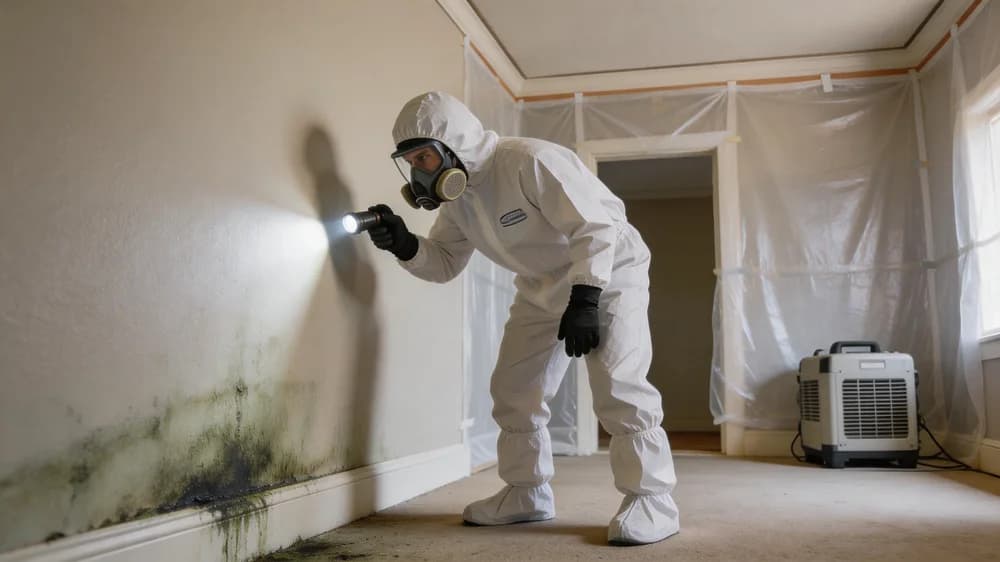
How much does mold remediation cost in Pennsylvania in 2026? See average costs by project size, factors that affect pricing, and insurance coverage tips.
How Much Does Mold Remediation Cost in Pennsylvania?
Pennsylvania's humid summers, older housing stock, and frequent basement moisture issues make mold a persistent problem for homeowners across the state. Whether you're in Philadelphia, Pittsburgh, Harrisburg, or the Pocono Mountains, understanding mold remediation costs helps you budget effectively and avoid companies that overcharge.
At Advanced Disaster Recovery Inc. (ADRI), we provide professional mold remediation throughout Pennsylvania. Here's what PA homeowners can expect to pay in 2026.
Mold Remediation Cost by Project Size
| Service | Low Estimate | Average | High Estimate |
|---|---|---|---|
| Mold Inspection & Testing | $300 | $550 | $900 |
| Small Area (under 10 sq ft) | $500 | $1,500 | $3,000 |
| Medium Area (10-100 sq ft) | $2,000 | $4,500 | $7,000 |
| Large Area (100-300 sq ft) | $4,000 | $7,500 | $12,000 |
| Whole-Home Remediation (300+ sq ft) | $8,000 | $15,000 | $30,000+ |
| Crawl Space Mold Remediation | $1,500 | $4,000 | $8,000 |
| Attic Mold Remediation | $2,000 | $5,000 | $10,000 |
| HVAC Mold Remediation | $1,000 | $3,500 | $7,000 |
Data reflects 2026 pricing across Pennsylvania markets. Costs in the Philadelphia and Pittsburgh metro areas may run 10-20% higher than rural regions due to labor rates.
Factors That Affect Mold Remediation Cost in PA
1. Size of the Affected Area
This is the primary cost driver. The EPA defines areas under 10 square feet as potentially manageable by homeowners, but anything larger requires professional remediation with proper containment, HEPA filtration, and antimicrobial treatment.
2. Location of Mold Growth
Mold in easily accessible areas costs less to remediate than mold inside wall cavities, HVAC systems, crawl spaces, or attics. Accessibility directly affects labor hours and the complexity of containment setup.
3. Type of Mold
While the remediation process is similar for most mold types, certain species like Stachybotrys (black mold) require more rigorous containment, personal protective equipment, and disposal protocols, which increases costs by 20-40%.
4. Materials Affected
Porous materials like drywall, carpet, and insulation often need to be removed and replaced. Semi-porous materials like wood framing can usually be treated and saved. The extent of material replacement significantly impacts total cost.
5. Source of Moisture
Mold remediation without fixing the underlying moisture source is wasted money. Common PA moisture sources include:
- Basement water intrusion (very common in PA's older homes)
- Roof leaks from ice dams in winter
- Poor ventilation in bathrooms and kitchens
- Plumbing leaks behind walls
- High humidity in crawl spaces
Pennsylvania-Specific Mold Considerations
Pennsylvania homeowners face unique mold challenges:
- Older housing stock: Many PA homes were built before 1960 with stone or block foundations that allow moisture intrusion. Philadelphia row homes and Pittsburgh's older neighborhoods are especially susceptible.
- Humid summers: PA's average summer humidity of 70-80% creates ideal mold growth conditions, especially in unconditioned basements and attics.
- No state mold licensing: Pennsylvania does not currently require mold remediation licensing, making it crucial to choose a certified company. Look for IICRC certification and proper insurance.
- Real estate implications: PA sellers must disclose known mold issues. Professional remediation with clearance testing documentation protects your home's value.
Does Insurance Cover Mold Remediation in Pennsylvania?
Insurance coverage for mold in Pennsylvania is complicated and often limited:
- Covered: Mold resulting from a "covered peril" like a burst pipe, storm damage, or firefighting water is typically covered under your homeowner's policy.
- Not Covered: Mold from long-term moisture issues, poor maintenance, high humidity, or flooding (without flood insurance) is generally excluded.
- Mold caps: Many PA insurers cap mold coverage at $5,000-$10,000 per occurrence, even when the mold resulted from a covered event.
- Mold endorsements: Some carriers offer additional mold coverage for an extra premium of $500-$1,000 per year.
ADRI helps PA homeowners navigate the insurance process by documenting the cause of mold growth and linking it to covered events when applicable. Contact us for a free assessment that includes insurance guidance.
What's Included in Professional Mold Remediation?
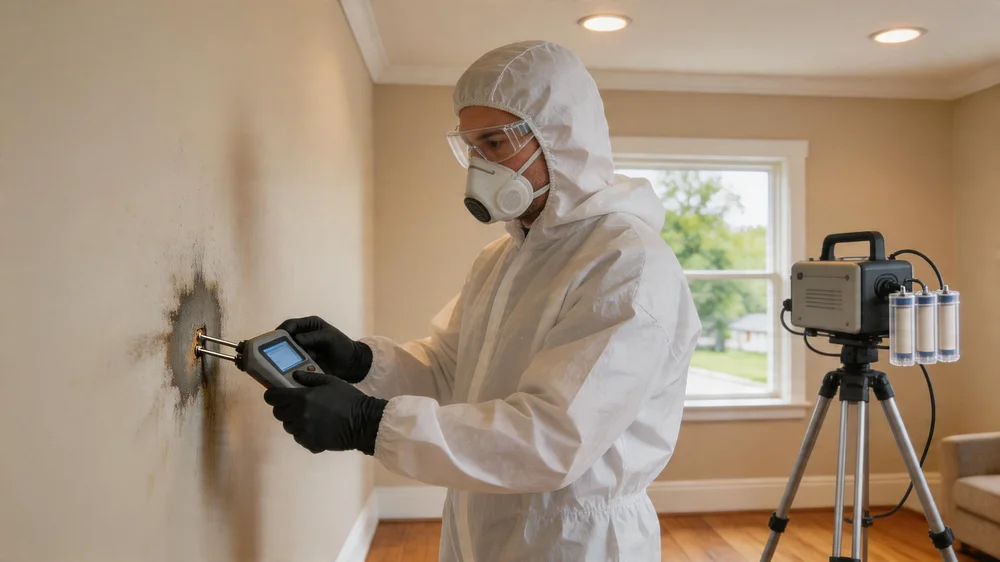
- Inspection and testing: Air sampling, surface sampling, moisture mapping
- Containment: Negative air pressure chambers, polyethylene sheeting to prevent spore spread
- HEPA air filtration: Industrial air scrubbers running continuously during remediation
- Mold removal: Physical removal of mold-contaminated materials
- Antimicrobial treatment: Application of EPA-registered antimicrobials to treated surfaces
- Clearance testing: Post-remediation air quality testing to confirm successful removal
- Reconstruction: Replacing drywall, insulation, and other removed materials
How to Save on Mold Remediation
- Act early: Small mold problems grow exponentially. A 10 sq ft problem today can become a 100 sq ft problem in weeks.
- Get multiple estimates: But beware of quotes that seem too low, as they often exclude critical steps like clearance testing.
- Check for financing options: ADRI offers payment plans to help manage costs not covered by insurance.
- Invest in prevention: Dehumidifiers ($200-$400), proper ventilation, and waterproofing can prevent costly future remediation.
Frequently Asked Questions
Is mold remediation worth the cost in Pennsylvania?
Absolutely. Beyond health risks (respiratory issues, allergic reactions, and worse), untreated mold can decrease your home's value by 10-25% and make it nearly impossible to sell in PA's disclosure-required market. Professional remediation with documentation actually protects and can restore property value.
How much does black mold removal cost in PA?
Black mold (Stachybotrys) remediation in Pennsylvania typically costs 20-40% more than standard mold removal due to enhanced safety protocols. For a medium-sized area (10-100 sq ft), expect $2,500-$9,000. However, the remediation process is fundamentally the same regardless of mold species.
Can I remove mold myself to save money?
The EPA recommends professional remediation for any mold area larger than 10 square feet. DIY attempts on larger areas risk spreading spores throughout your home, potentially turning a $2,000 problem into a $10,000+ whole-home remediation project. For small, surface-level mold on non-porous surfaces, homeowner cleanup may be appropriate.
How long does mold remediation take?
Small projects (under 10 sq ft) can be completed in 1-2 days. Medium projects take 3-5 days. Large or whole-home projects may require 1-3 weeks. ADRI provides a detailed timeline during your free initial assessment and keeps you informed throughout the process.
Get Your Free Mold Remediation Estimate
Don't let mold compromise your Pennsylvania home's air quality, structural integrity, or property value. Contact Advanced DRI today for a free, no-obligation mold assessment. Our IICRC-certified technicians will identify the mold, its source, and provide a transparent cost estimate.
Categories
Need Restoration Services?
Our team is available 24/7 for emergency response. Call us today for a free phone consultation.
Questions About Restoration?
Our experts are ready to help. Contact us for a free consultation.