
Elsa Boyer is a Regional Operations Manager for Advanced Disaster Recovery, based in Harrisburg, Pennsylvania, overseeing commercial and healthcare restoration projects. She holds a Bachelor of Arts from Valparaiso University and a deep certification portfolio, including ICRA Certified Healthcare Remediator Supervisor and multiple IICRC designations across commercial drying, structural drying, water, and fire & smoke restoration.
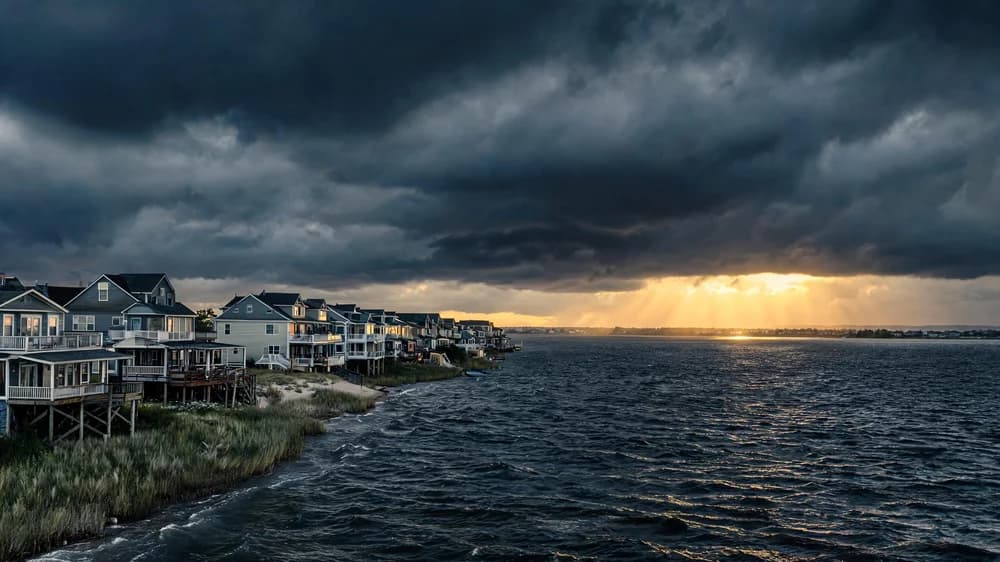
Brick Township NJ's coastal storm history and future risk analysis. Data on nor'easters, hurricanes, and storm surge patterns affecting Ocean County.
Brick Township's Storm Exposure
Brick Township, one of the largest municipalities in Ocean County, occupies a uniquely vulnerable position along the New Jersey coast. With over 26 miles of bayfront shoreline on Barnegat Bay and proximity to the barrier island beaches, the township is exposed to coastal storms from virtually every direction. Nor'easters drive storm surge into the bay from the north, tropical systems push ocean water through the inlets, and even unnamed coastal storms can cause significant flooding in low-lying neighborhoods.
At Advanced DRI, we have provided storm damage restoration services across Ocean County for years. Our experience in Brick Township -- especially in the aftermath of Superstorm Sandy and subsequent major storms -- gives us a perspective on storm risk that no statistics alone can provide.
Major Storm Events Affecting Brick Township
| Storm Event | Date | Type | Peak Surge / Impact | Brick Township Damage |
|---|---|---|---|---|
| Superstorm Sandy | Oct 2012 | Post-tropical cyclone | 6-8 ft storm surge | Catastrophic |
| Nor'easter (Jonas) | Jan 2016 | Nor'easter | 3-4 ft surge + snow | Significant |
| Hurricane Ida Remnants | Sep 2021 | Tropical remnants | 8-10 inches rain | Moderate-Severe |
| March 2018 Nor'easters | Mar 2018 | Sequential nor'easters | 3-5 ft surge (repeated) | Significant |
| Tropical Storm Fay | Jul 2020 | Tropical storm | 5-7 inches rain | Moderate |
| Oct 2024 Coastal Storm | Oct 2024 | Nor'easter | 3-4 ft surge | Moderate |
Sources: NOAA National Hurricane Center, NJ Office of Emergency Management, USGS storm tide monitoring network, Ocean County OEM records
Brick Township's Most Vulnerable Areas
Bayfront Neighborhoods
The neighborhoods directly along Barnegat Bay -- including Shore Acres, Normandy Beach sections, and the communities along Drum Point Road and Princeton Avenue -- face the highest storm surge risk. These areas are in FEMA Zone AE or VE and are subject to wave action and tidal surge during coastal storms. Many properties in these neighborhoods have been elevated since Sandy, but structures that have not been raised remain extremely vulnerable.
Inland Low-Lying Areas
Several inland sections of Brick experience flooding from a combination of stormwater runoff and elevated Barnegat Bay levels that prevent normal drainage. The neighborhoods near Sawmill Creek and the Metedeconk River are particularly affected. When bay levels are elevated during a coastal storm, stormwater that would normally drain into the bay cannot exit, causing flooding in areas that appear safely inland on a map.
Barrier Island Access Areas
While the barrier islands themselves are separate municipalities, Brick properties near the Route 35 bridge approaches can be affected by storm-related road closures, evacuation traffic, and flooding at the low-lying bridge approaches.
Future Risk Trends
Several factors are increasing Brick Township's storm risk over time:
- Sea level rise: The New Jersey coast is experiencing sea level rise at rates above the global average due to land subsidence. NOAA projects 1.2 to 2.2 feet of additional sea level rise along the NJ coast by 2060, which means that a storm producing a 4-foot surge today will produce the equivalent of a 5- to 6-foot surge in the future
- Increased storm intensity: Climate science indicates that while the total number of tropical systems may not increase, the proportion of major storms (Category 3 and above) is likely to grow, meaning more intense wind and surge events
- Sunny day flooding: High tidal flooding events, unrelated to storms, are already increasing in frequency in Brick's bayfront neighborhoods. NOAA projects that by 2050, these nuisance flooding events could occur 25 to 75 times per year along the Barnegat Bay shoreline
- Infrastructure aging: Brick's stormwater drainage infrastructure, much of it installed during the township's development boom of the 1960s through 1980s, is aging and increasingly unable to handle the volume of water from intensifying storm events
Storm Preparedness for Brick Township Residents
- Know your zone: Brick Township uses evacuation zones keyed to storm surge risk. Know your zone designation and the corresponding evacuation routes
- Maintain flood insurance: Even if your home was elevated post-Sandy, flood insurance remains essential. Elevated homes can still experience damage to below-living-area components and utilities
- Secure outdoor items: Patio furniture, boats on trailers, and loose yard items become projectiles in high winds. Secure or store these items before storm season
- Install storm shutters or plywood: For bayfront properties, wind-driven rain and debris can breach windows during severe storms
- Test sump pumps and generators: Power outages during storms can disable sump pumps exactly when they are needed most. A generator or battery backup is essential for flood-prone properties
- Keep restoration contacts ready: Post-storm response demand is enormous. Property owners who contact Advanced DRI early receive priority scheduling
Advanced DRI provides emergency storm damage restoration, water damage restoration, and complete reconstruction services across Brick Township and Ocean County. Visit our service areas page for coverage details.
Frequently Asked Questions
Has Brick Township's flood risk changed since Superstorm Sandy?
Yes, in both directions. Thousands of homes have been elevated since Sandy, reducing their individual flood risk significantly. However, sea level rise and increased storm intensity mean that community-level flood risk continues to grow. Updated FEMA maps reflect higher base flood elevations than pre-Sandy maps, and flood insurance premiums under Risk Rating 2.0 more accurately price individual property risk.
Should I elevate my Brick Township home?
If your home is in a FEMA flood zone and has not been elevated, elevation is the single most effective flood mitigation measure available. The NJ Department of Community Affairs has administered elevation grant programs since Sandy, though funding availability varies. The typical cost of home elevation in Brick ranges from $80,000 to $180,000 depending on the structure, but it dramatically reduces both flood damage risk and insurance premiums. Contact our team if you need post-flood restoration before or after elevation.
What should I do immediately after a storm damages my Brick Township property?
Document all damage with photographs before moving or cleaning anything. If it is safe to enter the building, cover roof breaches with tarps to prevent further water intrusion. Do not operate electrical systems in flooded areas. Contact your insurance carrier and Advanced DRI simultaneously -- we begin mitigation work while the claims process proceeds. Early professional intervention prevents secondary damage like mold and structural deterioration that can triple restoration costs. Reach us through our emergency contact page.
Storm Damage in Brick Township?
Advanced DRI has been restoring Brick Township properties since Superstorm Sandy. Our Ocean County teams understand coastal storm damage and respond rapidly when events strike.
Categories
Need Restoration Services?
Our team is available 24/7 for emergency response. Call us today for a free phone consultation.

Questions About Restoration?
Our experts are ready to help. Contact us for a free consultation.