
Elsa Boyer is a Regional Operations Manager for Advanced Disaster Recovery, based in Harrisburg, Pennsylvania, overseeing commercial and healthcare restoration projects. She holds a Bachelor of Arts from Valparaiso University and a deep certification portfolio, including ICRA Certified Healthcare Remediator Supervisor and multiple IICRC designations across commercial drying, structural drying, water, and fire & smoke restoration.
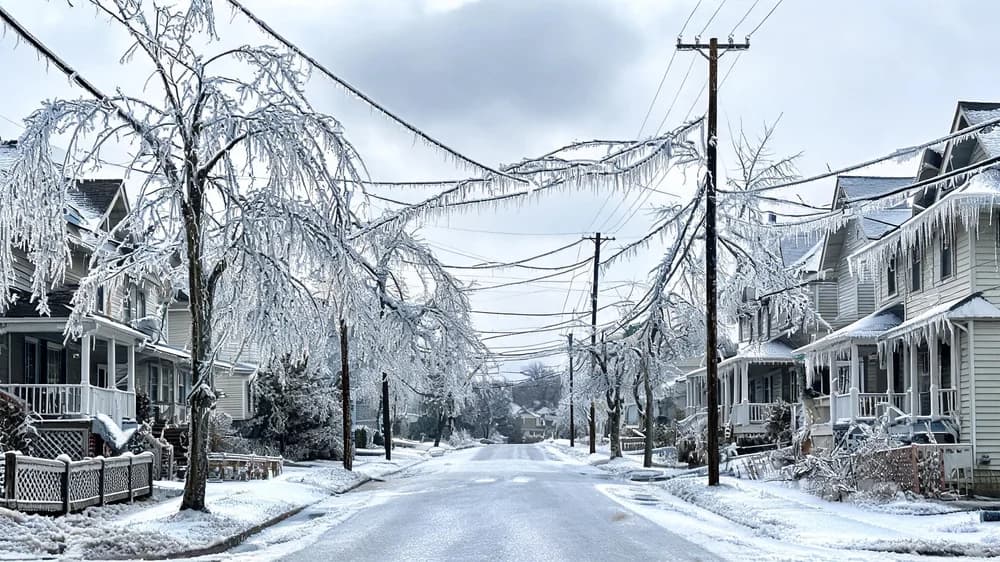
Advanced DRI analyzes ice storm damage patterns across Pennsylvania. Regional data on ice accumulation zones, tree failure rates, and structural damage.
Ice Storm Damage Patterns in Pennsylvania
Ice storms are among the most destructive and underestimated weather events in the Northeast, and Pennsylvania occupies a unique geographic position that makes it particularly vulnerable. The commonwealth straddles the boundary zone where warm, moist air from the south overrides cold, dense air trapped at the surface, the exact atmospheric setup that produces freezing rain. At Advanced DRI, we respond to ice storm damage across Pennsylvania every winter, and the damage patterns we observe are remarkably consistent from event to event.
This analysis draws on NOAA Storm Events Database records, NWS ice accumulation reports, and our own field data to map ice storm frequency, identify the most vulnerable regions, and describe the damage patterns that property owners need to recognize.
Pennsylvania's Ice Storm Corridor
Pennsylvania is bisected by what meteorologists call the I-76/I-80 freezing rain zone, a broad swath running northeast to southwest where the topography and typical storm tracks create optimal conditions for ice accumulation. When a winter storm approaches from the southwest, warm air rides up and over cold air dammed against the Appalachian ridges. Rain falls through this warm layer, then enters the sub-freezing surface layer and coats every exposed surface in ice.
| Pennsylvania Region | Avg. Icing Events/Year | Avg. Max Ice Accumulation | Primary Damage Type | Risk Rating |
|---|---|---|---|---|
| Poconos / NE Mountains | 2.5 - 3.5 | 0.50 - 1.00 inch | Tree/limb failure, power outage | Very High |
| Central Ridge and Valley | 2.0 - 3.0 | 0.50 - 0.75 inch | Power lines, roof ice loading | High |
| Lehigh Valley / Reading | 1.5 - 2.5 | 0.25 - 0.75 inch | Tree/limb failure, gutter damage | High |
| Susquehanna Valley | 1.5 - 2.5 | 0.25 - 0.75 inch | Power outage, ice dam formation | Moderate-High |
| Philadelphia Metro / SE PA | 1.0 - 2.0 | 0.10 - 0.50 inch | Tree damage, localized power outage | Moderate |
| Pittsburgh Metro / SW PA | 1.0 - 1.5 | 0.10 - 0.50 inch | Road hazard, minor tree damage | Moderate |
Source: NOAA Storm Events Database, NWS State College and NWS Mount Holly offices, climate records 2005-2025
The Five Primary Damage Patterns
Through years of responding to ice storm events across Pennsylvania, our team has identified five recurring damage patterns that account for the vast majority of property losses.
Pattern 1: Tree and Limb Failure
This is the single most common and most expensive damage pattern from ice storms. Ice accumulation of 0.25 to 0.50 inches adds 250 to 500 pounds of weight to a mature tree's canopy. At 0.75 inches or more, the weight can exceed the structural capacity of even healthy trees, causing limbs to snap or entire trees to topple.
The damage cascade is predictable: a limb or tree falls onto a roof, puncturing the roofing membrane and potentially damaging structural framing. This creates an opening for water intrusion, which continues as long as the ice persists and then intensifies during the subsequent thaw. The combination of physical impact damage and water intrusion from a single tree failure can require extensive roof repair, structural repair, water extraction, drying, and mold prevention.
Pattern 2: Ice Dam Formation
Ice dams form when heat escaping through the roof melts snow and ice from above, but the meltwater refreezes at the colder eaves. During ice storms, this process is accelerated because the entire roof surface is coated in ice. As the ice dam grows, it creates a barrier that traps meltwater on the roof. This water backs up under shingles, penetrates the roof deck, and enters the wall cavity and interior spaces.
Ice dam damage is insidious because it often occurs inside wall cavities where it is not immediately visible. Our team frequently discovers extensive mold growth in wall cavities months after an ice storm, traced back to ice dam water intrusion that was never detected or addressed.
Pattern 3: Gutter and Downspout Destruction
Ice-filled gutters can weigh several hundred pounds per linear foot. Standard residential gutter brackets are designed to support the weight of water and light debris, not hundreds of pounds of solid ice. During significant ice storms, gutters pull away from the fascia, taking fascia boards, soffit panels, and sometimes roof edge materials with them. The resulting damage exposes the building envelope to ongoing water intrusion.
Pattern 4: Power Outage Cascade Damage
Extended power outages from ice storms produce a chain of secondary property damage. Without electricity, heating systems fail. Interior temperatures drop, and pipes freeze and burst. Sump pumps stop operating, and basements flood. Food spoils. In commercial properties, fire suppression sprinkler systems can freeze and fail catastrophically. NWS data shows that major ice storms in Pennsylvania have caused power outages lasting 3-7 days in some areas, with rural mountain communities occasionally waiting over a week for restoration.
Pattern 5: Roof Structural Stress
While ice storms do not produce the deep snow accumulation of heavy snowstorms, the density of ice is approximately 5 times that of packed snow. A uniform layer of 0.50 inches of ice across a roof adds approximately 2.6 pounds per square foot of load. On a 2,000-square-foot roof, that is 5,200 pounds of additional weight. When combined with any existing snow load, this can approach or exceed the design capacity of roof structures, particularly on older buildings, flat or low-slope roofs, and structures with long unsupported spans like garages and porches.
Seasonal Risk Timeline
November: Early-season ice storms are possible, particularly in the Poconos and central mountains, when the first significant warm-air overrunning events occur. These tend to be minor, with accumulations under 0.25 inches. Risk level: Low.
December: Ice storm frequency increases as the jet stream pattern establishes more frequent storm tracks across Pennsylvania. The December 2008 ice storm is a historic example, knocking out power to over 400,000 customers across the state. Risk level: Moderate-High.
January - February: Peak ice storm season. The highest frequency of freezing rain events occurs during these months, when the contrast between warm air aloft and cold surface air is strongest. Multi-day events with sustained freezing rain are most common in January and February. Risk level: High to Very High.
March: Late-season ice storms can be particularly damaging because they are often preceded by days of mild weather that cause premature tree budding. Trees that have begun to leaf out are more susceptible to ice loading failure. Risk level: Moderate.
What to Do Before, During, and After an Ice Storm
Before: Have a certified arborist assess and prune trees within falling distance of your property. Ensure your roof is in good repair. Have a generator or alternative heating plan for extended power outages. Insulate pipes in vulnerable locations. Seal and insulate your attic to reduce ice dam potential.
During: Stay indoors and away from windows. Do not go under ice-laden trees. If you lose power, open faucets to a slow drip to prevent pipe freezing. Monitor for signs of roof stress. If using a portable generator, operate it outdoors only to prevent carbon monoxide poisoning.
After: Inspect your property for tree damage, gutter damage, and roof damage as soon as conditions are safe. Check your attic for signs of ice dam water intrusion: wet insulation, staining on the underside of the roof deck, or water pooling. If you discover damage, contact Advanced DRI for professional assessment and storm damage restoration. Even if damage appears minor, hidden water intrusion from ice dams can lead to serious mold problems if not addressed.
Frequently Asked Questions
How much ice does it take to cause property damage?
Significant property damage typically begins at 0.25 inches of ice accumulation, which is the NWS threshold for an ice storm warning. At this level, weak tree limbs begin failing and power outages start. At 0.50 inches, widespread tree damage, extensive power outages, and structural damage to gutters and roofing become common. At 0.75 inches or more, the event is catastrophic: healthy trees fail, power infrastructure collapses, and roof structural failures occur. The most damaging ice storms in Pennsylvania's recent history have produced accumulations between 0.50 and 1.25 inches.
Are ice storms becoming more or less frequent in Pennsylvania?
The trend is complex. While the overall number of minor freezing rain events may be decreasing slightly as winters warm, the intensity of significant ice storms appears to be increasing. Warmer ocean temperatures provide more moisture to winter storms, and the jet stream patterns that produce freezing rain events in Pennsylvania are occurring with greater amplitude, producing more extreme warm-cold contrasts when they do happen. The net result is fewer but more damaging ice storm events, which is actually a worse outcome for property owners.
Does homeowners insurance cover ice storm damage?
Yes, in most cases. Standard homeowners insurance typically covers ice storm damage including tree impact damage, ice dam water intrusion, and damage from burst pipes caused by power-outage-related freezing. However, coverage for ice dam damage specifically varies by insurer, and some policies have exclusions or sublimits for this type of loss. We recommend reviewing your policy with your agent before ice storm season and specifically asking about ice dam coverage. Advanced DRI provides detailed damage documentation that supports the insurance claims process for all types of ice storm damage.
When Ice Storms Strike Pennsylvania
Ice storms are a defining winter hazard in Pennsylvania, and the damage they produce is both predictable and preventable with proper preparation. At Advanced DRI, we respond to ice storm emergencies across the commonwealth with storm damage restoration, water damage restoration, and mold remediation services designed to address the full spectrum of ice storm damage patterns.
Do not wait for the ice to arrive. Contact Advanced DRI today for pre-season preparation advice or to put us on speed dial for emergency response. We are here 24/7, throughout every ice storm season, ready to restore your property and protect it from secondary damage.
Categories
Need Restoration Services?
Our team is available 24/7 for emergency response. Call us today for a free phone consultation.

Questions About Restoration?
Our experts are ready to help. Contact us for a free consultation.