Rob Temples manages emergency restoration operations for Advanced DRI's Fairfield, NJ and New York City service areas. With 10 years in the restoration industry and prior experience working for a general contractor, he integrates construction knowledge with mitigation expertise on every project and holds an IICRC Water Restoration Technician (WRT) certification.
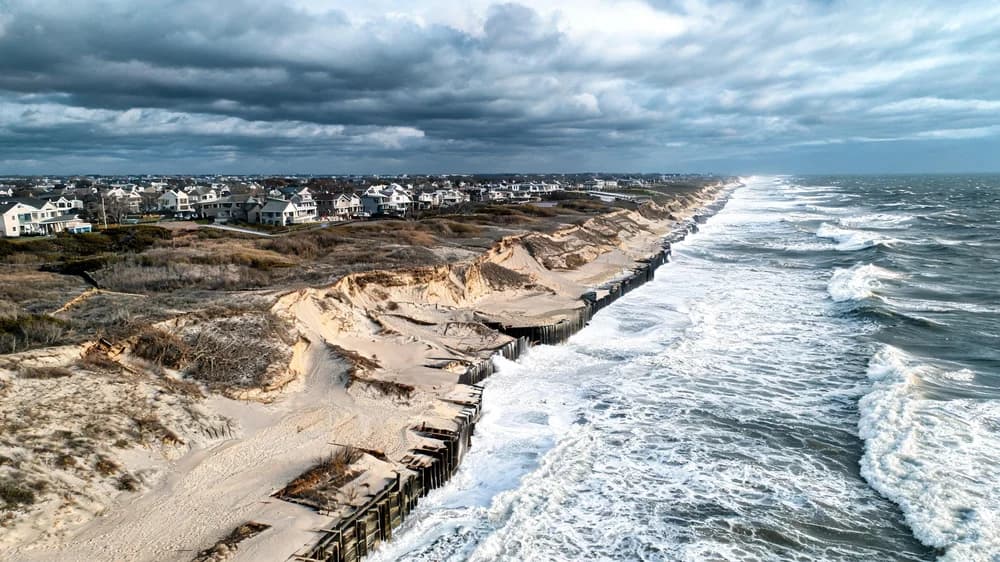
Advanced DRI presents storm surge and coastal erosion data for the New Jersey Shore. County-level analysis of erosion rates and flood risk zones.
Coastal Erosion and Storm Surge Data for NJ Shore
The New Jersey Shore stretches 130 miles from Sandy Hook to Cape May, and every mile of it is shaped by the forces of erosion and storm surge. These are not abstract geological concepts for the hundreds of thousands of property owners along this coast. They are immediate, measurable threats that affect property values, insurance costs, and the physical survival of structures. At Advanced DRI, we restore storm-damaged coastal properties and we track the data that predicts where damage will occur next.
This analysis draws on data from NOAA's National Ocean Service, the U.S. Army Corps of Engineers, the NJ Department of Environmental Protection's Bureau of Coastal Engineering, and USGS coastal change research to present a comprehensive picture of erosion and storm surge risk along the New Jersey Shore.
Coastal Erosion Rates by Region
Coastal erosion along the NJ Shore is not uniform. Some communities gain sand through natural processes and beach nourishment programs while others lose shoreline steadily. The following table presents long-term erosion data for key coastal segments.
| Coastal Segment | County | Avg. Erosion Rate (ft/yr) | Storm Surge Exposure (Cat 1) | Beach Nourishment Status |
|---|---|---|---|---|
| Sandy Hook to Long Branch | Monmouth | -1.5 to -3.0 | 4-7 ft | Partial coverage |
| Long Branch to Manasquan | Monmouth | -1.0 to -2.5 | 4-6 ft | Active federal project |
| Manasquan to Barnegat Inlet | Ocean | -2.0 to -4.0 | 5-8 ft | Active federal project |
| Long Beach Island | Ocean | -2.5 to -5.0 | 5-9 ft | Active federal project |
| Brigantine to Atlantic City | Atlantic | -1.5 to -3.5 | 5-8 ft | Active federal project |
| Ocean City to Sea Isle City | Cape May | -1.0 to -3.0 | 4-7 ft | Active federal project |
| Avalon to Cape May Point | Cape May | -0.5 to -2.5 | 4-6 ft | Active federal project |
| Delaware Bay Shore | Cumberland/Cape May | -3.0 to -8.0 | 3-5 ft | Limited |
Source: NJ DEP Bureau of Coastal Engineering, USGS National Assessment of Coastal Change Hazards, U.S. Army Corps of Engineers Philadelphia District
Storm Surge: The Primary Threat
While chronic erosion is a slow-moving problem, storm surge delivers catastrophic damage in hours. Storm surge is the abnormal rise in water level generated by a storm's winds pushing ocean water onshore. Along the NJ Shore, storm surge is the leading cause of property destruction during major weather events.
Superstorm Sandy demonstrated the scale of the threat. Sandy's storm surge reached 8.9 feet at Sandy Hook, 8.6 feet at Atlantic City, and over 6 feet along much of the coast. This surge destroyed or severely damaged over 346,000 housing units in New Jersey and caused over $30 billion in damage statewide.
But Sandy was not an isolated event. Significant storm surge impacts the NJ Shore far more frequently than major hurricanes:
- Nor'easters: Major nor'easters produce 3-5 feet of storm surge along the NJ Shore and occur multiple times per winter. Because nor'easters last longer than hurricanes, they can sustain elevated water levels through multiple high tide cycles, amplifying the surge effect.
- Tropical storms: Even tropical storms that do not reach hurricane intensity can produce 3-6 feet of surge along the coast, particularly when their track concentrates onshore wind along the NJ Shore.
- King tides: Astronomical high tides, particularly during perigean spring tides, elevate baseline water levels by 1-2 feet above normal high tide. When these coincide with any storm system, flood thresholds are reached earlier and more easily.
The Compounding Effect of Sea Level Rise
All of these storm surge risks are being amplified by sea level rise. NOAA tide gauge data from Atlantic City shows that mean sea level has risen approximately 16 inches since 1911, a rate of about 0.16 inches per year. More concerning, the rate is accelerating. Recent decades show sea level rising at approximately 0.20-0.25 inches per year along the NJ coast.
This means that today's minor flooding events produce water levels that would have been moderate flooding events 30 years ago. Today's moderate flooding events reach levels that would have been considered major flooding events a generation ago. The baseline is shifting, and every storm surge event starts from a higher water level than the same storm would have produced in the past.
Seasonal Storm Surge Risk Timeline
June - August: Tropical development begins. Early-season tropical storms rarely impact NJ directly, but offshore systems can generate increased wave energy and minor surge. The primary risk during summer is rip currents and wave-driven beach erosion during offshore storms. Risk level: Low-Moderate.
September - October: Peak hurricane season increases the chance of a direct or near-miss tropical system. This is the highest-stakes period for catastrophic storm surge. The water temperature along the NJ coast reaches its annual maximum in September, providing additional energy to approaching tropical systems. Superstorm Sandy struck on October 29. Risk level: High.
November - December: Nor'easter season begins. The first significant coastal storms of winter can produce 3-5 feet of surge, especially when they coincide with astronomical high tides. Properties that lost dune protection during summer storms are especially vulnerable. Risk level: High.
January - March: Peak nor'easter season. Multiple significant coastal storms per month are possible. Extended periods of onshore wind and wave energy can strip beaches of sand deposited by nourishment projects, leaving structures more exposed with each successive storm. Risk level: Very High for nor'easter surge.
April - May: Storm frequency decreases but late-season nor'easters remain possible. This is the optimal window for property assessment, repair, and preparation for the next storm cycle. Risk level: Low-Moderate.
What Storm Surge Does to Properties
Storm surge damage differs from rainfall flooding in critical ways that affect restoration. Surge water is saltwater, which is far more corrosive to building materials than freshwater. It carries sand, debris, and marine contaminants. And it often arrives with tremendous force, driven by waves on top of the surge.
Properties impacted by storm surge typically experience:
- Foundation undermining: Wave action and surge flow scour sand from around and beneath foundations, compromising structural support.
- Saltwater intrusion into building systems: Electrical systems, HVAC equipment, and plumbing corrode rapidly when exposed to saltwater. Equipment that appears functional after drying may fail within weeks or months from salt corrosion.
- Interior damage from contaminated water: Storm surge is Category 3 (grossly contaminated) water under IICRC standards. All porous materials contacted by surge water, including drywall, insulation, carpet, wood flooring, and cabinetry, must be removed and replaced.
- Mold colonization: Warm-season storm surge (hurricane or tropical storm) leaves buildings saturated in conditions ideal for rapid mold growth. Without immediate professional intervention, mold can colonize throughout a structure within days.
Our storm damage restoration teams are experienced in coastal property restoration, including saltwater damage mitigation, structural drying in marine environments, and coordination with engineers for foundation assessment. We work alongside our water damage restoration and mold remediation teams to address the full scope of storm surge damage.
Frequently Asked Questions
Is the NJ Shore losing beach permanently?
Without human intervention, most of the NJ Shore would be losing beach at significant rates. The federal and state beach nourishment programs that have been ongoing since the 1990s add millions of cubic yards of sand to NJ beaches on regular cycles, typically every 3-6 years per project area. These projects have proven effective at maintaining beach width and providing storm damage reduction, but they require continuous funding and replenishment. Post-Sandy nourishment projects have substantially improved storm protection for many communities, but the sand is temporary and will continue to erode, requiring future replenishment.
How do I find out my property's storm surge risk?
FEMA flood maps (available at msc.fema.gov) show your property's flood zone designation, but they may not fully capture storm surge risk. The NJ Flood Mapper tool (njfloodmapper.org) provides interactive visualization of storm surge inundation at various levels. NOAA's storm surge model (SLOSH) produces inundation maps for hurricane categories 1-4. We recommend consulting all three sources and considering that surge levels during actual events can exceed model predictions, as Sandy demonstrated. Your property's elevation relative to mean high tide is the single most important factor in determining surge vulnerability.
What should I do to protect my coastal property from storm surge?
For properties in surge zones, the most effective protections are elevation (raising the structure above the expected surge level), flood vents in the foundation to relieve hydrostatic pressure, flood-resistant materials on lower levels, and backflow prevention on all drain connections. Have an emergency plan that includes knowing when to evacuate, what to take with you, and how to secure the property before you leave. Ensure you have flood insurance with adequate coverage. After any storm surge event, contact Advanced DRI immediately for professional water extraction and restoration to minimize secondary damage from salt corrosion and mold growth.
Protecting Your Shore Property
Coastal erosion and storm surge are permanent realities of New Jersey Shore property ownership. The risks are quantifiable, the patterns are predictable, and the protective measures are known. What separates properties that survive coastal storms from those that suffer catastrophic damage is preparation and rapid professional response.
Contact Advanced DRI for coastal property assessment, storm preparation consultation, or 24/7 emergency response when the next storm impacts the Shore. Our teams understand the unique challenges of coastal restoration, from saltwater damage mitigation to post-surge mold prevention, and we are positioned to respond rapidly across the NJ coastline.
Categories
Need Restoration Services?
Our team is available 24/7 for emergency response. Call us today for a free phone consultation.

Questions About Restoration?
Our experts are ready to help. Contact us for a free consultation.