Storm & Disaster Damage
Storm Damage Roof Tarping Services: Emergency Protection for Your Home
January 21, 20268 min read
R
Rob Temples· Operations Manager, Emergency Services (Fairfield, NJ & New York City)
Rob Temples manages emergency restoration operations for Advanced DRI's Fairfield, NJ and New York City service areas. With 10 years in the restoration industry and prior experience working for a general contractor, he integrates construction knowledge with mitigation expertise on every project and holds an IICRC Water Restoration Technician (WRT) certification.
10+ years experienceIICRC Water Restoration Technician (WRT)
Published January 21, 2026 · Updated May 27, 2026

Learn about emergency roof tarping services for storm damage protection. Covers when tarping is needed, professional techniques, and insurance coverage.
Roof Tarping Services: When Roof Tarping Is Necessary
Professional roof tarping services address various damage scenarios requiring temporary weather protection. Understanding when tarping is needed helps property owners respond appropriately to damage.Storm-Related Roof Damage
High winds cause shingle loss, flashing failure, and structural damage creating openings. Hail punches holes through roofing materials. Flying debris penetrates roof surfaces. Any opening allowing water entry warrants immediate emergency roof tarping for effective protection.Tree Impacts
Fallen trees and branches create roof penetrations ranging from minor punctures to major structural failures. Tarping protects the building while tree removal and permanent repairs are coordinated.Fire Damage
Fires that burn through roofs leave openings requiring protection from weather. Roof tarping services provide interim protection during fire damage assessment and restoration planning.Missing Shingles
Even small areas of missing shingles expose underlayment that wasn't designed for direct weather exposure. Multiple missing shingles create significant leak risk requiring prompt protection through temporary roof repair solutions.| Damage Type | Urgency Level | Tarping Priority |
|---|---|---|
| Major structural damage/holes | Emergency | Immediate - within hours |
| Large sections of missing shingles | High | Same day if weather threatening |
| Tree penetrations | Emergency | Immediately after tree removal |
| Multiple small damage areas | Moderate | Within 24-48 hours |
| Minor damage with good weather forecast | Lower | Before next precipitation expected |
Professional Roof Tarping Services
Emergency roof tarping requires proper materials, techniques, and safety equipment for effective storm damage protection.Proper Materials
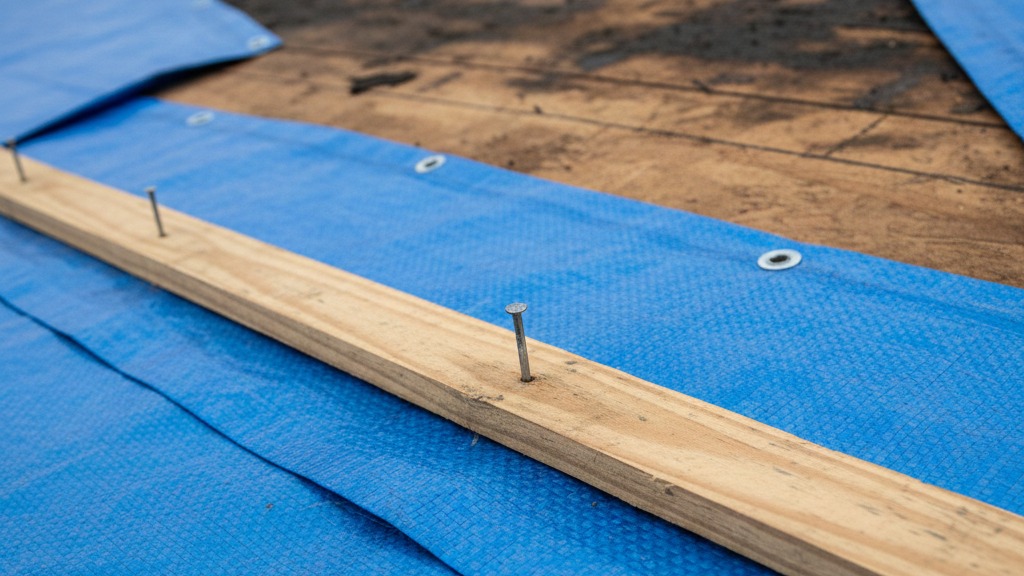
Heavy-duty tarps: Professional roof tarping services use heavy-duty polyethylene tarps rated for UV exposure and weather resistance. Standard blue tarps degrade quickly in sunlight. Quality tarps maintain protection for months when properly installed. Tarp sizing: Proper coverage extends well beyond damage areas - typically 4-6 feet beyond all damage edges. This overlap ensures water doesn't reach damage points even with wind-driven rain. Securing materials: Professional installation uses appropriate fastening methods including furring strips, cap nails, and weighted ballast depending on roof type and damage situation.Installation Techniques
Effective tarping requires proper technique: Preparation: Debris is cleared and sharp edges addressed to prevent tarp damage. Loose materials are secured or removed. Positioning: Tarps are positioned with upper edge above the ridge line when possible, ensuring water flows over rather than under the tarp. Securing: Multiple attachment points prevent wind displacement. Edges are sealed to prevent water intrusion. Weight distribution prevents billowing that can damage tarps or pull fasteners. Drainage: Installation ensures water drains away from damage areas rather than pooling on the tarp. Pro Tip: Roof tarping during or immediately after storms can be dangerous. Don't attempt DIY roof access during high winds, lightning, or wet conditions. Wait for professional help rather than risking falls.Safety Requirements
Professional roof tarping services require:- Fall protection equipment (harnesses, anchors)
- Proper footwear for roof surfaces
- Training in safe roof access and work
- Awareness of electrical hazards from damaged lines
- Assessment of structural stability before roof access
How Long Does Roof Tarping Last?
Properly installed professional tarping provides storm damage protection for extended periods while permanent repairs are arranged.Expected Duration
Quality tarping typically protects properties for:- 3-6 months under normal conditions
- Longer with periodic inspection and maintenance
- Less time under extreme conditions (high winds, heavy snow)
Factors Affecting Longevity
Tarp quality: Heavy-duty UV-resistant tarps outlast standard materials significantly. Installation quality: Properly secured tarps with adequate overlap last longer than makeshift applications. Weather exposure: Continuous sun exposure, repeated storms, and snow loads affect tarp lifespan. Periodic inspection: Checking tarps after storms and adjusting as needed extends effective protection.When Re-Tarping Is Needed
Monitor tarps for:- Visible tears or holes
- Loosened edges or corners
- Pooling water indicating improper drainage
- UV degradation (color fading, brittleness)
- Any water intrusion inside the structure
Roof Tarping and Insurance Claims
Emergency roof tarping typically qualifies as mitigation expense under insurance policies.Coverage Expectations
Most property insurance policies require homeowners to mitigate additional damage following covered losses. Emergency tarping fulfills this requirement and typically receives coverage as part of the overall claim, often separate from your deductible.Documentation Requirements
- Photograph damage before tarping begins
- Document tarping installation
- Keep all receipts for emergency services
- Note dates and times of service
Working with Adjusters
Insurance adjusters understand the necessity of emergency protection. Professional restoration companies provide documentation supporting tarping as appropriate mitigation. Adjusters typically reimburse reasonable tarping costs alongside other covered restoration work.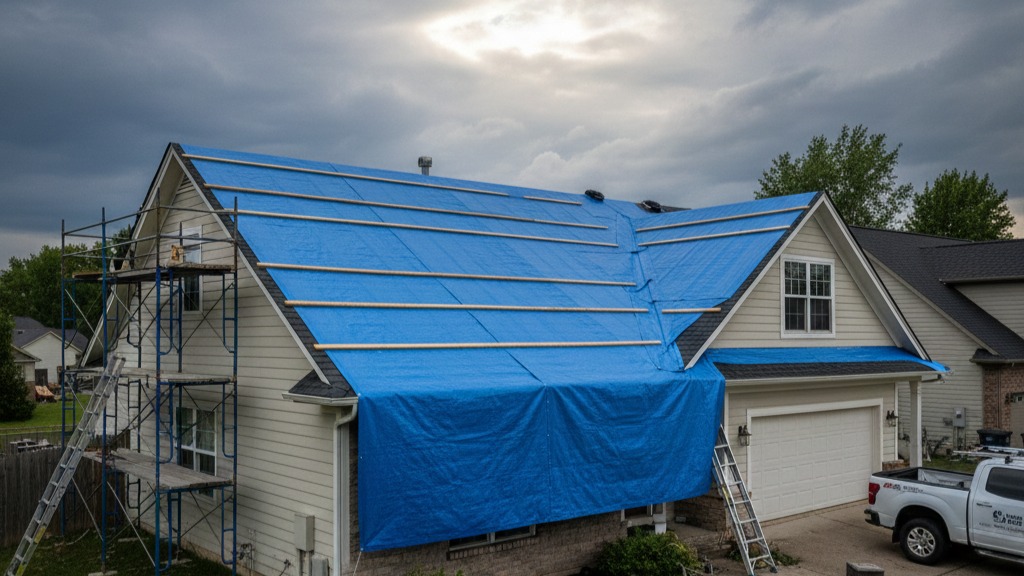
Roof Tarping Services vs. Temporary Roof Repair
Depending on damage type, alternatives to tarping may provide better storm damage protection.When Roof Tarping Services Are Best
- Large damage areas requiring extensive repair
- Situations where permanent repair materials aren't available
- Weather conditions preventing immediate permanent repair
- Complex damage requiring engineering assessment first
- Insurance inspection needs before permanent repair
When Temporary Roof Repair May Be Better
- Small penetrations easily patched
- Individual missing shingles replaceable immediately
- Minor flashing repairs possible
- Situations where permanent repair can occur immediately
DIY Roof Tarping Risks
While attempting to protect their homes is understandable, DIY roof tarping presents significant risks compared to professional roof tarping services.Fall Hazards
Roof falls cause thousands of serious injuries annually. Damaged roofs are more hazardous than intact roofs due to structural weakness, debris, and wet surfaces. Professional equipment and training dramatically reduce fall risk.Inadequate Protection
Improper tarping often fails to prevent water intrusion, providing false security while damage continues. Undersized tarps, inadequate overlap, poor attachment, and drainage problems all reduce effectiveness.Additional Damage
Improper installation can cause additional damage including:- Punctures from improper fastening
- Structural damage from improper weight distribution
- Water channeling into undamaged areas
- Tarp failure during storms causing additional damage
When DIY Might Be Appropriate
Very limited circumstances may justify DIY tarping:- Single-story roof with safe access
- Small damage area requiring minimal coverage
- Proper materials available
- Good weather conditions
- Professional help completely unavailable
Coordinating Tarping with Restoration
Roof tarping is typically one component of comprehensive restoration.Integrated Response
24/7 emergency services coordinate all aspects of storm response:- Emergency tarping and board-up services
- Water intrusion assessment and mitigation
- Contents protection
- Damage documentation
- Insurance coordination
- Permanent repair planning
Timeline Coordination
Tarps remain until permanent repairs are ready. Restoration professionals coordinate tarping with overall repair schedules, ensuring continuous protection throughout the restoration process.Frequently Asked Questions About Roof Tarping Services
How quickly can emergency tarping be performed?
+Professional emergency services typically respond within hours, with tarping beginning immediately upon arrival. During major storm events affecting many properties, response times may extend, but emergency calls receive priority.
Will tarping damage my roof further?
+Professional tarping using proper techniques minimizes additional damage. Some fastener penetrations may be necessary, but these are addressed during permanent repair. The prevention of water damage far outweighs minor installation impacts.
Can tarps be installed in any weather?
+Active lightning, high winds, and heavy rain create unsafe conditions for roof access. Professional crews wait for safe conditions when possible. If emergency access is essential, crews use enhanced safety measures and may complete only partial protection until conditions improve.
How much does emergency roof tarping cost?
+Costs depend on roof accessibility, damage extent, and tarp size required. Emergency tarping typically qualifies for insurance coverage as mitigation expense. Professional restoration companies provide documentation supporting insurance reimbursement.
Get Emergency Roof Tarping Services
When storms damage your roof, immediate professional roof tarping services prevent additional water damage that compounds property losses. Quality services provide reliable protection while permanent repairs or temporary roof repair solutions are coordinated, protecting your investment throughout the restoration process. For storm-damaged properties in Northern New Jersey, Pennsylvania's Capital Region, New York's Hudson Valley, Connecticut's Capital Region, or the South Jersey Shore, 24/7 emergency services provide rapid roof protection that safeguards your home from further damage.Categories
Need Restoration Services?
Our team is available 24/7 for emergency response. Call us today for a free phone consultation.
Questions About Restoration?
Our experts are ready to help. Contact us for a free consultation.