Rob Temples manages emergency restoration operations for Advanced DRI's Fairfield, NJ and New York City service areas. With 10 years in the restoration industry and prior experience working for a general contractor, he integrates construction knowledge with mitigation expertise on every project and holds an IICRC Water Restoration Technician (WRT) certification.
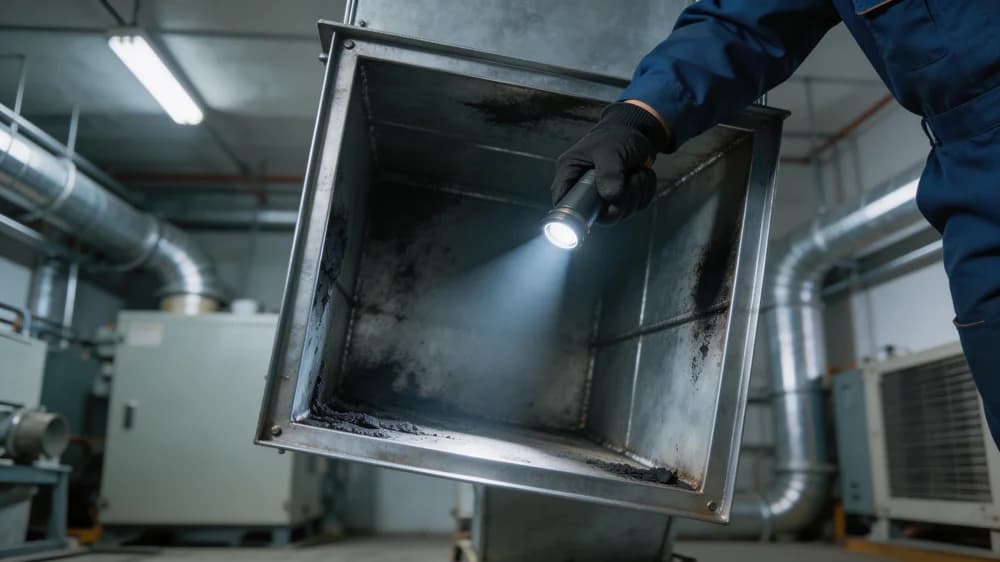
Discover how smoke damage silently spreads through HVAC ductwork after a fire. Advanced DRI explains the risks, signs, and professional cleaning solutions.
The Silent Spread of Smoke Through Your HVAC System
When a fire occurs in a home or commercial building, the visible damage at the source is only part of the story. One of the most overlooked consequences of any fire, whether a small kitchen incident or a larger structural event, is the way smoke particles infiltrate HVAC ductwork and distribute contamination throughout the entire property. At Advanced DRI, we have seen countless cases where property owners believed their fire damage was contained, only to discover weeks later that smoke residue had spread to every room through their heating and cooling system.
Understanding how this process works and why it requires professional attention is critical for anyone dealing with fire or smoke damage in New York, New Jersey, Pennsylvania, or Connecticut.
How Smoke Enters and Travels Through Ductwork
Modern HVAC systems are designed to circulate air efficiently throughout a building. Unfortunately, that same efficiency becomes a liability during and after a fire. Here is how smoke contamination spreads through ductwork:
During the Fire
If the HVAC system is running when a fire breaks out, the return air vents actively pull smoke-laden air into the duct system. Smoke particles, many of which are smaller than one micron in diameter, pass through standard HVAC filters with ease. The blower fan then pushes contaminated air into every room connected to the system, depositing soot on interior duct surfaces along the way.
After the Fire
Even after a fire is extinguished, residual smoke hangs in the air. If anyone turns on the HVAC system to ventilate the property or restore heating and cooling, the system pulls this residual smoke through the ductwork. This is one of the most common mistakes we see property owners make after a fire. Each cycle of the system drives more contamination deeper into the ducts and into previously unaffected rooms.
Passive Migration
Even without the system running, temperature differentials and natural air convection can cause smoke particles to drift through ductwork over time. Smoke is remarkably persistent, and its microscopic particles can settle into duct seams, insulation linings, and the interior surfaces of air handlers and evaporator coils.
What Smoke Deposits in Your Ducts
Smoke is not a single substance. It is a complex mixture that leaves several types of contamination in ductwork:
- Soot particles: Fine carbon particles that coat duct surfaces and become airborne each time the system operates.
- Volatile organic compounds (VOCs): Chemical gases released during combustion that absorb into duct materials and re-release over time, a process known as off-gassing.
- Acidic residues: Combustion byproducts that corrode metal ductwork and degrade duct sealants, leading to long-term system deterioration.
- Odor compounds: Microscopic particles that carry the characteristic smoke smell and are redistributed throughout the building every time the system cycles.
These contaminants do not simply disappear over time. Without professional intervention, they continue to degrade air quality and cause health concerns for building occupants.
Health Risks of Contaminated Ductwork
Breathing air circulated through smoke-contaminated ductwork poses real health risks, particularly for vulnerable populations including children, elderly residents, and individuals with respiratory conditions such as asthma or COPD.
Symptoms of exposure to smoke-contaminated air from HVAC systems include persistent coughing, headaches, eye irritation, sore throat, and worsening of existing respiratory conditions. In commercial settings, contaminated HVAC systems can affect employee health and productivity, leading to increased absenteeism and potential liability concerns.
Our fire damage restoration team prioritizes HVAC assessment and cleaning as a core component of every fire restoration project because of these significant health implications.
Signs Your Ductwork Has Smoke Contamination
Smoke contamination in ductwork is not always immediately obvious. Watch for these warning signs in the weeks and months following a fire:
- A persistent smoky or burnt odor that intensifies when the HVAC system runs
- Visible dark residue around supply and return vents
- Discoloration on walls or ceilings near air vents
- Respiratory symptoms that worsen when spending time indoors
- A thin film of soot on surfaces that reappears shortly after cleaning
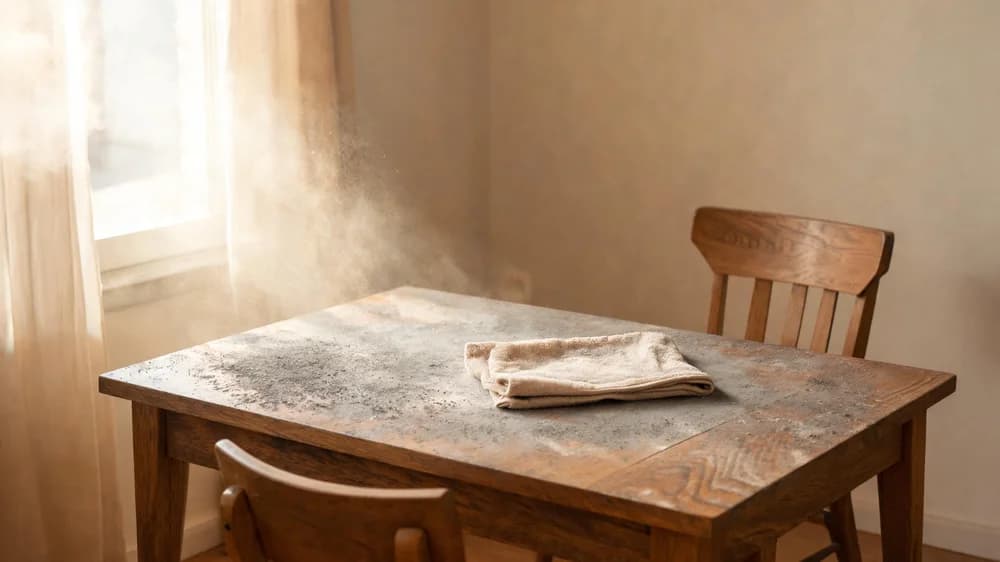
- Unusual dust patterns, particularly dark-colored dust on furniture and floors near vents
If you notice any of these signs, do not continue operating your HVAC system. Contact Advanced DRI for a professional inspection and air quality assessment.
Professional HVAC Smoke Remediation Process
Cleaning smoke contamination from ductwork is not a standard duct-cleaning job. It requires specialized equipment, techniques, and expertise that go well beyond what typical HVAC cleaning services offer.
Inspection and Testing
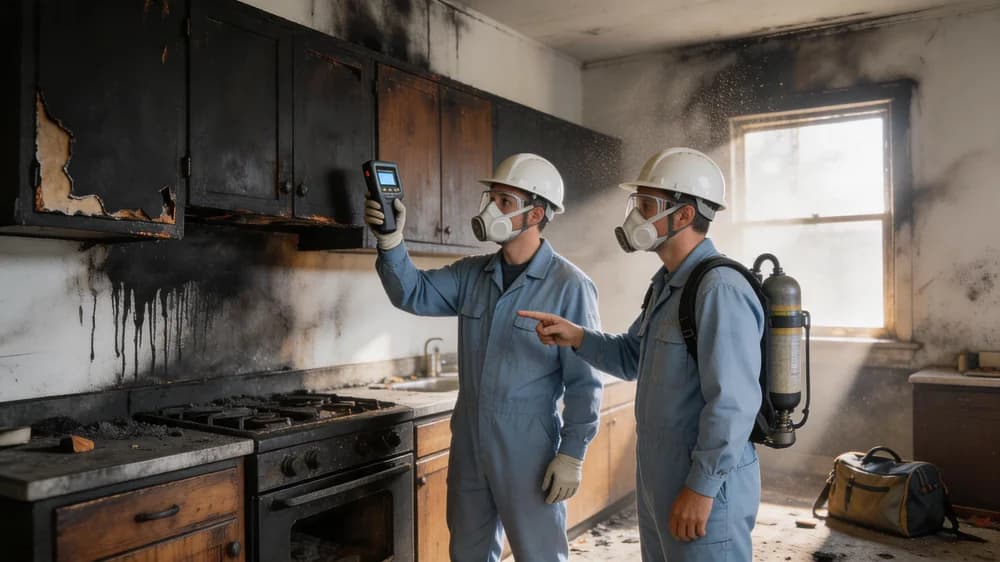
We begin with a comprehensive inspection using robotic cameras to assess contamination levels throughout the duct system. Air quality testing measures particulate counts and VOC levels to establish a baseline and determine the extent of remediation needed.
System Component Cleaning
Our technicians clean every component of the HVAC system, including supply and return ducts, the air handler, blower assembly, evaporator coils, condensate drain pan, and all registers and grilles. We use HEPA-filtered negative air machines, mechanical agitation tools, and specialized chemical treatments formulated for smoke residue removal.
Duct Sealing and Encapsulation
After cleaning, we apply antimicrobial sealants to interior duct surfaces to encapsulate any residual contamination and prevent future off-gassing. Damaged duct sections, deteriorated insulation linings, and compromised seals are repaired or replaced.
Filter Replacement and System Testing
All filters are replaced with high-efficiency options appropriate for the system. We then run the system and conduct post-remediation air quality testing to verify that particulate and VOC levels have returned to safe thresholds.
Why Standard Duct Cleaning Is Not Enough
Many property owners assume that a routine duct cleaning service can address smoke contamination. Unfortunately, standard duct cleaning focuses primarily on dust and debris removal and does not address the chemical residues, acidic compounds, and deeply embedded soot that smoke deposits leave behind.
Smoke remediation requires specific chemical agents designed to break down combustion byproducts, HEPA filtration capable of capturing sub-micron particles, and the expertise to identify and treat every contaminated component. At Advanced DRI, our technicians hold IICRC certifications in fire and smoke restoration, ensuring they apply the right methods for complete remediation.
Protecting Your Property and Health
If your property has experienced a fire of any size, have your HVAC system professionally assessed before resuming normal operation. Even small fires can introduce enough smoke contamination into ductwork to affect indoor air quality for months or years. Our team provides thorough assessments and complete remediation services to ensure your indoor environment is safe for occupants.
Do not let smoke damage spread silently through your property. Contact Advanced DRI today for a professional HVAC smoke contamination assessment and restoration plan.
Frequently Asked Questions
Can I run my HVAC system after a fire to clear the smoke smell?
No. Running your HVAC system after a fire will spread smoke contamination to every room connected to the ductwork. Keep the system off until a qualified restoration professional has inspected and cleaned it. Open windows for ventilation instead, if safe to do so.
How long can smoke residue remain in ductwork?
Smoke residue can persist in ductwork indefinitely if not professionally removed. Soot particles adhere to interior duct surfaces, and chemical compounds absorb into duct insulation and sealants. Without remediation, these contaminants continue to off-gas and recirculate each time the system operates, potentially for years.
Does homeowners insurance cover HVAC smoke remediation?
In most cases, yes. If the smoke contamination resulted from a covered fire event, HVAC cleaning and remediation is typically included in the insurance claim. Advanced DRI documents all contamination with photos, air quality readings, and detailed reports to support your claim and ensure full coverage.
Can smoke damage in ductwork cause mold growth?
Smoke damage itself does not directly cause mold, but the water used to extinguish a fire can introduce moisture into the duct system. Combined with soot deposits, this creates conditions conducive to microbial growth. Our team inspects for both smoke contamination and moisture intrusion, coordinating with our mold remediation specialists when needed.
Categories
Need Restoration Services?
Our team is available 24/7 for emergency response. Call us today for a free phone consultation.
Questions About Restoration?
Our experts are ready to help. Contact us for a free consultation.