
Rob Temples manages emergency restoration operations for Advanced DRI's Fairfield, NJ and New York City service areas. With 10 years in the restoration industry and prior experience working for a general contractor, he integrates construction knowledge with mitigation expertise on every project and holds an IICRC Water Restoration Technician (WRT) certification.
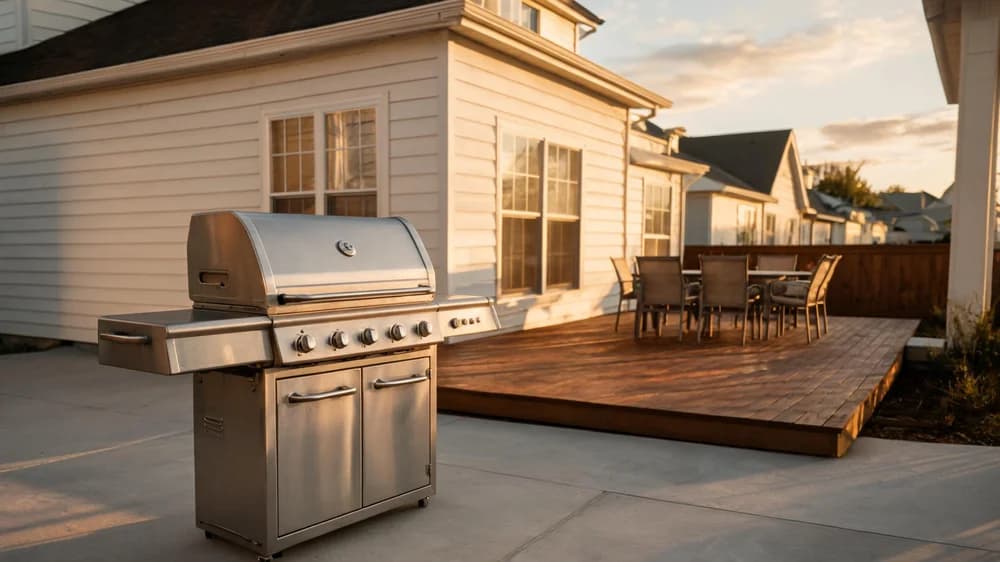
Grill fires ignite thousands of homes each year. Advanced DRI shares practical tips to protect your deck, siding, and home before your next cookout.
Few things feel more like home than dinner on the grill. Unfortunately, few home activities send as many homes into restoration each year as grilling gone wrong. At Advanced DRI, we see a reliable spike in grill-related fire calls every May through September — decks that caught from grease flares, siding melted by grills placed too close, garage fires from grills wheeled inside after a cookout.
The mechanics of a grill fire are simple: intense heat, flammable fuel, combustible materials nearby. The prevention is also simple, but it requires a few habits most weekend grillers have never been taught. Here’s how to keep your home safe.
Where You Put the Grill Matters More Than the Grill Itself
The single biggest risk factor in a grill fire is location. Even the best grill, operated perfectly, can start a fire if it’s in the wrong place. Good locations share these features:
- At least 10 feet from the house in all directions — including above and behind
- Away from overhangs like eaves, gutters, umbrellas, and covered patios
- On a non-combustible surface — concrete patio, stone, or brick ideally
- Clear of dry vegetation — shrubs, mulch, and low-hanging tree branches
- Sheltered from strong wind but not boxed in (wind drives flare-ups toward nearby structures)
The Deck Problem
Wooden decks are one of the most common grill locations and also the riskiest. Grease splatter penetrates the wood, soaking into surface and gaps between boards. After months of buildup, a grease flare can ignite the deck itself. Vinyl and composite decks don’t ignite as readily, but they warp and melt at temperatures gas grills routinely produce.
If you grill on a deck, at minimum:
- Place a non-combustible grill mat under and in front of the unit
- Keep the grill at least 3 feet from the house wall and 2 feet from the railing
- Never grill under a roof, pergola, or umbrella
- Clean the deck surface under the grill monthly during grilling season
Gas Grills: The Leak Test
Before the first cookout of the season — and anytime you reconnect the propane tank — check for gas leaks. This is a two-minute test that prevents a remarkable number of explosions:
- Brush soapy water on all connections — tank valve, regulator, hose connections
- Turn on the tank valve with the grill burners off
- Watch the soapy spots. Growing bubbles mean a leak
- If you see bubbles, close the tank and tighten the connection or replace the hose
Also inspect the hose itself for cracks, brittleness, or signs of damage. Rodents chew them. UV degrades them. A $20 hose is cheap insurance.
Charcoal Grills: The Ash Problem
Gas grill fires are more dramatic, but charcoal grill fires are often more destructive because of hot ash disposal. A smoldering briquette in a plastic garbage can ignites hours later, usually after the homeowner has gone inside for the evening.
The rules for charcoal:
- Never dispose of ash in anything plastic or combustible. Use a metal ash can with a tight lid.
- Wait at least 48 hours before dumping ash, or douse thoroughly with water first.
- Store ash cans outside on non-combustible ground, away from the house.
- Use starter fluid only on cold coals. Adding more fluid to burning briquettes causes flashback fires that have taken eyebrows and started house fires.
The 10 Things to Check Every Cookout
- Clearance from the house, railings, and overhangs
- Grease tray is empty and clean
- Burner ports are clear (gas) or vents are open (charcoal)
- Hose is not cracked or crimped (gas)
- Tank is upright and stable (gas)
- Lighter fluid is stored away from heat before lighting (charcoal)
- Kids and pets are supervised and at least 3 feet away
- Fire extinguisher or bucket of sand is within reach
- Hose or nearby water source is accessible
- Never leave the grill unattended while burners or coals are hot
Dealing with a Flare-Up
Flare-ups happen when grease drips and ignites. Most are small and manageable:
- Gas grill: Close the lid and turn down the burners. If it doesn’t subside, turn off the burners and shut the tank.
- Charcoal grill: Close the lid and close the vents. Do not use water — it scatters burning grease.
- Larger fire: Use a Class B or ABC extinguisher. Get everyone back. Call 911 if it’s beyond a small contained flare.
After Grilling: The Often-Forgotten Steps
- Turn off the gas at the tank, not just at the control knob. A loose connection can slowly leak overnight.
- Let the grill cool before covering. Covers on hot grills have melted and caught fire.
- Clean the grease tray every few cookouts. Grease is the single biggest ignition risk.
- Store tanks outside. Never in a garage, shed, or basement. Tanks slowly leak and accumulated propane ignites from any spark — water heater, refrigerator compressor, light switch.
If a Grill Fire Has Already Happened
Deck and siding damage from grill fires often looks minor on the surface but extends significantly beyond the visible burn. Heat warps vinyl siding several feet away from the source, melts soffits, and damages the WRB (weather-resistive barrier) behind siding. Smoke penetrates soffit vents and can leave soot in the attic.
Our fire and smoke damage restoration team handles everything from siding replacement and deck rebuild to full odor removal if smoke reached the interior through open windows.
Ready for Help?
If a grill fire has damaged your deck, siding, or home, contact Advanced DRI today. Fast response means less heat damage migrating into wall cavities and attic spaces. We work directly with your insurance carrier and document everything. Available 24/7.
Frequently Asked Questions
Is it safe to grill on a covered porch or under an awning?
No. Covered porches trap heat and smoke, and the roof structure is well within the ignition zone. A grease flare can reach ceiling materials in seconds. Always grill in the open, at least 10 feet from any structure.
Can I store my propane tank in the garage during winter?
No. Propane tanks should always be stored outdoors, upright, and in a ventilated area. Garages often contain ignition sources — water heater pilot lights, refrigerator compressors, light switches — that can ignite a slow leak. Disconnected tanks stored outside in freezing weather are perfectly safe.
How often should I clean my grill to prevent fires?
Empty the grease tray every 2 to 3 cookouts and deep-clean the grill once a month during active season. Heavy grease buildup in the firebox is the number one cause of serious grill fires.
Categories
Need Restoration Services?
Our team is available 24/7 for emergency response. Call us today for a free phone consultation.
Questions About Restoration?
Our experts are ready to help. Contact us for a free consultation.