
Rob Temples manages emergency restoration operations for Advanced DRI's Fairfield, NJ and New York City service areas. With 10 years in the restoration industry and prior experience working for a general contractor, he integrates construction knowledge with mitigation expertise on every project and holds an IICRC Water Restoration Technician (WRT) certification.
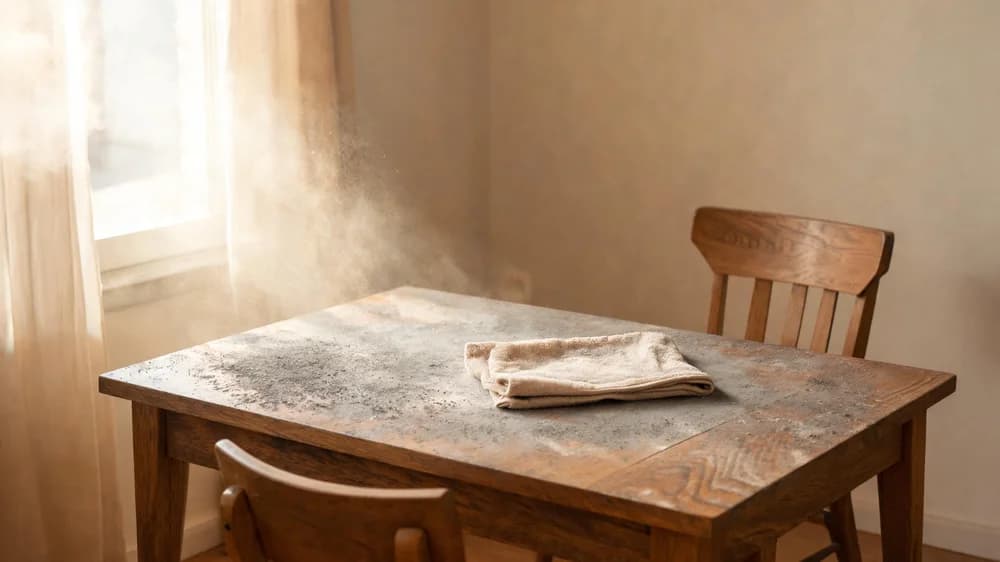
Smoke leaves more than a smell on wood furniture. Advanced DRI explains how soot and acid damage finishes, and what can be restored vs. replaced.
After a fire — even a small one — many homeowners focus on the obvious damage: charred walls, burned flooring, the room where the fire started. What they often miss is that wood furniture throughout the rest of the house is being quietly attacked by smoke and soot residue, starting within hours and continuing for days if nothing is done.
At Advanced DRI, salvaging wood furniture is one of the most common and most rewarding parts of fire restoration. Heirloom pieces, antiques, custom cabinetry, hardwood floors — with fast action, an enormous amount can be saved. With delayed action, much of it cannot. Here’s what happens and what you can do.
What Smoke and Soot Actually Are
Smoke is a cocktail of combustion byproducts: carbon particles, water vapor, acidic gases, and unburned fuel compounds. When fabric, plastic, and synthetic materials burn (which is nearly everything in a modern home), the resulting smoke contains chlorides, sulfates, and other acidic compounds.
Soot is the solid residue — carbon particles and condensed tars — that settles on every surface smoke touches. It is extremely fine, sticks via static and moisture, and is slightly acidic on contact.
When smoke and soot meet wood, three things happen in sequence:
- Discoloration — a grayish or yellowish film settles on surfaces
- Chemical etching — acidic residue begins eating the finish
- Odor absorption — porous wood traps smoke compounds deep in the grain
The Timeline of Damage
The First 24 Hours
Soot settles on every horizontal surface and clings to vertical ones. The smell is at its strongest. Finishes may still look intact, but the acidic pH is already starting to react with the surface coating.
Days 2–7
Finishes begin yellowing or crazing. Acidic compounds have had time to break down the top layer of lacquer, shellac, or polyurethane. Smell intensifies as wood absorbs odor compounds. Pieces that could have been cleaned in day one now require professional refinishing.
Weeks 2–4
Permanent staining sets in on light woods. Gapped joints that absorbed smoke now emit odor even after surface cleaning. Finishes may peel or cloud. The chance of full restoration drops significantly.
Beyond One Month
Wood pieces untreated for over a month often require stripping and complete refinishing to restore. Odor frequently persists even then because smoke compounds have migrated deep into the grain.
Different Woods, Different Outcomes
Hardwoods (Oak, Maple, Cherry, Walnut)
Durable finishes on dense woods hold up best. Most hardwood furniture with sealed finishes can be cleaned and restored if addressed quickly.
Softwoods (Pine, Cedar)
More porous, absorbs odor faster, and finishes are generally thinner. These pieces need faster intervention and sometimes full refinishing.
Antiques with Shellac or Varnish Finishes
The most delicate. Old shellac can dissolve under aggressive cleaning; even water-based cleaners can damage it. These require hand restoration by someone who understands period finishes.
Painted Furniture and Cabinets
Oil-based and enamel paints clean up reasonably well. Chalk-painted or unsealed pieces are the hardest and often show permanent staining.
Veneered and Laminated Pieces
Moisture during cleaning can lift veneer from its substrate. These require dry-method cleaning by trained technicians.
Why DIY Often Makes Things Worse
The instinct after a fire is to start wiping things down. With soot, this is often exactly the wrong move. Here’s what goes wrong:
- Wet cleaning smears soot into the grain, turning a surface deposit into a permanent stain.
- Generic household cleaners often have chemistries that react with both the soot and the finish, creating new discoloration.
- Vacuuming with a household vacuum blows superfine soot particles back into the air and spreads them around the room.
- Aggressive scrubbing works soot into the pores of the wood and through worn spots in the finish.
Professional restoration uses dry soot sponges first, then specialty cleaning agents matched to the finish type, then careful deodorization. The sequence and the products matter.
What You Can Do Right Now (Before Restoration Arrives)
- Do not wipe soot with water or household cleaner. Leave it for the professionals.
- Cover surfaces with clean sheets to reduce ongoing soot settling, but only if the surface is already lightly soiled.
- Reduce humidity — if safe to do so, run a dehumidifier or HVAC system. Moisture accelerates acidic damage.
- Ventilate by opening windows if weather permits, but only after active smoke has cleared.
- Photograph everything before any cleaning for insurance documentation.
- Keep pieces in their current locations until documented — insurance adjusters want to see the scene.
What Professional Restoration Looks Like
When we respond to a smoke-damaged home, our process for wood furniture usually includes:
- Initial assessment and photographic documentation
- Dry soot removal with chemical sponges — no liquid
- HEPA vacuuming to capture lifted particles
- Cleaning with pH-neutral, finish-appropriate solutions
- Deodorization, often with thermal fogging or hydroxyl generators
- Polishing or refinishing where needed
Pieces with sentimental or high market value often go back to our facility for controlled-environment restoration. Our full fire and smoke damage restoration service coordinates all of this along with structural cleaning, HVAC duct work, and odor removal.
Insurance and Wood Furniture
Most homeowners and renters insurance policies cover smoke damage to furniture under contents coverage. Keep in mind:
- Document condition before cleaning.
- Get a professional assessment in writing.
- Don’t discard damaged pieces until the adjuster has approved the claim.
- Restoration is usually less expensive than replacement, and insurers often prefer it.
Ready for Help?
If your home has suffered a fire — large or small — and you have wood furniture you want to save, time is the single biggest variable. Contact Advanced DRI immediately and we can often begin triage within hours. We’ve restored pieces homeowners assumed were lost, and we’re happy to assess over the phone at no charge.
Frequently Asked Questions
Can smoke damage be removed from wood that was never finished?
It’s much harder. Raw wood absorbs smoke compounds directly into the grain. Light discoloration can sometimes be sanded out, but odor often persists. Sealing with a primer-sealer after cleaning is usually required.
How long does the smoke smell last in wood furniture?
Untreated, the smell can persist for months or years. Professional deodorization combined with surface cleaning typically eliminates odor within one to two weeks, depending on the severity and the piece.
Is it worth restoring an inexpensive piece of furniture?
Strictly financially, often no — replacement may cost less. But many homeowners restore pieces for sentimental reasons, and insurance usually covers restoration. An honest assessment before work begins will tell you which pieces are candidates and which are not.
Categories
Need Restoration Services?
Our team is available 24/7 for emergency response. Call us today for a free phone consultation.
Questions About Restoration?
Our experts are ready to help. Contact us for a free consultation.