Tyler McClelland leads mitigation operations for Advanced DRI across New York's Hudson Valley, directing water, mold, and large-loss response in the field. He holds IICRC Water Restoration Technician (WRT) and Applied Microbial Remediation Technician (AMRT) certifications and a New York State Mold Supervisor certification, and is trained in IRCA hospital safe construction practices recognized by The Joint Commission.
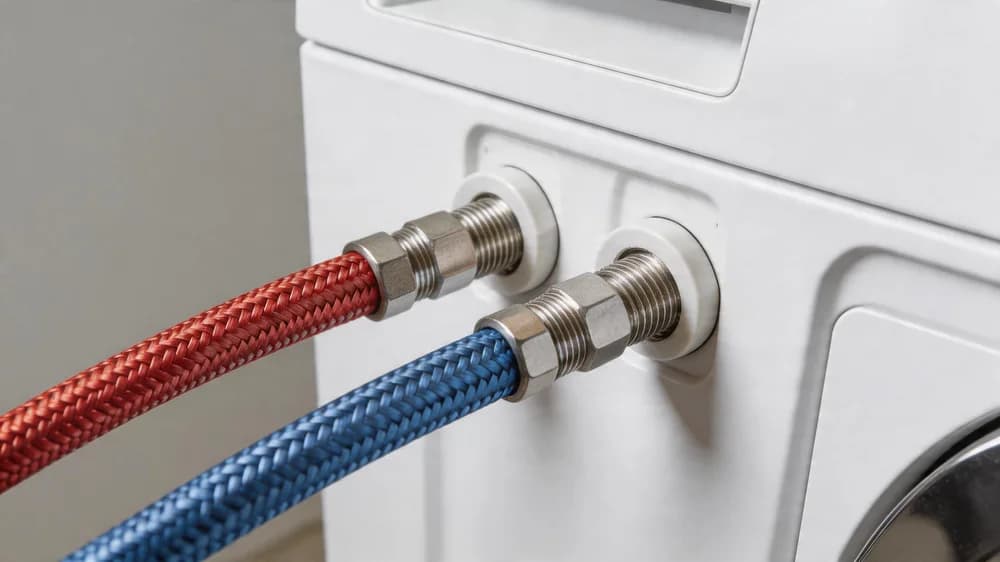
Washing machine hoses are a top cause of home flooding. Learn how to inspect, upgrade, and replace them before they fail, from Advanced DRI's restoration team.
If we had to name the single most destructive appliance failure in homes across our service area, it would be this: the humble rubber washing machine hose. A burst supply line can push 500 gallons of water through your laundry room in an hour, and because most failures happen while the homeowner is at work or asleep, the damage is almost always catastrophic by the time it’s discovered.
At Advanced DRI, we’ve responded to washing machine floods that soaked through two stories of a home before anyone noticed. The frustrating part? Nearly all of them were preventable with about twenty dollars of parts and fifteen minutes of work.
Why Washing Machine Hoses Fail
Unlike the cold supply line feeding your bathroom sink, washing machine hoses are pressurized 24/7 whenever the water is on. The valves at the back of the machine stay closed, but the hoses themselves are always holding line pressure — 40 to 80 PSI in most homes. That constant stress, combined with age and temperature cycling, is why they fail.
Rubber hoses typically last about 5 years. After that, the rubber begins to crack, the reinforcing layers weaken, and the ends corrode where they thread into the valves. The failure itself is usually sudden: a pinhole or a full split, with no warning.
The Four Things to Check Right Now
1. The Hose Material
Look at what’s behind your washer. If you see black rubber hoses with crimped metal ends, those are the stock hoses that came with most machines made before 2010. Replace them with braided stainless steel hoses, available at any hardware store. They cost about $10 to $15 each and last dramatically longer. This single upgrade is the best $30 you will ever spend on home maintenance.
2. The Age
Even braided stainless hoses aren’t forever. Most manufacturers rate them for about 8 to 10 years. If you can’t remember when yours were installed, assume they’re old and swap them now.
3. The Connections
Check where each hose threads into the wall valve and the machine. Look for white crusty mineral deposits, rust stains, or a damp ring around the connection. Any of those mean the gasket is weeping — it hasn’t fully failed yet, but it will.
4. The Kinks and Bends
Washing machines are usually pushed back against the wall, which can crimp the hoses. A sharp kink weakens the hose over time, even if you straighten it later. Leave at least four inches of clearance behind the machine, and use a hose with a 90-degree elbow end if space is tight.
Shut-Off Valves: The Step Almost Everyone Skips
Every washing machine has two shut-off valves where the hoses connect to the wall. The manufacturer and every plumbing code assumes you will close these valves between loads, or at least when you leave the house for more than a day.
Almost nobody does. The valves are hard to reach, they get stiff with age, and it feels like a hassle. Our suggestion: install a single-lever shutoff box (brands like SharkBite and Oatey make them) that lets you close both hot and cold with one flick. They’re widely available and install in under an hour with basic tools.
An even better option is an automatic water shutoff valve that senses motion or flow and closes automatically when no one is home or when a leak sensor goes off. Smart versions from Flo by Moen, Phyn, and others integrate with your phone and can shut the main line.
Where to Put Leak Sensors
A battery-powered water sensor costs about $20 and screams when it gets wet. Put one on the floor directly behind your washing machine, pushed back as far as it will go. Add another in the drip pan if you have one. If your laundry is on an upper floor, add a third in the ceiling space below if accessible.
- Test sensors twice a year — the batteries die faster than you expect.
- Pick a model with both an audible alarm and a phone notification if possible.
- Leak sensors are especially important in second-floor laundry rooms, where damage spreads to the floor below almost instantly.
What to Do If a Hose Bursts
If you come home to a flooded laundry room, move fast:
- Shut off the water. Close the valves behind the machine, or the whole-house main if you can’t reach them.
- Kill power to the room. Standing water and electrical outlets don’t mix.
- Call for professional extraction. By the time a washer hose fails, water has usually spread through flooring, baseboards, and adjacent walls. Our water damage restoration team will arrive with truck-mounted extractors and industrial drying equipment.
- Document everything. Take photos before cleaning. Save the failed hose — your insurance may want to see it.
A Quick 15-Minute Prevention Checklist
- Replace rubber hoses with braided stainless steel (if you haven’t already).
- Write the installation date on the hose with permanent marker.
- Install or verify shutoff valves are accessible.
- Drop a leak sensor behind the machine.
- Leave 4+ inches of clearance so hoses don’t kink.
- Close shutoff valves before leaving town for more than a weekend.
Ready for Help?
Whether you’re already dealing with a washing machine flood or you want to get ahead of the problem, our team is here. Contact Advanced DRI for 24/7 emergency response or to ask any question about preventing water damage in your home. We’re happy to help, even if you just need advice.
Frequently Asked Questions
How often should I replace washing machine hoses?
Rubber hoses should be replaced every 3 to 5 years. Braided stainless steel hoses typically last 8 to 10 years. If your hoses are of unknown age and your machine is more than 5 years old, swap them now — the cost is minimal compared to the risk.
Are braided stainless hoses really that much better?
Yes. The stainless braid provides a second layer of protection and dramatically reduces the risk of a sudden burst. The inner liner can still fail, but the braid usually contains any rupture long enough for the drip to be detected rather than turning into a flood.
Is my washing machine covered by homeowners insurance if a hose bursts?
The resulting water damage is usually covered under sudden and accidental water damage clauses. However, the machine itself and the failed hose may not be — those are typically considered maintenance items. Check your policy and keep documentation of recent hose replacements.
Categories
Need Restoration Services?
Our team is available 24/7 for emergency response. Call us today for a free phone consultation.

Questions About Restoration?
Our experts are ready to help. Contact us for a free consultation.