
Water Damage Restoration
Hidden Water Damage: Areas You Need to Check After Leaks and Floods
January 30, 20269 min read
T
Tyler McClelland· Mitigation Manager, Hudson Valley Region (NY)
Tyler McClelland leads mitigation operations for Advanced DRI across New York's Hudson Valley, directing water, mold, and large-loss response in the field. He holds IICRC Water Restoration Technician (WRT) and Applied Microbial Remediation Technician (AMRT) certifications and a New York State Mold Supervisor certification, and is trained in IRCA hospital safe construction practices recognized by The Joint Commission.
IICRC Water Restoration Technician (WRT), IICRC Applied Microbial Remediation Technician (AMRT), NY State Mold Supervisor Certification, Lead RRP Certification, OSHA Bloodborne Pathogens Training, IRCA Hospital Safe Construction Practices (TJC), Large Loss Mastery Estimating CertifiedLinkedIn
Published January 30, 2026 · Updated October 10, 2026

Discover hidden water damage areas often missed after flooding. Learn where water travels behind walls, under floors, and how professionals detect moisture.
Understanding hidden water damage helps property owners prevent serious long-term problems. Comprehensive water damage inspection identifies moisture in concealed spaces that visual examination misses. Professional moisture detection equipment locates water damage behind walls and in other hidden areas before secondary damage develops. Recognizing where hidden water damage occurs and when professional water damage inspection is necessary protects property investments and health.
Why Hidden Water Damage Matters
Hidden water damage creates problems that surface drying alone cannot address. Water trapped in concealed spaces continues causing damage long after visible areas appear dry.Ongoing Structural Damage
Water absorbed into structural materials weakens them over time. Wood framing swells, warps, and eventually rots. Subfloor materials deteriorate beneath intact flooring. OSB and particle board lose structural integrity when wet. Damage progresses silently until structural failures occur.Mold Growth in Hidden Spaces
Mold thrives in dark, moist environments—exactly the conditions hidden water damage creates. Wall cavities, beneath flooring, and inside ceiling spaces provide ideal mold growth conditions. Mold remediation becomes necessary when hidden moisture allows colonies to establish.Delayed Discovery
Hidden damage often goes undetected for weeks or months. By the time visible signs appear—staining, odors, warping—extensive damage has occurred. Early detection through thorough inspection prevents this progression.Critical Areas to Check for Hidden Water Damage
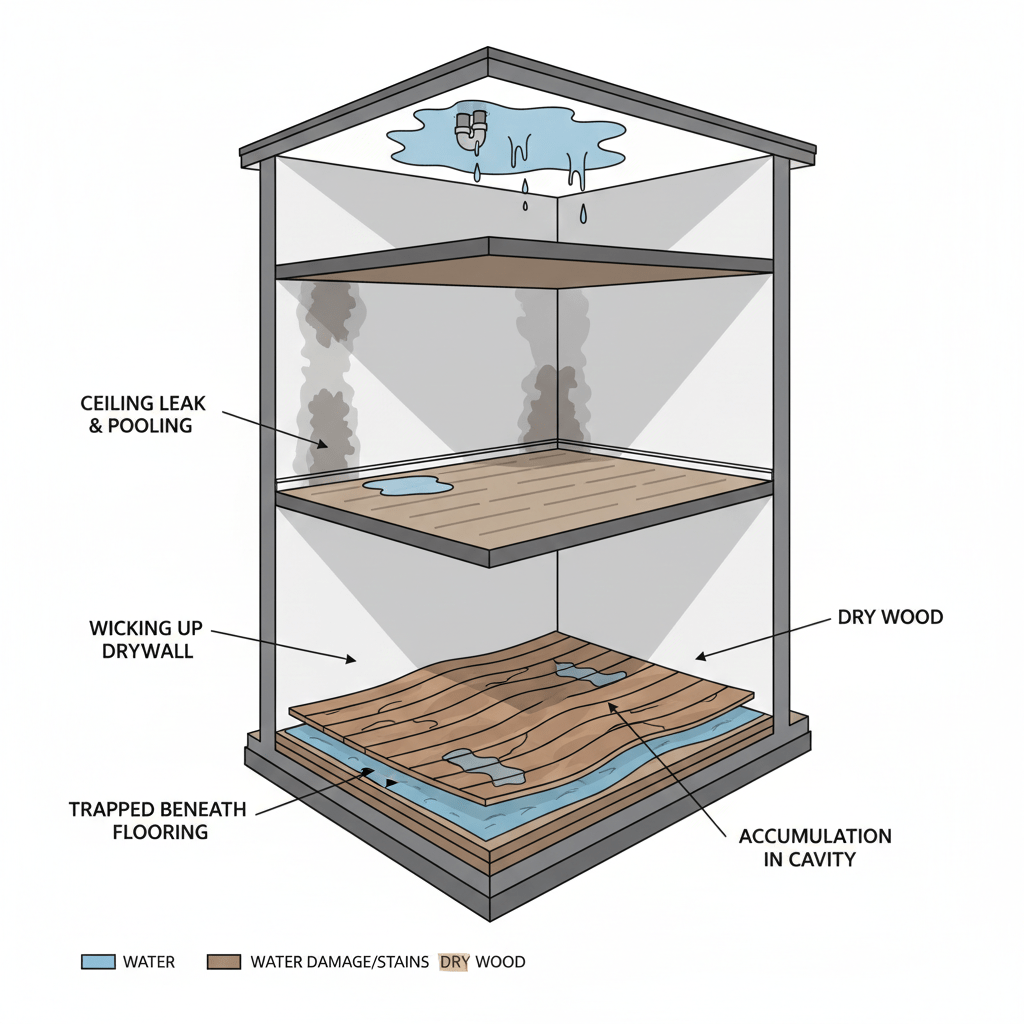
Water follows predictable pathways through buildings. Knowing where to look during water damage inspection helps identify hidden water damage before it causes secondary problems.Behind Walls
Drywall acts as a wick, drawing moisture upward through capillary action. Water damage behind walls travels 12-24 inches above visible waterlines. Even brief flooding can saturate wall cavities with moisture. Signs of hidden wall damage include:- Soft or spongy drywall when pressed
- Bubbling or peeling paint
- Warped or swollen baseboards
- Musty odors near walls
- Visible staining above floor level
Beneath Flooring
Water penetrates most flooring types, saturating subfloor materials underneath. Carpet holds water that seeps into padding and subfloor. Hardwood and laminate allow water migration between seams. Even tile floors permit water passage through grout. Subfloor damage indicators:- Soft or bouncy areas when walking
- Cupping or buckling in hardwood
- Loose or lifting tiles
- Carpet that remains damp despite surface drying
- Discoloration around floor edges
Inside Ceiling Cavities
Upstairs water damage affects ceilings below. Water pools on ceiling drywall, saturating insulation and structural members. Even small leaks can spread across large ceiling areas before visible signs appear. Ceiling damage signs:- Sagging or bulging ceiling areas
- Brown water stains
- Soft texture when touched
- Cracking around light fixtures
- Visible mold spots
Inside Wall Cavities Around Plumbing
Plumbing runs through wall cavities throughout buildings. Slow leaks or burst pipes saturate surrounding materials while remaining invisible from room interiors. Areas around bathrooms, kitchens, and laundry rooms are particularly vulnerable.Crawl Spaces and Basements
Water naturally flows downward, accumulating in lowest building areas. Basement and crawl space flooding affects structural elements, stored items, and creates moisture sources affecting entire buildings.HVAC Ductwork
Water entering duct systems spreads moisture throughout buildings when systems operate. Flooded ducts also harbor mold growth that distributes spores to all connected spaces. Professional restoration includes duct inspection and cleaning when water exposure occurs.| Hidden Area | How Water Enters | Detection Method |
|---|---|---|
| Wall cavities | Capillary action, direct penetration | Moisture meters, thermal imaging |
| Subfloor | Seepage through flooring, pooling | Moisture readings, physical inspection |
| Ceiling cavities | Leaks from above, pipe failures | Visual inspection, moisture probes |
| Insulation | Water migration through cavities | Thermal imaging, physical inspection |
| HVAC ducts | Flooding, condensation | Visual inspection, air quality testing |
| Crawl space | Ground water, foundation seepage | Direct inspection, moisture measurement |
Professional Detection Equipment
Restoration professionals use specialized equipment for moisture detection to locate hidden water damage that visual inspection cannot detect.Moisture Meters
Professional-grade moisture meters measure moisture content in various materials. Pin-type meters measure moisture at specific points. Pinless meters scan larger areas through surfaces. Both types detect elevated moisture in walls, floors, and structural materials.Thermal Imaging Cameras
Thermal cameras detect temperature differences that indicate moisture presence during moisture detection processes. Wet materials display different temperatures than dry surroundings. This technology identifies moisture locations without invasive testing.Hygrometers
Hygrometers measure relative humidity levels in specific spaces. Elevated readings in wall cavities or crawl spaces indicate moisture problems. Continuous monitoring tracks drying progress in hidden areas.Borescopes
Small cameras on flexible cables allow visual inspection inside wall cavities and other enclosed spaces. This minimally invasive approach confirms moisture presence and extent without major demolition.Common Hidden Damage Scenarios
Understanding common scenarios helps identify where hidden water damage likely exists based on water source and location.Upstairs Bathroom Overflow
Water from upstairs bathrooms travels through floor systems, potentially affecting:- Subfloor beneath bathroom
- Ceiling of room below
- Walls on lower level (water follows framing)
- Insulation in floor/ceiling cavity
- Any rooms water passes through traveling downward
Supply Line Failure
Burst supply lines in walls can run for hours before discovery, saturating:- Wall cavities along pipe route
- Flooring materials where water emerges
- Lower level spaces where water accumulates
- Adjacent walls through shared framing
Roof Leak
Roof leaks don't always show directly below the entry point. Water may travel along rafters, sheathing, or insulation before emerging:- Attic insulation along water path
- Ceiling areas distant from actual roof penetration
- Wall tops where ceiling meets walls
- Anywhere along the water's travel path
Basement Flooding
Standing water in basements affects more than visible wet areas:- Concrete absorbs water, releasing moisture for weeks
- Wall materials above waterline through wicking
- Stored contents even if above water level (humidity damage)
- HVAC equipment and ductwork
When DIY Inspection Isn't Enough
While homeowners can identify obvious damage, hidden water damage often requires professional water damage inspection.Limitations of Visual Inspection
Visual inspection only reveals damage that has progressed enough to cause visible signs. By the time staining, warping, or mold appears visibly, extensive hidden damage typically exists. Professional equipment detects moisture before visible damage occurs.Professional Assessment Benefits
- Detection of moisture in inaccessible areas
- Accurate moisture content measurements
- Documentation for insurance purposes
- Identification of all affected areas
- Prevention of incomplete restoration
Insurance Considerations
Insurance claims require documentation of damage extent. Professional moisture mapping provides evidence of hidden damage supporting appropriate claim values. DIY assessment may miss damage that insurance would otherwise cover.Preventing Hidden Damage from Worsening
Actions taken immediately after water intrusion affect hidden water damage severity.Remove Standing Water Quickly
The longer water sits, the more it penetrates hidden areas. Rapid extraction limits migration into wall cavities, subfloors, and other concealed spaces.Don't Just Dry Surfaces
Surface drying with fans may make floors and walls appear dry while hidden moisture remains. Professional drying addresses moisture in wall cavities and beneath flooring, not just surface moisture.Call Professionals for Assessment
Emergency restoration services include comprehensive moisture assessment. Professional evaluation identifies hidden damage early, when it's most treatable. Pro Tip: Even if visible damage seems minor, professional assessment is worthwhile after any significant water intrusion. The cost of inspection is minimal compared to damage from undetected moisture.Frequently Asked Questions About Hidden Water Damage
How long does it take for hidden water damage to show visible signs?
+
Visible signs may appear anywhere from days to months after water intrusion, depending on moisture amount and location. Minor damage might show within a week through staining or warping. Damage in well-concealed areas might not become visible until mold growth, structural failure, or odors develop weeks or months later. Professional moisture detection identifies problems before visible damage occurs.
Can I use a household moisture meter to check for hidden damage?
+
Consumer moisture meters provide basic readings but lack the accuracy and penetration depth of professional equipment. They can indicate elevated moisture in accessible areas but may miss moisture deep in wall cavities or beneath flooring. Professional water damage inspection uses multiple detection methods for comprehensive evaluation.
Do I need to remove drywall to check for hidden water damage?
+
Not always. Professional moisture meters read through drywall, and thermal imaging detects temperature variations indicating water damage behind walls without removal. However, severely damaged drywall or confirmed significant moisture may require removal for proper drying and to verify cavity conditions. Professionals determine when removal is necessary based on readings and damage extent.
What happens if hidden water damage goes untreated?
+
Untreated hidden water damage leads to progressive problems: mold growth within 24-48 hours, structural material deterioration, wood rot, pest attraction, and air quality issues. Repair costs increase significantly as damage spreads. What starts as minor hidden moisture can become major structural problems and health hazards without treatment.
Will insurance cover hidden water damage?
+
Most policies cover hidden water damage from sudden water events, but coverage depends on the water source and how quickly damage was addressed. Professional documentation of hidden damage extent supports insurance claims. Policies may limit coverage if damage resulted from delayed response or neglected maintenance. Review your specific policy and document damage thoroughly.
How soon after water damage should hidden areas be checked?
+
Hidden areas should be assessed as part of initial emergency response. Professional water damage inspection includes comprehensive moisture mapping during the first assessment. Checking immediately allows treatment before mold growth begins and before moisture spreads further into hidden spaces. Never assume visible drying means hidden areas are dry.
Professional Hidden Damage Assessment
Hidden water damage poses serious risks to property and health when left undetected. Professional water damage inspection using specialized moisture detection equipment identifies moisture in concealed spaces, enabling complete restoration and preventing long-term problems. When water damage affects properties throughout Northern New Jersey, Pennsylvania's Capital Region, New York's Hudson Valley, Connecticut's Capital Region, or the South Jersey Shore, comprehensive professional assessment ensures hidden moisture is detected and addressed—protecting properties from damage that surface inspection would miss.Categories
Need Restoration Services?
Our team is available 24/7 for emergency response. Call us today for a free phone consultation.

Questions About Restoration?
Our experts are ready to help. Contact us for a free consultation.