
Tyler McClelland leads mitigation operations for Advanced DRI across New York's Hudson Valley, directing water, mold, and large-loss response in the field. He holds IICRC Water Restoration Technician (WRT) and Applied Microbial Remediation Technician (AMRT) certifications and a New York State Mold Supervisor certification, and is trained in IRCA hospital safe construction practices recognized by The Joint Commission.
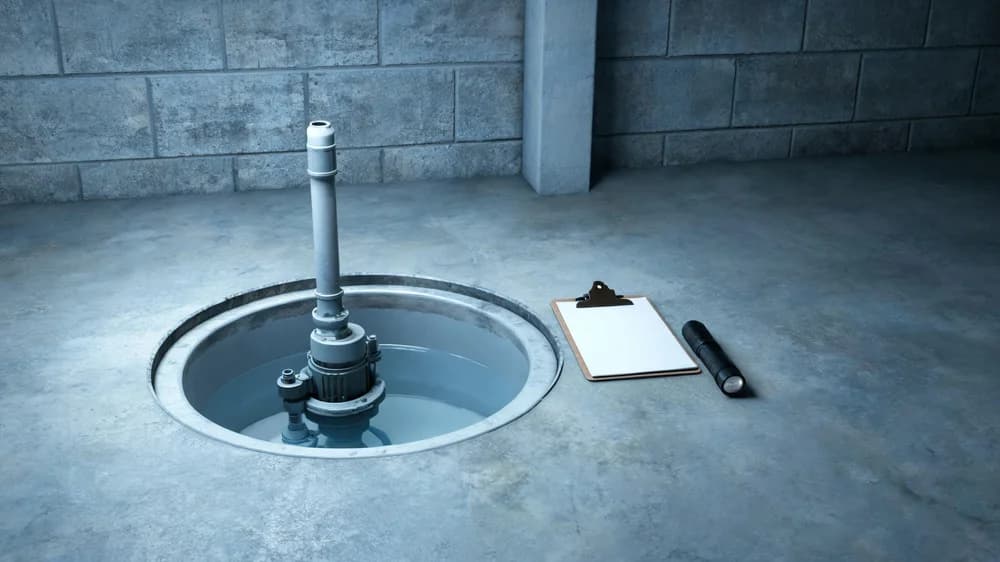
A failed sump pump can flood a basement in hours. Advanced DRI shares a complete sump pump maintenance and testing guide to keep your basement dry.
The Most Important Appliance You Never Think About
For homeowners with basements, the sump pump is quiet, hidden, and easy to forget. It sits in a pit in the lowest part of the home and does nothing visible until groundwater rises. Then, in heavy rain or snowmelt, it becomes the single piece of equipment standing between a dry basement and several feet of water.
At Advanced DRI, many of the basement flooding losses we restore trace back to a sump pump that failed at the worst possible moment. The frustrating part is that most of these failures were preventable. A sump pump that is tested and maintained is far more likely to work when it matters.
How a Sump Pump Works
A sump pump sits in a basin, called the sump pit, dug into the lowest point of a basement or crawlspace. As groundwater collects around the foundation, it drains into the pit. When the water reaches a set level, a float switch activates the pump, which pushes the water out through a discharge pipe and away from the home.
The system is simple, which is exactly why it is reliable when maintained and frustrating when neglected. Every component, the pump, the float switch, the discharge line, and the power source, must work for the system to protect your home.
How to Test Your Sump Pump
Testing takes five minutes and should be done at least twice a year, ideally before the wet seasons of spring and fall.
- Locate the sump pit and remove the lid.
- Slowly pour a bucket of water into the pit until the float rises.
- Confirm the pump switches on automatically as the water level rises.
- Watch that the water drains quickly and the pump shuts off once the pit is empty.
- Step outside and verify water is discharging from the pipe and flowing away from the foundation.
If the pump fails to start, runs but does not drain, or short-cycles on and off, it needs service or replacement before the next heavy rain.
Routine Sump Pump Maintenance
Beyond testing, a few maintenance tasks keep the system dependable.
Every Few Months
- Clear debris, gravel, and silt from the sump pit, which can jam the pump or float switch.
- Check that the float switch moves freely and is not caught on the pit wall or the pump.
- Confirm the pump is plugged directly into a working outlet, ideally a GFCI outlet.
Once a Year
- Clean the inlet screen or grate at the base of the pump.
- Inspect the discharge pipe for clogs, and check that the exterior outlet is clear and angled away from the home.
- Verify the check valve is working so discharged water does not flow back into the pit.
- Listen for unusual noises such as grinding or rattling, which suggest a worn motor or impeller.
Plan for the Day the Power Fails
Here is the hard truth about sump pumps: the storms most likely to flood your basement are also the storms most likely to knock out your power. A standard sump pump connected only to household electricity will not run during an outage, precisely when you need it most.
Two solutions address this gap. A battery backup pump activates automatically when power is lost or when the primary pump cannot keep up. A water-powered backup uses municipal water pressure to remove water and needs no electricity at all. For homes with finished basements or a history of flooding, a backup system is one of the best protective investments available.
Know When to Replace
Sump pumps do not last forever. Most units have a service life of about 7 to 10 years. If your pump is approaching that age, runs frequently, or has needed repairs, replacing it proactively is far cheaper than restoring a flooded basement. Replacement is one of the clearest examples of preventive spending that pays off.
When the Basement Floods Anyway
Even a well-maintained system can be overwhelmed by an extreme storm or fail without warning. If your basement floods, prioritize safety first. Do not enter standing water that may be in contact with electrical outlets or appliances. Shut off power to the basement at the breaker if you can do so safely.
Then call for professional help. Basement water needs to be extracted quickly and the space dried completely, because moisture trapped in concrete, framing, and insulation leads to mold within days. Our water damage restoration team handles basement flooding from extraction through complete structural drying. If your basement has flooded, contact Advanced DRI right away. Learn more about our experience on our about page.
Frequently Asked Questions
How often should I test my sump pump?
Test your sump pump at least twice a year, and ideally before spring snowmelt and the fall rainy season. Homeowners in flood-prone areas may choose to test monthly during wet periods.
How long do sump pumps last?
Most sump pumps last about 7 to 10 years, though heavy use shortens that lifespan. If your pump is near or past a decade old, plan to replace it proactively rather than risk a failure during a storm.
Do I really need a battery backup sump pump?
If your basement is finished, stores valuables, or has flooded before, a backup system is strongly recommended. Severe storms frequently cause power outages at the exact moment a sump pump is needed most, and a backup keeps the system running.
Categories
Need Restoration Services?
Our team is available 24/7 for emergency response. Call us today for a free phone consultation.

Questions About Restoration?
Our experts are ready to help. Contact us for a free consultation.