Mold Under the Kitchen Sink: Causes, Safe Cleanup, and When to Replace the Cabinet
Elsa Boyer is a Regional Operations Manager for Advanced Disaster Recovery, based in Harrisburg, Pennsylvania, overseeing commercial and healthcare restoration projects. She holds a Bachelor of Arts from Valparaiso University and a deep certification portfolio, including ICRA Certified Healthcare Remediator Supervisor and multiple IICRC designations across commercial drying, structural drying, water, and fire & smoke restoration.
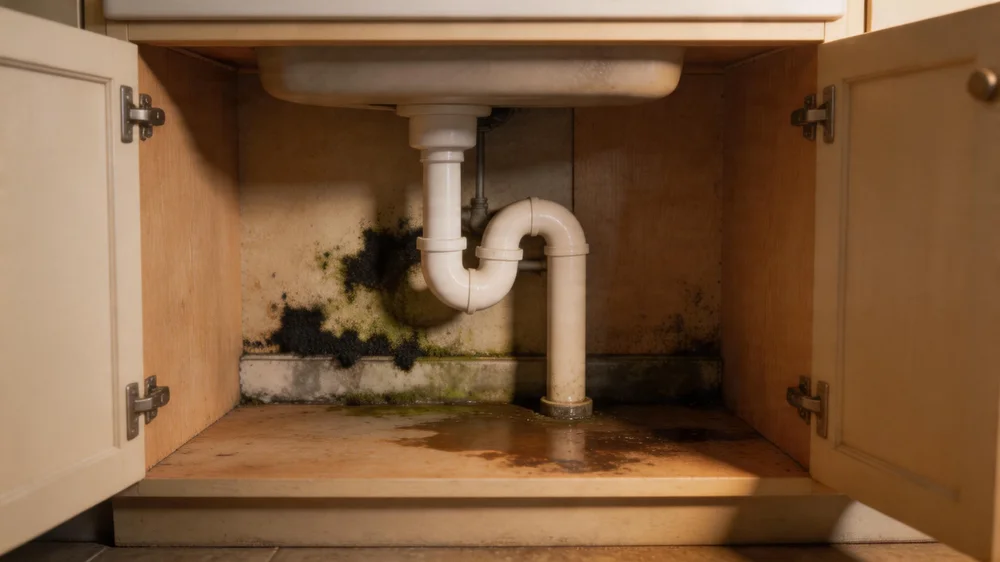
Black or white mold under your kitchen sink? Clean small spots the EPA way, know when swollen particle board has to go, and when to call a pro.
In most of the sink bases we open, the cabinet isn't the real problem. The water that keeps finding it is. Mold under a kitchen sink almost always means a moisture source (a slow drip, a sweating pipe, a spill that never dried) inside a dark, closed box full of wood and cardboard.
Black mold under the sink is common for exactly that reason, and it comes back after a quick wipe if the water does. Small spots on a firm, sealed surface are a homeowner job. Soft or swollen particle board, growth on the wall behind, or a musty smell you can't trace are the signs to stop.
Clean It, Replace the Floor, or Call a Pro? A 60-Second Check
Run through this first. It tells you which job you actually have, and when DIY mold removal makes sense.
- Stop the water and find the source.
- Empty the cabinet; throw out wet cardboard and sponges.
- Press the cabinet floor with a screwdriver. Firm or soft?
- Firm, sealed surface, small patch: clean it (steps below).
- Soft board, stained wall behind, or a smell you can't trace: call a pro.
| What you see | Likely meaning | Next step |
|---|---|---|
| Spots on laminate, paint or plastic; floor firm | Surface growth | Clean it yourself |
| Stained but firm plywood | Shallow growth | Clean, dry, monitor |
| Particle board swollen, soft or flaking | The board has failed | Replace panel if subfloor is dry |
| Mold on drain pipes or supply lines | Moisture problem, not pipe problem | Wipe, dry, find the source |
| Back panel stained near the drain stub | Possible leak inside the wall | Remove panel, check drywall |
| Musty smell, nothing visible | Hidden moisture | Professional moisture check |
| Over about 10 sq ft, or keeps returning | Beyond EPA's DIY guideline | Call a pro |
If you landed in one of the last three rows, the problem probably reaches past the cabinet. A moisture check settles it; our line, (845) 294-8919, is answered around the clock.
Is Mold Under the Sink Dangerous?
Usually not an emergency, but it should come out promptly. According to the CDC, mold can cause a stuffy nose, sore throat, coughing or wheezing, burning eyes, or skin rash in some people, and people with asthma or mold allergies may react more severely. Color doesn't tell you how dangerous it is. The bigger risk is often hidden: a wet cabinet floor, subfloor or wall behind the sink.
The CDC adds that people with weakened immune systems or chronic lung disease "may get infections in their lungs from mold." If anyone in the home falls into that group, have someone else do the cleanup and keep them out of the kitchen until it's done and dry.
And "toxic black mold"? Stachybotrys chartarum is real, but you can't identify it by eye. The CDC is blunt: "You do not need to know the type of mold," and it doesn't recommend testing. Whatever the species, the fix is the same: remove it, dry the area, stop the water. Symptoms that seem worse in the kitchen are a question for a doctor, not a test kit.
How to Get Rid of Mold Under the Sink
First stop the leak and empty the cabinet. Wearing an N-95 respirator, gloves and goggles, scrub small areas (under about 10 square feet) with detergent and water, then dry the cabinet completely within 24 to 48 hours. If the particle board is soft or swollen, cleaning won't fix it, and the panel has to be replaced.
Step 1: Stop the Water Source
Close both angle stops, then run each side and wipe every joint with a dry paper towel: supply nuts, faucet base, trap slip nuts, disposal, dishwasher hose. The towel finds seepage your fingers miss. Tighten what you can; call a plumber for anything cracked.
Step 2: Empty the Cabinet and Discard Porous Items
Plastic bottles can be wiped down. Wet cardboard, paper bags, sponges and rags go in the trash. Drain-side water is used water, so don't try to save anything it soaked.
Step 3: Protect Yourself
The EPA says you may want to wear an N-95 respirator, rubber or nitrile gloves that reach the middle of the forearm, and goggles "that do not have ventilation holes." Vented safety glasses aren't the same thing. Put a fan in a nearby window blowing outward, not across the kitchen.
Step 4: Scrub Hard Surfaces With Detergent and Water
The EPA's instruction is simple: detergent, water, a scrub, then dry completely. Use a stiff brush and disposable towels, and bag them afterward. No cleaner rescues a swollen board.
About bleach: The EPA says a biocide such as chlorine bleach "is not recommended as a routine practice during mold remediation," and that wet, moldy porous materials may have to be discarded.
Never mix bleach with ammonia, vinegar or any other cleaner. Bleach plus an acid such as vinegar releases chlorine gas (Poison Control). Use one product, rinse, and let the surface dry before trying another.
Step 5: Dry It Completely, Then Check Again in a Week
Aim a fan or small dehumidifier into the cabinet. Keep the doors open and the cabinet empty until the board is dry and the smell is gone. The EPA also says not to paint or caulk moldy surfaces. A spot that returns within a week means water is still getting in.
Particle Board or MDF Cabinet Floor: Clean It or Replace It?
Only clean it if the board is still hard and the mold sits on the surface laminate. Once particle board or MDF has swollen, softened or started to flake, it can't be dried flat or cleaned reliably. Cut out the panel, check that the subfloor and the wall behind are dry and firm, and install a moisture-resistant replacement.
Most sink base floors are particle board or MDF under a thin melamine skin. The skin sheds water; the core doesn't. Water enters at cut edges and screw holes, the chips swell, and the glue lets go. Solid plywood holds up better and can often take one round of cleaning.
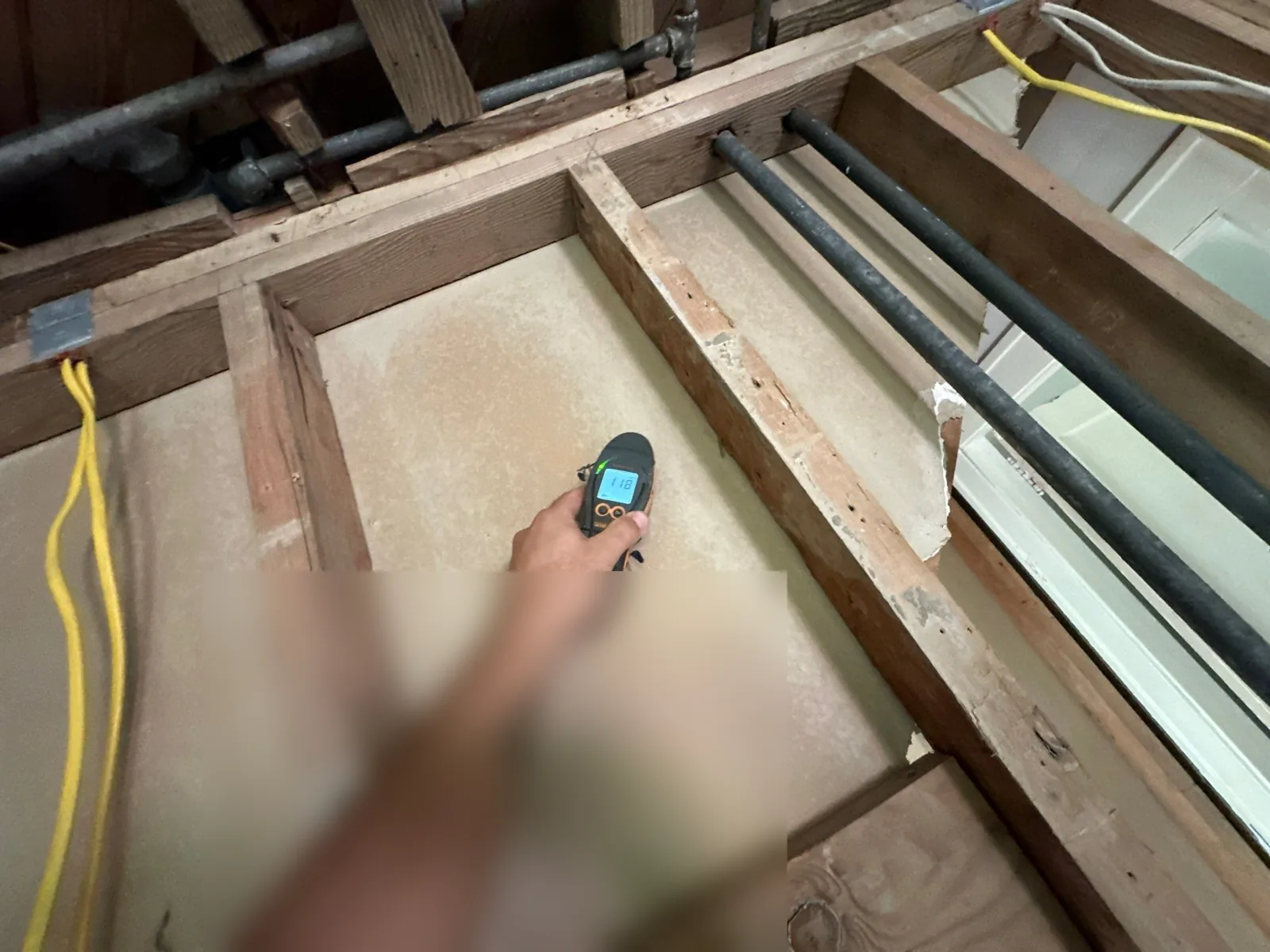
A handy homeowner can swap the panel. The order we'd follow:
- Shut off the disposal and dishwasher circuit at the breaker.
- Close both angle stops, set a bucket under the trap, and disconnect it if it's in the way.
- Cut the old panel out along the face frame with an oscillating tool, clear of pipes.
- Check the subfloor and the drywall behind, ideally with a moisture meter. If either is wet, soft or moldy, stop: the job now goes beyond the cabinet.
- Clean surface growth on sound framing and let it dry.
- Fit a new panel of exterior-grade plywood or PVC sheet with sealed edges.
- Add a waterproof under-sink mat with raised edges.
Step 4 is where small jobs turn big. In Connecticut, a long-running hidden leak had rotted the subflooring. Cosmetic fixes weren't enough, so the subfloor was opened, dried and rebuilt; that job was handled by our Connecticut water damage team.
Mold on the Pipes or the Back Panel
Pipes are non-porous. Growth on them means the space stays damp: wipe, dry, find the moisture. Staining on the back panel, especially near the drain stub, can mean a leak inside the wall. Take the panel off and look at the drywall before closing anything up.
What It Looks Like: Black, White, Green, or Just Mildew?
Mold, water stains and mineral scale get mistaken for each other. Three quick tests:
- Wipe test. Mold is fuzzy or slimy and smears on a damp towel. A stain doesn't move.
- Scale or mold? Hard-water deposits are white, hard and crusty, sit under a fitting and follow a drip trail. As a home check, a drop of vinegar fizzes on scale; mold just smears.
- Screwdriver test. A dark stain on a soft board can hide growth inside it.
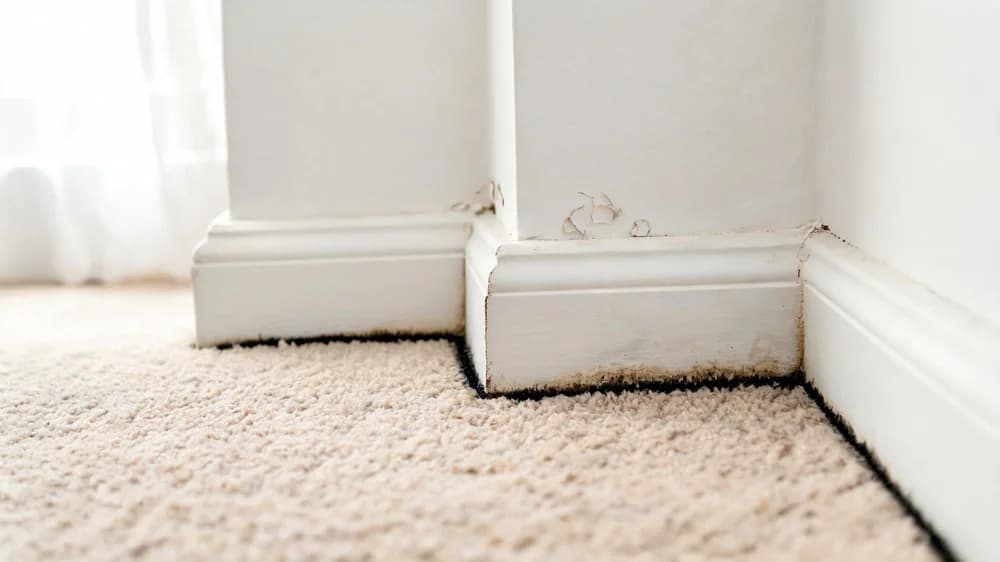
Black, dark green, white and fuzzy, grey and powdery: it all gets the same cleanup. For more, see the difference between black and green mold. Black or pink buildup in the drain or along the caulk line instead? That's a cleaning and recaulking job, not a cabinet problem.
Why the Cabinet Keeps Getting Wet
The Usual Leak Points
- P-trap slip nuts that loosened, or were never retightened after the last clog.
- Supply lines: worn compression nuts or a weeping braided hose.
- Faucet base and sprayer hose.
- Disposal sink flange (dried-out putty) and dishwasher inlet.
- Dishwasher drain hose that splits or slips its clamp; see our guide to a dishwasher leak.
- Undermount sink rim with failed caulk or loose clips.
- Wall drain stub, where the drain enters the wall.
A supply line leaks clean water. Drain water from the trap, disposal or dishwasher is used water. Restorers generally treat it as at least Category 2 (gray water) under the IICRC S500 standard, and it gets worse the longer it sits, which is why we discard soaked board and cardboard after a drain leak. Fridge lines and other appliance leaks can travel in from the side.
Damp but No Drip? Where to Look
- Sweating cold lines in humid summers, especially without air conditioning. Foam sleeves fix it.
- The countertop seam behind the faucet, where splash water runs down the back.
- A clogged dishwasher air gap or a loose clamp at the disposal inlet.
- Indoor humidity: the EPA advises keeping it below 60 percent, ideally 30 to 50.
If the board still reads wet after 48 hours of drying, or the smell won't quit, the water is coming from somewhere you can't see. On an inspection in Allentown, moisture meters found a leak that wasn't visible on the surface. Our lists of hidden water damage areas to check and other hidden mold signs around the home help narrow it down.
In apartments, co-ops and condos, the water may come from the unit above; kitchens are often stacked. In New York City, NYC HPD says Local Law 55 of 2018 requires owners of buildings with three or more apartments to keep units free of mold and fix the conditions that cause it. Notify your landlord in writing; if nothing happens, HPD says tenants can file online or call 311. Leases vary, so read up on landlord and tenant responsibilities before paying for repairs yourself.
What About Mold Under a Bathroom Sink?
Mold under a bathroom sink follows the same logic, plus a few failure points of its own. The pop-up drain linkage often drips where its rod passes through the drain body. The overflow channel can leak at the gasket. And shower humidity can keep a vanity damp with no leak at all. Vanity bases are usually particle board too, so the screwdriver test applies. A slow drip from a supply valve can also wick into the toe kick before you ever see a puddle. Run the exhaust fan through and after showers, and if the vanity backs onto the shower, check for mold behind shower tiles.
When to Call a Mold Remediation Professional
- Growth covers more than about 10 square feet (the EPA's DIY line) or has spread into the wall, floor or nearby cabinets.
- The cabinet floor has failed and the subfloor beneath feels damp.
- You smell mold but can't find it.
- Someone at home has asthma, a mold allergy, a weak immune system or lung disease.
- It keeps returning after cleaning and a leak repair.
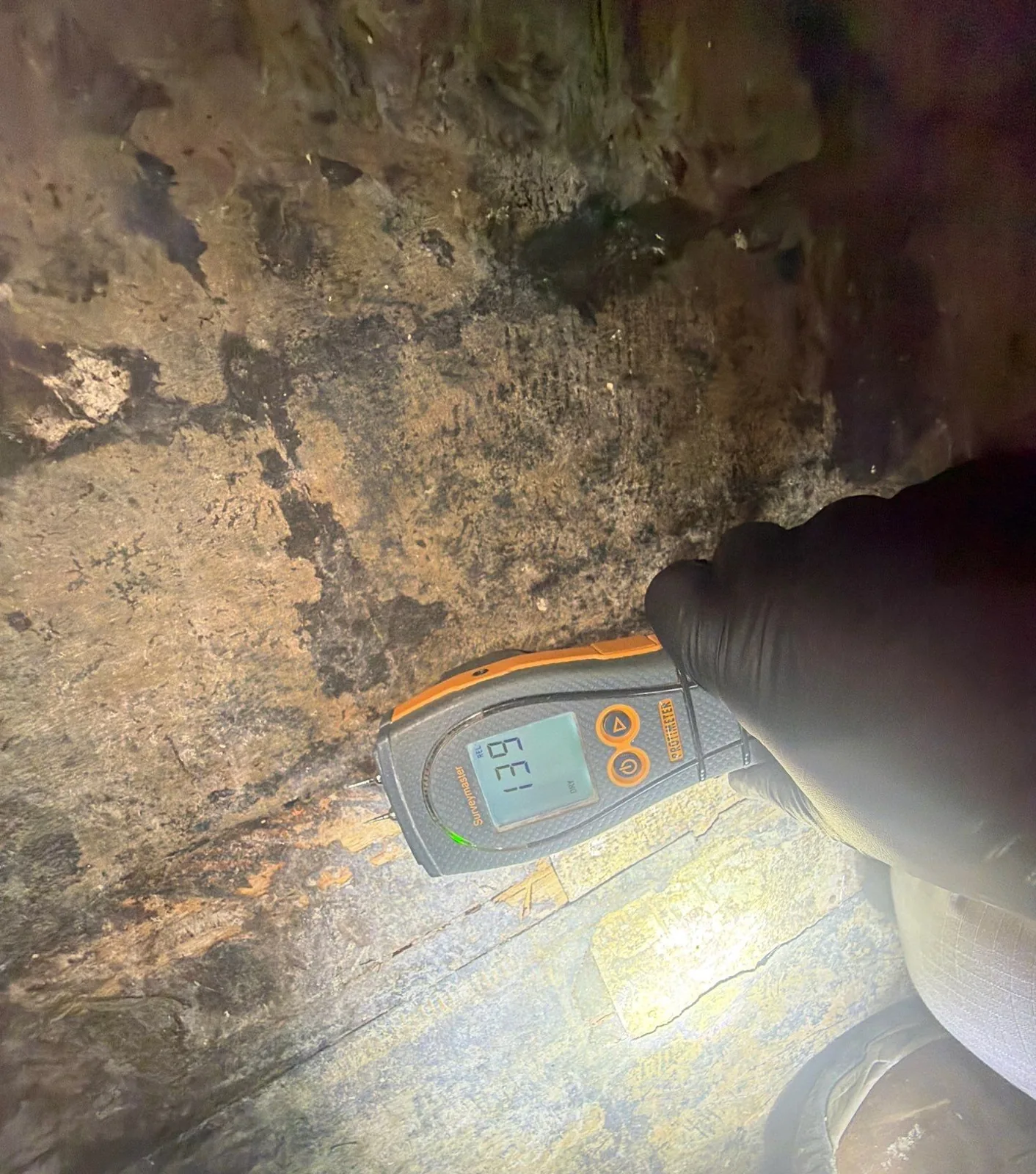
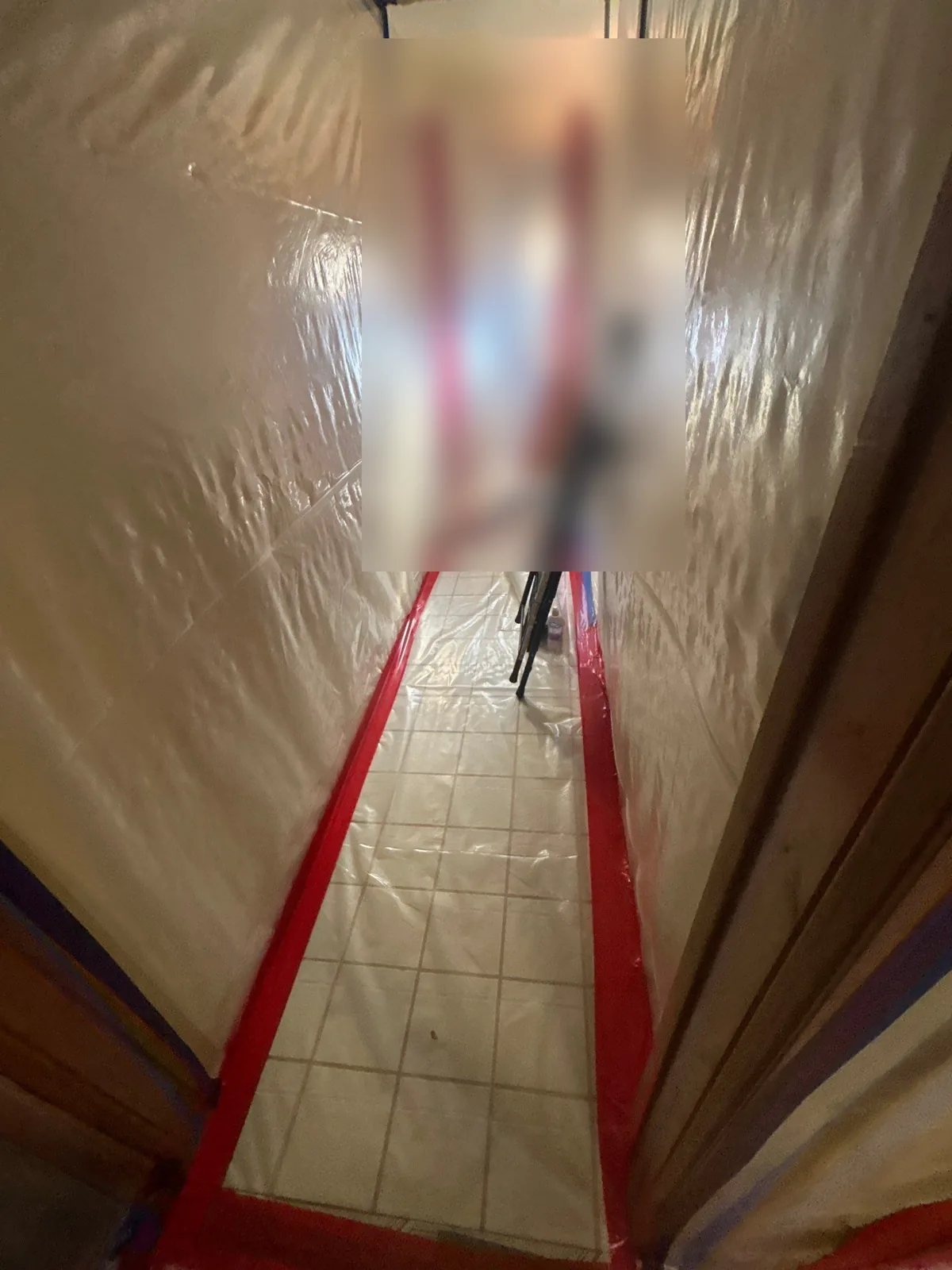
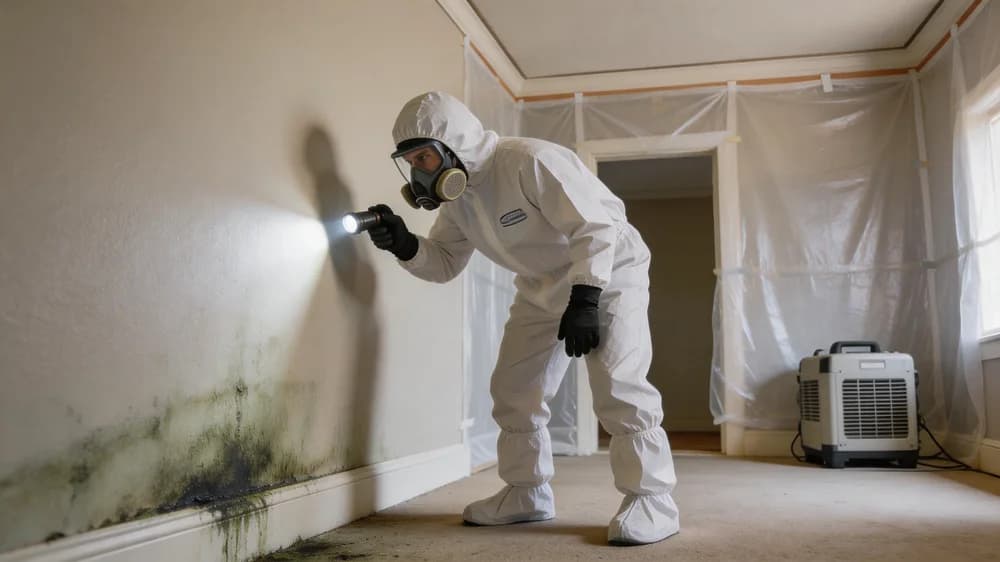
A crew's edge is finding and controlling what you can't see. We map moisture with meters and thermal imaging, then follow IICRC S520 procedures: the work area is sealed with plastic sheeting under negative air, HEPA air scrubbers run, and moldy material is physically removed, not just sprayed. Nothing is rebuilt until it reads dry. The containment photo below shows that setup on one of our 2026 kitchen jobs.
New York rules. New York State licenses mold assessors and remediation contractors, "with limited exceptions such as home or business owners performing work on their own properties" (NYS DOL Mold Program). In New York City, HPD says owners of buildings with 10 or more units must hire a licensed assessor and a licensed remediator, independent of each other, for more than 10 square feet of mold; those workers must comply with Administrative Code section 24-154 and file under Local Law 61 of 2018. Rules differ in NJ, PA and CT.
See how professional mold remediation works and what each step involves. Scope drives cost: a surface clean-up, a replaced cabinet floor and an opened wall are very different jobs. Our guides to mold testing and removal costs in New Jersey and mold remediation costs in Pennsylvania break that down. Questions about your situation? (845) 294-8919, 24/7.
How to Keep Mold From Coming Back
- A waterproof under-sink mat with raised edges, so drips pool where you see them.
- A battery leak sensor at the back of the cabinet.
- A look under the sink twice a year, plus cleaners kept in a plastic bin; replace braided supply lines on the manufacturer's schedule.
- Foam sleeves on cold lines before humid weather.
- A dishwasher drain high loop or air gap, to stop backflow and odors.
What Happens If You Ignore It
A slow leak doesn't stay in the cabinet. It runs under the toe kick, into the subfloor and along the framing. In September 2026, our Toms River team was called to a severe kitchen leak that had already reached the subfloor and crawlspace. By then the job meant extraction and structural drying, not a quick cleanup.
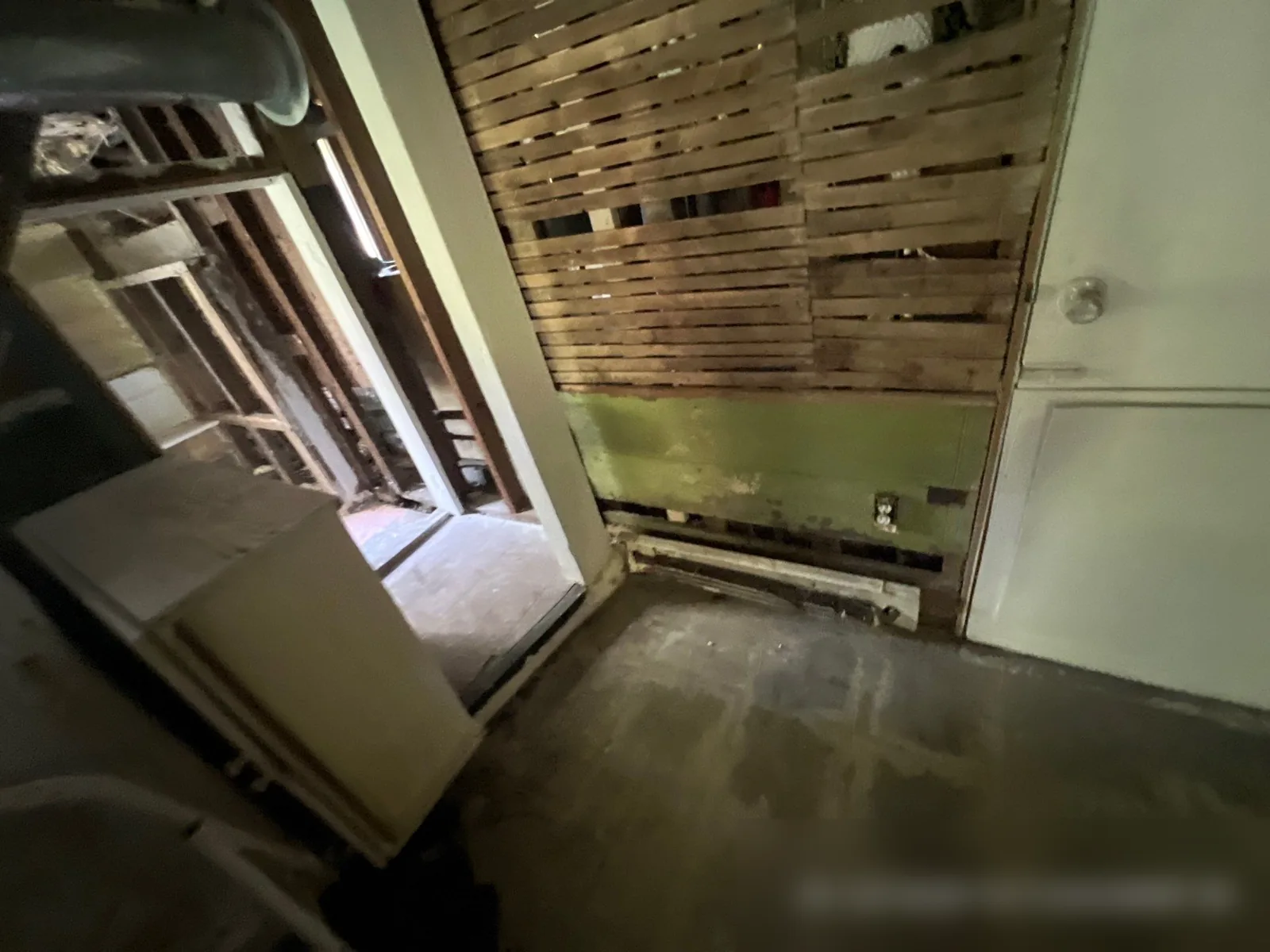
The pattern our crews see from Harrisburg to the Jersey Shore is the same: caught early, a leak is a dry-out; left to sit, it becomes a mold job. If water has reached the floor or wall, water damage restoration comes before mold work. Not sure which you have? Contact Advanced DRI. We've served New York, New Jersey, Pennsylvania and Connecticut since 2000, typically arriving within 90 minutes in nearby service areas.
Frequently Asked Questions
Can I just paint over mold under my sink?
No. Paint doesn't remove mold, and the growth keeps going while the paint peels. The EPA advises against painting or caulking moldy surfaces. Clean the mold off, fix the leak, let it dry completely, and only then use a mold-resistant primer on a sound surface.
How long does it take for mold to grow after a sink leak?
The EPA says wet materials should be dried within 24 to 48 hours to prevent mold growth, so treat that as your window. Under-sink leaks often run unnoticed for weeks, so mold is frequently established by the time it's found. Dry the cabinet right away and recheck it over the next several days.
Is vinegar or bleach better for mold under the sink?
Neither is the EPA's main method; it recommends scrubbing hard surfaces with detergent and water. The EPA does not list vinegar as a recommended cleaner, and it says bleach is not recommended as a routine practice. Never mix bleach with ammonia, vinegar or any other cleaner; bleach plus an acid such as vinegar releases chlorine gas. Neither fixes a soaked particle-board floor.
I found white stuff under my sink. Is it mold?
If it's fuzzy and smears on a damp towel, it's likely mold. If it's hard, crusty, sits under a fitting and fizzes with a drop of vinegar, it's probably mineral scale from a drip. Either way, water is escaping somewhere, so find the source before you clean.
Does homeowners insurance cover mold under the sink?
Often not. The Insurance Information Institute says standard policies generally treat mold as a maintenance issue, though removal may be covered when mold results directly from a covered peril such as a burst pipe. A slow leak that ran for weeks is less likely to qualify. Policies vary, so read yours and photograph everything.
More on claims after a sudden leak: burst pipe insurance claims.
Who do I call for mold under the sink: a plumber or a mold company?
Call a plumber for the active leak. Call a restoration or remediation company when materials past the cabinet are wet, the board has failed, the growth is large or keeps returning, or there's a musty smell with no visible source. Advanced DRI handles both drying and mold remediation.
Our line is open 24/7: (845) 294-8919.
Sources:
- EPA: Mold Cleanup in Your Home
- EPA: A Brief Guide to Mold, Moisture and Your Home
- EPA: Mold Remediation in Schools and Commercial Buildings, Chapter 3
- CDC: About Mold and Your Health
- Poison Control: Chlorine Gas
- New York State Department of Labor: Mold Program
- NYC HPD: Indoor Allergen Hazards (Mold and Pests)
- Insurance Information Institute: Protecting Your Home From Mold
- ANSI/IICRC S500-2021: Standard for Professional Water Damage Restoration
- ANSI/IICRC S520-2024: Standard for Professional Mold Remediation
Categories
Need Restoration Services?
Our team is available 24/7 for emergency response. Call us today for a free phone consultation.

Questions About Restoration?
Our experts are ready to help. Contact us for a free consultation.