Mold in Commercial HVAC Systems: Detection and Remediation
Elsa Boyer is a Regional Operations Manager for Advanced Disaster Recovery, based in Harrisburg, Pennsylvania, overseeing commercial and healthcare restoration projects. She holds a Bachelor of Arts from Valparaiso University and a deep certification portfolio, including ICRA Certified Healthcare Remediator Supervisor and multiple IICRC designations across commercial drying, structural drying, water, and fire & smoke restoration.
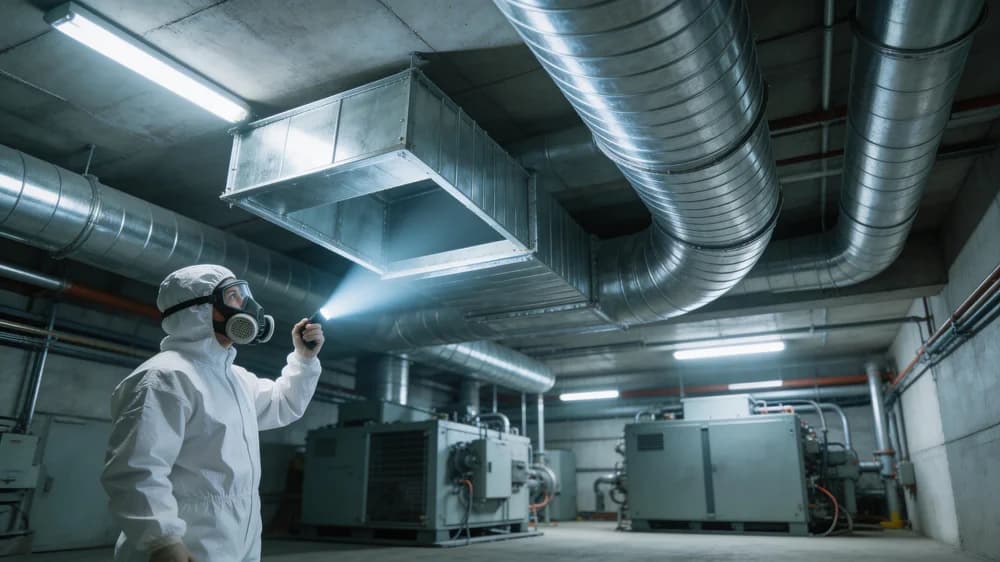
Learn how mold grows in commercial HVAC systems, warning signs to watch for, and professional remediation strategies from Advanced DRI's certified experts.
Why Mold in Commercial HVAC Systems Is a Serious Threat
Commercial HVAC systems are designed to circulate air efficiently throughout large buildings, but that same efficiency becomes a liability when mold takes hold inside the ductwork. A single contaminated air handler can distribute mold spores to every floor, every office, and every occupied space within minutes. At Advanced DRI, we have seen relatively small mold colonies inside HVAC components escalate into building-wide contamination events that disrupt operations and put occupants at risk.
For building owners and facility managers across New York, New Jersey, Pennsylvania, and Connecticut, understanding how mold infiltrates HVAC systems and what to do about it is essential to maintaining indoor air quality and protecting your investment.
How Mold Gets Into HVAC Systems
Mold requires three things to thrive: moisture, organic material, and moderate temperatures. Commercial HVAC systems provide all three in abundance.
- Condensation on coils and drain pans: Cooling coils generate significant condensation during operation. When drain pans clog or fail to drain properly, standing water creates an ideal breeding ground for mold.
- Humidity in ductwork: Poorly insulated ducts can develop condensation on interior surfaces, especially in humid Northeast summers. That moisture accumulates dust and organic debris, providing food for mold colonies.
- Filter neglect: Dirty or saturated filters trap moisture and organic particles, becoming mold incubators that seed the entire system downstream.
- Water intrusion events: Roof leaks, plumbing failures, or water damage incidents that reach mechanical rooms can introduce moisture directly into air handling units.
Warning Signs of HVAC Mold Contamination
Detecting mold inside a commercial HVAC system can be challenging because much of the growth occurs in areas that are not visible during routine operations. However, several indicators should prompt immediate investigation:
Musty or Earthy Odors
A persistent musty smell that intensifies when the HVAC system is running is one of the most common early warning signs. If occupants report unusual odors that seem to come from the vents, mold contamination should be investigated promptly.
Visible Growth at Vents and Registers
Dark discoloration around supply vents, return air grilles, or diffusers often indicates mold growth inside the ductwork. By the time mold is visible at the register, contamination within the system is likely extensive.
Increased Occupant Health Complaints
A sudden increase in respiratory complaints, allergy symptoms, headaches, or fatigue among building occupants can signal poor indoor air quality related to mold. These symptoms often worsen during the workday and improve when occupants leave the building.
Elevated Humidity Readings
Indoor relative humidity consistently above 60 percent suggests the HVAC system is not adequately controlling moisture, which creates favorable conditions for mold growth throughout the system and the building.
Professional Detection Methods
Our team at Advanced DRI uses a multi-layered approach to detect and assess mold contamination in commercial HVAC systems:
- Visual inspection with borescope cameras: We insert flexible camera systems into ductwork, air handlers, and plenums to visually inspect surfaces without disassembling the system.
- Air quality sampling: We collect air samples upstream and downstream of HVAC components to measure spore concentrations and identify mold species present in the airflow.
- Surface sampling: Tape lifts and swab samples from interior duct surfaces, coils, and drain pans provide laboratory-confirmed identification of mold species and contamination levels.
- Moisture mapping: We use thermal imaging and moisture meters to identify condensation points and moisture accumulation within the HVAC system that fuel mold growth.
Our HVAC Mold Remediation Process
Remediating mold in a commercial HVAC system requires a systematic approach that addresses both the contamination and the underlying moisture problem. Our mold remediation team follows industry standards including IICRC S520 and NADCA ACR guidelines for HVAC cleaning and restoration.
Step 1: Containment and System Isolation
We isolate contaminated sections of the HVAC system to prevent further spore distribution during remediation. Negative air pressure and HEPA filtration devices are deployed to contain airborne particles.
Step 2: Component Cleaning and Treatment
All contaminated components, including coils, drain pans, plenums, and accessible ductwork, are cleaned using HEPA vacuuming, antimicrobial treatments, and mechanical cleaning methods appropriate to the surface material.
Step 3: Duct Cleaning
Interior duct surfaces are cleaned using specialized rotary brush systems and high-powered HEPA vacuum collection equipment. Flexible ductwork that cannot be adequately cleaned is removed and replaced.
Step 4: Moisture Source Correction
We identify and correct the conditions that allowed mold to develop, whether that means repairing drain lines, improving insulation, upgrading filtration, or addressing building envelope issues that introduce excess moisture.
Step 5: Post-Remediation Verification
After remediation, we conduct clearance air sampling to verify that spore levels have returned to acceptable levels and the system is safe for normal operation.
Preventing HVAC Mold Recurrence
Prevention is far more cost-effective than remediation. We recommend the following maintenance practices for commercial building HVAC systems:
- Inspect and clean drain pans and condensate lines quarterly
- Replace or upgrade air filters on the manufacturer's recommended schedule
- Maintain indoor relative humidity between 30 and 50 percent
- Schedule professional duct inspections annually
- Address any water damage near mechanical rooms immediately
- Ensure proper insulation on all ductwork in unconditioned spaces
Why Choose Advanced DRI for Commercial HVAC Mold Remediation
Our team holds certifications from the IICRC and NADCA, and we have extensive experience working in commercial environments including office buildings, retail spaces, healthcare facilities, and multi-family residential properties across the tri-state area. We understand that commercial mold remediation requires minimal disruption to building operations, and we schedule work to accommodate your tenants and business needs.
If you suspect mold in your commercial HVAC system, do not wait for the problem to spread. Contact Advanced DRI for a professional assessment and a detailed remediation plan tailored to your building.
Frequently Asked Questions
How quickly can mold spread through a commercial HVAC system?
Mold spores can be distributed throughout an entire building within hours once a colony establishes itself inside an air handling unit or ductwork. The forced air circulation that makes HVAC systems effective also makes them highly efficient at spreading contamination, which is why early detection and prompt remediation are critical.
Can we just clean the visible mold at the vents ourselves?
Cleaning mold at the vents without addressing the source inside the HVAC system will not solve the problem. Visible mold at registers typically indicates much more extensive contamination deeper in the ductwork. Professional remediation is necessary to remove the source, correct moisture issues, and verify that air quality has been restored to safe levels.
Is it necessary to shut down the HVAC system during remediation?
In most cases, the contaminated section of the HVAC system must be isolated and shut down during remediation to prevent further spore distribution. However, our team works to minimize disruption by remediating in phases and providing temporary ventilation solutions when needed.
How much does commercial HVAC mold remediation cost?
Cost varies significantly based on the size of the HVAC system, the extent of contamination, and the type of building. We provide detailed assessments and transparent pricing before work begins. Contact Advanced DRI for a site evaluation and customized estimate.
Categories
Need Restoration Services?
Our team is available 24/7 for emergency response. Call us today for a free phone consultation.



Questions About Restoration?
Our experts are ready to help. Contact us for a free consultation.