
Fire Damage to Concrete and Masonry: What Property Owners Miss
Rob Temples manages emergency restoration operations for Advanced DRI's Fairfield, NJ and New York City service areas. With 10 years in the restoration industry and prior experience working for a general contractor, he integrates construction knowledge with mitigation expertise on every project and holds an IICRC Water Restoration Technician (WRT) certification.
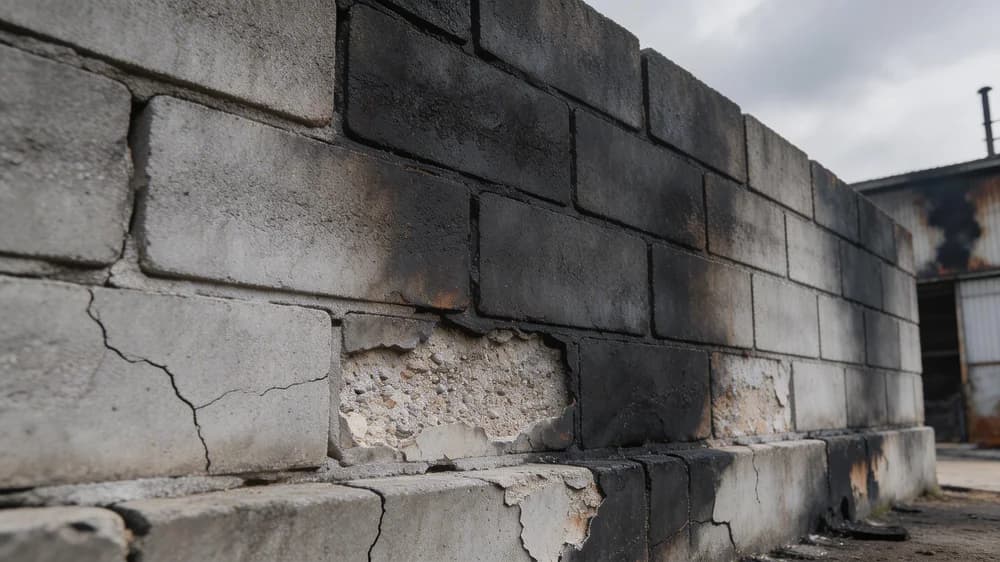
Fire damage to concrete and masonry is often overlooked. Advanced DRI explains the hidden structural risks and restoration methods property owners need to know.
The Misconception About Fireproof Concrete and Masonry
One of the most common assumptions property owners make after a fire is that their concrete foundations, masonry walls, and brick structures are fine because they did not burn. While concrete and masonry are classified as fire-resistant materials, they are not immune to fire damage. Extreme heat fundamentally alters the physical and chemical properties of these materials, leading to hidden structural weaknesses that can compromise the safety of an entire building.
At Advanced DRI, we regularly encounter fire-damaged properties in New York, New Jersey, Pennsylvania, and Connecticut where the concrete and masonry damage was overlooked during initial assessments. Understanding what happens to these materials during a fire is essential for making informed decisions about repairs and ensuring occupant safety.
What Fire Does to Concrete
Concrete is a composite material made of cement, water, and aggregate such as gravel or crusite. When exposed to the temperatures generated by a structural fire, typically between 1,000 and 2,000 degrees Fahrenheit, several damaging processes occur:
Spalling
Spalling is the most visible form of fire damage to concrete. As heat drives moisture out of the concrete, the resulting steam pressure causes surface layers to crack, pop, and flake away. Explosive spalling can blow chunks of concrete off walls and columns, exposing the steel reinforcement inside. This is particularly dangerous in structural elements like load-bearing walls, columns, and floor slabs.
Strength Reduction
Concrete begins losing compressive strength at temperatures above 570 degrees Fahrenheit. By the time temperatures reach 1,100 degrees, concrete can lose 50 percent or more of its original strength. This loss is permanent and cannot be reversed. Structural engineers must evaluate whether the remaining strength is adequate for the building's load requirements.
Color Changes
Fire-exposed concrete undergoes characteristic color changes that indicate the temperatures it endured. Pink or red discoloration suggests exposure above 570 degrees Fahrenheit. Gray or buff colors indicate temperatures above 1,100 degrees. A whitish appearance signals exposure beyond 1,650 degrees, at which point the concrete is severely compromised.
Cracking Patterns
Thermal expansion and contraction create distinctive cracking patterns in fire-damaged concrete. Surface crazing, map cracking, and deep fissures all indicate different levels of heat exposure and structural compromise. These cracks also create pathways for moisture intrusion, which can accelerate deterioration and lead to mold growth if not addressed.
Fire Damage to Masonry and Brick
Brick and mortar are also susceptible to fire damage, though the signs may be subtler than with concrete:
- Mortar joint deterioration: The mortar between bricks is often the first component to fail. Heat causes mortar to crack, crumble, and lose its bonding strength, compromising the structural integrity of the wall.
- Brick spalling and cracking: Individual bricks can crack or spall when heated unevenly. The exterior surface may appear intact while the interior has fractured.
- Thermal expansion damage: Different materials in a masonry assembly expand at different rates when heated. This differential expansion can cause separation between brick and mortar, between masonry and framing, and between masonry walls and their foundations.
- Smoke and soot penetration: Masonry is porous, and smoke compounds can penetrate deep into brick and mortar. This causes persistent odor issues and surface discoloration that standard cleaning cannot resolve.
Why This Damage Gets Overlooked
Several factors contribute to fire damage in concrete and masonry being missed during initial property assessments:
First, property owners and general contractors often lack specialized knowledge about how fire affects these materials. A concrete wall that appears structurally sound may have lost significant load-bearing capacity that only testing can reveal.
Second, the more dramatic visible damage from a fire, such as destroyed interiors, melted fixtures, and charred framing, tends to dominate attention. The concrete foundation or masonry wall standing amid the destruction appears to have survived unscathed.
Third, some fire damage to concrete develops over time. Micro-cracks caused by thermal stress can propagate under structural loads, leading to failures weeks or months after the fire. Post-fire moisture intrusion through heat-damaged concrete accelerates this deterioration.
Professional Assessment and Testing Methods
At Advanced DRI, our fire damage restoration process includes thorough evaluation of all concrete and masonry elements. We work with licensed structural engineers who employ several testing methods:
- Rebound hammer testing: Measures surface hardness to estimate remaining compressive strength.
- Ultrasonic pulse velocity testing: Sends sound waves through concrete to detect internal cracking, voids, and density changes caused by heat exposure.
- Core sampling: Extracts cylindrical samples from concrete elements for laboratory analysis of strength retention, chemical changes, and depth of heat penetration.
- Visual and tactile assessment: Expert evaluation of color changes, cracking patterns, spalling depth, and surface condition against established fire damage classification standards.
- Petrographic analysis: Microscopic examination of concrete samples to assess the condition of cement paste and aggregate at a granular level.
Restoration Options for Fire-Damaged Concrete and Masonry
Based on the assessment results, our team recommends appropriate restoration strategies:
Surface Repair
For concrete with surface-only damage, we remove the compromised outer layer through controlled demolition or hydro-blasting and apply engineered repair mortars that bond to the sound substrate. This restores the protective cover over reinforcing steel and the structural surface integrity.
Structural Strengthening
When concrete has lost significant strength but replacement is not practical, carbon fiber reinforcement, steel jacketing, or supplemental structural supports may be installed to restore the required load capacity.
Masonry Repointing and Replacement
Damaged mortar joints are ground out and repointed with compatible mortar. Severely damaged bricks are replaced individually, with careful matching of size, color, and texture. For historic properties, we source period-appropriate materials to maintain architectural integrity.
Complete Replacement
In cases where testing reveals that concrete or masonry elements have lost structural viability, complete demolition and reconstruction may be the safest and most cost-effective option. Our reconstruction team handles these projects from engineering through final inspection.
Protect Your Property With a Complete Assessment
If your property has experienced a fire, do not assume that your concrete and masonry structures are undamaged. What appears to be a surviving wall may be a weakened structure waiting to fail. A thorough professional assessment protects your investment, ensures occupant safety, and prevents costly surprises during reconstruction.
Contact Advanced DRI today to schedule a comprehensive fire damage assessment that includes evaluation of all structural elements, including concrete and masonry components that other restoration companies may overlook.
Frequently Asked Questions
Can fire-damaged concrete regain its original strength?
No. Once concrete has been exposed to temperatures above approximately 570 degrees Fahrenheit, the strength loss is permanent. The chemical changes in the cement paste cannot be reversed. However, structural strengthening methods such as carbon fiber wrapping or steel jacketing can restore the required load-bearing capacity without full replacement.
How can I tell if my brick wall has fire damage?
Look for cracked or spalling bricks, crumbling mortar joints, discoloration ranging from pink to black, and separation between the masonry and surrounding structural elements. Tap the bricks with a hammer. Sound bricks produce a clear ringing tone, while damaged bricks sound dull or hollow. Any signs of damage should be evaluated by a professional.
Is it safe to occupy a building with fire-damaged concrete?
Not without a professional structural assessment. Fire-damaged concrete may have lost significant load-bearing capacity even if it appears intact. A qualified structural engineer must evaluate the extent of damage and confirm that the structure is safe before occupancy resumes. Advanced DRI coordinates these assessments as part of our fire restoration services.
Does insurance cover concrete and masonry fire damage repair?
Yes, structural repairs to fire-damaged concrete and masonry are typically covered under standard property insurance policies when the damage results from a covered fire event. Advanced DRI provides the detailed documentation, engineering reports, and cost estimates that insurance adjusters need to approve these claims.
Categories
Need Restoration Services?
Our team is available 24/7 for emergency response. Call us today for a free phone consultation.
Questions About Restoration?
Our experts are ready to help. Contact us for a free consultation.