Emergency Board-Up Services: How a Damaged Property Gets Secured, Step by Step
Rob Temples manages emergency restoration operations for Advanced DRI's Fairfield, NJ and New York City service areas. With 10 years in the restoration industry and prior experience working for a general contractor, he integrates construction knowledge with mitigation expertise on every project and holds an IICRC Water Restoration Technician (WRT) certification.

Broken window, fire or break-in? What emergency board-up involves, what to do first and what insurers expect. NY/NJ/PA/CT, 24/7: (845) 294-8919.
A limb comes through the living room window during a nor'easter. Someone kicks in the back door of a shop overnight. Firefighters leave a kitchen fire with the windows gone and the front door forced. Each building is now open, and it stays open until somebody closes it. Emergency board-up covers those openings so rain, wind, intruders and animals stay out until repairs can start.
Advanced DRI provides emergency board-up service in NY, NJ, PA and CT around the clock at (845) 294-8919. Here is how the work is done, what to do first, and how each kind of damage changes the job.
Quick answer: Emergency board-up is the temporary covering of broken windows, doors, wall breaches and other openings with plywood, lumber bracing and fasteners right after a fire, storm, break-in or vehicle impact. It keeps out rain, wind, intruders and animals, limits further damage your insurer expects you to prevent, and holds the building until permanent repairs begin.
What Is Emergency Board-Up?
In restoration work, board-up is the first mitigation step. It closes the building; it does not repair it. Mitigation means stopping damage from spreading, and board-up sits in that group with water extraction and roof tarping.
The materials are simple: exterior plywood cut to the opening, framing lumber as braces, and bolts, screws or nails. The skill is in the fit. A panel with a gap at the top lets wind-driven rain in, and one held by a few face screws can be pried off in a minute. Crews close doors, wall holes and storefront glass as well as windows.
The First Hour: What to Do Before the Board-Up Crew Arrives
- Get everyone out and wait for the release. After a fire, Ready.gov says to check with the fire department that the home is safe to enter.
- Leave utilities alone. If water or fire reached wiring or gas lines, call the utility. Ready.gov: do not try to reconnect utilities yourself.
- Photograph every opening from outside before it is covered. Wide shots of each side, then close-ups. Our guide on how to document the damage for your claim has a shot list.
- Call your insurer. The Insurance Information Institute tells homeowners to photograph or videotape the damage, "then take reasonable steps to protect your property from further damage," and to save receipts.
- Call a board-up crew. Advanced DRI dispatches 24/7 at (845) 294-8919, typically arriving within 90 minutes in nearby service areas. Have the address ready, the list of broken openings, and whether fire officials have released the building.
- After a break-in, file the police report before glass is cleared.
If investigators are still working out how a fire started, keep the first job narrow: secure the openings, leave the debris where the fire began, and ask the fire department or your adjuster before any cleanup.
Board-Up by Situation: Fire, Storm, Break-In, Vehicle, Vacant
After a storm, crews board broken windows and doors, tarp any roof breach and clear limbs that opened the structure. After a fire, they board what firefighters broke or forced, cover roof vent holes and, following the U.S. Fire Administration's procedure for damaged buildings, set one padlocked access door and post a No Trespassing sign before cleanup begins.
After a Fire
Boards go up after the fire department releases the scene. By then the openings are often bigger than the fire damage, because firefighting means forcing doors, breaking windows and sometimes cutting ventilation holes in the roof. A fire that stayed in one room can leave half the house open.
Roof vent holes get a tarp or temporary sheathing, not a braced panel. Suppression water is already in the walls and floors. Power is often shut off, so crews bring portable lights, and any generator stays outdoors. If the fire marshal or an insurer's cause-and-origin investigator hasn't finished, the crew closes openings without touching the area where the fire started. Soot and odor work waits until the envelope is closed, and an open, fire-damaged house also draws thieves and trespassers.
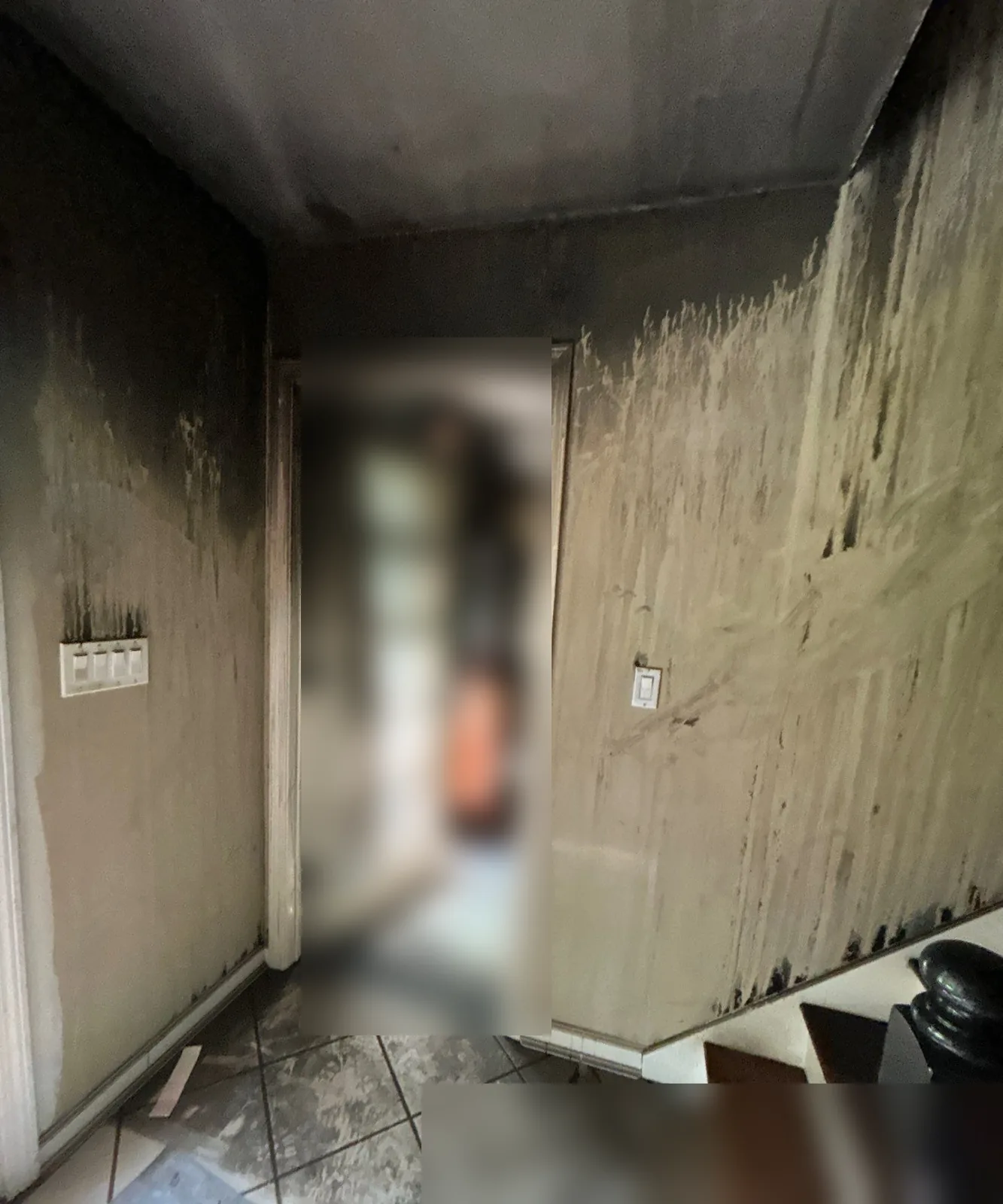
Soot like this coats every surface it reaches. Cleaning it while weather still blows through broken openings means cleaning it twice. See what to do in the first 24 hours after a house fire and our fire damage restoration process. If the fire department has released your house and the windows are still open, call (845) 294-8919 to have it closed up.
After a Storm or a Fallen Tree
Wind and flying debris break windows and sliders and tear off storm doors. When a tree comes through a wall or roof, the board-up waits for the tree: the limb has to be cut back or lifted off before the opening can be measured, so fallen tree removal usually goes first in the same visit. Glass openings get plywood, roof breaches get a tarp, and water that already got in calls for storm damage restoration.
Pre-storm boarding vs. post-loss board-up. Pre-storm shuttering is preparation, done before hurricane remnants or a nor'easter arrive; see preparing for hurricane season in the Northeast. Post-loss board-up is mitigation of an opening that already exists. Storm shutters follow a different spec from security boarding: the Federal Alliance for Safe Homes (FLASH) recommends exterior-grade CDX plywood 5/8-inch or thicker for window panels before a storm. The U.S. Fire Administration spec below was written for securing damaged and vacant buildings against entry.
Break-Ins, Vandalism and Commercial Storefronts
Securing a business after a break-in follows a fixed order: police report, photos of the point of entry, safe glass cleanup, board the storefront or door, then the glazier. The report and photos are what the insurer asks for, so skipping them to save twenty minutes rarely pays.
Most commercial calls come after hours, and the business usually needs a way in next morning, so the crew leaves one lockable entry rather than sealing every door. A commercial policy may have its own reporting rules, so call the carrier early. More on our commercial property restoration page. If your storefront is open tonight, call (845) 294-8919 and a crew will come secure it.
When a Vehicle Hits the Building
A car through a storefront is a structural problem before it is a board-up problem. If the impact hit framing, a load-bearing wall or the storefront header, a qualified contractor working under an engineer's direction shores the structure first. Storefront frames and headers can look intact and still be racked out of square.
Board-up closes the hole; it doesn't hold the building up, and the board-up crew doesn't decide when people can go back in. Depending on the town, that is the building department or a structural engineer. The same kind of inspection is described in our page on structural assessment after fire damage.
Property Board-Up for Vacant and Damaged Buildings
Property managers, landlords, lenders and estates face a building that may sit empty for months. The risk is less rain than people. The U.S. Fire Administration's Board Up Procedures (FEMA, April 2018) list the openings that must be barricaded:
- every opening in the basement;
- every first-floor door and window;
- every point of entry reachable from a porch, fire escape or other climbing point.
Openings at least 10 feet up that can't be reached from a porch, fire escape, roof or other climbing point may be nailed only. Where authorized people still need access, one street-visible door can be a solid-core wood or steel door, with no windows, locked with a padlock and a hasp bolted through the door. The building gets a "No Trespassing" sign, and boards are painted or stained to match. Check them after storms, and if a city has ordered the building sealed, follow that order's terms. Property managers and lenders can call (845) 294-8919 to have a vacant building secured.
How Professional Board-Up Is Done, Step by Step
- Site safety. Confirm the structure is released; check for live wires, gas odor and unstable walls.
- Walk-through and photos. Every opening is measured and photographed before it is covered.
- Glass and debris removal. Loose shards come out of the frames; walkways are cleared.
- Cut panels. Plywood is cut to sit snugly against the exterior frame or masonry, with no edge to pry at.
- Fasten. Through-bolted braces where security matters, screws or nails where risk is lower.
- Seal and finish. Edges sealed against wind-driven rain; access door and signage if the building will stand empty.
- Hand-off to mitigation. Drying, soot cleaning and restoration start once the building is closed.
In homes built before 1978, paid work that disturbs painted surfaces, such as pulling old trim for a flush fit, generally falls under the EPA's Lead Renovation, Repair and Painting rule (with limited allowances for emergency work). If you're working yourself, the EPA urges lead-safe work practices.
What Board-Up Covers Besides Windows
Doors and sliders, wall breaches from a tree, a vehicle or a fire that burned through siding, and storefront glass all get panels; roof openings get a tarp or temporary sheathing instead.
Materials and Fastening: What the U.S. Fire Administration Specifies
The U.S. Fire Administration's Board Up Procedures (FEMA, April 2018) were written for barricading damaged and vacant buildings against entry. They are a detailed public spec and a useful benchmark for any board-up that has to stay secure.
| Item | USFA specification | Why it matters |
|---|---|---|
| Panel | 1/2-inch (4-ply) CDX plywood, exterior grade | Holds up to weather and prying |
| Not to use | Particle board, waferboard, Masonite or similar materials | Weaker sheet goods |
| Braces | 2x4x8 lumber; two outside and two inside per window, three sets per door | Spreads the clamping force |
| Bolts | 3/8 x 12-inch carriage bolts, rounded head outside, tightened from inside | Nothing outside to unscrew or pry |
| Perimeter nails | 1 5/8-inch (6D) galvanized or stainless ring-shank, every 12 inches | Keeps edges tight |
| Screw fallback | Screws at least 3 inches long on 4-inch centers, only if bolting is impossible | Second-best option |
| Finish | Painted or stained to match; "No Trespassing" sign | Makes the barrier less conspicuous |
The USFA drawings add field details: slide double-hung sashes to the middle so bolts pass above and below, store storm windows inside, set window braces about a third of the way in from top and bottom, and pre-drill the whole assembly with 3/8-inch holes. Trim may come off for a flush fit with no pry points.
Plywood vs. OSB for Boarding Windows
Plywood is the safer choice. The U.S. Fire Administration's board-up procedures call for 1/2-inch CDX exterior plywood and say particle board, waferboard, Masonite or similar panels should not be used. OSB isn't named, but it grew out of waferboard, which the spec rules out, so for a building that has to stay secure, exterior-grade plywood is the spec to follow.
Board-Up and Roof Tarping: When You Need Both
Board-up covers walls and the openings in them. A tarp, or temporary sheathing under one, covers a roof breach, including vent holes cut by firefighters. After fires and tree strikes you usually need both, ideally in one visit so the building is closed top to bottom at once.
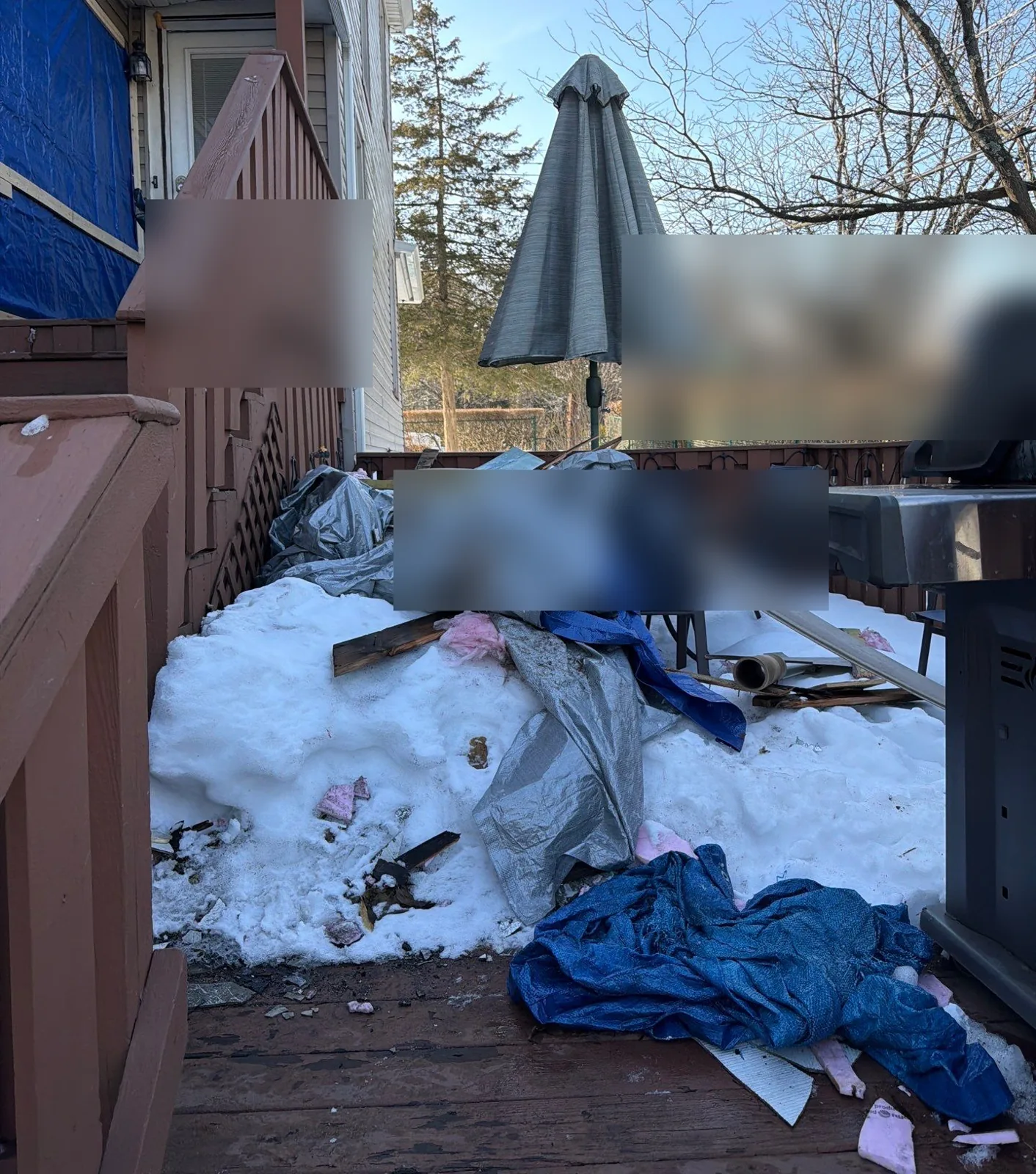
When a panel can't be fitted to a damaged wall, a tarp buys time, but its edges and anchoring need the same care as plywood. Our guide to emergency roof tarping covers how it is installed.
Why Fast Board-Up Limits Water and Mold Damage
Every rain that blows through an open window adds water to floors, walls and insulation that may already be soaked from a storm or a fire hose. The EPA's A Brief Guide to Mold, Moisture, and Your Home says to "dry water-damaged areas and items within 24-48 hours to prevent mold growth." A building still taking on water can't dry.
Under the IICRC S500 standard, the type of water is assessed on site; rain that came straight through a window is usually assessed differently from fire-suppression water carrying soot and debris, and water that sits can get worse. We follow IICRC S500 and S520 procedures for the drying and mold work after board-up (see IICRC standards). Closing the opening is step one, water damage restoration is step two, and mold remediation follows only if growth has started.
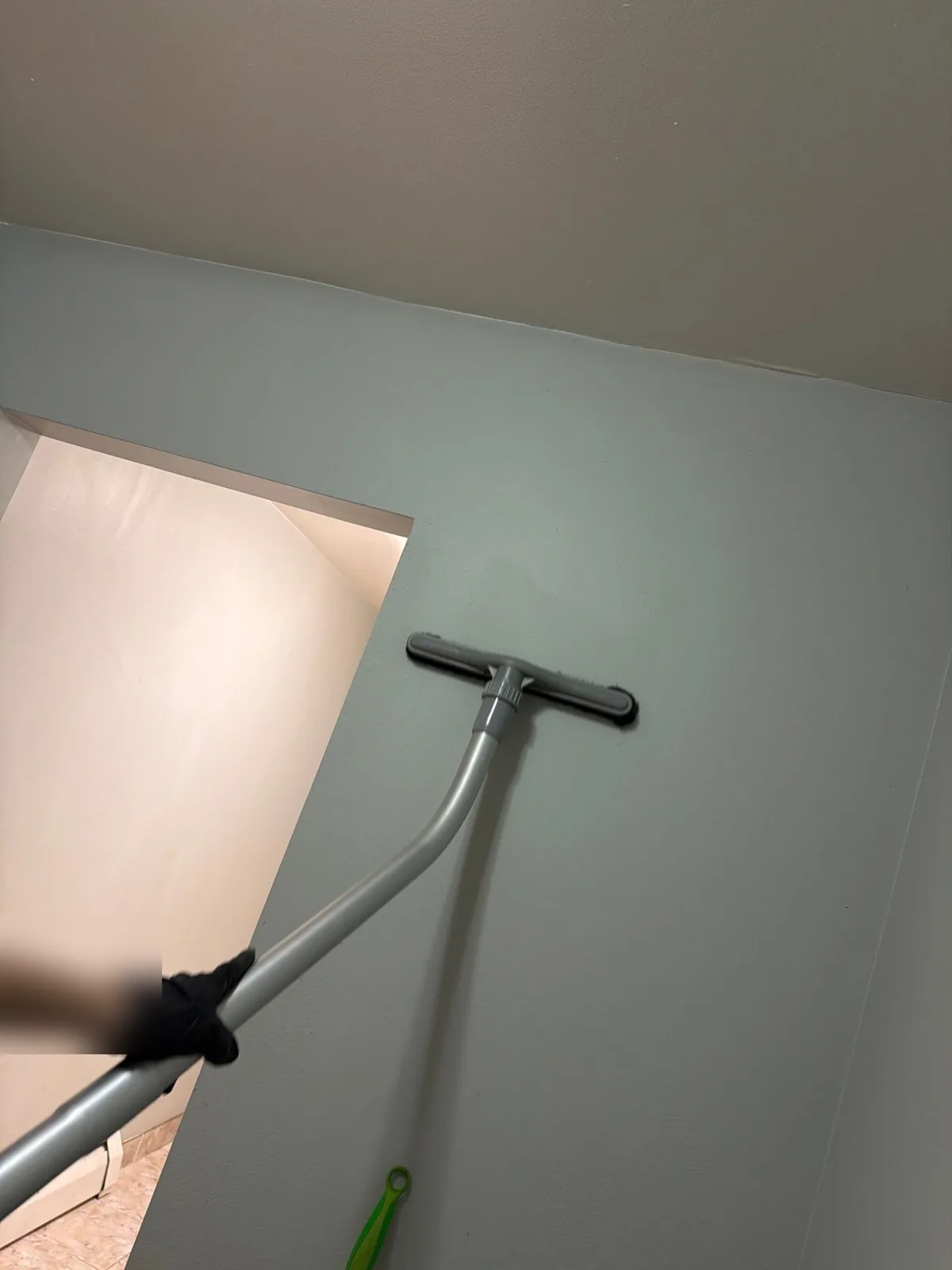
Detail work like this only makes sense once rain and outside dust have stopped coming in.
Insurance: Board-Up Is Part of Protecting Your Claim
The Insurance Information Institute's guide on how to file a homeowners claim puts it simply: photograph the damage, take reasonable steps to protect your property from further damage, and save receipts, which you may be able to submit for reimbursement. Board-up is one of those steps. Whether it is paid depends on your policy and the cause of loss, so ask your carrier, and keep:
- photos of every opening before and after boarding;
- an invoice listing the number of openings and materials;
- your claim number on that invoice.
For prices, see what board-up costs and what drives the price; after a fire, our fire damage insurance claims guide covers the rest. This isn't coverage advice; your policy wording decides.
DIY Board-Up: What's Reasonable and Where to Stop
| Reasonable to do yourself | Call a professional |
|---|---|
| One ground-floor window, with exterior plywood you already own | Anything above the first floor or needing a ladder |
| Taping a cracked pane still in its frame | Fire-damaged or structurally damaged buildings |
| Closing off an interior door to an open room | Large storefront glass |
| Photographing everything for the insurer | Openings near damaged wiring, or any vehicle impact |
Professional crews work to OSHA construction rules. 29 CFR 1926.95 requires protective equipment for the eyes, face, head and extremities, plus respiratory devices, wherever hazards call for it, and fire debris does. The ladder standard, 29 CFR 1926.1053, bars carrying any load that could cause a loss of balance and a fall. A 4x8 sheet of plywood in a gust of wind is that load, which is why upper-floor boarding needs a crew and staging.
After the Boards Go Up
Stay in a boarded home only if:
- fire officials have released it and the structure and utilities are safe;
- every bedroom keeps at least one usable escape route (never board the only egress window of a room someone sleeps in);
- smoke and CO alarms work, with fresh batteries if the power is out;
- no generator runs inside. The CDC says never to use one in a home or garage, even with windows open, and to keep it more than 20 feet from windows, doors and vents.
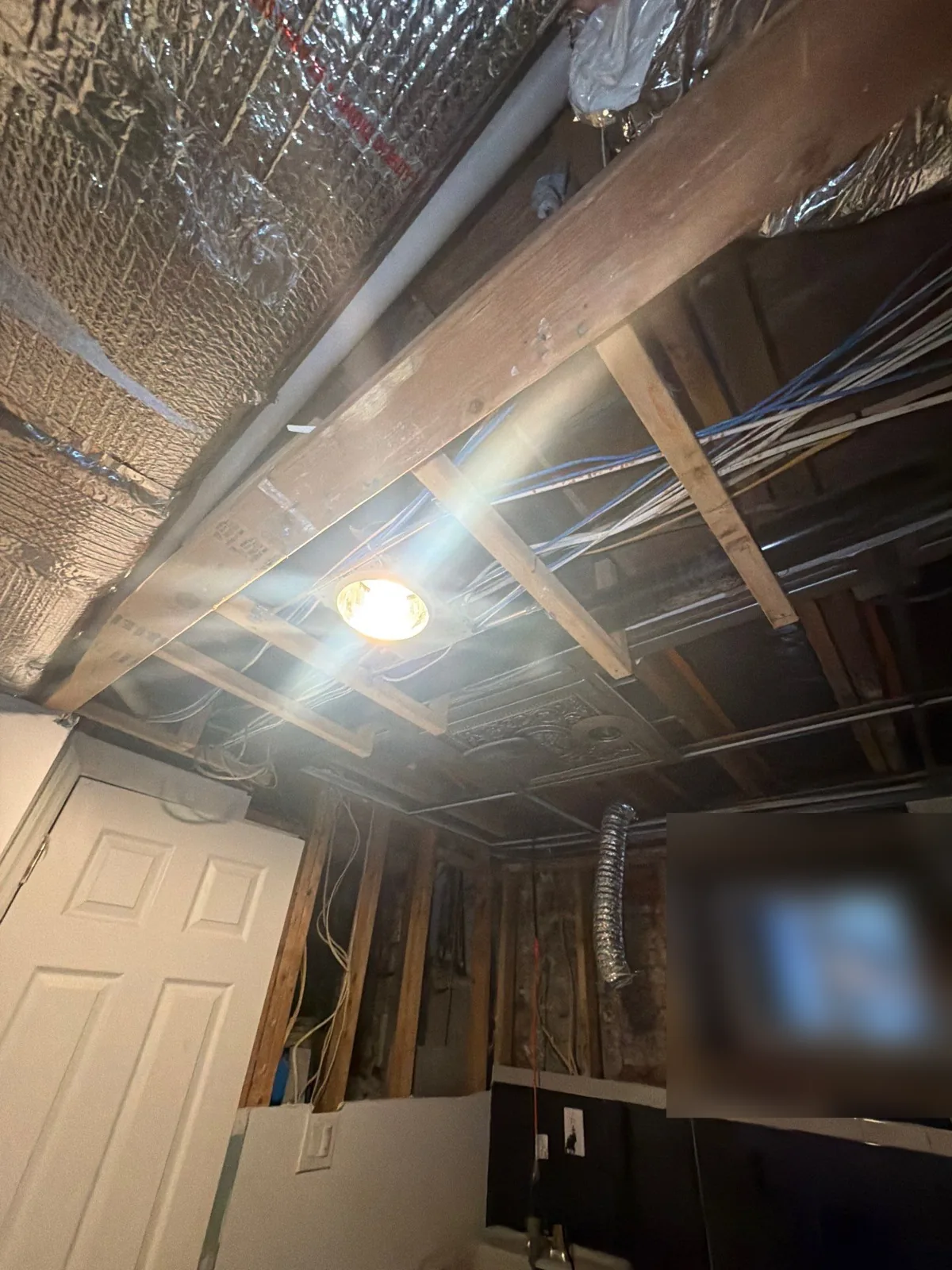
With the shell closed, crews can open ceilings to the joists and start fire mitigation inside without the weather undoing it.
Check the boards after storms. Fix a loose panel or leaking seal quickly. If more damage happens, photograph it, call the board-up company back and tell your insurer; a new break-in is a new event. How long boards stay: until permanent windows and doors are in. Long-term boards, especially on an empty building, should be through-bolted and checked, not screwed on and forgotten. During repairs, a boarded opening may be swapped for a temporary door so materials can come in, and boards come off one opening at a time as each permanent unit goes in.
How to Choose a Board-Up Provider
- Live 24/7 dispatch: a person answers at 2 a.m.
- Written scope with a photo log: every opening listed and photographed.
- Exterior-grade plywood: not particle board or similar panels.
- Proof of insurance before work starts.
- One company for the follow-on work, so the building isn't opened twice by two crews.
- Clear credentials: our certifications page lists ours; ask any provider for the same.
Emergency Board-Up Across New York, New Jersey, Pennsylvania and Connecticut
- New York: In New York City, street-level storefront glass and ground-floor windows are the usual openings; call (845) 294-8919.
- New Jersey: Near the coast, sliders and large glass take the brunt of wind-driven rain; on the Jersey Shore, call (732) 228-7582.
- Pennsylvania: Brick rowhomes need panels fitted against the brick molding, as the USFA spec describes; around Harrisburg, call (717) 232-5444.
- Connecticut: Wooded lots mean fallen limbs can open walls and roofs; our Marlborough office covers Connecticut at (860) 295-8790.
Frequently Asked Questions
Is OSB OK for boarding up windows?
For anything that has to stay secure, use exterior-grade plywood. The U.S. Fire Administration's spec calls for 1/2-inch CDX plywood and rules out particle board, waferboard and similar panels. OSB isn't named in the spec, but it is a close relative of the waferboard the spec excludes. See "Plywood vs. OSB" above.
Will homeowners insurance pay for emergency board-up?
It may; that depends on your policy and the cause of loss. The Insurance Information Institute tells homeowners to take reasonable steps to protect property from further damage and to save receipts for possible reimbursement, and board-up is one of those steps. Keep the invoice, photos and claim number together, and ask your carrier what it will reimburse. Typical costs are in our board-up pricing guide.
Is roof tarping part of board-up?
They are separate tasks, often done in one visit. Board-up covers windows, doors and wall openings with braced plywood; a tarp or temporary sheathing covers roof damage, including firefighters' vent holes. After a fire or tree strike, most houses need both.
How long can a house stay boarded up?
Until the permanent windows and doors are installed. There's no set limit, but long-term boards, especially on a vacant building, should be through-bolted and checked after every storm or high wind.
Can I stay in my home after it's been boarded up?
Only if fire officials have released it, the structure and utilities are safe, every bedroom keeps an escape route, smoke and CO alarms work, and no generator runs indoors or near the house. Otherwise, stay elsewhere. The checklist is under "After the Boards Go Up."
What's the fastest way to secure a business after a break-in?
File the police report, photograph the point of entry, clear the glass safely, then board the door or storefront while keeping one lockable way in for staff. Schedule the glazier last, and call your commercial carrier early.
Can I board up my own property?
A single ground-floor window, yes, with exterior plywood and photos for the insurer. Upper floors, fire-damaged or structurally damaged buildings, storefront glass and openings near damaged wiring belong to a professional crew. The DIY table shows where the line falls.
Get Your Property Secured Today
If a window, door or wall is open right now, every hour adds risk. Call (845) 294-8919 day or night and tell us which openings are broken, or read more about our emergency board-up services.
Sources: U.S. Fire Administration (FEMA), Board Up Procedures, April 2018; Federal Alliance for Safe Homes (FLASH), Emergency Board Up; Insurance Information Institute, How to file a homeowners claim; EPA, A Brief Guide to Mold, Moisture, and Your Home; EPA, Lead Renovation, Repair and Painting Program; OSHA, 29 CFR 1926.95 and 29 CFR 1926.1053; Ready.gov, Home Fires; CDC, Carbon Monoxide Poisoning Basics.
Categories
Need Restoration Services?
Our team is available 24/7 for emergency response. Call us today for a free phone consultation.

Questions About Restoration?
Our experts are ready to help. Contact us for a free consultation.