Emergency Restoration Services: What to Expect When You Call
Rob Temples manages emergency restoration operations for Advanced DRI's Fairfield, NJ and New York City service areas. With 10 years in the restoration industry and prior experience working for a general contractor, he integrates construction knowledge with mitigation expertise on every project and holds an IICRC Water Restoration Technician (WRT) certification.

Learn what happens when you call emergency restoration services. Understand the process from initial call to complete restoration and what to expect.
The Initial Phone Call
Your first contact with emergency restoration services begins the response process. Understanding the restoration process helps you know what to expect during that call.
Information Gathering
The dispatcher or technician will ask questions to understand your situation:
- What type of damage occurred (water, fire, storm, etc.)
- When the damage happened or was discovered
- Property address and access instructions
- Whether the damage source is controlled (water shut off, fire out)
- Any safety concerns (electrical hazards, structural damage, injuries)
- Approximate affected area
Answer what you know—don't worry about having complete information. Partial details help crews prepare while they travel.
Immediate Guidance
Based on your situation, the dispatcher may provide immediate guidance:
- Safety instructions if hazards exist
- Steps to take while waiting (if safe)
- What to avoid doing
- Expected arrival time
Pro Tip: Save the restoration company's phone number to your contacts before emergencies occur. During crisis situations, searching for numbers adds stress and delays response.
Dispatch
True emergency restoration services dispatch crews immediately—not during the next business day. Quality 24 hour restoration companies maintain on-call teams ready to respond 24/7, including nights, weekends, and holidays.
Crew Arrival and Initial Assessment
When the emergency damage response crew arrives, they'll conduct initial assessment before beginning work.
Safety Evaluation
Before entering significantly damaged properties, technicians assess safety:
- Structural stability
- Electrical hazards
- Air quality concerns
- Slip and fall risks
- Any other immediate dangers
If hazards exist, crews may need to address them before full assessment proceeds.
Damage Assessment
Assessment determines what's affected and what response is needed:
- Extent of affected areas
- Types of materials involved
- Moisture levels (for water damage)
- Contamination concerns
- Equipment requirements
This assessment typically takes 30-60 minutes depending on property size and damage extent.
Explanation and Authorization
After assessment, the crew leader will:
- Explain what they found
- Describe recommended immediate actions
- Discuss scope and approach
- Address questions and concerns
- Obtain authorization to proceed with emergency mitigation
You should understand what work will be done before it begins. Ask questions if anything is unclear. 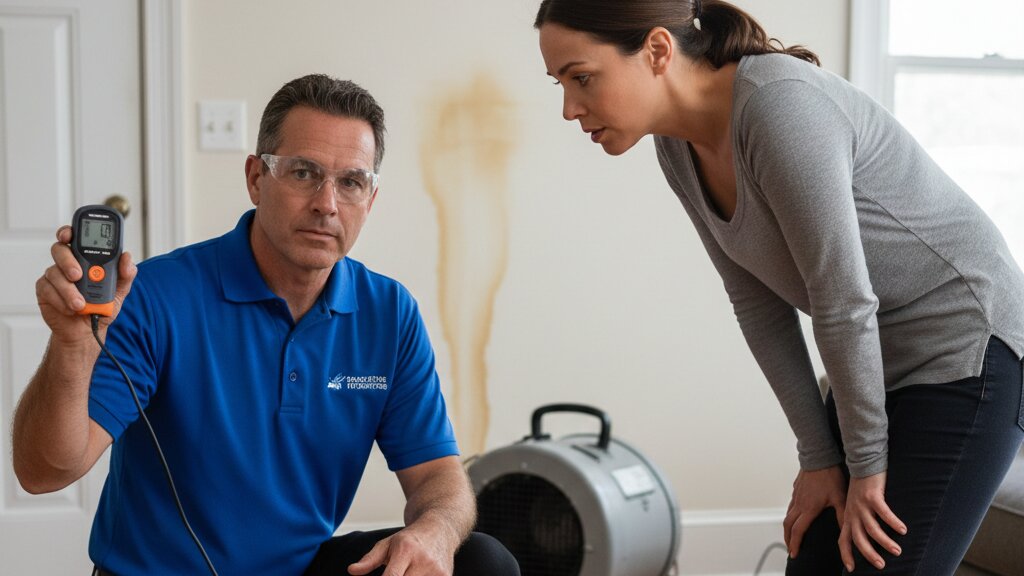
Emergency Mitigation Work
Emergency mitigation focuses on stopping ongoing damage and preventing additional harm. This critical phase of the restoration process varies based on damage type.
Water Damage Mitigation
Water damage response typically includes:
- Water extraction: Removing standing water using truck-mounted or portable extraction equipment
- Content protection: Moving or elevating belongings to prevent damage
- Moisture detection: Mapping moisture throughout affected areas
- Initial drying setup: Positioning dehumidifiers and air movers
- Contamination control: Addressing unsanitary water if present
Fire and Smoke Mitigation
Fire damage response typically includes:
- Safety securing: Board-up of openings, tarping of roof damage
- Ventilation: Reducing smoke concentration in the structure
- Pre-cleaning: Initial soot removal to prevent ongoing acidic damage
- Content protection: Removal of salvageable items from damaged areas
- Water mitigation: Addressing firefighting water damage
Storm Damage Mitigation
Storm damage response focuses on:
- Emergency board-up: Securing broken windows and doors
- Tarping: Covering roof damage to prevent water intrusion
- Water extraction: Removing water that entered during the storm
- Debris management: Safe removal of hazardous debris
| Emergency Type | Primary Goal | Typical First Actions |
|---|---|---|
| Water damage | Remove water, prevent mold | Extraction, drying equipment setup |
| Fire/smoke damage | Secure property, halt smoke damage | Board-up, ventilation, pre-cleaning |
| Storm damage | Protect from weather, secure property | Tarping, board-up, water removal |
| Sewage backup | Remove contamination, sanitize | Extraction, disinfection, disposal |
Documentation Throughout the Process
Professional emergency restoration services include thorough documentation from first arrival through project completion.
Photo and Video Documentation
Crews photograph and video damage before beginning work. This documentation serves multiple purposes:
- Insurance claim support
- Before/after comparison
- Record of affected areas
- Evidence of damage extent
Moisture Mapping
For water damage, moisture readings are documented and mapped showing affected areas. This creates a baseline for tracking drying progress.
Work Orders and Reports
Written documentation records what work was performed, materials affected, and equipment deployed. These records support insurance claims and provide reference for ongoing work.
What Happens After Emergency Response
Emergency damage response is the first phase of restoration. Understanding what follows in the restoration process helps set expectations.
Ongoing Drying (Water Damage)
After initial extraction and equipment placement, drying continues for several days. Technicians return daily to:
- Monitor moisture readings
- Adjust equipment placement
- Document progress
- Determine when drying is complete
Drying typically takes 3-5 days for moderate damage, longer for severe situations.
Detailed Assessment and Scope
Once emergency mitigation is complete, detailed assessment determines full restoration scope:
- What needs repair or replacement
- Required permits and inspections
- Timeline for completion
- Detailed cost estimates
Insurance Coordination
24 hour restoration companies work with insurance adjusters to:
- Provide damage documentation
- Explain scope and approach
- Submit estimates and invoices
- Answer claim-related questions
Pro Tip: Contact your insurance company as soon as possible after the emergency, but don't wait for their response before calling emergency restoration services. Policies require you to mitigate damage promptly.
Restoration Work
Following mitigation and assessment, restoration repairs damage and returns the property to pre-loss condition. This may include:
- Drywall replacement and finishing
- Flooring repair or replacement
- Painting
- Content cleaning and restoration
- Any other needed repairs
Your Role During Emergency Restoration
Property owners play important roles in the restoration process.
Provide Access
Crews need access to perform work and daily monitoring. Arrange access even if you can't be present—key exchange, lockbox codes, or meeting technicians at scheduled times.
Make Decisions
Throughout the process, decisions arise that require your input:
- Approval for work scopes
- Choices about materials and finishes
- Decisions about content disposition
- Authorization for change orders if scope changes
Communicate with Insurance
While emergency restoration services assist with insurance coordination, you're the policyholder and ultimately responsible for the claim. Stay informed and communicate with your adjuster as needed.
Ask Questions
Never hesitate to ask questions about:
- What work is being done and why
- Timeline expectations
- Costs and payment arrangements
- Anything you don't understand
Quality 24 hour restoration companies welcome questions and keep property owners informed throughout the process.
What Quality Emergency Services Look Like
Knowing what to expect from professional emergency damage response helps you recognize quality service—and identify red flags.
Signs of Quality Service
- Rapid response (within 1-2 hours for most locations)
- Uniformed, professional crews
- Clear communication about findings and plans
- Thorough documentation
- Written authorization before work begins
- Daily monitoring and updates
- Respect for your property and belongings
Red Flags to Watch For
- Pressure to sign contracts immediately without explanation
- Refusal to provide written scope or estimates
- Demands for full payment upfront
- Lack of proper documentation
- Unable or unwilling to answer questions
- No license or insurance verification available
Frequently Asked Questions About Emergency Restoration
How quickly will restoration crews arrive?
+Do I need to be present when crews arrive?
+Should I call my insurance company first or restoration services first?
+What if I can't afford to pay upfront?
+Can I stay in my home during restoration?
+How long does the entire restoration process take?
+Professional Emergency Restoration Services
Emergency restoration services respond to property crises with rapid, professional service that protects properties and helps owners navigate difficult situations. Understanding the restoration process—from initial call through complete restoration—helps property owners feel more confident during stressful times. When emergencies affect properties in Northern New Jersey, Pennsylvania's Capital Region, New York's Hudson Valley, Connecticut's Capital Region, or the South Jersey Shore, 24 hour restoration teams stand ready to respond quickly, explain clearly, and restore professionally through every phase of the emergency damage response.
Categories
Need Restoration Services?
Our team is available 24/7 for emergency response. Call us today for a free phone consultation.


Questions About Restoration?
Our experts are ready to help. Contact us for a free consultation.