Electrical Fire Damage: Identifying and Restoring Systems
Rob Temples manages emergency restoration operations for Advanced DRI's Fairfield, NJ and New York City service areas. With 10 years in the restoration industry and prior experience working for a general contractor, he integrates construction knowledge with mitigation expertise on every project and holds an IICRC Water Restoration Technician (WRT) certification.
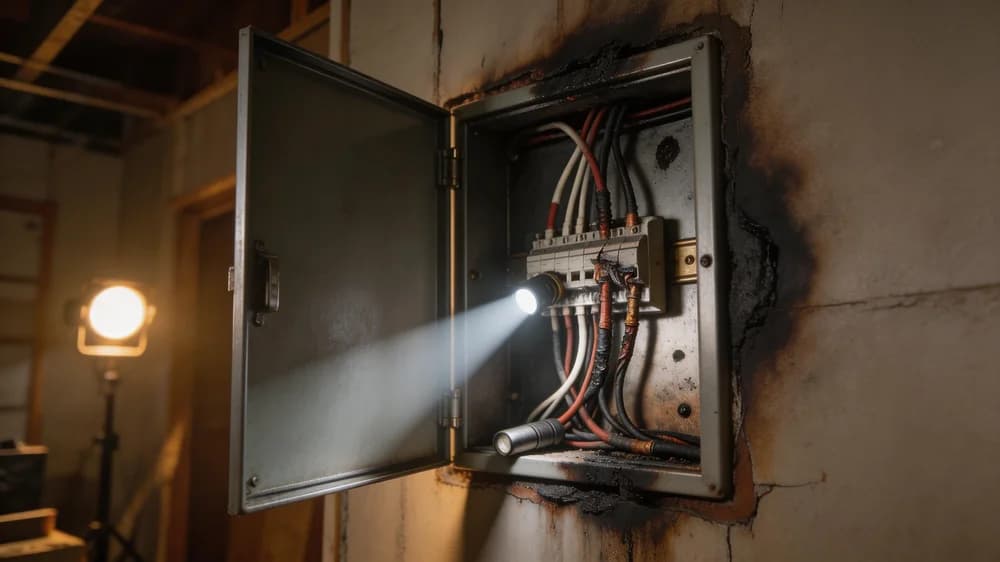
Electrical fires cause hidden damage throughout your property's wiring. Advanced DRI explains how to identify electrical fire damage and restore affected system
The Unique Dangers of Electrical Fires
Electrical fires account for a significant percentage of residential and commercial fires across New York, New Jersey, Pennsylvania, and Connecticut. What makes these fires particularly dangerous is their tendency to originate and spread within walls, ceilings, and other concealed spaces before becoming visible. By the time flames or smoke are detected, the electrical system may have sustained extensive damage that is not immediately apparent.
At Advanced DRI, we understand that electrical fire restoration requires a fundamentally different approach than other types of fire damage. The combination of structural fire damage, compromised wiring, and potential ongoing electrical hazards demands careful coordination between our fire damage restoration team and licensed electrical professionals.
Common Causes of Electrical Fires
Understanding what caused the fire helps our team assess the likely extent of damage throughout the electrical system:
- Overloaded circuits: Drawing more power than a circuit is rated for generates excess heat in wiring and connections, eventually igniting surrounding materials.
- Faulty or outdated wiring: Older homes with aluminum wiring, knob-and-tube wiring, or deteriorated insulation are at elevated risk. Wiring that has degraded over decades can arc and ignite without warning.
- Damaged outlets and switches: Loose connections, cracked outlet covers, and worn switch mechanisms create points of resistance that generate heat.
- Arc faults: Electrical arcing occurs when current jumps across a gap in the wiring, producing temperatures that can exceed 10,000 degrees Fahrenheit at the arc point.
- Appliance malfunctions: Defective appliances, damaged power cords, and improper use of extension cords are frequent fire sources.
- Panel overloads: Electrical panels that have exceeded their capacity or contain double-tapped breakers create dangerous heat conditions.
Hidden Damage That Electrical Fires Cause
The visible fire damage, such as charred walls, melted outlets, and burned framing, tells only part of the story. Electrical fires create several categories of hidden damage that require thorough investigation:
Wiring Damage Behind Walls
Heat from an electrical fire travels along wiring, degrading insulation and potentially damaging conductors well beyond the visible fire origin. Wire insulation can melt, crack, or carbonize, creating new points where future arcing can occur. A fire that appeared contained to one room may have compromised wiring running through multiple walls and floors.
Panel and Breaker Compromise
Electrical panels exposed to heat may have damaged breakers, melted bus bars, or compromised connections that are not visible without professional disassembly and inspection. A breaker that appears to function normally may have heat-damaged internal components that prevent it from tripping during an overload, creating an ongoing fire risk.
Conduit and Junction Box Damage
Metal and PVC conduit can warp, melt, or lose their protective properties when exposed to fire. Junction boxes may have damaged connections that create resistance points and heat buildup.
Connected System Damage
Modern homes have extensive interconnected electrical systems including smart home devices, security systems, HVAC controls, and structured wiring for data and communications. Heat and smoke can damage these systems and their wiring even if they were not at the fire origin.
The Assessment Process
Restoring a property's electrical system after a fire requires a methodical approach that prioritizes safety at every stage:
1. Power Disconnection and Lockout
Before any assessment begins, the electrical supply to the property is fully disconnected and locked out. This is a non-negotiable safety step. Even in areas that appear undamaged, compromised wiring can energize unpredictably and pose electrocution or re-ignition risks.
2. Comprehensive Electrical Inspection
A licensed electrician inspects every accessible component of the electrical system, including the service entrance, main panel, sub-panels, all circuits, outlets, switches, junction boxes, and connected systems. Thermal imaging helps identify hot spots in wiring concealed within walls that may indicate ongoing damage.
3. Damage Mapping
Our team creates a detailed map of all identified electrical damage, cross-referenced with the structural fire damage assessment. This map guides both the electrical restoration and the broader reconstruction plan, ensuring that all compromised wiring is replaced before walls and ceilings are closed up.
4. Insulation Resistance Testing
Megger testing measures the insulation resistance of wiring circuits to identify degraded insulation that may not be visible. This test can detect heat damage in wiring that is concealed within walls, floors, and ceilings, revealing compromised circuits that visual inspection alone would miss.
Restoration and Rewiring
Based on the assessment, our restoration plan typically involves several phases:
Selective Rewiring
Circuits with confirmed damage are completely rewired using current-code-compliant materials. In older properties, this is often an opportunity to upgrade outdated wiring systems to modern standards, improving both safety and functionality.
Panel Replacement or Repair
Damaged electrical panels are replaced with new, properly sized panels that meet current NEC code requirements. If the existing panel is salvageable, damaged breakers and components are replaced individually.
Arc Fault Protection
Current building codes require arc-fault circuit interrupter (AFCI) protection in most residential circuits. During restoration, we ensure that all rewired circuits include AFCI breakers, providing an additional layer of protection against future electrical fires.
System Integration
Once the primary electrical system is restored, connected systems including HVAC controls, security systems, and smart home devices are inspected, repaired, or replaced as needed. Our team coordinates with specialized contractors to ensure all systems are properly reconnected and tested.
Code Compliance and Permitting
Electrical work performed during fire restoration must comply with local building codes and typically requires permits and inspections. Advanced DRI manages the permitting process and coordinates all required inspections, ensuring that the restored electrical system meets or exceeds current code requirements. This is particularly important in older properties where the original electrical installation may not have met modern safety standards.
Working With Your Insurance Provider
Electrical fire restoration can be complex, and insurance claims for these projects require thorough documentation. Our team provides detailed reports including the fire origin and cause determination, scope of electrical damage, testing results, code compliance requirements, and itemized repair estimates. This documentation supports your insurance claim and helps ensure appropriate coverage for the full restoration.
If your property has experienced an electrical fire, safety must be the top priority. Do not attempt to restore power or use any electrical systems until a professional assessment has been completed. Contact Advanced DRI for immediate emergency response and a comprehensive electrical fire damage assessment.
Frequently Asked Questions
Can I check if my electrical system is safe after a fire myself?
No. Never attempt to inspect or test electrical systems after a fire without professional assistance. Damaged wiring can be energized and lethal, and compromised insulation may not be visible. Always have a licensed electrician inspect the entire system before power is restored to any part of the property.
Will my entire house need to be rewired after an electrical fire?
Not necessarily. The extent of rewiring depends on where the fire originated and how far the damage spread through the wiring system. Insulation resistance testing can identify which circuits are compromised and which remain safe. In some cases, only the circuits in the affected area need replacement, while the rest of the system can be certified safe for continued use.
How long does electrical fire restoration take?
The electrical component of fire restoration typically takes one to three weeks, depending on the scope of damage and the extent of rewiring needed. This timeline is often integrated with broader structural repairs, as walls and ceilings must be opened for wiring access and then closed up during reconstruction. Advanced DRI coordinates all trades to minimize overall project duration.
Does insurance cover upgrading old wiring during fire restoration?
Insurance typically covers replacing damaged wiring with current code-compliant materials, which may represent an upgrade from the original installation. However, upgrading undamaged portions of the electrical system beyond what is required for the repair is generally not covered. Our team helps you understand what falls within your coverage and works with your adjuster to document code-required upgrades.
Categories
Need Restoration Services?
Our team is available 24/7 for emergency response. Call us today for a free phone consultation.
Questions About Restoration?
Our experts are ready to help. Contact us for a free consultation.