Residential Fire Restoration Timeline: What Homeowners Should Expect
Rob Temples manages emergency restoration operations for Advanced DRI's Fairfield, NJ and New York City service areas. With 10 years in the restoration industry and prior experience working for a general contractor, he integrates construction knowledge with mitigation expertise on every project and holds an IICRC Water Restoration Technician (WRT) certification.

Understand the residential fire restoration timeline from emergency response to reconstruction. Learn what factors affect duration and each recovery phase.
Factors Affecting Fire Restoration Timeline
Before examining typical timeframes, understanding what influences timeline helps explain why some restorations complete faster than others.
Damage Severity
Fire damage ranges from minor smoke incidents to complete structural destruction. A small kitchen fire might require weeks of restoration while major structural fires may take months. Damage assessment early in the process helps estimate overall timeline.
Property Size
Larger properties require more time for every restoration phase. A 1,500 square foot home restores faster than a 4,000 square foot home with comparable damage percentages.
Water Damage Extent
Firefighting introduces thousands of gallons of water that must be addressed alongside fire damage. Extensive water damage from suppression efforts extends timeline significantly.
Insurance Process
Insurance approvals, adjuster inspections, and claim processing can affect timeline. Prompt insurance communication and professional documentation minimize these delays.
Material Availability
Replacing specific materials, especially in older homes or after widespread disasters, may require lead time for sourcing. Custom or specialty items take longer than standard materials.
Permit Requirements
Significant reconstruction requires permits with associated inspection schedules. Permit timelines vary by jurisdiction.
| Damage Level | Description | Typical Timeline |
|---|---|---|
| Minor | Smoke damage only, no structural damage | 1-3 weeks |
| Moderate | Fire contained to one area, some structural damage | 1-3 months |
| Significant | Multiple rooms affected, moderate structural damage | 3-6 months |
| Severe | Extensive structural damage, major reconstruction needed | 6-12+ months |
Phase 1: Emergency Response (Day 1-3)
Restoration begins immediately following fire department clearance with emergency stabilization protecting the property from additional damage.
Scene Assessment
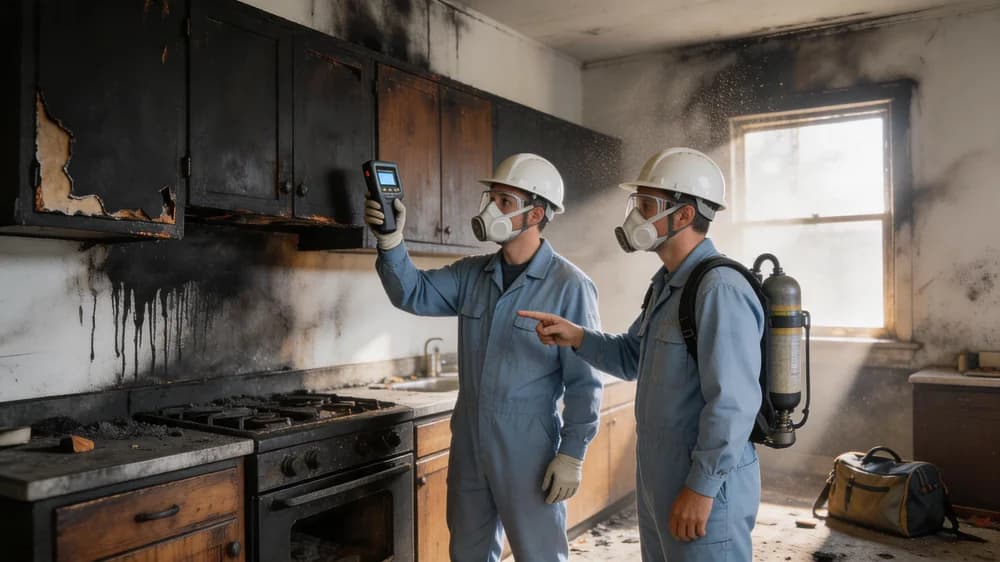
Professional restoration teams assess damage extent, safety concerns, and stabilization needs. This initial assessment typically occurs within hours of contact, often the same day as the fire.
Board-Up and Tarping
Emergency board-up services secure broken windows, damaged doors, and structural openings. Roof damage receives emergency tarping preventing water intrusion. This protection typically completes within 24-48 hours.
Water Removal
Fire suppression water extraction begins immediately. Standing water removal completes within hours; structural drying setup follows.
Utility Assessment
Electrical, gas, and water systems are evaluated for safety. Utilities may be shut off until professional inspection clears them for use.
Phase 2: Assessment and Planning (Days 3-10)
Detailed assessment guides restoration planning and insurance claim development.
Comprehensive Damage Documentation
Restoration teams document all damage thoroughly:
- Structural damage assessment
- Smoke and soot contamination extent
- Water damage from suppression
- Contents inventory and condition assessment
- System (electrical, HVAC, plumbing) evaluation
Scope Development
Based on assessment, restoration teams develop detailed scope of work specifying all required remediation, cleaning, and reconstruction activities.
Insurance Coordination
Documentation supports insurance claims. Adjusters typically inspect properties within 1-2 weeks of claims filing. Professional restoration companies facilitate adjuster visits and provide supporting documentation.
Content Decisions
Assessment determines which contents can be restored versus require replacement. Content restoration services begin pack-out of salvageable items.
Phase 3: Mitigation and Cleaning (Weeks 1-4)
With assessment complete and authorization received, active remediation begins.
Structural Drying
If significant water damage exists, structural drying continues until moisture levels normalize. This typically requires 3-7 days but may extend for severe saturation.
Debris Removal
Unsalvageable materials are removed:
- Fire-damaged structural materials
- Smoke-saturated insulation
- Damaged flooring and subfloor
- Contents beyond repair
Smoke and Soot Cleaning
Professional cleaning addresses smoke contamination throughout the structure. This intensive process includes:
- Surface cleaning using appropriate methods for each material
- HVAC system cleaning preventing continued contamination
- Deodorization using thermal fogging, ozone, or hydroxyl treatment
- Air quality improvement through HEPA filtration
Cleaning duration depends on contamination extent, ranging from several days for light smoke damage to several weeks for extensive contamination.
Mold Prevention
If water damage created mold risk, antimicrobial treatment prevents growth. Any developing mold receives remediation before reconstruction begins. Pro Tip: Don't rush through cleaning to begin reconstruction faster. Thorough smoke and odor removal now prevents persistent problems after reconstruction completes. Reconstruction over lingering contamination traps odors and particles within new materials.
Phase 4: Reconstruction (Weeks 4-16+)
Following complete remediation, reconstruction restores the home to pre-loss condition.
Permits and Planning
Reconstruction requiring permits must wait for approval. Permit timelines vary by jurisdiction and project scope. Simple repairs may not require permits; significant structural work requires engineering approval and inspections.
Structural Reconstruction
Structural work proceeds first:
- Framing repairs or replacement
- Roof reconstruction
- Window and door installation
- Exterior envelope restoration
Systems Restoration
Electrical, plumbing, and HVAC systems are repaired or replaced:
- Electrical rewiring if damaged
- Plumbing repairs
- HVAC system restoration or replacement
- Required inspections at each stage
Interior Finishing
Interior reconstruction completes the process:
- Insulation installation
- Drywall installation, taping, and finishing
- Trim and millwork
- Flooring installation
- Cabinet and fixture installation
- Painting and final finishes
Final Inspections and Walkthrough
Required inspections verify code compliance. Final walkthrough with homeowners confirms satisfaction before project completion.
Phase 5: Contents Return and Completion (Final Week)
The final phase returns the home to livable condition.
Final Cleaning
Construction cleaning removes dust and debris from reconstruction. Professional cleaning prepares the home for occupancy.
Contents Return
Restored contents return to the home. Pack-back services place items in appropriate locations based on original pack-out documentation.
Occupancy
With all work complete and final inspections passed, homeowners can return home. Restoration company provides documentation of all work performed.
Managing Timeline Expectations
Several strategies help homeowners navigate restoration timelines effectively.
Communication
Maintain regular communication with your restoration company. Weekly updates help track progress and anticipate upcoming phases. Ask questions about timeline when changes occur.
Decision Making
Delays often result from pending decisions. Promptly select finishes, approve proposals, and make required choices. Delayed decisions extend timelines.
Insurance Coordination
Proactive insurance communication prevents approval delays. Respond promptly to adjuster requests. Your restoration company can help facilitate communication.
Temporary Housing
Plan temporary housing for the full expected timeline plus contingency. It's easier to end housing arrangements early than extend them at the last minute.
Frequently Asked Questions About Fire Restoration Timeline
Can the fire restoration timeline be shortened?
+When can I enter my home after a fire?
+What if restoration takes longer than expected?
+Should I live in my home during restoration?
+Professional Fire Restoration Services
Understanding typical fire restoration timelines helps homeowners navigate recovery with realistic expectations. While timelines vary based on damage severity and other factors, experienced restoration professionals keep projects moving efficiently while maintaining quality standards. When fire affects your home in Northern New Jersey, Pennsylvania's Capital Region, New York's Hudson Valley, Connecticut's Capital Region, or the South Jersey Shore, 24/7 emergency services begin the restoration process immediately, providing clear timeline expectations and regular progress updates throughout your recovery.
Categories
Need Restoration Services?
Our team is available 24/7 for emergency response. Call us today for a free phone consultation.
Questions About Restoration?
Our experts are ready to help. Contact us for a free consultation.