Fire & Smoke Damage
Fire Damage Structural Assessment: What Professionals Evaluate
January 30, 20268 min read
R
Rob Temples· Operations Manager, Emergency Services (Fairfield, NJ & New York City)
Rob Temples manages emergency restoration operations for Advanced DRI's Fairfield, NJ and New York City service areas. With 10 years in the restoration industry and prior experience working for a general contractor, he integrates construction knowledge with mitigation expertise on every project and holds an IICRC Water Restoration Technician (WRT) certification.
10+ years experienceIICRC Water Restoration Technician (WRT)
Published January 30, 2026 · Updated May 27, 2026

Learn how professionals do fire damage structural assessment. Understand evaluation methods, what can be saved, and why assessment matters for safety.
Understanding fire damage structural assessment is critical for property owners facing fire recovery. Professional fire damage evaluation determines building safety and guides restoration planning. Structural fire damage creates hazards requiring expert analysis before restoration begins. Proper building safety after fire assessment protects occupants and workers while ensuring complete restoration of fire-damaged properties.
Why Structural Assessment Is Critical After Fire
Structural fire damage affects building structures in multiple ways, creating hazards that require professional fire damage evaluation before restoration work begins.Heat Effects on Structural Materials
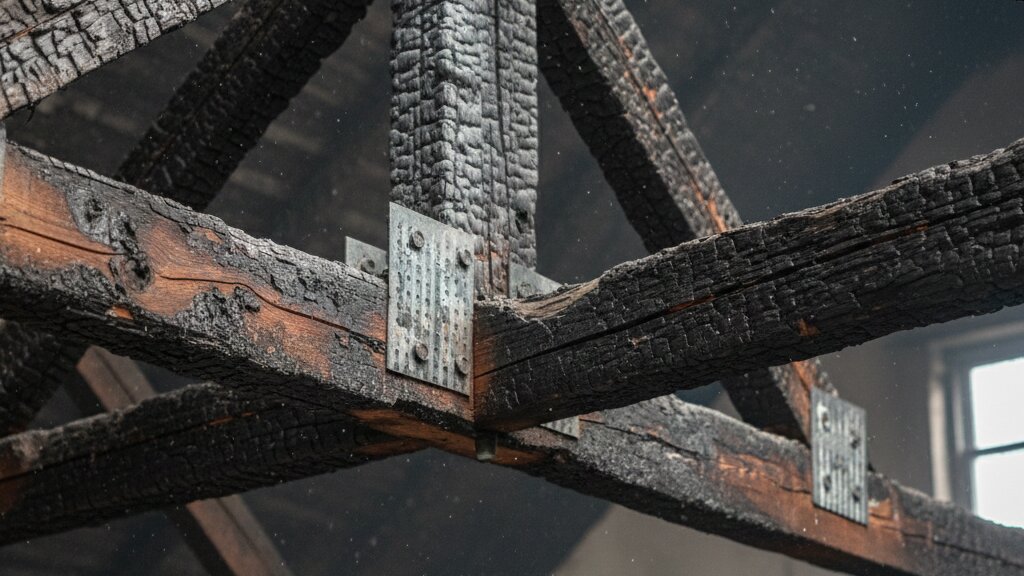
Different building materials respond to fire exposure in distinct ways: Wood Framing: Wood loses structural capacity as it chars. The depth of charring indicates remaining strength. Surface charring may leave adequate structure, while deeper burning requires replacement. Steel: Steel loses significant strength at temperatures common in structural fires. Steel heated above 1,000°F may have permanent strength reduction even after cooling. Visual inspection alone cannot determine steel integrity. Concrete: Concrete can crack, spall, and lose strength from fire exposure. Surface damage may indicate deeper structural compromise. Color changes in concrete suggest the temperatures it reached. Engineered Wood Products: Trusses, I-joists, and laminated beams are particularly vulnerable. Their thin components and adhesives fail faster than solid wood under fire conditions.Water Damage Compounds Fire Damage
Firefighting efforts introduce significant water to fire-damaged structures. This water saturates already-weakened materials, adding weight and causing additional deterioration. Water damage restoration often accompanies fire restoration for this reason.Hidden Damage
Fire travels through concealed spaces—attics, wall cavities, and floor systems. Damage visible from occupied spaces may be minimal compared to hidden structural damage. Professional assessment investigates beyond visible areas.| Material | Fire Effects | Assessment Methods |
|---|---|---|
| Wood framing | Charring, strength loss, connection damage | Char depth measurement, probing, load calculations |
| Steel | Deformation, strength reduction, connection failure | Visual inspection, testing, engineering analysis |
| Concrete | Cracking, spalling, rebar exposure | Visual inspection, hammer testing, core sampling |
| Engineered wood | Rapid failure, adhesive damage | Visual inspection, load-bearing verification |
| Masonry | Cracking, mortar damage, displacement | Visual inspection, stability assessment |
The Professional Assessment Process
Fire damage structural assessment follows systematic procedures to identify all damage and safety concerns.Exterior Evaluation
Assessment begins outside the structure, evaluating:- Overall structural stability and obvious failure signs
- Roof condition and integrity
- Wall alignment and potential lean or displacement
- Foundation condition and cracks
- Entry safety for interior inspection
Interior Structural Inspection
Once safe entry is established, fire damage evaluation examines: Load-Bearing Elements:- Columns and posts for char depth and remaining capacity
- Beams and headers for structural integrity
- Load-bearing walls for damage extent
- Connections between structural members
- Joists and subfloor condition
- Deflection or sagging indicating weakness
- Fire extension beneath flooring
- Water saturation adding weight to weakened members
- Truss or rafter condition
- Ridge and support integrity
- Sheathing damage
- Connection points to walls
Hidden Space Investigation
Fire travels through concealed spaces, requiring investigation of:- Attic spaces where fire may have spread undetected
- Wall cavities where fire travels vertically
- Floor and ceiling cavities
- Crawl spaces and basement areas
- Utility chases and penetrations
Documentation
Professional assessment includes detailed documentation:- Photographs of all damage areas
- Written descriptions of damage extent and location
- Measurements of char depth and damage dimensions
- Diagrams showing damage locations
- Recommendations for repair or replacement
Determining What Can Be Saved
Structural fire damage assessment determines which elements remain sound and which require repair or replacement.Salvageable Structural Elements
Many fire-damaged structural components can be retained with proper treatment:- Lightly charred wood with adequate remaining cross-section
- Steel that didn't reach critical temperatures
- Concrete with surface damage only
- Members with localized damage that can be reinforced
Elements Requiring Replacement
Some damage necessitates replacement:- Wood with char depth exceeding safe limits
- Failed connections or fasteners
- Engineered wood products with any significant fire exposure
- Deformed or buckled steel
- Concrete with deep damage or exposed reinforcing
Engineering Analysis
Complex situations require engineering analysis to determine whether damaged structures can safely support loads. Structural engineers calculate remaining capacity and design reinforcement or replacement as needed. Pro Tip: Don't assume visible damage indicates total structural loss. Professional assessment often identifies more salvageable material than initial appearance suggests, potentially reducing restoration costs significantly.Safety Hazards Identified During Assessment
Beyond structural concerns, building safety after fire assessment identifies other hazards requiring attention.Collapse Risks
Weakened structural elements may collapse without warning. Assessment identifies:- Members at risk of failure
- Areas requiring shoring before work proceeds
- No-entry zones until stabilization occurs
Electrical Hazards
Fire damages electrical systems, creating shock and fire restart risks:- Damaged wiring requiring replacement
- Water-exposed electrical components
- Heat-damaged panels and equipment
Air Quality Concerns
Fire-damaged structures contain hazardous materials:- Smoke residue and soot particles
- Asbestos potentially disturbed by fire or response
- Combustion byproducts
- Mold growth from firefighting water
Unstable Debris
Collapsed materials, hanging fixtures, and unstable contents create hazards during restoration work. Assessment identifies debris requiring safe removal procedures.Temporary Stabilization and Securing
Building safety after fire often requires immediate needs for property securing and stabilization.Emergency Shoring
Weakened structural elements may need temporary support:- Temporary posts beneath compromised beams
- Bracing for damaged walls
- Support for weakened floor systems
Board-Up and Tarping
Board-up services protect fire-damaged properties:- Windows and doors secured against entry
- Roof openings covered to prevent weather damage
- Structural openings protected
Utility Disconnection
Damaged utilities may require professional disconnection:- Gas lines with fire exposure
- Electrical service to damaged areas
- Water lines if freezing is a concern
Assessment and Insurance Claims
Professional fire damage structural assessment supports insurance claim processing.Documentation Requirements
Insurance companies require documentation of damage extent and repair needs. Professional assessment provides:- Detailed damage descriptions
- Photographic evidence
- Expert opinions on repair versus replacement
- Cost estimates for restoration
Scope Accuracy
Thorough assessment ensures claims reflect actual damage. Inadequate assessment may result in insufficient claim settlements that don't cover complete restoration.Expert Support
Assessment professionals can support claim discussions, explaining damage findings and restoration requirements to adjusters and insurance representatives.Frequently Asked Questions About Fire Damage Structural Assessment
How soon after a fire should structural assessment occur?
+
Initial safety assessment should occur before anyone enters the structure—typically within hours of fire department clearance. Comprehensive fire damage structural assessment follows as soon as safe access permits. Immediate assessment identifies urgent hazards and prevents secondary damage from weather exposure or unsecured property.
Who performs fire damage structural assessments?
+
Fire damage restoration professionals conduct initial assessments to determine safety and restoration approach. Complex structural fire damage concerns may involve licensed structural engineers who analyze load-bearing capacity and design repair solutions. Building inspectors may be involved for permit and code compliance verification.
Can I enter my fire-damaged property to assess damage myself?
+
Only enter after professional safety clearance. Fire damage creates invisible hazards—structural weakness, air quality issues, and electrical dangers. Fire departments typically secure properties and release them when initial hazards are addressed, but professional building safety after fire assessment should occur before extended entry or restoration work begins.
What determines whether fire-damaged framing can be saved?
+
Char depth is the primary factor. Wood maintains structural capacity based on remaining uncharred cross-section. Professionals measure char depth and calculate remaining strength during fire damage evaluation. Surface charring without deep penetration often leaves adequate structure. Engineering analysis determines whether damaged members can be retained with reinforcement or require replacement.
Does insurance cover structural assessment costs?
+
Assessment costs typically fall under restoration expenses covered by property insurance for covered fire losses. Documentation and fire damage evaluation are necessary parts of restoration that insurance expects and covers. Keep records of all assessment activities and costs for claim submission.
How long does structural assessment take?
+
Initial safety assessment may take several hours. Comprehensive fire damage structural assessment depends on property size and damage extent—from one day for smaller properties to several days for large or complex structures. Detailed engineering analysis for severely damaged structures may require additional time for calculations and report preparation.
Professional Fire Damage Assessment Services
Fire damage structural assessment determines safety, guides restoration planning, and supports insurance claims. Professional fire damage evaluation identifies all damage—visible and hidden—ensuring complete restoration and protecting against hazards that incomplete assessment would miss. When fire damages properties in Northern New Jersey, Pennsylvania's Capital Region, New York's Hudson Valley, Connecticut's Capital Region, or the South Jersey Shore, professional assessment teams evaluate structural conditions thoroughly, providing the expert analysis needed for safe and complete fire damage restoration.Categories
Need Restoration Services?
Our team is available 24/7 for emergency response. Call us today for a free phone consultation.
Questions About Restoration?
Our experts are ready to help. Contact us for a free consultation.