Water Damage Restoration
Electrical Safety After Flooding: Protecting Your Family and Property
January 26, 20269 min read
T
Tyler McClelland· Mitigation Manager, Hudson Valley Region (NY)
Tyler McClelland leads mitigation operations for Advanced DRI across New York's Hudson Valley, directing water, mold, and large-loss response in the field. He holds IICRC Water Restoration Technician (WRT) and Applied Microbial Remediation Technician (AMRT) certifications and a New York State Mold Supervisor certification, and is trained in IRCA hospital safe construction practices recognized by The Joint Commission.
IICRC Water Restoration Technician (WRT), IICRC Applied Microbial Remediation Technician (AMRT), NY State Mold Supervisor Certification, Lead RRP Certification, OSHA Bloodborne Pathogens Training, IRCA Hospital Safe Construction Practices (TJC), Large Loss Mastery Estimating CertifiedLinkedIn
Published January 26, 2026 · Updated May 27, 2026

Learn critical steps for electrical safety after flooding. Understand when to shut off power, hazards to avoid, and why professional evaluation is essential.
Understanding electrical safety after flooding is critical for protecting lives and property. Flood electrical hazards create immediate dangers including electrocution and fire risks that require professional handling. Water damage electrical systems pose both immediate and long-term threats to occupants and property. Proper flooded home safety protocols demand careful attention to electrical dangers before entering or restoring power to affected properties.
Immediate Electrical Dangers After Flooding
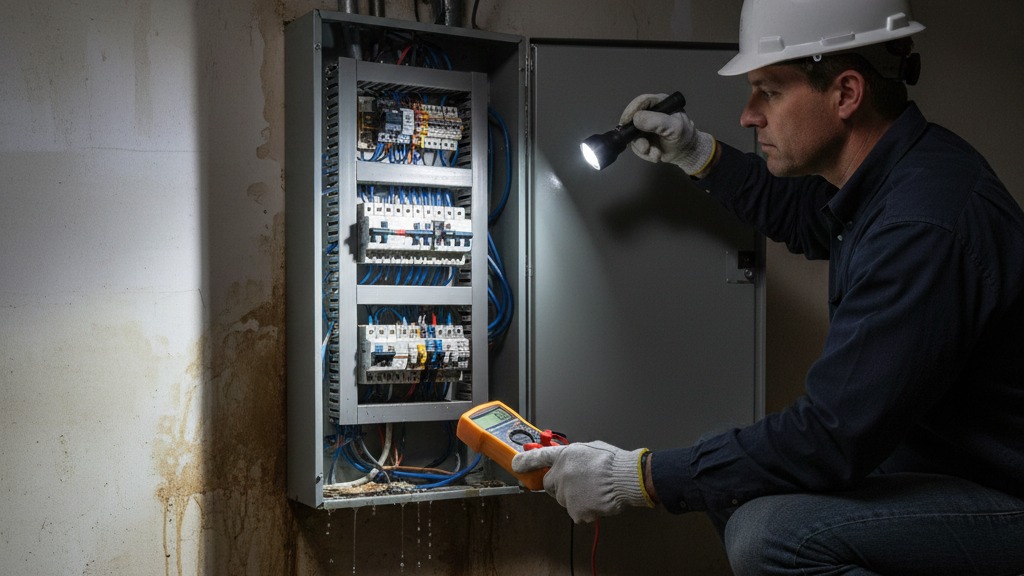
Flooded properties present multiple flood electrical hazards requiring extreme caution and careful attention to electrical safety after flooding.Electrocution Risk
Water conducts electricity. Standing water in contact with energized electrical components, outlets, or wiring creates electrocution danger for anyone entering the water. This risk exists even in relatively shallow water—dangerous current can flow through just inches of water covering floors with live electrical contact. Warning: Never enter a flooded area where water may contact electrical systems until power is confirmed disconnected at the main breaker or utility meter. Even if you believe circuits are off, hidden wiring or electrical equipment in water creates serious risk.Fire Hazards
Water damage electrical systems create fire hazards that may manifest during or after flood events:- Short circuits when water bridges electrical connections
- Arcing as water evaporates from wet components
- Overheating from corroded connections
- Delayed failures as damaged insulation breaks down
Hidden Damage
Electrical damage may not be immediately apparent. Water inside electrical panels, outlets, junction boxes, and conduit causes progressive corrosion and insulation breakdown that creates hazards days, weeks, or months after flooding.Shutting Off Power Safely
Disconnecting power is the first priority for electrical safety after flooding—but doing so safely requires proper approach.When You Can Shut Off Power
If you can reach your main electrical panel without stepping in water or standing on wet surfaces, shutting off the main breaker is appropriate. Turn off the main breaker (typically the large breaker at the top or bottom of the panel) to de-energize the entire home.When to Call for Help
Do not attempt to shut off power if:- You must step in water to reach the panel
- The electrical panel is in a flooded area
- You see sparking, smoke, or fire near electrical equipment
- You smell burning or electrical odors
- You're unsure whether you can reach the panel safely
After Power Is Off
Even after main power disconnection, some hazards remain:- Battery backup systems may still be energized
- Solar panel systems may feed power to certain circuits
- Generator connections may energize circuits
Electrical Components Affected by Flooding
Different electrical components respond to water exposure differently, creating various flood electrical hazards.| Component | Water Damage Risk | Typical Outcome |
|---|---|---|
| Main Electrical Panel | Corrosion, short circuits, breaker damage | Often requires replacement if submerged |
| Outlets and Switches | Internal corrosion, contact degradation | Replacement recommended after flooding |
| Wiring and Conduit | Insulation breakdown, conductor corrosion | May be salvageable depending on type and exposure |
| Circuit Breakers/Fuses | Internal damage affecting protection capability | Replacement recommended |
| GFCI/AFCI Devices | Internal electronics vulnerable to moisture | Replacement required after flooding |
| Light Fixtures | Socket corrosion, wiring damage | Replacement recommended for flooded fixtures |
Electrical Panel Concerns
Main electrical panels that have been submerged typically require replacement. Internal components, bus bars, and connections corrode rapidly after water exposure. Even panels that appear functional may fail dangerously later. Professional evaluation is essential.Wiring Considerations
Wire types respond differently to flooding: Non-metallic sheathed cable (Romex): Most common in residential construction. Water exposure degrades insulation over time. Replacement is often recommended, especially in walls where inspection is difficult. Metal-clad cable: Better protected from water, but internal conductors still vulnerable. Professional evaluation determines salvageability. Conduit with individual conductors: Conduit may trap water against conductors. Requires draining, inspection, and possible conductor replacement.Professional Electrical Evaluation
After flooding, licensed electrician evaluation is essential for electrical safety after flooding before restoring power.What Electricians Inspect
Qualified flood damage electrical inspection includes:- Main panel and sub-panels
- All circuits that may have been affected
- Outlets, switches, and junction boxes in flooded areas
- Ground fault and arc fault protection devices
- Any electrical equipment exposed to flooding
- Wiring accessibility and condition
Testing and Verification
Professional evaluation uses:- Visual inspection for corrosion and damage
- Insulation resistance testing (megger testing)
- Circuit continuity verification
- Ground fault testing
- Load testing where appropriate
Documentation for Insurance
Electrician reports documenting flood damage support insurance claims for electrical system repair or replacement. Request detailed written reports of findings and recommendations.
Restoration of Electrical Systems
Water damage electrical restoration after flooding follows specific requirements.Replacement vs. Repair
Many flood-damaged electrical components require replacement rather than repair:- Submerged panels are typically replaced
- Flooded outlets, switches, and receptacles are replaced
- GFCI and AFCI devices cannot be cleaned—replacement is required
- Wiring decisions depend on type, exposure, and inspection results
Code Compliance
Electrical work during restoration must meet current electrical codes, which may exceed original construction requirements. This can mean:- Additional GFCI protection in kitchens, bathrooms, and other locations
- Arc fault circuit interrupter (AFCI) protection in bedrooms
- Upgraded grounding and bonding
- Panel upgrades if existing capacity is insufficient
Permits and Inspections
Significant electrical work requires permits and inspections. Your electrician handles permit applications and schedules required inspections. Don't restore power without inspection approval.Coordinating Electrical Work with Restoration
Electrical restoration fits into overall restoration sequences at specific points.Initial Phase
Electrical evaluation occurs early in restoration:- Power must be safely disconnected before water extraction
- Electrician evaluates systems after water removal
- Temporary power arrangements may enable drying equipment
During Structural Work
Electrical restoration coordinates with reconstruction:- Wiring rough-in occurs before drywall installation
- Panel replacement and circuit modifications happen during this phase
- Electrical inspection occurs before walls are closed
Final Phase
Finish electrical work completes restoration:- Device installation (outlets, switches, fixtures)
- Final electrical inspection
- Power restoration for normal operation
Appliances and Electronics After Flooding
Electrical appliances and electronics present additional flooded home safety considerations.Major Appliances
Pro Tip: Major appliances submerged in floodwater typically require replacement rather than cleaning. Internal electrical components, motors, and controls damaged by water—especially contaminated floodwater—create ongoing safety and reliability risks. Appliances requiring evaluation or replacement include:- Refrigerators and freezers
- Washers and dryers
- Dishwashers
- HVAC equipment
- Water heaters
- Ovens and ranges
Electronics
Electronics exposed to flooding face similar concerns:- Internal corrosion damages circuit boards
- Power supplies may fail dangerously
- Batteries in flooded electronics can become hazardous
Safety Testing
Never plug in appliances or electronics that may have been flooded without professional evaluation. Even items that appear dry may have internal moisture or damage that creates fire or shock hazards.Preventing Future Electrical Flood Damage
After restoration, consider improvements that enhance electrical safety after flooding and reduce future risks.Elevated Electrical Components
In flood-prone areas, consider elevating critical electrical components:- Main panel relocated above expected flood levels
- Outlets raised higher on walls
- Critical circuits routed above flood levels
Ground Fault Protection
Ensure comprehensive GFCI protection in areas subject to flooding. GFCI devices shut off power quickly when ground faults occur, providing protection even during flood events.Quick Disconnect Capability
Consider main disconnects or emergency shutoffs that can be operated quickly and safely during flood emergencies, located in accessible areas above flood levels.Frequently Asked Questions About Electrical Safety After Flooding
How do I know if it's safe to enter my flooded home?
+
Do not enter flooded areas where water may contact electrical systems until power is confirmed disconnected. Proper flooded home safety requires that if you can safely reach your main breaker without stepping in water, shut it off before entering. Otherwise, contact your utility to disconnect power at the meter. Even then, exercise caution—battery backups and solar systems may still be energized.
Can I just let flooded electrical systems dry out?
+
No. Drying doesn't restore flooded electrical components to safe operation. Water deposits contaminants, starts corrosion, and damages insulation in ways that drying doesn't reverse. Flooded electrical systems require professional evaluation and often replacement of affected components regardless of apparent drying.
Do I need an electrician, or can restoration companies handle electrical work?
+
Licensed electricians must handle water damage electrical system evaluation and repair—this is separate from restoration company work. Restoration companies handle water extraction, drying, and reconstruction, but electrical work requires licensed electricians for safety and code compliance. Reputable restoration companies coordinate with electricians but don't perform electrical work themselves.
Will insurance cover electrical system replacement after flooding?
+
Insurance coverage for flood-damaged electrical systems depends on your policy and flood source. Standard homeowner policies typically cover electrical damage from covered water events (like burst pipes). Flood insurance covers flooding from external sources. Document damage thoroughly and obtain electrician reports supporting replacement recommendations.
How long after flooding can electrical problems develop?
+
Electrical problems from flooding can manifest weeks or months later as corrosion progresses. Components may function initially but fail as internal damage worsens. This is why professional evaluation and replacement of flood-affected electrical components is recommended—apparently functional systems may fail dangerously later.
Can I use extension cords while waiting for electrical repairs?
+
Temporary power solutions must be set up safely by qualified professionals. Running extension cords from unaffected areas or using generators requires proper setup to avoid fire hazards and electrocution risks. Your electrician can advise on safe temporary power arrangements during restoration.
Professional Restoration with Electrical Safety
Complete flood restoration addresses electrical safety after flooding as a critical component. Professional restoration companies coordinate with licensed electricians to ensure safe, code-compliant electrical restoration alongside water damage repair, addressing all flood electrical hazards appropriately. When flooding affects properties in Northern New Jersey, Pennsylvania's Capital Region, New York's Hudson Valley, Connecticut's Capital Region, or the South Jersey Shore, 24-hour emergency restoration services respond with proper safety protocols, coordinating all aspects of restoration including electrical system safety.Categories
Need Restoration Services?
Our team is available 24/7 for emergency response. Call us today for a free phone consultation.

Questions About Restoration?
Our experts are ready to help. Contact us for a free consultation.