Water Damage in Multi-Story Buildings: Upper Floor Leaks
Tyler McClelland leads mitigation operations for Advanced DRI across New York's Hudson Valley, directing water, mold, and large-loss response in the field. He holds IICRC Water Restoration Technician (WRT) and Applied Microbial Remediation Technician (AMRT) certifications and a New York State Mold Supervisor certification, and is trained in IRCA hospital safe construction practices recognized by The Joint Commission.
Upper floor leaks in multi-story buildings cause cascading water damage to lower floors. Advanced DRI explains how to respond, who is responsible, and restorati
How Water Travels Through Multi-Story Buildings
At Advanced DRI, some of our most complex water damage restoration projects involve multi-story buildings where a single water event on an upper floor creates cascading damage through multiple levels. Whether it is a condominium, apartment building, townhouse, or commercial property, the physics of water flow in multi-story structures creates challenges that require specialized knowledge and equipment to address properly.
Water always follows the path of least resistance downward. In a multi-story building, that path is rarely a straight vertical line. Water that enters the floor assembly from an upper unit spreads laterally along the subfloor, finds penetrations in the floor system such as plumbing chases, electrical conduit, HVAC ducts, and structural connections, and migrates into wall cavities, ceiling assemblies, and interior partitions on the levels below. A single overflowing bathtub on the fourth floor can damage units on the third, second, and first floors, often in unpredictable patterns.
Common Causes of Upper Floor Water Damage
Plumbing Failures
Supply line bursts, failed shut-off valves, corroded drain lines, and leaking fittings within upper floor units are the most frequent causes of cascading water damage. In older buildings across New York, New Jersey, Pennsylvania, and Connecticut, aging galvanized steel and copper plumbing systems are increasingly prone to failure.
Appliance Malfunctions
Washing machines, dishwashers, and water heaters located on upper floors present significant risk. A burst washing machine hose on an upper floor can release hundreds of gallons of water before anyone notices, especially in unoccupied units or during overnight hours.
Bathroom Overflows
Overflowing toilets, bathtubs, and sinks are common causes of upper floor water events. Clogged drains combined with running water can produce significant volumes quickly, and the water often enters the floor system through gaps around fixtures, at the tub-floor junction, and through deteriorated caulking and grout.
HVAC System Failures
In buildings with individual HVAC units on each floor, condensation drain line failures, frozen coils, and drain pan overflows can send water into the floor and ceiling assemblies. These leaks are often slow and persistent, causing extensive hidden damage before they are detected.
Fire Suppression System Events
Accidental sprinkler head activation, burst sprinkler lines, and sprinkler system testing failures can release large volumes of water that quickly travels through the building. A single activated sprinkler head can discharge 15 to 25 gallons per minute.
The Cascading Damage Effect
Understanding how water moves through building assemblies helps property owners and managers appreciate the scope of these events:
- Floor assemblies: Water penetrates the flooring surface and saturates the subfloor material. In wood-framed buildings, it travels along joists and through gaps between subfloor panels. In concrete structures, it finds cracks, penetrations, and cold joints to migrate through.
- Wall cavities: Water entering a wall cavity from above travels down inside the wall, saturating insulation, wetting studs, and potentially reaching electrical wiring and junction boxes. It often pools at the base of the wall, damaging baseboards and adjacent flooring on the lower level.
- Utility chases and penetrations: Plumbing chases, electrical conduit runs, and HVAC ducts that connect floors provide direct pathways for water to travel between levels. These vertical pathways can carry water multiple stories below the original source.
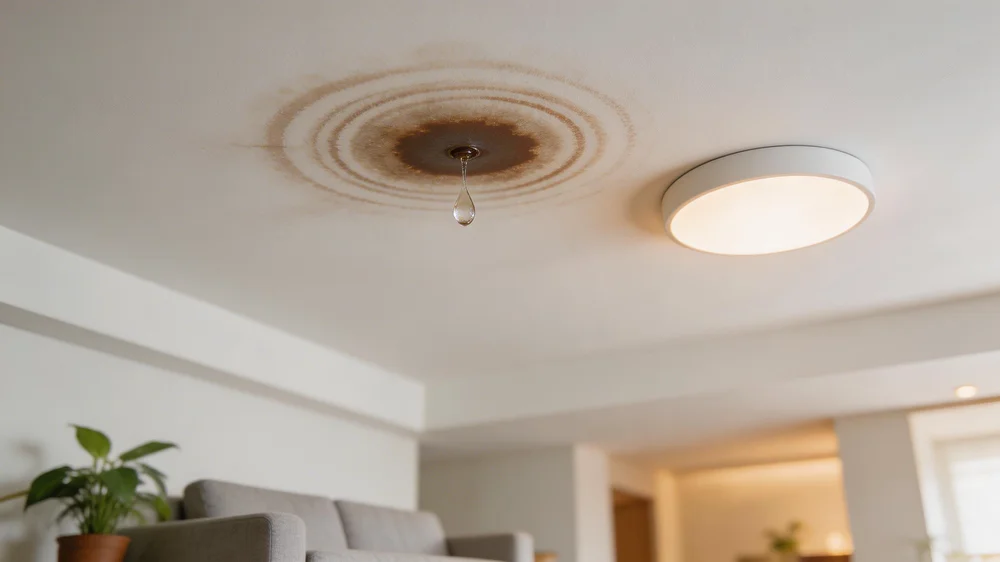
- Ceiling assemblies: Water accumulates above the ceiling of the unit below, saturating insulation and drywall. Eventually, the drywall becomes too heavy and either sags visibly or collapses, releasing a large volume of water and debris into the living space below.
Immediate Response for Multi-Story Water Damage
Rapid response is critical in multi-story water events to limit the cascading impact:
- Identify and stop the source. Locate the source of the water on the originating floor and shut it off. If the source cannot be stopped at the fixture level, shut off the water supply to the entire unit or building if necessary.
- Alert affected units below. Notify occupants on lower floors immediately so they can protect belongings and evacuate if ceiling collapse is a risk.
- Shut off electrical power in any areas where water is in contact with electrical systems, particularly ceiling light fixtures, which can become electrified when water reaches them from above.
- Begin water extraction immediately. The sooner standing water is removed from the originating floor, the less water migrates to lower levels.
- Contact Advanced DRI. Multi-story water damage requires a coordinated response across all affected levels simultaneously. Our teams deploy to the building with equipment to address extraction, containment, and drying on every affected floor.
Restoration Challenges in Multi-Story Buildings
Restoring water damage in multi-story buildings presents unique challenges that differ significantly from single-family home restoration:
Access and Coordination
Our team must coordinate access to multiple units, work around occupants who may still be living in partially affected spaces, and manage equipment placement in shared hallways and common areas. In occupied buildings, we schedule work to minimize disruption while maintaining the urgency the drying process requires.
Identifying the Full Extent of Damage
Water migration in multi-story buildings is often unpredictable. Using thermal imaging cameras and moisture meters, our technicians trace the water path through each floor assembly, wall cavity, and utility chase to map the complete damage footprint. Missing an affected area leads to hidden moisture that causes mold growth and ongoing material deterioration.
Structural Drying Across Multiple Levels
Each affected floor requires its own drying plan with appropriately sized dehumidification and air movement equipment. The drying conditions on one level affect the drying progress on adjacent levels, so our technicians monitor and adjust equipment across the entire vertical damage footprint.
Ceiling Considerations
Water-saturated ceiling drywall presents a collapse risk and must be addressed carefully. In some cases, strategic removal of ceiling sections allows trapped water to drain in a controlled manner and exposes the floor assembly above for effective drying. Our team makes these decisions based on moisture readings, structural assessment, and safety considerations.
Responsibility and Insurance in Multi-Unit Buildings
Water damage that crosses unit boundaries raises complex questions about responsibility and insurance coverage:
- Condo and co-op buildings: The originating unit's owner is typically responsible for damage caused by their unit's plumbing or appliance failures. The building's master insurance policy may cover damage to common elements and structural components. Individual unit owners' policies cover their personal property and interior finishes. Coverage boundaries are defined by the building's governing documents.
- Rental properties: The building owner or landlord is generally responsible for the building structure and plumbing systems. Tenants are responsible for their personal belongings, which is why renter's insurance is essential. If a tenant's negligence caused the event, liability may shift.
- Commercial buildings: Lease terms typically define responsibility for water damage. Building owners maintain the structure and common systems, while tenants may be responsible for improvements and contents within their leased space.
Advanced DRI works with multiple insurance carriers and adjusters on multi-unit claims, providing the documentation each party needs to process their portion of the claim efficiently.
Prevention in Multi-Story Buildings
Building owners and managers can reduce the risk of cascading water damage with these measures:
- Install water leak detection systems in every unit, particularly near washing machines, water heaters, and under sinks.
- Require braided stainless steel supply hoses on all appliances as a building standard.
- Conduct regular plumbing inspections, especially in older buildings with aging pipe systems.
- Install automatic shutoff valves on individual unit water supplies that activate when a leak is detected.
- Ensure all units have accessible, functional shutoff valves that occupants know how to use.
- Maintain the building's fire suppression system with regular inspections and testing.
If your multi-story building has experienced water damage from an upper floor leak, contact Advanced DRI immediately. Our team has the experience, equipment, and coordination capability to handle multi-level restoration projects efficiently across New York, New Jersey, Pennsylvania, and Connecticut.
Frequently Asked Questions
Who pays for water damage when it comes from an upstairs unit?
Responsibility typically falls on the owner of the unit where the water originated, though the specifics depend on the building's governing documents, the cause of the leak, and the applicable insurance policies. In most cases, the originating unit's insurance covers damage caused to other units. Each affected unit owner should file a claim with their own insurance carrier, who may then pursue reimbursement from the responsible party's insurer.
How long does it take to restore water damage across multiple floors?
Multi-floor restoration typically takes longer than single-unit projects due to the greater scope and coordination required. The drying phase usually takes 3 to 7 days depending on the materials affected and the extent of water migration. Full restoration, including repairs and finishes, can take several weeks for severe events. Advanced DRI works to minimize the timeline by deploying sufficient equipment and personnel to address all affected levels simultaneously.
Can I stay in my unit while the restoration is happening on the floor above?
In many cases, yes. If the damage to your unit is limited to ceiling staining and the area has been properly dried, you may be able to remain in place while repairs are completed above and in your unit. However, if there is active water intrusion, ceiling collapse risk, electrical hazards, or mold contamination, temporary relocation may be necessary for your safety. Advanced DRI and your insurance carrier can help arrange temporary housing when needed.
How do I prevent my upstairs neighbor's leak from damaging my unit?
Unfortunately, you cannot prevent water from an upper floor from reaching your unit once it enters the floor assembly. However, you can protect your belongings by having renter's or condo owner's insurance with adequate coverage, and you can advocate for building-wide leak detection systems and plumbing maintenance programs through your building management or HOA. Early detection and rapid shutoff at the source are the most effective ways to limit cascading damage.
Categories
Need Restoration Services?
Our team is available 24/7 for emergency response. Call us today for a free phone consultation.

Questions About Restoration?
Our experts are ready to help. Contact us for a free consultation.