Elsa Boyer is a Regional Operations Manager for Advanced Disaster Recovery, based in Harrisburg, Pennsylvania, overseeing commercial and healthcare restoration projects. She holds a Bachelor of Arts from Valparaiso University and a deep certification portfolio, including ICRA Certified Healthcare Remediator Supervisor and multiple IICRC designations across commercial drying, structural drying, water, and fire & smoke restoration.
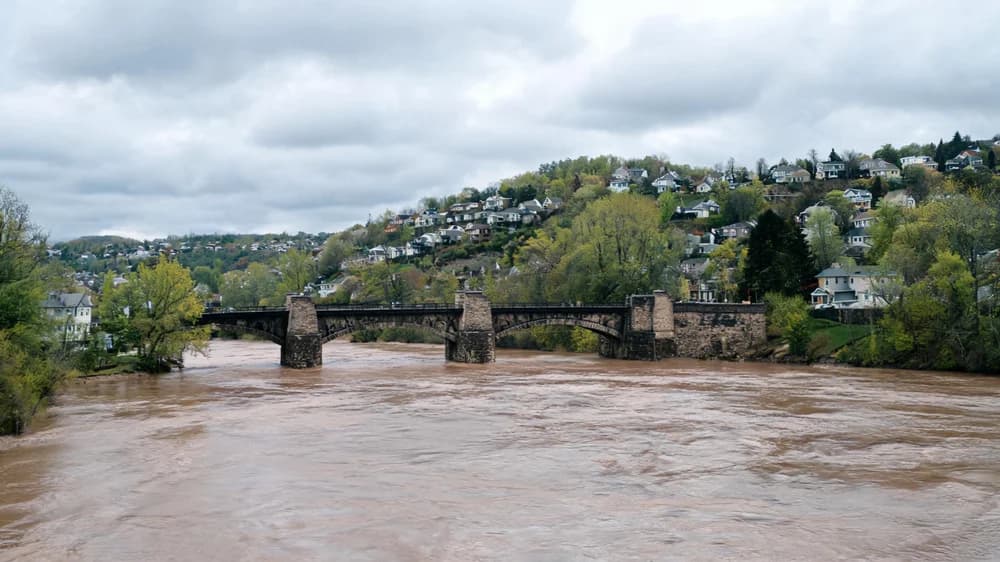
Lehigh County PA flood and severe weather risk analysis for 2026. FEMA data, Lehigh River flooding history, and restoration services from Advanced DRI.
Lehigh County PA Flood & Weather Risk: 2026 Assessment
Lehigh County, anchored by the city of Allentown and situated in Pennsylvania's Lehigh Valley, is home to approximately 380,000 residents. The county's 348 square miles are bisected by the Lehigh River, which has been both an economic lifeline and a persistent flood threat for centuries. At Advanced DRI, we maintain active operations in the Lehigh Valley region, and this 2026 report reflects our assessment of the property risks facing this growing community.
Hydrological Risk Profile
The Lehigh River enters the county from the north, flowing through Allentown before joining the Delaware River at Easton in neighboring Northampton County. The river drains a 1,364-square-mile watershed that extends deep into the Pocono Mountains, meaning that heavy rainfall far upstream can produce flooding in Lehigh County hours or even days later. Jordan Creek, Little Lehigh Creek, and Cedar Creek are significant tributaries that contribute additional flood risk to communities across the county.
Allentown's urban core, particularly the neighborhoods along Jordan Creek and the Lehigh River, has experienced repeated flood events. The Lehigh River's historic flood stage at Allentown is 22 feet, and the river has exceeded this threshold multiple times in recent decades. The city's older neighborhoods feature combined sewer systems that overflow during heavy rainfall, compounding the flood damage with contamination concerns.
FEMA Disaster Declarations
| FEMA Declaration | Event | Year | County Impact |
|---|---|---|---|
| DR-4596-PA | Severe Storms & Flooding | 2023 | $9.7M |
| DR-4474-PA | Remnants of Hurricane Ida | 2021 | $18.2M |
| DR-4408-PA | Severe Storms & Flooding | 2019 | $6.4M |
| DR-4025-PA | Hurricane Irene & Tropical Storm Lee | 2011 | $14.8M |
| DR-1649-PA | Severe Storms & Flooding | 2006 | $21.5M |
Severe Weather Trends
Beyond flooding, Lehigh County faces growing risk from severe thunderstorms, including damaging straight-line winds, large hail, and occasional tornadoes. The Lehigh Valley's position between the Appalachian ridges and the Atlantic coastal plain creates a convergence zone where warm, moist air from the south collides with cooler air masses, producing intense convective storms during the warm season.
| Year | Severe Thunderstorm Warnings | Tornado Warnings | Estimated Wind Damage |
|---|---|---|---|
| 2025 | 34 | 3 | $4.8M |
| 2024 | 29 | 2 | $3.6M |
| 2023 | 31 | 4 | $6.2M |
| 2022 | 22 | 1 | $2.1M |
| 2021 | 27 | 2 | $5.4M |
At-Risk Communities
Within Lehigh County, flood risk concentrates along the Lehigh River corridor through Allentown, Whitehall Township, and Catasauqua. Jordan Creek threatens properties in Allentown's west side neighborhoods and parts of South Whitehall Township. Little Lehigh Creek impacts properties in Allentown's south side and Emmaus. The suburban and rural townships in the county's western and southern portions face lower flood risk but remain vulnerable to wind damage and hail from severe thunderstorms.
Commercial properties along the Route 22 corridor and the Hamilton Street business district in Allentown are particularly vulnerable to both flooding and wind damage due to the age and construction type of many structures in these areas.
Recommendations
- Properties along the Lehigh River, Jordan Creek, or Little Lehigh Creek should carry flood insurance even if outside the mapped floodplain
- Have your roof inspected annually and after any significant storm event, as wind-damaged shingles may not be visible from the ground
- Trim trees that overhang your home or power lines to reduce wind damage risk
- Install a sump pump with battery backup if your property has a basement in the flood-prone urban core
- Know your restoration options before an emergency occurs, and save Advanced DRI's contact information for rapid response
Our team provides water damage restoration, storm damage restoration, and mold remediation services throughout Lehigh County and the greater Lehigh Valley. We respond 24/7 and work with all major insurance providers. Visit our service areas page for more information.
Frequently Asked Questions
How often does the Lehigh River flood in Allentown?
The Lehigh River at Allentown reaches minor flood stage (approximately 17 feet) an average of 2-3 times per year. Major flood stage (22 feet) has been reached during several significant events in the past 15 years, including Hurricane Irene in 2011 and the remnants of Ida in 2021. Upstream watershed conditions in the Poconos significantly influence flood timing and severity.
Is hail damage common in Lehigh County?
Yes. The Lehigh Valley's geographic position makes it susceptible to severe thunderstorms that produce damaging hail. The county averages 4-6 significant hail events per year, with hailstones occasionally exceeding 1.5 inches in diameter. Roof, siding, and vehicle damage from hail are among the most common insurance claims in the area.
What should I do if my Lehigh County property floods?
Prioritize safety first: do not enter floodwater, and turn off electricity to affected areas if you can do so safely. Document damage with photos before cleanup begins. Contact Advanced DRI for professional water extraction and drying. The faster water is removed and structural drying begins, the less secondary damage, especially mold, you will face.
Lehigh Valley property owner? We are your local restoration experts.
24/7 emergency response for flood, storm, and water damage across Lehigh County.
Contact Advanced DRI
Data sources: FEMA Disaster Declarations Summary, NFIP claims database, National Weather Service State College and Philadelphia offices, PA Emergency Management Agency, Lehigh County EMA, and Advanced DRI project records. Data current as of Q1 2026.
Categories
Need Restoration Services?
Our team is available 24/7 for emergency response. Call us today for a free phone consultation.


Questions About Restoration?
Our experts are ready to help. Contact us for a free consultation.