
Kingston NY Historic District Restoration Challenges
Rob Temples manages emergency restoration operations for Advanced DRI's Fairfield, NJ and New York City service areas. With 10 years in the restoration industry and prior experience working for a general contractor, he integrates construction knowledge with mitigation expertise on every project and holds an IICRC Water Restoration Technician (WRT) certification.
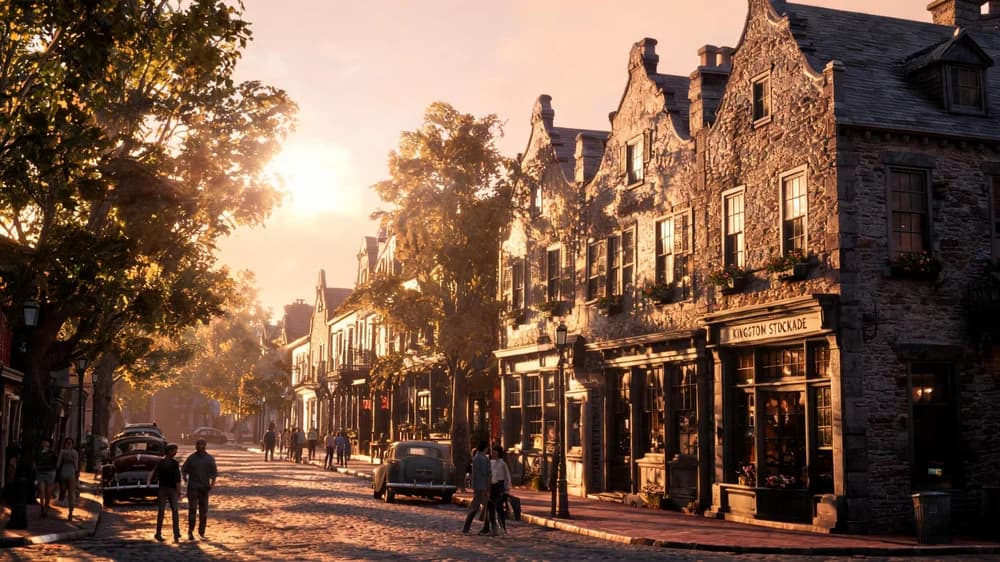
Kingston NY's historic districts present unique restoration challenges. Learn about preservation requirements, building vulnerabilities, and expert restoration
Kingston's Living History
Kingston, New York holds a unique place in American history. As the first capital of New York State, it contains the Stockade District -- one of the oldest continuously inhabited settlements in the country -- along with the Rondout waterfront district and the Midtown neighborhood, each with their own architectural heritage. These historic areas are protected by local and state preservation guidelines, which means that when damage occurs, restoration is far more complex than in modern construction.
At Advanced DRI, we have restored numerous historic properties in Kingston and across the Hudson Valley. Our teams understand that working in Kingston's historic districts requires more than technical restoration skill -- it requires knowledge of preservation standards, period construction methods, and the regulatory landscape that governs work on historic properties.
Kingston Historic Districts at a Glance
| District | Period of Significance | Building Count | Dominant Materials | Key Vulnerability |
|---|---|---|---|---|
| Stockade District (NRHP) | 1658-1865 | ~90 contributing | Native stone, brick, wood | Moisture intrusion, fire |
| Rondout-West Strand (NRHP) | 1820-1940 | ~200 contributing | Brick, wood frame | Flooding, structural aging |
| Fair-Green Historic District | 1850-1930 | ~150 contributing | Wood frame, brick | Deferred maintenance |
| Chestnut Street District | 1840-1920 | ~60 contributing | Wood frame Victorian | Fire, wind damage |
Sources: National Register of Historic Places nominations, Kingston Historic Landmarks Preservation Commission, NY State Historic Preservation Office (SHPO)
Why Historic Restoration Is Different
When a modern home suffers water or fire damage, the restoration approach is relatively straightforward: remove damaged materials, dry the structure, and replace with equivalent modern materials. In Kingston's historic districts, every step must account for preservation requirements:
Material Matching
Damaged historic materials must be replaced with equivalent materials wherever possible. This means sourcing period-appropriate lumber dimensions (true 2x4s, not modern nominal lumber), matching historic plaster formulations, and finding or fabricating period hardware. Modern drywall is often not an acceptable replacement for original horsehair plaster in contributing structures.
Regulatory Review
Work on properties within Kingston's locally designated historic districts must be reviewed by the Historic Landmarks Preservation Commission (HLPC). Even emergency repairs that alter the exterior appearance of a contributing building may require a Certificate of Appropriateness. Properties individually listed on the National Register may also need State Historic Preservation Office (SHPO) review, particularly if any federal funding or permits are involved.
Construction Techniques
Historic buildings were constructed differently than modern ones. Balloon framing (where wall studs run the full height of the building) is common in pre-1920 Kingston homes. This framing type creates open vertical channels inside walls that can spread fire and water damage rapidly between floors -- a critical factor our restoration teams account for when assessing damage scope.
Common Damage Scenarios in Kingston's Historic Areas
Water Damage in the Rondout
The Rondout waterfront district sits at the confluence of Rondout Creek and the Hudson River. Its low elevation makes it vulnerable to flooding during heavy rain events and Hudson River tidal surges. Many Rondout buildings have experienced multiple flood events, and the cumulative effect of repeated water exposure on historic masonry and timber is significant. Our water damage restoration approach in the Rondout includes careful moisture assessment of historic wall assemblies using non-invasive moisture meters to avoid unnecessary destructive investigation.
Fire Damage in Dense Historic Blocks
Kingston's historic districts contain blocks of attached or closely spaced buildings where fire can spread rapidly. The 2016 fire on Broadway in Midtown and multiple structure fires in the Rondout have demonstrated how quickly flames can move through interconnected roof lines and party walls. Fire damage restoration in these buildings requires careful structural assessment and smoke odor removal from porous historic materials like plaster, brick, and softwood.
Advanced DRI's Approach to Kingston Historic Restoration
Our restoration process for Kingston historic properties includes:
- Damage assessment with preservation awareness -- We evaluate not just the extent of damage but the historic significance of affected materials and features
- Documentation -- Thorough photographic and written documentation of pre-existing conditions and damage, required for both insurance claims and HLPC review
- Preservation-compliant restoration plans -- We develop restoration approaches that meet both building code requirements and historic preservation standards
- Skilled trades coordination -- We maintain relationships with craftspeople experienced in historic plaster, masonry, woodwork, and other period trades
- Regulatory coordination -- We navigate the HLPC review process and SHPO consultation requirements so property owners do not have to
Advanced DRI serves all of Kingston and Ulster County. Visit our service areas page for details on our Hudson Valley coverage.
Frequently Asked Questions
Do I need permission to repair my historic Kingston property after damage?
If your property is within a locally designated historic district and the repairs affect the exterior appearance, you likely need a Certificate of Appropriateness from the HLPC. Emergency stabilization to prevent further damage can proceed immediately, but permanent repairs and reconstruction should be reviewed. Advanced DRI can guide you through this process and prepare the documentation the HLPC requires. Reach out through our contact page for assistance.
Does historic district status affect my insurance claim?
Historic district status can increase restoration costs because of material matching requirements, specialized labor, and regulatory review timelines. A standard insurance policy may not cover the full cost of historically appropriate restoration. We recommend discussing "ordinance or law" coverage with your insurer, which covers the additional cost of complying with building codes and regulations -- including historic preservation requirements -- during restoration.
Can Advanced DRI match original historic materials during restoration?
Yes. Our restoration approach prioritizes matching original materials and techniques wherever possible. For Kingston's historic properties, this includes lime-based plaster and mortar, period-appropriate wood species and profiles, and historically accurate finishes. When original materials cannot be salvaged, we work with specialized suppliers and craftspeople to source appropriate replacements that satisfy preservation review requirements.
Historic Property Damage in Kingston?
Advanced DRI combines modern restoration technology with respect for Kingston's architectural heritage. We restore historic properties to their full beauty while meeting all preservation requirements.
Categories
Need Restoration Services?
Our team is available 24/7 for emergency response. Call us today for a free phone consultation.

Questions About Restoration?
Our experts are ready to help. Contact us for a free consultation.