Storm & Disaster Damage
Hurricane Flood Damage Restoration: Recovery After Major Storms
January 27, 20269 min read
T
Tyler McClelland· Mitigation Manager, Hudson Valley Region (NY)
Tyler McClelland leads mitigation operations for Advanced DRI across New York's Hudson Valley, directing water, mold, and large-loss response in the field. He holds IICRC Water Restoration Technician (WRT) and Applied Microbial Remediation Technician (AMRT) certifications and a New York State Mold Supervisor certification, and is trained in IRCA hospital safe construction practices recognized by The Joint Commission.
IICRC Water Restoration Technician (WRT), IICRC Applied Microbial Remediation Technician (AMRT), NY State Mold Supervisor Certification, Lead RRP Certification, OSHA Bloodborne Pathogens Training, IRCA Hospital Safe Construction Practices (TJC), Large Loss Mastery Estimating CertifiedLinkedIn
Published January 27, 2026 · Updated May 27, 2026

Guide to hurricane flood damage restoration. Learn about contaminated water cleanup, insurance claims, and timeline for recovery after major storms.
Understanding hurricane flood damage and effective hurricane restoration processes helps property owners prepare for and respond to these devastating natural disasters. Hurricane flood damage involves multiple damage types requiring comprehensive restoration approaches. Professional storm surge cleanup and flood damage recovery services address contaminated water, structural damage, and the complex challenges of hurricane restoration.
Types of Hurricane Property Damage
Hurricane flood damage typically involves multiple damage types occurring simultaneously, each requiring different restoration approaches.Flood Damage
Hurricane flooding represents the most widespread and severe damage type. Hurricane flood damage may result from:- Storm surge: Ocean water pushed inland by hurricane winds
- Rainfall flooding: Extreme precipitation overwhelming drainage
- River flooding: Waterways overflowing from upstream rainfall
- Infrastructure failure: Levee breaches, dam failures, pumping station failures
Wind Damage
Hurricane winds cause structural damage ranging from minor (missing shingles) to catastrophic (structural failure):- Roof damage allowing water intrusion
- Window and door failure
- Siding and exterior damage
- Structural damage to framing
- Total destruction of buildings
Rain Intrusion
Even without flooding, hurricane rainfall causes significant water damage through wind-driven rain penetration:- Water forced through gaps in windows and doors
- Penetration through roof damage
- Entry around improperly sealed penetrations
- Interior flooding from overwhelmed drainage
Debris and Impact Damage
Flying debris and falling trees cause impact damage beyond wind effects alone:- Vehicle and equipment damage
- Structural impacts from projectiles
- Tree falls onto structures
- Damage from neighbor's debris
Immediate Actions After Hurricane
Post-hurricane response requires careful prioritization of safety and damage mitigation to begin effective hurricane restoration and flood damage recovery.Safety Assessment
Warning: Do not return to hurricane-damaged property until authorities confirm safety. Downed power lines, gas leaks, structural instability, contaminated floodwater, and displaced wildlife create serious hazards. Upon return, assess for:- Structural damage that could cause collapse
- Gas leaks (smell of gas = evacuate immediately)
- Electrical hazards
- Contaminated water
- Animal and pest hazards
Documentation
Before cleanup begins, thoroughly document damage:- Photograph and video all damage inside and outside
- Document water lines showing flood depth
- List damaged contents
- Note any safety hazards observed
- Keep all documentation in multiple locations
Contacting Resources
Contact insurance company immediately to report damage. Be prepared for delays during widespread events. Contact restoration services for professional assessment and mitigation. Document all communications with dates, names, and content.Hurricane Flood Water Contamination
Hurricane flood damage poses serious health hazards requiring appropriate precautions during storm surge cleanup.Contamination Sources
Hurricane floodwater typically contains:- Raw sewage from overwhelmed systems
- Industrial chemicals from flooded facilities
- Fuel and oil from damaged vehicles and tanks
- Agricultural chemicals
- Hazardous household materials
- Bacteria, viruses, and parasites
- Dead animals and biological decomposition
Health Precautions
When working in hurricane flood-damaged areas:- Avoid contact with floodwater when possible
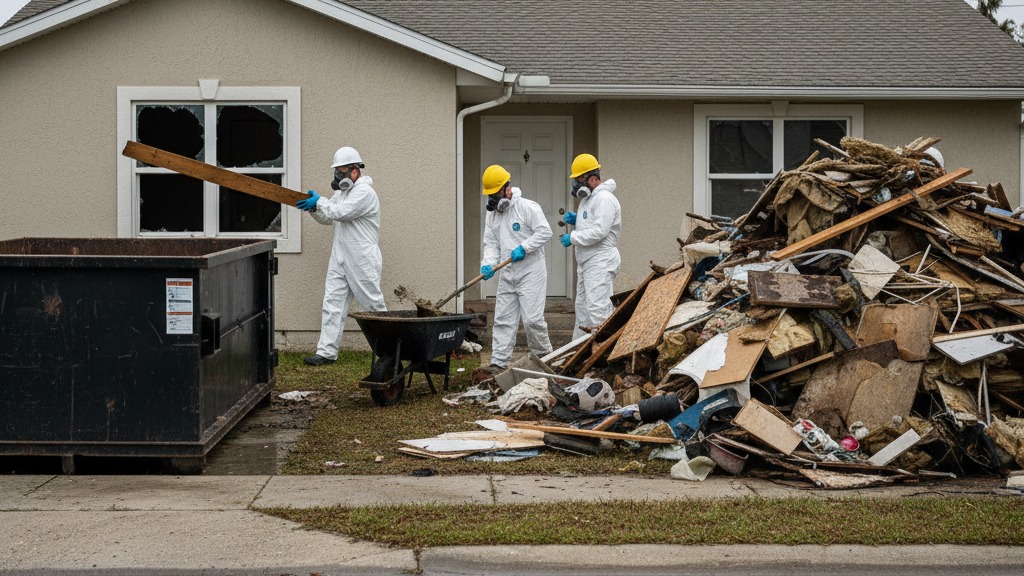
- Wear protective clothing, rubber boots, and gloves
- Never eat food that contacted floodwater
- Wash thoroughly after any floodwater contact
- Seek medical attention for any injuries exposed to floodwater
Professional Handling
Hurricane flood cleanup requires professional sewage and contaminated water cleanup protocols. DIY cleanup of hurricane flood damage poses serious health risks and often proves inadequate for proper decontamination.The Hurricane Restoration Process
Hurricane restoration follows established processes adapted for storm scale and contamination levels.Emergency Board-Up and Tarping
Board-up services secure properties against further damage:- Covering broken windows and door openings
- Tarping roof damage to prevent additional water intrusion
- Securing properties against unauthorized entry
- Protecting against additional weather before permanent repairs
Water Extraction
Removing flood water begins the storm surge cleanup and restoration process:- Pump-out of standing water
- Extraction of water from materials
- Removal of contaminated mud and debris
- Initial cleaning of surfaces
Contaminated Material Removal
Hurricane flood contamination requires extensive material removal during storm surge cleanup:- All porous materials contacted by floodwater (carpet, pad, drywall, insulation)
- Contaminated contents beyond salvage
- Materials showing mold growth
- Structurally damaged components
Cleaning and Disinfection
Surfaces that contacted flood water require thorough cleaning and disinfection:- Pressure washing of exterior surfaces
- Scrubbing and chemical treatment of interior surfaces
- Antimicrobial application to prevent mold growth
- Multiple treatment cycles for heavily contaminated areas
Structural Drying
After contaminated materials are removed and surfaces cleaned, structural drying prevents ongoing damage:- Industrial dehumidification equipment
- High-volume air movement
- Moisture monitoring until targets are reached
- Extended drying times for concrete and heavy materials
Mold Prevention and Remediation
Hurricane conditions promote rapid mold growth. Mold prevention and remediation is essential:- Antimicrobial treatments during cleanup
- Rapid drying to prevent growth establishment
- Remediation of any mold that develops
- Ongoing monitoring during reconstruction
Insurance and FEMA Assistance
Hurricane recovery typically involves multiple funding sources requiring coordination for effective flood damage recovery.Homeowner Insurance
Standard homeowner policies cover wind damage but typically exclude flood damage. Wind-driven rain entering through wind-caused openings may be covered under windstorm provisions.Flood Insurance
NFIP (National Flood Insurance Program) or private flood insurance covers flood damage. If you have flood insurance, file claims promptly. Document everything—the burden of proof falls on policyholders.FEMA Assistance
When disaster declarations are issued, FEMA Individual Assistance may help with:- Temporary housing
- Home repairs (limited)
- Personal property replacement (limited)
- Other disaster-related expenses
SBA Disaster Loans
Small Business Administration disaster loans provide low-interest financing for repairs beyond insurance and FEMA coverage, available to homeowners as well as businesses.Long-Term Hurricane Restoration Challenges
Major hurricanes create hurricane restoration challenges extending well beyond immediate cleanup.Contractor Availability
Regional disasters strain contractor capacity severely. Restoration and reconstruction timelines extend significantly when entire areas require simultaneous help. Establishing relationships with qualified restoration companies before storms helps secure priority response.Material Shortages
Building materials become scarce after major hurricanes as demand spikes while supply chains are disrupted. Drywall, roofing, electrical supplies, and other materials may face extended lead times.Permit Processing
Building departments become overwhelmed with permit applications after hurricanes. Processing times increase substantially for permits and inspections.Hidden Damage
Hurricane flood damage may not be fully apparent initially. Moisture in wall cavities, structural weakening, and slow mold development may manifest weeks or months later, requiring additional repairs.Frequently Asked Questions About Hurricane Flood Restoration
How long after a hurricane can I start cleanup?
+
Begin cleanup as soon as safely possible after authorities allow return and the property is safe to enter. Every day of delay allows more damage from mold growth, continued moisture damage, and material deterioration. However, safety comes first—ensure structural stability and absence of electrical/gas hazards before entering.
Can any flooded belongings be saved?
+
Some items can be professionally cleaned and restored, but many porous materials contaminated by hurricane flood damage cannot be adequately decontaminated. Hard, non-porous items may be cleanable. Soft, porous items (mattresses, upholstered furniture, carpet) generally require disposal. Professional contents restoration services can evaluate specific items.
Why does hurricane flood restoration require removing so much material?
+
Hurricane floodwater is Category 3 (black water)—grossly contaminated with sewage, chemicals, and pathogens. Porous materials absorb these contaminants deeply, beyond effective cleaning. Leaving contaminated materials creates ongoing health hazards and allows mold growth. Complete removal of contaminated materials is essential for safe restoration.
How quickly will mold grow after hurricane flooding?
+
Mold can begin growing within 24-48 hours in hurricane conditions. Warm temperatures, high humidity, and organic materials create ideal mold environments. Rapid water extraction, material removal, and drying are critical for mold prevention. Once established, mold requires separate remediation that adds time and cost to restoration.
What if I don't have flood insurance?
+
Without flood insurance, options include FEMA Individual Assistance (if available, typically limited), SBA disaster loans, and out-of-pocket payment. Wind damage covered under standard homeowner policies may cover some hurricane flood damage. Future flood insurance should be considered—flood risk exists in many areas without mandatory purchase requirements.
How long does hurricane flood restoration typically take?
+
Timeline varies dramatically based on damage severity and regional conditions. Minor flooding might be addressed in weeks; severe hurricane flood damage requiring extensive reconstruction takes months. After major hurricanes, contractor availability and material shortages extend all timelines. Properties requiring significant structural repair may take six months to a year or more for complete hurricane restoration.
Professional Hurricane Damage Restoration
Hurricane restoration requires experienced professionals with capabilities to handle contaminated floodwater, extensive material removal, and comprehensive property restoration. Professional restoration companies bring resources, expertise, and established processes essential for safe, complete hurricane recovery. When hurricanes affect properties in Northern New Jersey, Pennsylvania's Capital Region, New York's Hudson Valley, Connecticut's Capital Region, or the South Jersey Shore, 24-hour emergency restoration teams respond with equipment, personnel, and expertise to address hurricane damage comprehensively.Categories
Need Restoration Services?
Our team is available 24/7 for emergency response. Call us today for a free phone consultation.


Questions About Restoration?
Our experts are ready to help. Contact us for a free consultation.