
Tyler McClelland leads mitigation operations for Advanced DRI across New York's Hudson Valley, directing water, mold, and large-loss response in the field. He holds IICRC Water Restoration Technician (WRT) and Applied Microbial Remediation Technician (AMRT) certifications and a New York State Mold Supervisor certification, and is trained in IRCA hospital safe construction practices recognized by The Joint Commission.
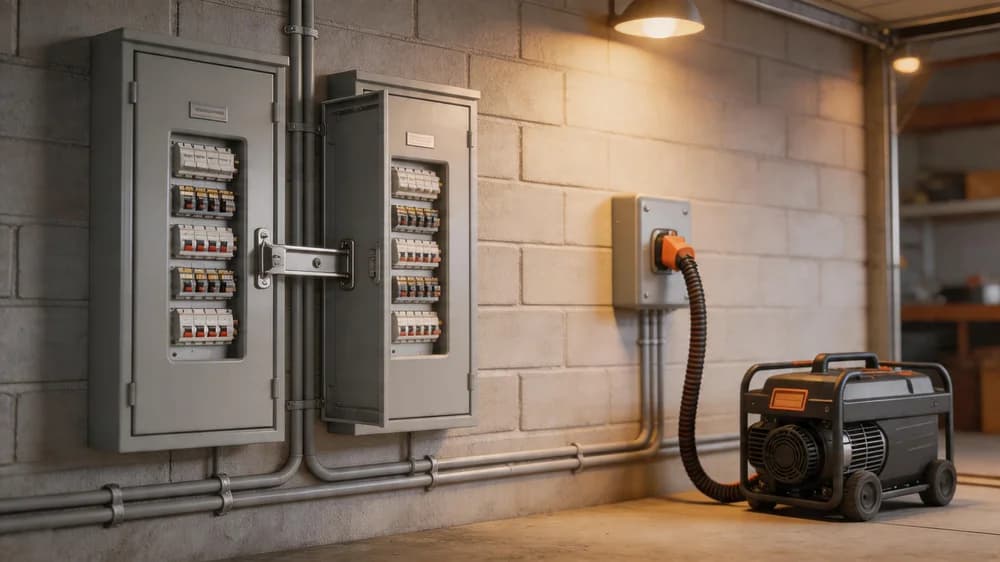
Understand how generator transfer switches work, why they matter for storm safety, and what homeowners should know before installation.
Why a Transfer Switch Is Essential for Storm Preparedness
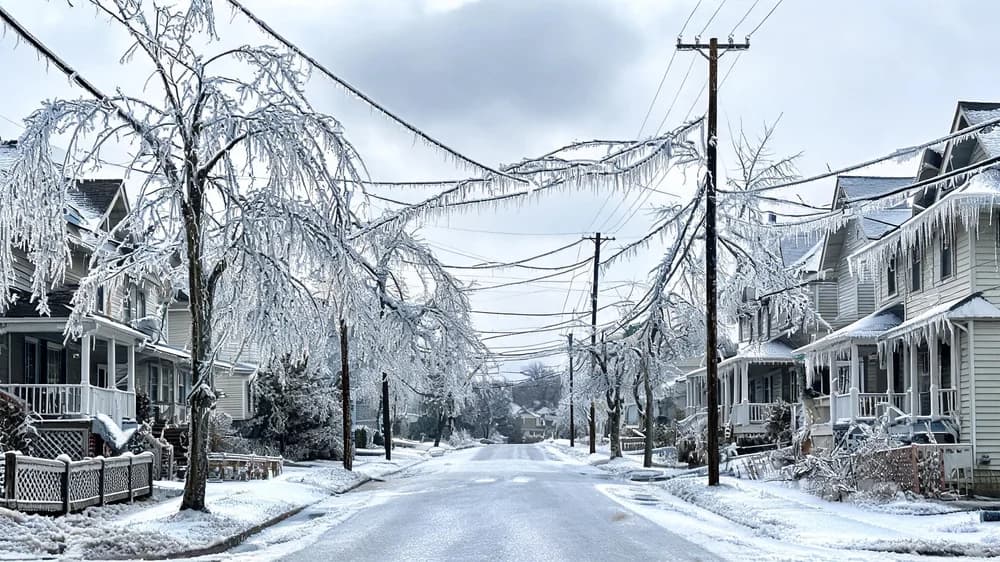
At Advanced DRI, we respond to homes after major storms across the Northeast, and a pattern becomes clear quickly. Homeowners with properly installed generator transfer switches weather outages comfortably, while those with improvised power setups often face dangerous situations, damaged equipment, or both. A transfer switch is not a luxury. It is the difference between a safe, reliable backup power system and a serious electrical hazard.
This guide explains what a transfer switch is, why it matters, the main types available, and what homeowners should understand before installation. While we recommend professional installation by a licensed electrician, understanding the fundamentals helps you make informed decisions.
What a Transfer Switch Actually Does
A transfer switch is an electrical device that safely moves your home's circuits between two power sources: the utility grid and your backup generator. When the power goes out, the switch lets you disconnect from the grid and energize selected circuits from your generator. When grid power returns, it safely transfers the load back to utility power.
The key word is safely. Without a transfer switch, connecting a generator to your home creates two serious hazards:
- Backfeed to the utility grid, which can electrocute line workers trying to restore power.
- Dangerous voltage surges when utility power returns unexpectedly and collides with generator output.
Connecting a generator to your home through extension cords running through windows is a common but dangerous workaround. Transfer switches eliminate these risks while providing a much more capable and convenient backup power solution.
The Main Types of Transfer Switches
Manual Transfer Switch
A manual transfer switch requires you to physically flip switches to transfer power between sources. These are the most affordable option and work well for homeowners with portable generators who want to prioritize a limited number of essential circuits.
Typical manual transfer switches handle six to ten circuits, letting you select which areas of your home receive backup power. Common choices include the refrigerator, well pump, furnace, a few lights, and the circuit with your sump pump.
Automatic Transfer Switch
An automatic transfer switch, often installed with standby generators, detects utility power loss and starts the generator within seconds. It restores power automatically and transfers back when utility power returns. These systems are more expensive but provide seamless protection, especially valuable for homes with medical equipment, sump pumps in flood-prone areas, or occupants who are frequently away.
Interlock Kit
An interlock kit is a mechanical device installed on your existing main breaker panel that prevents the main breaker and the generator breaker from being on at the same time. This is a lower-cost alternative to a dedicated transfer switch and allows you to power any circuit in the panel, but it requires manual operation and careful load management to avoid overloading the generator.
How Transfer Switches Connect to Your System
Understanding the basic components helps clarify what installation involves.
The Inlet Box
A weatherproof inlet box is mounted on the exterior of your home, typically near where your portable generator will be placed. A heavy-duty cable connects the generator to this inlet, eliminating the need to run cords through doors or windows.
The Conduit and Wiring
Wiring runs from the inlet box through conduit to the transfer switch inside your home. The gauge of this wiring must match the amperage of your generator and transfer switch.
The Transfer Switch
The transfer switch itself mounts next to or near your main electrical panel. Circuits are routed from the main panel through the transfer switch, which then distributes them to your loads during generator operation.
The Generator
A portable generator sits outside, at least fifteen to twenty feet from the house with exhaust directed away from windows, doors, and vents. It connects to the inlet box with the heavy-duty cable.
Sizing Your Transfer Switch
The transfer switch must match the capacity of your generator. Key considerations include:
Generator Output
Check your generator's continuous watt rating rather than the peak or surge rating. A seventy-five hundred watt generator with a ninety-five hundred watt surge still supports a thirty amp transfer switch in most cases.
Amperage Rating
Common transfer switches are rated at thirty or fifty amps. Verify that your generator has a matching output receptacle or pigtail.
Circuit Count
Count the circuits you want to power during an outage. Typical priority circuits include the refrigerator, heating system, sump pump or well pump, a kitchen outlet, a bathroom, and key lighting areas. Make sure your transfer switch has enough circuit positions.
Total Load Calculation
Add up the running watts of everything you plan to power simultaneously. Leave a safety margin of twenty to thirty percent to handle startup surges. If your load exceeds your generator's capacity, you will need to stagger operation of high-draw items.
Installation: Why This Is a Professional Job
While transfer switch kits are sold at home improvement stores, installation requires working inside your main electrical panel with live service wires. Unless you are a qualified electrician, this is not a DIY project.
Why Licensed Installation Matters
- Code compliance: Transfer switches must be installed according to National Electrical Code requirements and local amendments. Non-compliant installations can void insurance coverage.
- Permits and inspections: Most jurisdictions require permits and inspections for transfer switch installations, which protect you, future buyers, and insurance adjusters.
- Safe integration: Proper grounding, bonding, and neutral configurations are essential. Mistakes create shock, fire, and backfeed hazards.
- Warranty protection: Many generator manufacturers require professional installation to honor warranty coverage.
A licensed electrician typically completes a transfer switch installation in a day. The investment protects a much larger investment in your generator, home, and safety.
After Installation: What Homeowners Should Know
Once your transfer switch is installed, there are a few things we recommend every homeowner understand about operating the system.
Know Your Circuits
Label each position on your transfer switch clearly. During an outage in a dark storm, you want to know exactly which switch controls which circuit without guessing.
Practice Before You Need It
Run a test transfer on a calm day. Connect your generator, start it, and run through the transfer sequence. This is not the time to learn under stress during an actual storm.
Manage Loads Intelligently
Generators have finite capacity. Do not run every appliance at once. Stagger heavy loads like well pumps, electric heaters, and large appliances.
Maintain the Generator
Exercise your generator monthly, change the oil according to manufacturer recommendations, and keep fresh fuel on hand. Generators that sit unused for months often fail exactly when you need them.
Store Fuel Safely
Use approved fuel containers, store them away from living spaces, and add fuel stabilizer to extend shelf life. Never store large quantities of gasoline in attached garages.
Generator Placement and Carbon Monoxide Safety
No discussion of generators is complete without addressing carbon monoxide. Generator exhaust kills people every storm season. Our team treats this as one of the most important storm safety topics.
- Run portable generators at least twenty feet from the house.
- Direct exhaust away from windows, doors, and vents.
- Never run a generator in a garage, basement, or any enclosed space.
- Install carbon monoxide detectors on every level of your home.
- Protect the generator from weather with a purpose-built generator cover or tent rated for operation.
When Storms and Power Loss Cause Damage
Transfer switches prevent one of the most common sources of post-storm damage: failed sump pumps causing basement flooding during outages. If your sump pump is on generator backup through a transfer switch, your basement stays dry even during extended outages.
If a storm has already caused damage to your home, whether from flooding, wind, water intrusion, or extended power loss, our team is available for emergency response. Advanced DRI provides complete storm damage restoration and water damage cleanup throughout the Northeast.
Contact Advanced DRI for professional assessment and restoration after any storm-related damage.
Frequently Asked Questions
Can I install a transfer switch myself to save money?
Unless you are a licensed electrician, we strongly recommend against it. Transfer switch installation involves working inside your energized main panel, meeting code requirements, and obtaining permits. Incorrect installation creates serious safety hazards and can void your insurance coverage. The cost of professional installation is modest compared to the risks of doing it wrong.
How many circuits can a transfer switch handle?
Typical manual transfer switches handle six to ten circuits, while larger models handle up to sixteen or more. For whole-home backup, automatic transfer switches paired with standby generators can handle the entire electrical panel. The right size depends on which circuits you consider essential during an outage and what your generator can realistically power.
Will a transfer switch work with any generator?
Transfer switches are designed to work with generators within specific amperage and voltage ranges. A thirty amp transfer switch requires a generator with a matching thirty amp output, typically seventy-five hundred to ten thousand watts. If you upgrade your generator in the future, you may need to upgrade your transfer switch as well. Plan the system as a complete package.
Categories
Need Restoration Services?
Our team is available 24/7 for emergency response. Call us today for a free phone consultation.


Questions About Restoration?
Our experts are ready to help. Contact us for a free consultation.