Hidden Mold Behind Shower Tiles: Signs and Solutions
Elsa Boyer is a Regional Operations Manager for Advanced Disaster Recovery, based in Harrisburg, Pennsylvania, overseeing commercial and healthcare restoration projects. She holds a Bachelor of Arts from Valparaiso University and a deep certification portfolio, including ICRA Certified Healthcare Remediator Supervisor and multiple IICRC designations across commercial drying, structural drying, water, and fire & smoke restoration.
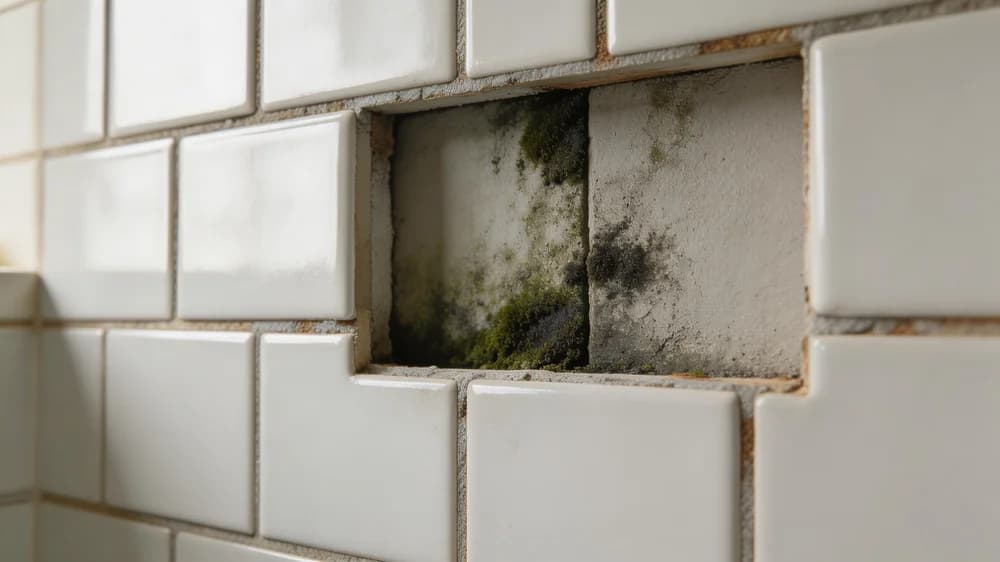
Discover the warning signs of mold hiding behind shower tiles, why it develops, and how Advanced DRI safely removes it and restores your bathroom.
The Hidden Mold Problem in Northeast Bathrooms
Your shower might look perfectly clean on the surface, but behind those tiles, a serious mold problem could be developing undetected. Bathrooms are the most moisture-intensive rooms in any home, and when water finds its way behind tile surfaces, it creates ideal conditions for mold growth that can persist for months or years before homeowners notice anything wrong.
At Advanced DRI, we regularly discover extensive mold contamination behind shower tiles during bathroom renovations and water damage assessments across New York, New Jersey, Pennsylvania, and Connecticut. Understanding the warning signs can help you catch this problem before it causes significant structural damage or health concerns.
Why Mold Grows Behind Shower Tiles
Every shower generates substantial moisture. Hot water, steam, and splashing create a humid environment that tile and grout are designed to manage. However, the waterproofing system behind your tiles is not invincible, and several common failures allow moisture to penetrate to the substrate:
- Deteriorating grout: Grout is porous and breaks down over time. Cracked, missing, or eroded grout allows water to seep behind tiles with every shower.
- Failed caulk joints: The caulk seams where the shower walls meet the tub, floor, or each other are critical waterproofing points. When caulk shrinks, cracks, or pulls away, water infiltrates freely.
- Inadequate waterproofing membrane: Older homes and some budget renovations may lack a proper waterproofing membrane behind the tile. Without this barrier, water reaches the drywall or wood framing directly.
- Improper tile installation: Tiles installed over standard drywall instead of cement board or waterproof backer provide no moisture resistance, virtually guaranteeing eventual mold problems.
Warning Signs of Mold Behind Shower Tiles
Because the mold is concealed behind the tile surface, direct visual confirmation is usually not possible without removing tiles. However, these indicators strongly suggest hidden mold growth:
Persistent Musty Odor
A musty or earthy smell in the bathroom that persists despite regular cleaning is one of the strongest indicators of hidden mold. This odor is produced by microbial volatile organic compounds (MVOCs) released by active mold colonies and often intensifies after showers when humidity rises.
Loose or Hollow-Sounding Tiles
When water damages the substrate behind tiles, the adhesive bond weakens. Tiles that feel loose, shift slightly when pressed, or produce a hollow sound when tapped have likely lost their bond due to moisture damage and possible mold growth on the backer material.
Discolored or Stained Grout
While surface mold on grout is common and usually manageable with regular cleaning, grout that remains dark or discolored despite thorough cleaning may indicate that mold has penetrated through the grout and is growing on the substrate behind it.
Bubbling or Peeling Paint on Adjacent Walls
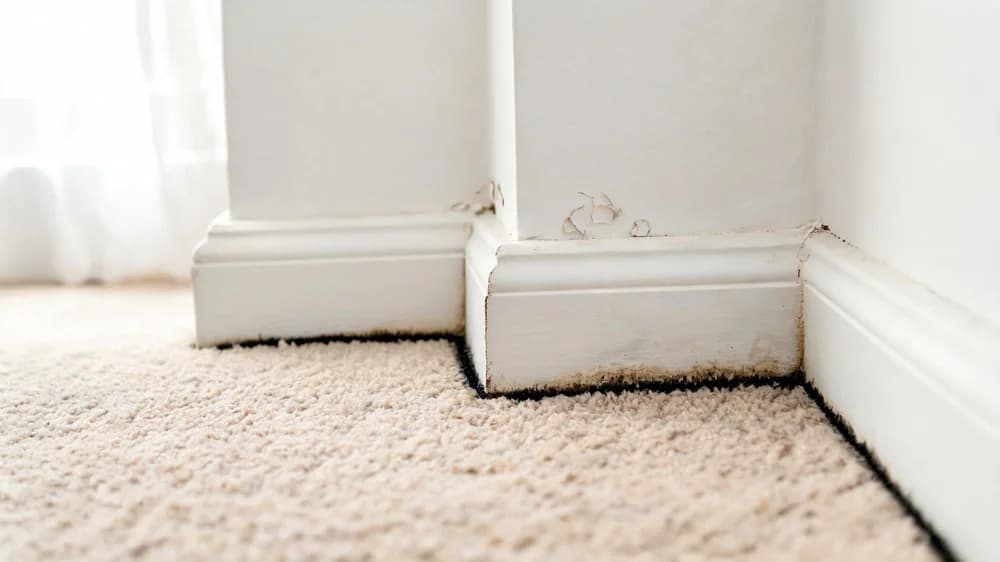
Moisture migrating from behind shower tiles can travel through wall framing and cause paint to bubble, peel, or discolor on the wall outside the shower enclosure. This is a clear sign that water is moving through the wall cavity.
Visible Mold at Tile Edges
Dark discoloration visible at the very edges of tiles, along the ceiling line of the shower, or at the junction between the shower and adjacent wall surfaces suggests mold growth that has spread from behind the tiles to visible areas.
Soft or Spongy Wall Areas
If pressing on the wall adjacent to the shower reveals soft or spongy areas, the drywall or framing has absorbed significant moisture and is likely hosting mold growth. This indicates a problem that has been developing for some time.
The Risks of Ignoring Hidden Shower Mold
Leaving mold behind shower tiles unaddressed creates compounding problems:
- Structural damage: Prolonged moisture exposure rots wood framing, deteriorates drywall, and can compromise the structural integrity of bathroom walls and floors.
- Health concerns: Mold spores released into the bathroom air during showers can trigger respiratory symptoms, allergies, and other health effects, particularly in children, elderly residents, and individuals with compromised immune systems.
- Spreading contamination: Mold behind shower tiles rarely stays contained. It migrates through wall cavities to adjacent rooms, closets, and even the floor below.
- Escalating repair costs: What begins as a tile and backer board issue can grow into a full wall cavity remediation requiring framing replacement, which is significantly more expensive.
How Advanced DRI Remediates Hidden Shower Mold
Our mold remediation team follows a proven process for addressing concealed mold behind shower tiles:
Assessment and Testing
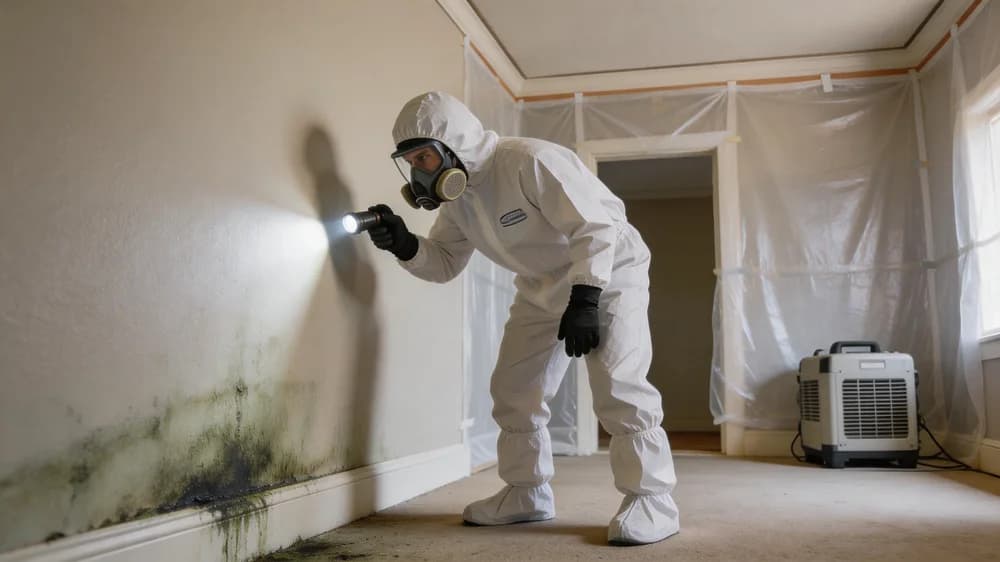
We begin with a thorough moisture assessment using thermal imaging and moisture meters to map the extent of water infiltration without unnecessary demolition. Air sampling may be conducted to quantify airborne spore levels before remediation begins.
Containment Setup
We establish containment barriers to prevent mold spores from spreading to other areas of the home during tile removal and remediation. HEPA air filtration devices maintain negative pressure within the work area.
Controlled Demolition
Tiles, backer board, and any mold-damaged substrate are carefully removed and disposed of according to environmental regulations. We inspect the wall framing behind the substrate to determine whether structural components have been affected.
Remediation and Treatment
All affected surfaces are cleaned, treated with antimicrobial solutions, and dried thoroughly. Damaged framing members are repaired or replaced as needed. We ensure the wall cavity is completely dry before any new materials are installed.
Proper Reconstruction
We rebuild the shower with appropriate materials including cement board backer, proper waterproofing membrane, and quality installation that prevents the problem from recurring. Our reconstruction services ensure the finished result is both beautiful and properly protected against moisture.
Preventing Mold Behind Shower Tiles
After remediation, or as preventive maintenance for any shower, we recommend these practices:
- Inspect grout and caulk every six months and repair any cracks or gaps immediately
- Re-caulk shower seams every one to two years, or at the first sign of deterioration
- Run the bathroom exhaust fan during every shower and for at least 30 minutes afterward
- Maintain indoor humidity levels between 30 and 50 percent
- Squeegee shower walls after each use to reduce moisture on tile surfaces
- Address any water damage in or near the bathroom immediately
If you notice any of the warning signs described above, do not attempt to investigate behind the tiles yourself. Disturbing mold without proper containment can release large quantities of spores into your home. Contact Advanced DRI for a professional assessment and safe remediation.
Frequently Asked Questions
Can I just re-grout or re-caulk to fix the problem?
If mold has already established itself behind the tiles, re-grouting or re-caulking the surface will not eliminate the existing contamination. While maintaining grout and caulk is important for prevention, active mold growth behind the tiles requires removal of the affected materials and professional remediation before the shower can be properly rebuilt.
How long does shower mold remediation take?
A typical shower mold remediation project, including tile removal, remediation, drying, and reconstruction, takes approximately five to ten business days depending on the extent of damage and the complexity of the rebuild. Our team works efficiently to minimize disruption to your household.
Will my homeowner's insurance cover mold behind shower tiles?
Coverage depends on your specific policy and the cause of the moisture intrusion. Some policies cover mold resulting from a sudden event like a pipe burst but exclude mold caused by long-term maintenance issues. We recommend contacting your insurance provider to discuss your coverage. Advanced DRI can provide documentation to support your claim.
How do I know if the mold is just surface mold or a deeper problem?
Surface mold on grout and caulk is typically manageable with regular cleaning products. However, if the mold returns quickly after cleaning, if you notice musty odors, or if tiles feel loose, there is likely a deeper problem behind the tile surface that requires professional investigation. Contact Advanced DRI for an assessment.
Categories
Need Restoration Services?
Our team is available 24/7 for emergency response. Call us today for a free phone consultation.
Questions About Restoration?
Our experts are ready to help. Contact us for a free consultation.