Mold Remediation Services in NY, NJ, PA & CT
Professional mold inspection using infrared cameras and moisture meters, safe containment with HEPA filtration capturing 99.97% of particles, and EPA-compliant removal to protect your family's health.
What Mold Remediation Involves, Beyond Wiping Down a Wall
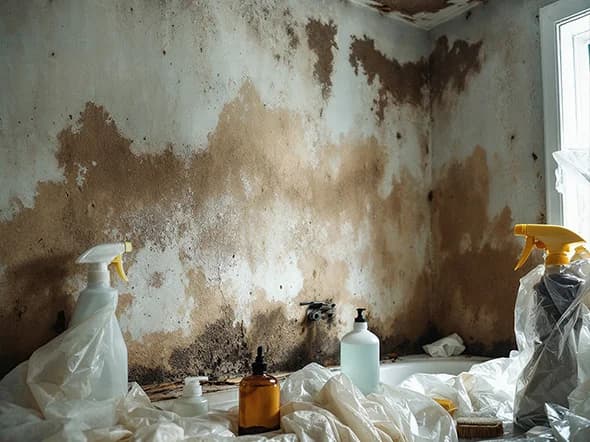
Mold remediation removes mold-damaged material and fixes the water behind it. EPA's remediation guide says the plan should include steps to fix the water or moisture problem, or the problem may reoccur. EPA also says that the key to mold control is moisture control.
Method scales with size. EPA's table for mold on building materials after clean water damage uses three tiers: under 10 square feet, 10 to 100, and over 100. It lists no containment for the smallest, limited containment for the middle tier, and full containment for the largest. Containment areas stay under negative pressure.
Wet porous materials with mold may have to be discarded, while hard surfaces are scrubbed with detergent and water and dried. HEPA vacuums are used for final cleanup. If a failed pipe or leak caused the growth, water damage restoration covers the drying side of the job.
Our Commitment
- 24/7 emergency availability
- 90-minute response time*
- Direct insurance billing
*In nearby service areas. Response times may vary by location.
Need Immediate Help?
Our emergency team is standing by 24/7 to respond to your mold removal situation.
(866) 926-3473Why Mold Remediation Depends on the Moisture Source
A mold job is not on a fixed countdown. It is on a moisture supply. EPA says that if wet materials are dried within 24 to 48 hours, in most cases mold will not grow. Once growth is visible, that window has passed, and the work shifts to finding what is still feeding it and keeping spores from spreading during removal.
Find the water
EPA's guide says the remediation plan should include steps to fix the water or moisture problem. Removing mold from a wall that is still getting wet only resets the clock.
Contain the spores
EPA cautions against letting mold and mold spores disperse through the air. On larger jobs the containment area is kept under negative pressure.
Check the result
EPA says visible mold, mold-damaged materials and moldy odors should not be present. It adds that where mold is visible, sampling is usually unnecessary.
Professional Mold Removal Process
Our proven 5-step process ensures complete restoration and prevents future damage.
Inspection
Infrared cameras and moisture meters locate all mold growth.
Containment
Negative air pressure prevents spore spread during removal.
Air Filtration
HEPA filters capture mold spores from the air.
Removal
Safe, EPA-compliant removal of all mold-affected materials.
Prevention
Address moisture sources to prevent future mold growth.
Advanced Mold Removal Technology
We invest in the latest equipment and techniques to provide faster, more thorough restoration.
Infrared Mold Detection
Thermal cameras reveal moisture patterns and hidden mold behind surfaces.
HEPA Air Filtration
Hospital-grade filters capture 99.97% of mold spores during remediation.
EPA-Compliant Removal
Following strict EPA and IICRC protocols for safe mold elimination.
Containment Protocols
Negative air pressure barriers prevent spores from spreading to clean areas.
Air Quality Testing
Third-party lab testing verifies successful remediation before clearance.
Prevention Solutions
Moisture control recommendations and treatments to prevent regrowth.
Why Choose Advanced DRI for Mold Removal?
- HEPA filtration captures 99.97% of particles
- EPA-compliant remediation
- Post-remediation testing
- Prevention recommendations
Questions to Ask Any Mold Remediation Contractor
Mold work is easy to oversell. These four questions test containment, scope and how the job will be judged finished.
Who is assessing the mold, and is that person separate from the remediator? New York's mold program prohibits the same individual from doing both the assessment and the remediation on one property. A good answer explains who defines the scope and who clears the work, wherever you live.
What containment will this job use, and how is negative pressure kept? EPA's table ties containment to the area affected: none for small jobs, limited for medium, full for large. A good answer links the plan to your square footage and says how air pressure is checked.
Which materials are coming out, and what is being cleaned in place? EPA notes that porous materials such as ceiling tiles and carpet may have to be thrown away if moldy. A good answer sorts materials by type and explains why each is removed or cleaned.
How will we decide the job is finished, and what fixes the moisture? EPA's guide says visible mold, mold-damaged materials and moldy odors should not be present, and that plans should fix the moisture problem. A good answer covers both, not testing alone.
Mold Remediation and Insurance Exclusions
Mold is often the part of a water claim that a policy treats separately. Triple-I says a policy will not cover damage due to lack of maintenance, mold or infestation, and that flood damage is excluded from standard policies. Policies differ, so read the declarations page and the exclusions for any mention of mold before assuming either way.
How the water arrived often shapes the outcome, so keep records of the leak, its repair and the dates. Photos of the growth and moisture readings taken before removal help show scope. Advanced DRI documents the loss with photos, moisture readings and written reports, and works with your adjuster.
Sources: EPA: Mold Remediation in Schools and Commercial Buildings, Chapter 3, EPA: Mold Remediation in Schools and Commercial Buildings, Table 2 Remediating Building Materials with Mold Growth, EPA: Brief Guide to Mold, Moisture and Your Home, EPA: Mold Cleanup in Your Home, New York State Department of Labor: Mold Program, Triple-I: Which disasters are covered by homeowners insurance?
The Advanced DRI Promise
Rapid Local Response
We target arrival within 90 minutes of your call in nearby service areas, 24/7/365.
Written Estimates
Clear, detailed estimates provided before work begins so you know exactly what to expect.
Direct Insurance Billing
We bill your insurance directly when possible, reducing your out-of-pocket expenses.
Satisfaction Guarantee
We are not satisfied until you are. If any issue arises, we make it right at no extra cost.
Licensed and Insured
Fully licensed in all service states with comprehensive liability coverage for your protection.
Mold Removal Questions
Common questions about our mold removal services.
What Our Mold Removal Clients Say
Real feedback from property owners who trusted us with their mold removal needs.
“Found black mold spreading behind our bathroom walls after a slow leak went unnoticed. Advanced DRI's team arrived within hours, set up full containment, and completely remediated the problem. The air quality testing showed our home was safe again.”
“Our basement had a serious mold problem that was making my kids sick. The technicians were IICRC certified and explained every step. They removed all contaminated materials and even helped with our insurance paperwork.”
“We discovered mold in our attic during a home inspection before selling. Advanced DRI completed the remediation in 4 days and gave us clearance documentation that satisfied the buyers. Saved our home sale!”
Complete Mold Removal Solutions
Mold Removal often requires additional services. We provide comprehensive restoration.
Water Damage
24/7 emergency water extraction, structural drying, and complete restoration. We prevent mold and secondary damage.
Sewage & Sewer Backup Cleanup
Sewer backup cleanup and sewage restoration. Category 3 extraction, hospital-grade disinfection, drying and rebuild.
Lead & Asbestos
EPA-certified removal of lead and asbestos from older properties. Safe inspection, removal, and disposal.
Mold Removal by Location
Rapid mold removal response across the Northeast with local teams ready 24/7.
New York
Hudson Valley - NYC Metro - Long IslandKey cities we serve:
- Poughkeepsie
- Kingston
- Newburgh
- Middletown
- Goshen
New Jersey
Northern NJ - Central NJ - Jersey ShoreKey cities we serve:
- Newark
- Jersey City
- Paterson
- Elizabeth
- Edison
Pennsylvania
Lehigh Valley - Capital Region - Northeast PAKey cities we serve:
- Harrisburg
- Lancaster
- York
- Carlisle
- Hershey
Connecticut
Hartford Area - New Haven - Fairfield CountyKey cities we serve:
- Hartford
- New Haven
- Waterbury
- New Britain
- Middletown
Mold Removal? We're Here 24/7
Don't wait - mold removal damage gets worse every hour. Call now for immediate emergency response anywhere in NY, NJ, PA, or CT.