Safe Room Basics: Protecting Your Family During Disasters
Rob Temples manages emergency restoration operations for Advanced DRI's Fairfield, NJ and New York City service areas. With 10 years in the restoration industry and prior experience working for a general contractor, he integrates construction knowledge with mitigation expertise on every project and holds an IICRC Water Restoration Technician (WRT) certification.
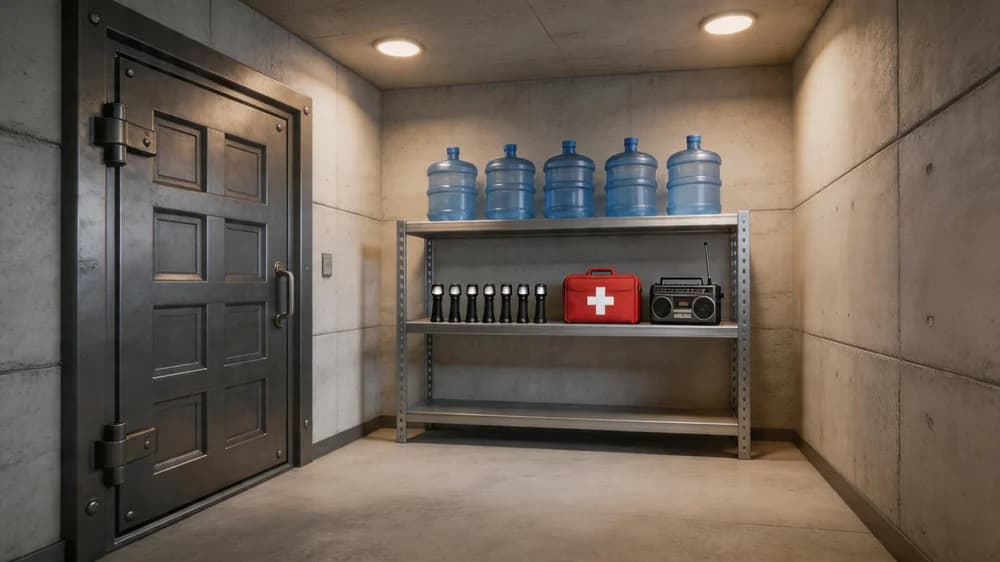
Learn how a properly designed safe room protects your family from tornadoes, severe storms, and home intrusions. Practical guidance from Advanced DRI.
Why Families Are Building Safe Rooms
A safe room is a hardened interior space designed to protect occupants from extreme events such as tornadoes, hurricanes, severe wind, or home invasion. Once considered a feature only of high-risk regions, safe rooms are now appearing in homes across the country as families take disaster preparedness more seriously.
At Advanced DRI, we respond to homes after tornadoes and severe storms, and the pattern is consistent: homes with properly built safe rooms protect their occupants even when the surrounding structure is heavily damaged. A safe room does not replace a broader preparedness plan, but it provides a layer of protection nothing else can match.
What Makes a Safe Room Different From a Basement
Not every enclosed space qualifies as a safe room. A proper safe room meets specific design criteria set by FEMA and the International Code Council, and it is engineered to withstand debris impact and sustained wind loads. A basement is safer than an upstairs bathroom, but a basement alone does not offer the same protection as an engineered safe room.
Key Features of a True Safe Room
- Reinforced walls, ceiling, and floor built to resist wind pressure and impact
- A purpose-built door rated for debris impact and anchored into the framing
- Anchoring to the home's foundation so it cannot be lifted or shifted
- Ventilation that functions even without power
- Interior-only access so occupants do not need to go outside during a storm
Where to Locate a Safe Room in Your Home
The best location depends on your home layout and the threats you are most concerned about. For tornado protection, an interior room on the lowest floor is standard. For hurricane protection, above the expected storm surge is essential. For intruder protection, a bedroom with a reinforced door may be sufficient.
Common Locations We See
- A reinforced interior closet on the main floor
- A dedicated room in the basement
- A hardened garage corner in homes without basements
- An under-stair space retrofitted with wall reinforcement
- A primary bedroom or master closet converted with impact-rated walls
Apartment and Rental Options
Renters and apartment dwellers often assume safe rooms are not an option. They can still identify the safest location in their unit, typically an interior bathroom, closet, or hallway away from exterior walls and windows. Location knowledge alone saves lives even without structural reinforcement.
What to Keep Inside Your Safe Room
A safe room should be stocked but not cluttered. The goal is to survive comfortably for a few hours in most cases, and up to twenty-four hours in severe events. Supplies should be rotated at least once a year so water and food remain usable.
Essential Supply List
- Bottled water, roughly one gallon per person for the expected duration
- Non-perishable snacks such as granola bars or shelf-stable meals
- Battery-powered or hand-crank radio
- Flashlights with fresh batteries
- First aid kit including any daily medications
- Cell phone chargers and a portable battery bank
- A whistle to signal rescuers if the home collapses
- Helmets or hard hats to protect against debris
- Sturdy shoes in case of broken glass
- Blankets, diapers, pet supplies as relevant to your household
Practicing Your Safe Room Plan
Knowing where the safe room is does not help if a family has never rehearsed getting there. Practice drills at least twice a year, including one at night to simulate a late-warning event. Time how long it takes to gather children, pets, and essentials. If the process takes more than a minute, streamline it.
Our team at Advanced DRI regularly talks with families who had a safe room but never practiced using it. When a real warning came, they lost precious time searching for pet carriers or shoes. A few practice runs solve that problem permanently.
Retrofitting an Existing Home
If you are building new construction, adding a safe room is most affordable during the framing stage. For existing homes, retrofitting is still very possible. Options range from prefabricated steel shelters installed in a garage to hardened closets built with impact-rated walls and doors.
Our restoration and construction teams work with homeowners throughout the region on post-disaster rebuilds that include safe room upgrades. If your home has already been damaged, rebuilding is the ideal moment to add this protection. Learn more on our services page.
How Advanced DRI Supports Safe Room Planning
While our primary work is restoration after disasters, we regularly assist homeowners with pre-disaster hardening projects including safe rooms. Our team can connect you with engineers, contractors, and suppliers who build to FEMA standards, and we help coordinate the permitting and inspection process. A safe room is an investment, but it is among the most meaningful investments a family can make.
Protect What Matters Most
If you are considering a safe room or rebuilding after storm damage and want to add one, our team is here to help. Contact Advanced DRI today to discuss your home, your risks, and the right protection strategy for your family.
Frequently Asked Questions
How much does a safe room typically cost?
Costs vary widely based on size, location, and whether it is built during new construction or retrofitted. Prefabricated steel shelters are typically the most affordable, while custom-built safe rooms integrated into a home cost more. We help homeowners evaluate which option fits their needs and budget.
Do I need a permit to build a safe room?
Most jurisdictions require permits for structural modifications, and some offer grants or tax incentives for FEMA-compliant safe rooms. Check with your local building department before starting, and keep all paperwork for insurance and resale purposes.
Can a safe room double as a storage closet or other useful space?
Absolutely. Many safe rooms are built as reinforced closets, pantries, or bathrooms that serve everyday purposes. The key is keeping the entry path clear and essential supplies accessible so the room can function as intended during an actual emergency.
Categories
Need Restoration Services?
Our team is available 24/7 for emergency response. Call us today for a free phone consultation.

Questions About Restoration?
Our experts are ready to help. Contact us for a free consultation.