
Sage Southard manages the estimating department at Advanced Disaster Recovery, bringing seven years of restoration-industry experience to insurance estimating and large-loss documentation. Sage holds a Bachelor's degree in Law and Justice Studies with a minor in Business Administration from Rowan University and is OSHA 10, Xactimate Level One, and FEMA certified, as well as a Haag Certified Reviewer.
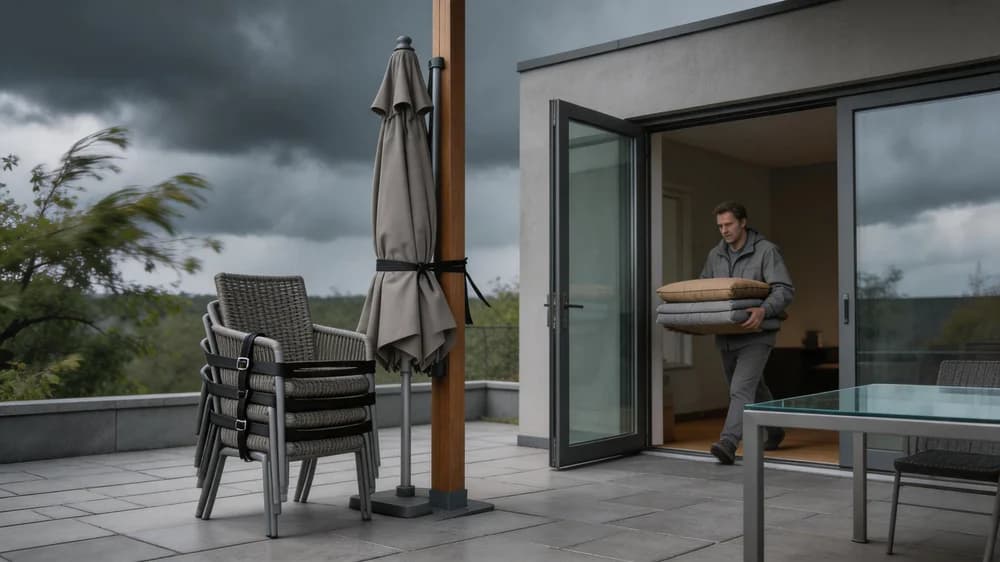
Keep your patio furniture safe and out of harm's way. Advanced DRI shares smart, practical ways to secure outdoor furnishings before severe weather arrives.
Why Outdoor Furniture Becomes a Storm Hazard
At Advanced DRI, we have seen the aftermath of too many storms where the damage to a home was caused not by the storm itself, but by the homeowner's own patio furniture. Chairs, tables, cushions, and umbrellas become dangerous projectiles when winds exceed forty miles per hour. We have documented broken windows, cracked siding, dented vehicles, damaged roofs, and injured neighbors, all caused by furniture that could have been secured in fifteen minutes.
Outdoor furniture is designed to resist normal weather, but severe storms produce forces well beyond what most pieces can withstand. Lightweight aluminum chairs can be lifted into the air by a strong gust. Glass tabletops can shatter and fly in shards. Even heavy wrought iron furniture can be slid, tipped, or launched given enough wind.
This guide covers how to evaluate your furniture, what to bring inside, what to secure, and how to handle the things that are too large to move.
Know Your Furniture's Weak Points
Before a storm arrives, take a mental inventory of everything on your patio, deck, pool area, and yard. Think about which pieces are most likely to move in high wind.
Lightweight and Easily Lifted Items
- Aluminum chairs and folding seats
- Resin wicker furniture with hollow frames
- Plastic tables and stools
- Inflatable pool floats and cushions
- Umbrellas and sunshades
- Tabletop decor, candles, and dishware
Medium-Weight Items That Still Move
- Cushioned lounge chairs
- Hammocks and their stands
- Small outdoor rugs
- Side tables and planter stands
- Grilling tools, utensil bins, and accessory carts
Heavy Items That Can Still Be Damaged
- Glass-top tables that may shatter
- Wrought iron and steel sets that can tip or slide
- Umbrella bases that can topple
- Ceramic and stone planters that can crack or fall
What to Bring Inside
The simplest rule of thumb is that anything that can fit through a door should come inside for severe storms. Our team recommends prioritizing these items first:
- Cushions and fabric pillows — these absorb rain, become heavy, and often develop mildew even if the storm is mild. Bring them in every time.
- Umbrellas — even closed umbrellas catch wind like a sail. Retract them, detach them from bases, and store them flat inside.
- Lightweight chairs and side tables — these move most easily and cause the most damage when airborne.
- Glass tabletops — if the table is sectional, the glass can be removed and stored safely inside.
- Decor and personal items — small planters, lanterns, outdoor dishes, and seasonal accessories should all come in.
Designated Storage Areas
Garages, basements, sunrooms, and mudrooms make excellent temporary storage. If space is tight, a tarp-covered pile in a protected corner of the garage works better than leaving items exposed.
How to Secure What Cannot Come Inside
Larger items sometimes need to stay outside. For those, secure them properly rather than hoping for the best.
Lay Furniture Flat
Laying furniture on its side or upside down dramatically reduces its wind profile. A chair on its side is far harder to lift or blow away than one sitting upright. Stack chairs tightly together and lay the stack on its side against a wall.
Use Ratchet Straps
Ratchet straps are far superior to bungee cords for storm preparation. Anchor straps to permanent features like posts, railings, or ground anchors. Cinch them tight and add a second strap as a redundancy.
Group and Interlock
Furniture tied together is harder to move than individual pieces. Nest chairs inside each other, stack side tables on top of main tables, and strap the entire group as a single unit.
Sheltered Positioning
If you can move furniture against the leeward side of a wall, fence, or house, the surrounding structure can block much of the wind force. Avoid open areas of the yard.
Anchor Umbrella Bases
If you cannot bring an umbrella base inside, place it against a corner, lay it on its side, or add weight to prevent it from rolling. Never leave an umbrella attached to its base.
Handling Specific Situations
Pool Furniture
Do not push pool furniture into the pool. This common tip circulates online but creates serious problems. Chlorine, metal corrosion, and debris in the pool complicate cleanup dramatically. Instead, move furniture to a secured location or lay it flat and strap it to the pool deck.
Grills
Shut off the propane tank, disconnect the tank, and store the tank outside away from the grill body. Move the grill itself to a protected location or strap it firmly to a fixed feature. Grill covers should be removed because they catch wind and can damage the grill underneath.
Outdoor Kitchens
Built-in outdoor kitchens cannot be moved, but accessories like stools, condiment storage, and portable appliances should be brought inside. Protect countertops and grilling surfaces with secured plywood or heavy tarps.
Playground Equipment
Swings and hammocks should be removed from their frames. Trampolines should be flipped over, staked down, or disassembled depending on severity of the forecast. We have responded to homes where a flipped trampoline became airborne and damaged a neighbor's property.
Protecting Furniture from Water Damage
Even furniture that survives the wind can be ruined by water exposure. Our team recommends:
- Sealing wood furniture with a fresh coat of outdoor sealer in the weeks before storm season.
- Removing all fabric elements, because cushions, pillows, and umbrella canopies absorb water quickly.
- Using waterproof covers strapped tightly for items that must remain outside, though these are a secondary measure, not a replacement for bringing items inside.
- Elevating furniture above flood-prone areas if your yard tends to accumulate water during storms.
Document Everything
Before the storm, photograph your outdoor furniture in place. Note the make, model, and purchase details of higher-value items. This documentation makes insurance claims significantly easier if damage occurs. Store photos in cloud storage so they survive even if your home is damaged.
After the Storm
Once it is safe to go outside, inspect your furniture carefully. Even pieces that look fine may have hidden damage:
- Check for cracked welds, bent frames, and loose hardware.
- Inspect cushions for water saturation, which can lead to mildew within forty-eight hours.
- Look for glass damage, even tiny chips, on tabletops.
- Test umbrella mechanisms before leaving them open in wind again.
If storm damage extends beyond your furniture to your home itself, including water intrusion, roof damage, or debris impacts, our team provides full storm damage restoration and water damage response. We are available for emergency dispatch throughout the Northeast during storm season.
Do not wait for a minor issue to become a major one. Contact Advanced DRI for rapid response and honest evaluations of storm-related damage.
Frequently Asked Questions
Are outdoor furniture covers enough protection during a severe storm?
Outdoor covers help with everyday weather, but they are not designed for severe storm conditions. In high winds, covers can be torn off, blow away themselves, or hold pooled water that strains the furniture beneath. For severe storms, bringing furniture inside or securing it flat is far more effective.
Can I leave my patio umbrella open if I tie it down?
No. Open umbrellas act like massive sails and generate forces strong enough to break bases, anchors, and the umbrella itself. Always close umbrellas, retract them into their bases, and ideally detach and store them inside. Even a closed umbrella attached to a base should be laid down or brought indoors for severe storms.
Does my homeowner's insurance cover outdoor furniture damaged in a storm?
Most standard homeowner policies include some coverage for outdoor furniture under the personal property provision, but limits and deductibles vary. Coverage may be reduced if the insurer determines you failed to take reasonable precautions. Documenting your efforts to secure furniture before a storm strengthens any claim you need to file.
Categories
Need Restoration Services?
Our team is available 24/7 for emergency response. Call us today for a free phone consultation.


Questions About Restoration?
Our experts are ready to help. Contact us for a free consultation.