Power Outage Property Damage: Sump Pump Failures and Flooding
Tyler McClelland leads mitigation operations for Advanced DRI across New York's Hudson Valley, directing water, mold, and large-loss response in the field. He holds IICRC Water Restoration Technician (WRT) and Applied Microbial Remediation Technician (AMRT) certifications and a New York State Mold Supervisor certification, and is trained in IRCA hospital safe construction practices recognized by The Joint Commission.
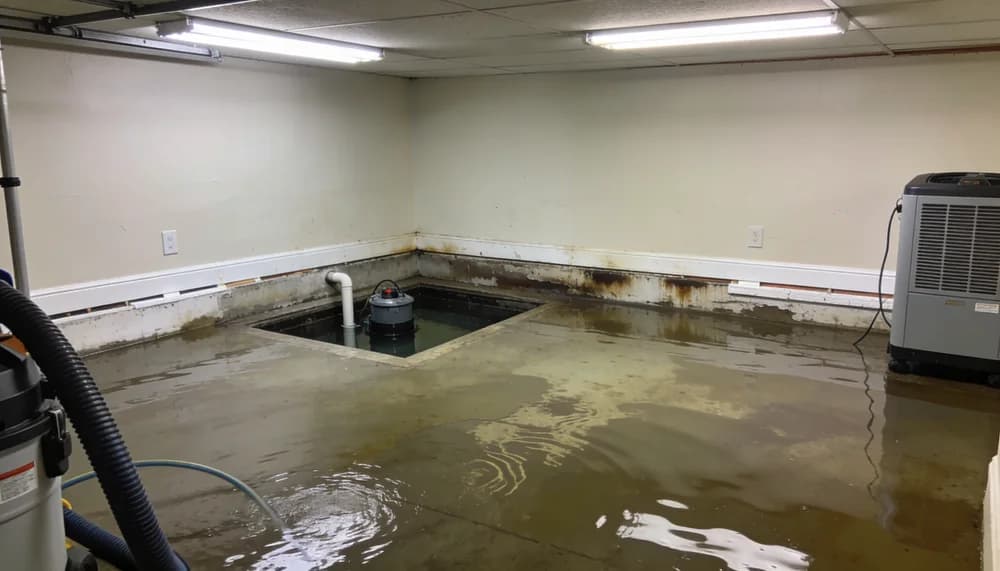
Power outages during storms cause sump pump failures and basement flooding. Learn prevention tips and how Advanced DRI restores flood damage in NY, NJ, PA & CT.
Power Outage Property Damage: Sump Pump Failures and Flooding
There is a cruel irony at the heart of many storm-related flooding events in the Northeast: the same storms that send the most water toward your foundation are the ones most likely to knock out the power that keeps your sump pump running. At Advanced DRI, we respond to dozens of basement flooding emergencies every storm season across New York, New Jersey, Pennsylvania, and Connecticut, and sump pump failure during power outages is consistently among the most common causes.
Understanding this vulnerability and taking steps to address it before the next storm can save you thousands of dollars in restoration costs and protect irreplaceable belongings stored in lower levels.
How Power Outages Lead to Property Damage
Power outages during storms create a chain reaction of property damage risks that extend well beyond a non-functioning sump pump:
Sump Pump Failure and Basement Flooding
Most residential sump pumps are powered by standard household electrical service. When the power goes out, the pump stops immediately. If the storm is producing heavy rain, rising groundwater, or both, water begins accumulating in the sump pit and quickly overflows onto the basement floor. Depending on conditions, a basement can take on several inches of water within just a few hours.
Sewage Backup
Heavy rainfall can overwhelm municipal sewer systems, causing sewage to back up through floor drains and basement plumbing fixtures. Without power, check valves and ejector pumps that normally prevent backflow may not function. Sewage backup introduces serious health hazards requiring professional sewage cleanup and sanitization.
Frozen Pipes in Winter Outages
Extended winter power outages disable your heating system, allowing interior temperatures to drop below freezing. Pipes in exterior walls, crawl spaces, and unheated areas can freeze and burst, creating significant water damage when the thaw occurs or power is restored.
Refrigeration Loss and Secondary Damage
Extended outages can spoil food in refrigerators and freezers. Beyond the loss of food itself, thawing and spoilage can lead to water damage, odors, and biological contamination that requires professional cleaning.
Why Northeast Properties Are Especially Vulnerable
Several regional factors make power outage-related flooding particularly common in our service area:
- High water tables. Much of New Jersey, New York's Long Island, and low-lying areas throughout the region have naturally high water tables that require constant sump pump operation during wet periods.
- Aging infrastructure. Overhead power lines in established neighborhoods are vulnerable to wind and fallen trees, making storm-related outages frequent and sometimes prolonged.
- Dense tree cover. The Northeast's abundant tree canopy is one of its greatest assets but also the primary cause of storm-related power outages when limbs and trees contact power lines.
- Combined sewer systems. Many older Northeast communities use combined sewer systems that handle both stormwater and sanitary sewage, increasing the risk of sewage backup during heavy rain events.
- Finished basements. Northeast homeowners commonly use basements as living space, home offices, media rooms, and storage areas, increasing the financial impact of flooding dramatically.
Preventing Sump Pump Failure During Outages
The most effective defense is ensuring your sump pump can operate independently of utility power:
Battery Backup Sump Pump Systems
A battery backup system adds a second pump powered by a marine-grade battery that activates automatically when the primary pump loses power. Quality battery backup systems can provide four to twelve hours of pumping capacity depending on water volume. This is the most cost-effective solution for most homeowners.
Water-Powered Backup Pumps
These systems use your home's municipal water pressure to power a backup pump. They require no electricity and can run indefinitely as long as water pressure is maintained. The trade-off is that they consume water during operation and are not suitable for homes on well water systems.
Whole-House Generators
A permanently installed standby generator provides uninterrupted power to your entire home, including the sump pump, during any outage. While the most expensive option, a whole-house generator eliminates all power-outage-related risks, including frozen pipes, security system failures, and refrigeration loss.
Portable Generators
A portable generator can power a sump pump during an outage, but it requires manual setup, refueling, and must be operated outdoors to prevent carbon monoxide poisoning. Never operate a portable generator inside your home, garage, or any enclosed space.
Sump Pump Maintenance
Backup systems are useless if your primary pump has already failed. Regular maintenance is essential:
- Test your sump pump quarterly by pouring water into the pit to confirm it activates and discharges properly.
- Clean the intake screen and check valve annually.
- Replace the battery in backup systems every two to three years or as recommended by the manufacturer.
- Consider replacing primary sump pumps every seven to ten years, before they fail unexpectedly.
- Install a sump pump alarm that alerts you to high water levels or pump failure.
What to Do When Your Basement Floods During a Power Outage
If prevention measures fail and your basement takes on water, take these steps:
- Do not enter standing water if there is any possibility of electrical contact. If water has reached electrical outlets, appliances, or your electrical panel, stay out until the power is confirmed off at the main breaker or by the utility company.
- Document the damage. Take photographs and video as soon as it is safe to do so, before any cleanup begins.
- Contact your insurance company. Report the loss promptly and ask about coverage for sump pump failure and water backup. Standard homeowner's policies often exclude this damage unless you carry a specific endorsement.
- Contact Advanced DRI for emergency water extraction. The sooner standing water is removed and drying begins, the less damage your property will sustain. Our water damage restoration teams are available 24/7 for emergency response.
Advanced DRI's Basement Flood Restoration Process
When we respond to a sump pump failure flooding event, our process includes:
- Rapid water extraction using truck-mounted and portable pumps capable of removing thousands of gallons per hour.
- Contamination assessment. If sewage or groundwater contamination is present, we implement appropriate safety and sanitization protocols.
- Content removal and evaluation. We carefully remove, inventory, and evaluate affected personal property and furnishings for restoration potential.
- Structural drying. Commercial dehumidifiers and air movers are deployed with daily moisture monitoring until all building materials reach safe moisture levels.
- Mold prevention. Anti-microbial treatments are applied to all affected surfaces to prevent mold growth during the drying process.
- Damaged material removal and replacement. Saturated drywall, insulation, flooring, and trim are removed and replaced as needed.
- Insurance coordination. Our team provides detailed documentation and works directly with your adjuster throughout the claims process.
Insurance Coverage for Sump Pump Failure
This is a critical point that many homeowners do not discover until it is too late: standard homeowner's insurance policies typically do not cover basement flooding from sump pump failure or water backup. This coverage requires an additional endorsement or rider, often called "water backup" or "sump pump overflow" coverage, which must be added to your policy before the damage occurs.
We strongly recommend all Northeast homeowners review their policies and add water backup coverage if they have a sump pump or any below-grade finished space. The cost of this endorsement is typically modest compared to the potential restoration expenses.
Act Before the Next Storm
Do not wait for a power outage to discover that your basement is unprotected. Install a backup pumping system, maintain your existing equipment, and verify your insurance coverage before storm season arrives. And if flooding has already occurred, contact Advanced DRI immediately. Our storm damage restoration teams serve New York, New Jersey, Pennsylvania, and Connecticut with rapid emergency response to minimize damage and restore your property.
Frequently Asked Questions
How quickly can a basement flood during a power outage?
In areas with high water tables or during heavy rainfall, a basement can accumulate several inches of water within two to four hours of sump pump failure. In severe conditions, water can rise even faster. This is why battery backup systems are so important: they buy you critical time during an outage.
Does homeowner's insurance cover sump pump failure flooding?
Standard homeowner's policies typically exclude basement flooding from sump pump failure, water backup, and groundwater seepage. You need a separate endorsement, often called water backup coverage, which must be added to your policy before the damage occurs. Contact your insurance agent to verify your coverage and add this endorsement if necessary.
How long does it take to dry out a flooded basement?
Professional structural drying of a flooded basement typically takes three to five days, depending on the volume of water, the materials affected, and environmental conditions. Advanced DRI monitors moisture levels daily with calibrated meters to verify that all materials have dried to safe levels before restoration work begins.
Can a flooded basement cause mold problems?
Yes. Mold can begin growing on wet building materials within 24 to 48 hours. Basements are particularly susceptible because they often have limited air circulation and higher humidity levels. Professional water extraction, drying, and anti-microbial treatment are essential to prevent mold establishment after any flooding event.
Categories
Need Restoration Services?
Our team is available 24/7 for emergency response. Call us today for a free phone consultation.

Questions About Restoration?
Our experts are ready to help. Contact us for a free consultation.