Odor Elimination Science: How Professional Deodorization Works
Rob Temples manages emergency restoration operations for Advanced DRI's Fairfield, NJ and New York City service areas. With 10 years in the restoration industry and prior experience working for a general contractor, he integrates construction knowledge with mitigation expertise on every project and holds an IICRC Water Restoration Technician (WRT) certification.
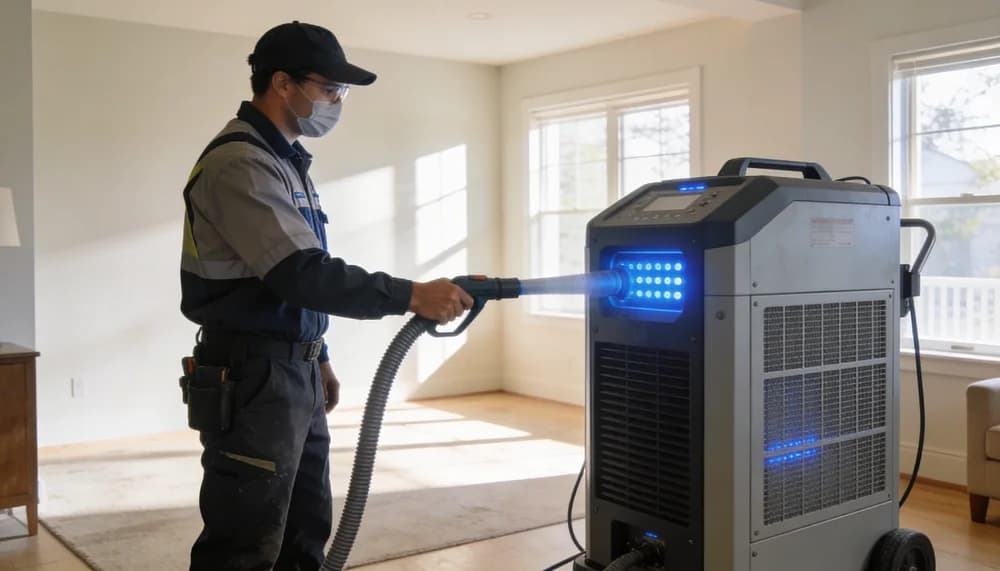
Discover how professional deodorization eliminates stubborn odors from fire, water, mold, and biohazard damage. Advanced DRI serves NY, NJ, PA & CT.
Why Odors Persist After Property Damage
After a fire, flood, sewage backup, mold infestation, or biohazard event, one of the most persistent challenges property owners face is lingering odor. Even after visible damage has been repaired and surfaces have been cleaned, odors can remain for weeks, months, or even permanently if not addressed with professional techniques.
The reason is straightforward: odors are caused by volatile organic compounds (VOCs) and other molecules that penetrate deep into porous building materials. Smoke particles embed themselves in drywall, insulation, carpet fibers, and wood. Mold produces mycotoxins and microbial volatile organic compounds (MVOCs) that persist even after visible mold is removed. Decomposition compounds from sewage or biohazard events absorb into subflooring and concrete.
At Advanced DRI, professional deodorization is an integral part of every restoration project. We do not consider a project complete until odors have been fully eliminated, not just masked.
The Difference Between Masking and Eliminating Odors
Consumer air fresheners and scented products do not eliminate odors. They work by either overwhelming the olfactory system with a stronger, more pleasant scent or by temporarily coating odor molecules. Once the masking agent dissipates, the underlying odor returns because the source molecules remain unchanged.
Professional deodorization takes a fundamentally different approach. Our methods physically destroy, chemically neutralize, or permanently encapsulate the molecules responsible for the odor. The result is permanent odor elimination, not a temporary cover-up.
Professional Deodorization Methods
Ozone Treatment
Ozone (O3) is one of the most powerful oxidizing agents available for odor elimination. Ozone generators produce unstable oxygen molecules that react with odor-causing compounds, breaking them down into odorless byproducts through oxidation.
Ozone is particularly effective for:
- Smoke and fire odors
- Cigarette and tobacco odors
- Cooking odors embedded in building materials
- Musty odors from water damage
Ozone treatment requires the space to be unoccupied during treatment, as ozone in high concentrations is harmful to breathe. Our technicians set up the generators, seal the treatment area, run the equipment for the prescribed duration, and then ventilate the space thoroughly before allowing reoccupancy.
Hydroxyl Generation
Hydroxyl generators produce hydroxyl radicals, which are the same oxidizing molecules naturally created by sunlight in the atmosphere. These radicals react with and destroy odor-causing VOCs at the molecular level.
The key advantage of hydroxyl generation over ozone is that it is safe for occupied spaces. This makes it ideal for:
- Commercial properties that cannot fully shut down
- Healthcare and assisted living facilities
- Residential situations where families need to remain in unaffected portions of the home
- Extended treatments for deeply embedded odors
Thermal Fogging
Thermal fogging uses heat to vaporize a deodorizing solution into a dense fog of microscopic particles. These particles are small enough to penetrate the same cracks, crevices, and porous materials that odor-causing molecules have entered. The deodorizing agent pairs with and neutralizes the odor molecules within the material.
Thermal fogging is especially effective for smoke odors because the fog particles follow the same pathways that smoke traveled during the fire, reaching deep into wall cavities, behind trim, and into insulation.
Ultra-Low Volume (ULV) Fogging
ULV foggers atomize liquid deodorizers into extremely fine droplets that remain suspended in the air for extended periods. This provides longer contact time with airborne odor molecules and allows the treatment to reach areas that are difficult to access with other methods. ULV fogging is commonly used for biological odors, sewage-related odors, and general musty smells.
Activated Carbon and HEPA Filtration
Air scrubbers equipped with activated carbon filters physically adsorb odor molecules from the air. Combined with HEPA filters that capture airborne particulate, these systems continuously clean the air in affected spaces. While filtration alone may not eliminate odors embedded in materials, it is an essential component of a comprehensive deodorization strategy, particularly during the restoration process itself.
Surface Sealants and Encapsulation
In cases where odor-causing compounds have deeply penetrated structural materials like concrete, framing lumber, or subfloor, and complete removal of those materials is not practical, professional-grade sealants can encapsulate the odor source. These products form a barrier that permanently prevents odor molecules from migrating into the living space. This is a last-resort technique used when other methods cannot fully eliminate the source.
Matching the Method to the Odor Source
Different types of odors require different treatment approaches. At Advanced DRI, our technicians are trained to identify the type and source of the odor and select the most effective combination of treatments:
- Fire and smoke odors — Thermal fogging combined with ozone treatment and air scrubbing
- Mold and mildew odors — Source removal through mold remediation followed by hydroxyl generation and air scrubbing
- Sewage and biological odors — Source removal and decontamination through biohazard cleanup followed by ULV fogging and ozone treatment
- Water damage musty odors — Complete structural drying followed by antimicrobial treatment and hydroxyl generation
- Pet and urine odors — Enzyme-based treatments targeting specific biological compounds followed by ozone treatment
Why DIY Odor Removal Fails
Property owners frequently attempt to address odors with consumer products before calling professionals. These attempts typically fail because:
- Consumer products mask odors rather than eliminating them
- The odor source is embedded deep in building materials, beyond the reach of surface treatments
- Incorrect treatment methods can actually set odors, making them harder to remove later
- Without addressing the root cause, odors return repeatedly
Professional deodorization is most effective when performed as part of a complete restoration project. If your property has lingering odors from any type of damage event, contact Advanced DRI for a professional assessment.
Frequently Asked Questions
How long does professional deodorization take?
Treatment duration depends on the type and severity of the odor, the size of the affected area, and the methods used. A single ozone treatment might take 24 to 48 hours. Hydroxyl generation for deeply embedded odors may run continuously for several days. Thermal fogging treatments typically require a few hours plus ventilation time. Our technicians assess the situation and provide realistic timeline expectations.
Is ozone treatment safe for my belongings?
Ozone is safe for most household items and building materials at the concentrations used for deodorization. However, certain materials including natural rubber, some fabrics, and some artwork may be sensitive to high ozone levels. Our technicians evaluate the space and either protect or remove sensitive items before treatment.
Can you eliminate cigarette smoke odor from a home?
Yes. Cigarette smoke odor is one of the most common and challenging odors we address. The combination of thorough surface cleaning, thermal fogging, ozone treatment, and in some cases sealing of deeply penetrated materials can eliminate even years of accumulated cigarette smoke odor.
Why does my house still smell after water damage repairs?
Lingering musty odors after water damage typically indicate that either the structure was not fully dried, mold has begun growing in concealed areas, or contaminated materials were not removed. These odors will not resolve on their own and will likely worsen over time. Contact Advanced DRI for a professional assessment to identify and address the source.
Do you guarantee odor elimination?
Advanced DRI is committed to complete odor elimination on every project. We use objective testing methods to verify that treatment has been successful, and we will continue treatment until the odor is resolved. In the rare case where odors persist after initial treatment, we reassess and adjust our approach until the issue is fully resolved.
Categories
Need Restoration Services?
Our team is available 24/7 for emergency response. Call us today for a free phone consultation.



Questions About Restoration?
Our experts are ready to help. Contact us for a free consultation.