
Sage Southard manages the estimating department at Advanced Disaster Recovery, bringing seven years of restoration-industry experience to insurance estimating and large-loss documentation. Sage holds a Bachelor's degree in Law and Justice Studies with a minor in Business Administration from Rowan University and is OSHA 10, Xactimate Level One, and FEMA certified, as well as a Haag Certified Reviewer.
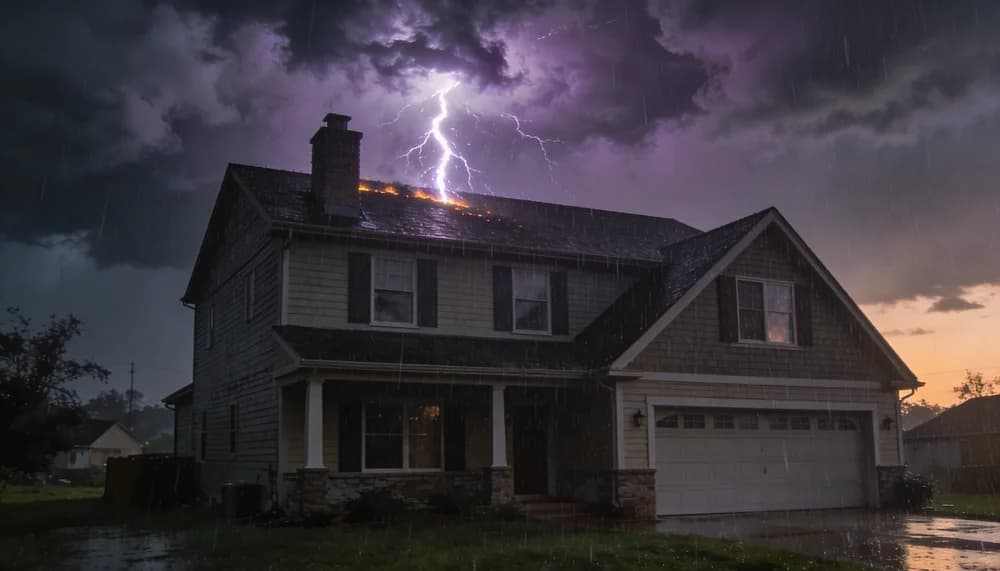
Lightning strikes cause hidden damage beyond fire and power surges. Learn what Advanced DRI looks for and how we restore lightning-damaged homes in NY, NJ, PA &
Lightning Strike Damage to Homes: Beyond the Obvious
When lightning strikes a home, most people immediately think of fire. And while fire is certainly a risk, the full scope of lightning damage extends far beyond scorch marks and flames. At Advanced DRI, our storm damage restoration teams across New York, New Jersey, Pennsylvania, and Connecticut regularly encounter lightning damage that homeowners never expected, hidden within walls, embedded in electrical systems, and lurking in plumbing that was compromised by the strike's massive energy discharge.
Understanding the full range of potential damage is critical for protecting your property and ensuring a thorough restoration.
The Physics Behind Lightning Damage
A single lightning bolt carries up to 300 million volts and can heat the air around it to 30,000 Kelvin, roughly five times the temperature of the sun's surface. When that energy contacts your home, it follows the path of least resistance, typically through conductive materials like wiring, plumbing pipes, metal framing, and even wet wood.
The result is a complex pattern of damage that may include:
- Direct fire ignition at the strike point
- Explosive force from superheated air and moisture within building materials
- Electrical surges traveling through wiring to every connected device and system
- Side flashes that jump between conductive elements within the structure
- Ground current damage to foundation systems and underground utilities
Visible Lightning Damage
The most obvious signs of a lightning strike are typically found at or near the point of contact:
- Roof damage. Shingles may be blown off, splintered, or scorched. Chimneys are frequent strike points and may show cracking, displacement, or complete structural failure.
- Fire damage. Attic fires are common after a lightning strike, as the bolt's energy ignites insulation, framing, or stored materials. Our fire damage restoration team responds to these emergencies around the clock.
- Exterior wall damage. Entry and exit points on siding, brick, or stucco may show blast marks, cracking, or blown-out sections where the energy traveled through or exited the structure.
- Tree and landscaping damage. Trees near the home may be split, stripped of bark, or killed by a lightning strike, creating secondary hazards from falling limbs. Our tree removal services address these dangers promptly.
Hidden Lightning Damage Most Homeowners Miss
The visible damage is often just the surface. Here is where the real restoration challenge begins:
Electrical System Damage
Lightning surges can destroy wiring insulation, melt connections, damage breaker panels, and compromise grounding systems throughout your home. Even if your lights still work, degraded wiring insulation creates an ongoing fire risk. A licensed electrician should inspect the entire electrical system after any lightning event, from the service entrance to individual outlets and switches.
Plumbing Damage
Lightning frequently travels through metal plumbing pipes, and the intense heat can create pinhole leaks, weakened joints, and damaged fixtures. These leaks may not become apparent for days or weeks, slowly causing water damage behind walls, under floors, and around fixtures.
HVAC System Damage
Your heating, ventilation, and air conditioning systems are connected to both electrical and plumbing infrastructure, making them highly vulnerable. Control boards, compressors, thermostats, and blower motors can all be damaged by a lightning surge, even if the unit appears to function normally afterward.
Structural Damage Within Walls
The explosive force of a lightning strike can crack framing members, dislodge fasteners, and create gaps in the building envelope that are invisible from the exterior. Thermal imaging can reveal heat signatures and moisture intrusion patterns that indicate hidden structural compromise.
Appliance and Electronics Damage
Surge protectors and power strips provide limited protection against a direct lightning strike. Computers, televisions, refrigerators, washers, dryers, and smart home systems may suffer immediate failure or latent damage that shortens their lifespan significantly.
Concrete and Masonry Damage
When lightning travels through moisture in concrete foundations, block walls, or brick chimneys, the rapid heating of trapped water creates steam pressure that can cause spalling, cracking, or explosive fragmentation. This damage is often mistaken for age-related deterioration.
What to Do Immediately After a Lightning Strike
If you know or suspect that your home has been struck by lightning, take these steps:
- Evacuate if you see or smell smoke. Call 911 first. A lightning strike can ignite fires in attic spaces, wall cavities, and other concealed areas that may not be immediately visible.
- Do not use plumbing or electrical systems until they have been professionally inspected. Damaged wiring or pipes can present electrocution and fire hazards.
- Contact your insurance company to report the event. Lightning damage is typically covered under standard homeowner's policies.
- Contact Advanced DRI for a comprehensive damage assessment. Our team uses thermal imaging, moisture detection, and systematic inspection protocols to identify all affected areas.
Advanced DRI's Lightning Damage Restoration Approach
Because lightning damage is so multifaceted, effective restoration requires a comprehensive approach. Our storm damage restoration process includes:
- Full-property damage assessment including electrical, plumbing, structural, and finish materials.
- Emergency board-up and tarping through our board-up services to secure any openings created by the strike.
- Fire and smoke damage restoration if ignition occurred, including soot removal, deodorization, and structural cleaning.
- Water damage mitigation to address any plumbing leaks or firefighting water introduced during the emergency response.
- Coordination with licensed electricians and plumbers for system repairs and code-compliant upgrades.
- Complete reconstruction of damaged structural and finish elements to return your home to pre-loss condition.
- Insurance documentation and claim support throughout the entire process.
Protecting Your Home From Future Lightning Strikes
While no system provides absolute protection, you can reduce your risk:
- Install a lightning protection system. A professionally installed system of air terminals, conductors, and ground rods provides a controlled path for lightning energy to reach the ground safely.
- Use whole-house surge protection. A surge protector installed at your electrical panel provides a layer of defense against voltage spikes traveling through your wiring.
- Maintain clearance from tall trees. Trees that overhang your home can transmit a side flash to the structure. Keep branches trimmed and consider removal of trees that tower directly over the roofline.
- Unplug sensitive electronics during thunderstorms when possible.
If your home has sustained lightning damage, do not assume that what you can see is all there is. Contact Advanced DRI for a thorough assessment. Our experienced technicians serving New York, New Jersey, Pennsylvania, and Connecticut will identify every area of concern and develop a restoration plan that addresses the complete scope of damage.
Frequently Asked Questions
Does insurance cover lightning strike damage?
Yes, lightning damage is generally covered under standard homeowner's insurance policies, including fire damage, structural repairs, electrical system replacement, damaged appliances, and personal property losses. Advanced DRI works directly with insurance adjusters to document and support your claim.
Can a lightning strike damage my home without starting a fire?
Absolutely. Fire is only one potential outcome. Lightning can damage electrical systems, plumbing, HVAC equipment, foundations, and electronics without any visible fire. Many homeowners discover hidden damage days or weeks after the strike when plumbing leaks appear or electrical systems begin malfunctioning.
How do I know if my home was struck by lightning?
Signs include a loud explosion or cracking sound during a storm, tripped breakers or blown fuses, scorch marks on the roof or exterior walls, damaged electronics or appliances, a burning smell, and cracked chimney masonry. If you suspect a strike, have your home inspected professionally even if no damage is immediately apparent.
Should I have my electrical system rewired after a lightning strike?
A licensed electrician should inspect the entire system. Partial rewiring may be sufficient if damage is localized, but a direct strike often affects wiring throughout the home. Damaged insulation on wiring is a serious fire hazard that may not be apparent without professional inspection, so a thorough evaluation is essential.
Categories
Need Restoration Services?
Our team is available 24/7 for emergency response. Call us today for a free phone consultation.
Questions About Restoration?
Our experts are ready to help. Contact us for a free consultation.