How to Secure Important Documents Before Disaster
Rob Temples manages emergency restoration operations for Advanced DRI's Fairfield, NJ and New York City service areas. With 10 years in the restoration industry and prior experience working for a general contractor, he integrates construction knowledge with mitigation expertise on every project and holds an IICRC Water Restoration Technician (WRT) certification.
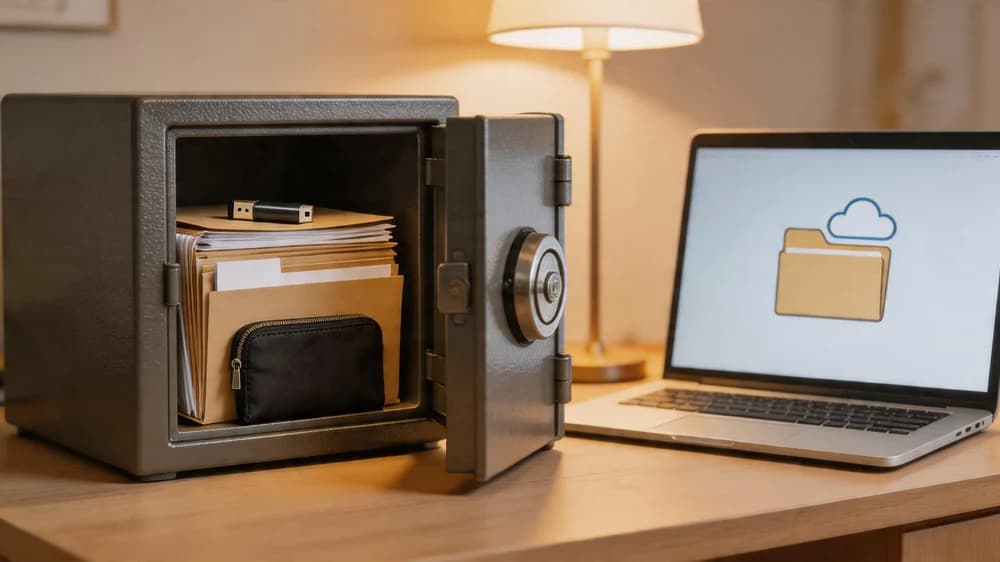
Protect birth certificates, deeds, and financial papers with a layered document strategy. Advanced DRI explains what to secure and how.
Document Loss Is One of the Hardest Parts of Recovery
After a fire, flood, or severe storm, families are often stunned to learn how many daily tasks depend on paper. Filing insurance claims requires policy documents. Replacing a driver's license may require a birth certificate. Selling a damaged vehicle requires the title. Without originals or secure copies, every task becomes slower and harder.
At Advanced DRI, we have watched families rebuild homes in a few months but spend over a year replacing documents. The good news is that a weekend of work before disaster prevents nearly all of that pain. This guide shares the layered approach our team recommends.
The Layered Approach to Document Security
A single backup is not a backup. If your only copy of a document is on a home computer, it lives and dies with that computer. True document security uses three layers, each addressing a different threat.
Layer One: Physical Originals in a Secure Container
Originals of birth certificates, Social Security cards, passports, marriage licenses, property deeds, and vehicle titles belong in a fireproof and waterproof container. A small home safe works for most families. A bank safe deposit box works for documents rarely needed in emergencies.
Layer Two: Digital Copies in Cloud Storage
Every document in the safe should also exist as a scanned PDF in encrypted cloud storage. Cloud storage protects against scenarios where the safe itself is inaccessible or destroyed. Use strong, unique passwords and enable two-factor authentication on any cloud account holding sensitive documents.
Layer Three: Physical Copies Off-Site
Keep a printed or USB backup at a trusted location outside your home. A relative's house, a workplace desk, or a safe deposit box all work. If technology fails during a widespread disaster, a physical off-site copy can still be retrieved.
Which Documents to Secure
Not every piece of paper deserves this level of protection. Focus on documents that are legally difficult or expensive to replace.
Identification Documents
- Birth certificates for every family member
- Passports and passport cards
- Social Security cards
- Driver's licenses or state IDs
- Naturalization and immigration paperwork
- Military service records
Financial and Legal Documents
- Mortgage papers, property deeds, and title insurance
- Vehicle titles and registration
- Insurance policies for home, auto, health, and life
- Tax returns for the most recent several years
- Investment and retirement account statements
- Wills, trusts, power of attorney, and healthcare directives
Medical Documents
- Insurance cards and policy numbers
- Vaccination and immunization records
- Prescription history and current medication list
- Major medical records or specialist reports
- Pet medical records and rabies certificates
Personal Records
- Marriage, divorce, and adoption certificates
- Diplomas and professional licenses
- Important correspondence such as custody agreements
- Photos of sentimental value, scanned or cloud-backed
Choosing the Right Home Safe
Not all safes are created equal. The label on the box matters. A true fire-rated safe will carry a UL or ETL certification that specifies how long it can withstand certain temperatures. Waterproof ratings are separate and also matter, especially in flood-prone areas.
What to Look For
- A fire rating of at least one hour at 1700 degrees Fahrenheit for paper documents
- Separate waterproof certification, often ETL verified for short submersion
- A bolt-down option so the safe cannot be removed by intruders
- Enough interior space with dividers to organize documents by category
- A backup key or combination option in case a digital lock fails
Remember that a fire safe protects paper, not electronics. If you store USB drives or external hard drives inside, choose a safe rated for media, which has stricter temperature requirements.
Scanning and Organizing Digital Copies
Scanning documents may sound tedious, but with a modern smartphone it takes a single afternoon for most households. Free apps turn any phone into a quality document scanner, producing PDFs that are easy to store and search.
Simple Scanning Workflow
- Use consistent file names such as FirstName_BirthCertificate.pdf
- Organize files into folders by family member or category
- Save to an encrypted cloud service with two-factor authentication
- Keep a master list of what is stored where
- Update scans whenever a document is replaced or updated
Protecting Photos and Sentimental Items
Family photos, letters, and keepsakes are not legally critical but are often emotionally irreplaceable. Scan them when you have time, store digital copies in cloud or with relatives, and keep the most treasured originals in the same fireproof location as your important documents. Our content restoration specialists can sometimes recover damaged photographs, but prevention is always better than recovery.
Updating the System
A document protection system only works if it stays current. Set a reminder for every birthday or tax season to add new documents, update expired ones, and re-verify cloud access. A ten-minute quarterly check prevents drift.
Our team at Advanced DRI often meets families who set up a great document system years ago but never updated it. By the time disaster struck, the passports had expired and the insurance policy had changed carriers. Keep the system living.
When Documents Are Already Lost
If your home has been damaged and documents are lost, do not panic. Almost every document can be replaced with time and effort. Start with identification: birth certificates through your state vital records office, Social Security cards through the SSA, and driver's licenses through the DMV. Property deeds can be retrieved from the county recorder's office.
Our restoration team regularly helps families organize this process alongside the physical rebuilding. We understand the paperwork maze that follows a disaster and can point you toward the right resources.
Start Protecting Your Documents Today
A single afternoon of organization gives your family peace of mind that no disaster can take away. If you want help building a comprehensive preparedness plan that includes documents, inventories, and restoration partnerships, contact Advanced DRI today. Our team is ready to help you protect what matters.
Frequently Asked Questions
Should I keep my passport in a home safe or a safe deposit box?
It depends on how often you travel. Passports used frequently are usually safer in a home safe where they are easily accessible. Passports used rarely can live in a safe deposit box with other infrequently needed originals. Either is better than a drawer.
Is cloud storage really safer than keeping originals at home?
Cloud storage and home originals serve different purposes. Cloud copies survive fires and floods that destroy your home. Home originals are required for many in-person tasks. The two together provide complete protection.
What is the quickest way to build a document backup system in one afternoon?
Gather all critical documents in one place, sort them by family member, and use a smartphone scanning app to capture each one as a PDF. Upload the scans to an encrypted cloud folder, then return originals to a fireproof container. Share access credentials with a trusted family member.
Categories
Need Restoration Services?
Our team is available 24/7 for emergency response. Call us today for a free phone consultation.

Questions About Restoration?
Our experts are ready to help. Contact us for a free consultation.