
Tyler McClelland leads mitigation operations for Advanced DRI across New York's Hudson Valley, directing water, mold, and large-loss response in the field. He holds IICRC Water Restoration Technician (WRT) and Applied Microbial Remediation Technician (AMRT) certifications and a New York State Mold Supervisor certification, and is trained in IRCA hospital safe construction practices recognized by The Joint Commission.
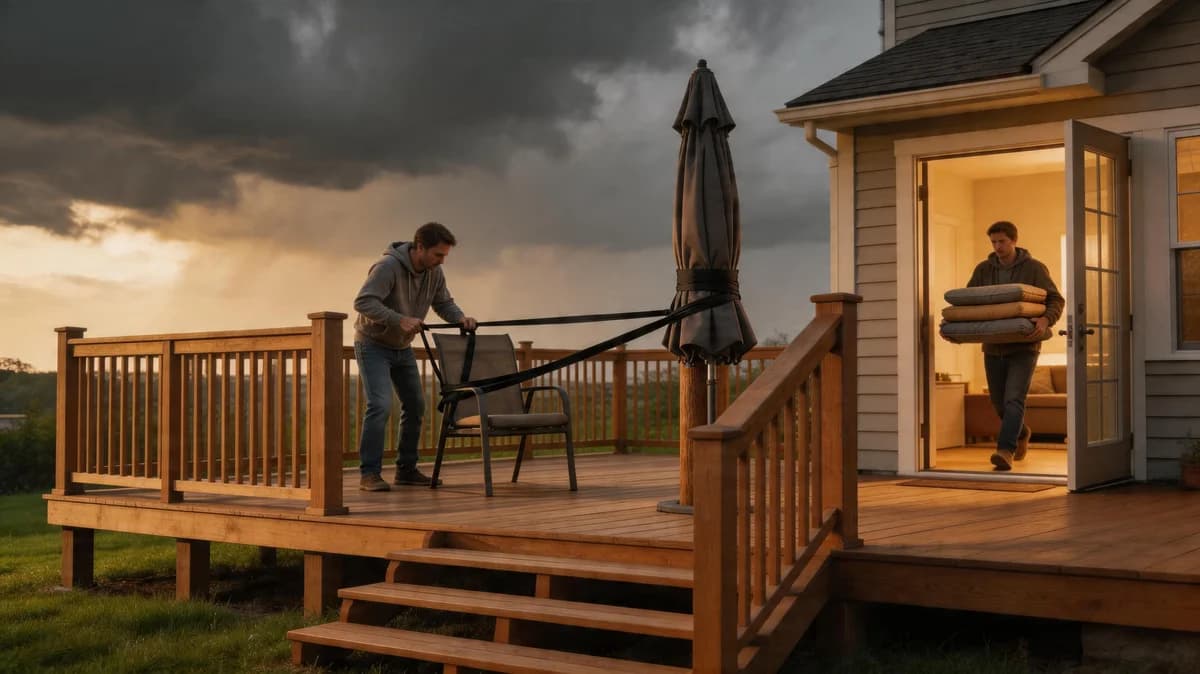
Protect your deck from storm damage with proven steps from Advanced DRI. Learn how to secure furniture, check hardware, and minimize wind and water damage.
Why Decks Are Especially Vulnerable to Storms
At Advanced DRI, we respond to storm damage across the Northeast every season, and decks are consistently among the most affected parts of a home. They are exposed on all sides, elevated above the ground, and loaded with objects that can become projectiles. High winds, driving rain, falling debris, and flying patio furniture cause the majority of deck damage we see.
The good news is that most of this damage is preventable. A few hours of preparation before a storm can save thousands of dollars in repairs, prevent injury to your family and neighbors, and reduce the risk of damage to your home itself.
This guide walks through the steps our team recommends whenever a severe weather warning is issued in your area.
Start with a Structural Check
Before you worry about furniture or decorations, make sure the deck itself is ready to handle high wind and heavy rain. Many decks that fail during storms had preexisting weaknesses that a brief inspection would have revealed.
Check Ledger Board Attachment
The ledger board is the horizontal piece that attaches your deck to the side of the house. This connection is the single most important structural element, and a failure here can collapse the entire deck. Look for loose bolts, rust, water staining, and rotted wood near the ledger.
Inspect Posts and Footings
Walk around and beneath the deck if possible. Posts should be straight, sit firmly on footings, and show no rot at the base where they meet the ground or concrete. Check for lateral movement by pushing firmly against vertical posts.
Look for Loose Boards and Railings
Walk the deck surface and pay attention to any boards that flex, squeak excessively, or have raised screws and nails. Give railings and balusters a firm shake to identify loose connections.
Evaluate Overhead Threats
Look up. Are there tree branches overhanging the deck? Dead limbs, weak crotches, and branches that extend over the roof itself are high-risk items. If a storm is days away, consider hiring an arborist to remove the most dangerous limbs before weather arrives.
Secure or Remove Loose Items
This is the single most impactful step you can take before a storm. Anything on your deck that is not physically attached should be either brought inside, secured, or removed from the area.
Furniture and Accessories
- Chairs, tables, and loungers should be moved indoors or into a garage. If you cannot bring them inside, stack them tightly and strap them together against a solid structural point.
- Cushions and umbrellas should always come inside. Cushions soak up water quickly and can double in weight, while umbrellas act like sails in high wind.
- Grills and fire pits need to be moved or firmly anchored. Propane tanks should be shut off and ideally stored in a protected outdoor location away from the house.
- Planters and decorative pots are heavy but not heavy enough to resist strong gusts. Consolidate them in a sheltered corner or bring them into a garage.
Smaller Items to Remember
- Solar lights and string lights
- Doormats and outdoor rugs
- Toys, sporting equipment, and pet accessories
- Hanging plants and wind chimes
- Grill tools, trays, and accessories
If you are in a hurry and storm conditions are imminent, at minimum bring cushions inside and lay furniture flat on the deck rather than leaving it upright.
Protect the House-to-Deck Connection
Decks connect to your home in multiple ways beyond the ledger board, and each connection point is a potential path for water damage.
Clear Gutters Above the Deck
Overflowing gutters can dump water directly onto the deck, saturate the ledger board area, and cause water damage inside your home. Make sure gutters are clear before a major storm.
Close and Seal Doors
The sliding or swinging door leading to your deck should be fully closed, locked, and have weatherstripping in good condition. Inspect the threshold for gaps where wind-driven rain could enter.
Check Flashing
The metal flashing between the deck ledger and the house siding should be continuous and uncompromised. If you see rust, gaps, or peeling caulk, schedule a repair before the weather turns.
Minimize Wind Load
Decks with tall privacy screens, lattice panels, or solid skirting act like sails in high wind. If you have these features, consider whether they can be temporarily removed for an incoming major storm. Louvered panels and slatted screens perform much better in wind than solid panels.
If you have a permanent pergola or overhead canopy, verify that all connections are tight and that fabric canopies are either removed or fully retracted.
Prepare for Water and Drainage
Heavy rain during a storm can accumulate on deck surfaces, in planters, and in low areas. Take these steps to prevent water-related problems:
- Clear deck surface drains if your deck has any built-in drainage features.
- Remove debris between boards that can trap water and direct it toward the ledger or joists.
- Empty standing water in planters and containers that might overflow during heavy rainfall.
- Check grading below the deck so water flows away from the foundation rather than pooling against it.
Document the Deck Before the Storm
Take photos and short videos of your deck from multiple angles before the storm arrives. This documentation is invaluable for insurance claims if damage does occur. Include close-up shots of furniture, hardware, and any preexisting conditions so there is no dispute about what the storm actually caused.
Store these photos in a cloud service or email them to yourself so they are accessible even if your home is damaged or you lose power.
Final Pre-Storm Checklist
- Furniture, cushions, and accessories brought inside or secured
- Grills, fire pits, and propane tanks shut off and stored appropriately
- Overhanging branches assessed and trimmed if needed
- Gutters and downspouts cleared
- Door to the deck fully closed and sealed
- Planters and loose items consolidated or removed
- Photos and videos of the deck taken and saved
- Power tools and electric accessories unplugged and stored
What to Do After the Storm
Once the weather passes and it is safe to go outside, walk the deck carefully. Watch for fallen limbs, loose boards, and structural damage. Do not step onto a deck that looks shifted, tilted, or partially collapsed. Take new photos of any damage for insurance purposes.
If you discover significant damage, water intrusion into the home, or compromised structural members, contact our team. Advanced DRI provides full storm damage restoration services and can coordinate cleanup, drying, and repairs. If rain entered the home through the deck door or through ledger failures, we can also address interior water damage before mold has a chance to develop.
For emergency response or a post-storm evaluation of your property, contact Advanced DRI. Our team serves homeowners across the Northeast with rapid dispatch during storm season.
Frequently Asked Questions
Should I strap my patio furniture down or bring it inside?
Bringing furniture inside is always the safer choice when time and space allow. Strapping and weighting only work when the anchor points are rated for the forces involved. We have seen homes where strapped furniture tore the deck railing away when winds exceeded expectations. If you must leave items outside, at minimum lay them flat and remove cushions.
Is it safe to stay on my deck during light rain to enjoy the storm?
No. Storm conditions can escalate quickly, and wet decks are slippery. Lightning poses a serious risk even from storms that seem distant. Enjoy weather from inside, and return to the deck only after conditions have fully cleared.
My deck looks fine after the storm, do I still need an inspection?
Not every case requires one, but a close visual inspection is always worth the time. Pay attention to ledger attachment, post bases, and railing stability. If anything feels loose, looks shifted, or shows new cracks, it is worth having a professional assess the damage before using the deck regularly again.
Categories
Need Restoration Services?
Our team is available 24/7 for emergency response. Call us today for a free phone consultation.


Questions About Restoration?
Our experts are ready to help. Contact us for a free consultation.