Water Damage Restoration
Furniture Restoration After Water Damage: Saving Your Valuables
January 29, 20268 min read
T
Tyler McClelland· Mitigation Manager, Hudson Valley Region (NY)
Tyler McClelland leads mitigation operations for Advanced DRI across New York's Hudson Valley, directing water, mold, and large-loss response in the field. He holds IICRC Water Restoration Technician (WRT) and Applied Microbial Remediation Technician (AMRT) certifications and a New York State Mold Supervisor certification, and is trained in IRCA hospital safe construction practices recognized by The Joint Commission.
IICRC Water Restoration Technician (WRT), IICRC Applied Microbial Remediation Technician (AMRT), NY State Mold Supervisor Certification, Lead RRP Certification, OSHA Bloodborne Pathogens Training, IRCA Hospital Safe Construction Practices (TJC), Large Loss Mastery Estimating CertifiedLinkedIn
Published January 29, 2026 · Updated May 27, 2026

Furniture water damage restoration. Understand which pieces can be restored, proper immediate steps, and when professional restoration is needed.
Understanding furniture water damage helps property owners respond effectively to water emergencies. Different materials respond differently to water exposure, affecting water damaged furniture restoration potential. Knowing how to save wet furniture through immediate action and professional intervention prevents unnecessary losses. Proper antique water damage repair techniques protect valuable pieces from permanent damage caused by improper handling.
Furniture Materials and Water Damage
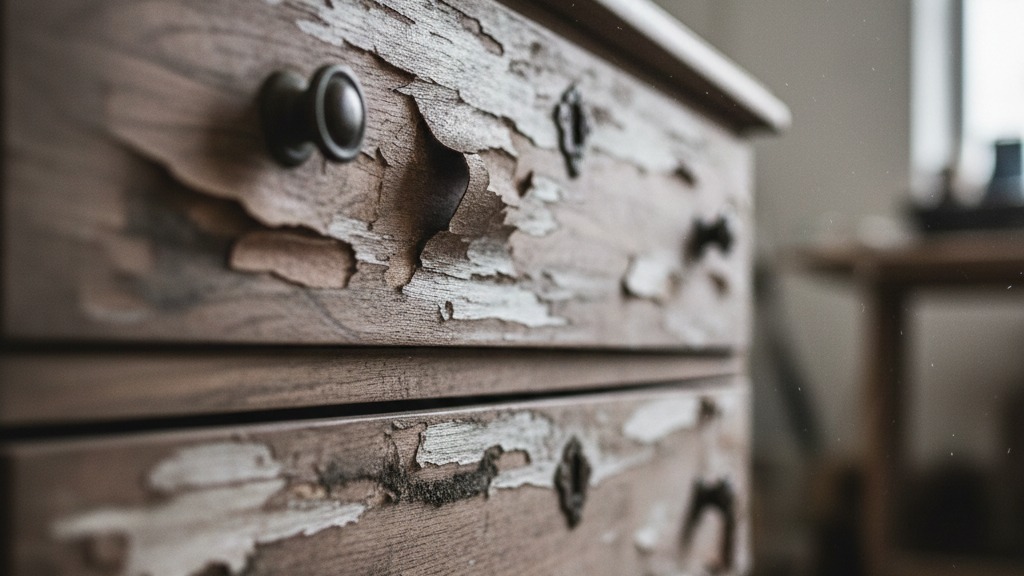
Different furniture materials respond to furniture water damage differently, affecting restoration potential and determining whether you can save wet furniture.Solid Wood Furniture
Solid wood absorbs water slowly but can suffer significant damage:- Swelling and warping: Wood expands as it absorbs moisture, potentially warping shapes
- Veneer lifting: Veneered pieces may delaminate as adhesives fail
- Finish damage: Water spots, cloudiness, and finish lifting
- Joint failure: Glued joints may weaken or separate
Engineered Wood and Particleboard
Manufactured wood products (particleboard, MDF, plywood) are more vulnerable:- Rapid swelling: These materials absorb water quickly and swell significantly
- Structural failure: Particleboard loses integrity when wet, often permanently
- Delamination: Layers separate as adhesives fail
Upholstered Furniture
Upholstery presents complex restoration challenges:- Fabric saturation: Fabric absorbs and holds water
- Cushion absorption: Foam padding absorbs extensively
- Frame damage: Hidden wooden frames may warp
- Contamination concerns: Porous materials absorb contaminants from flood water
Leather Furniture
Leather responds uniquely to water:- Stiffening: Leather hardens as it dries improperly
- Shrinkage: Uncontrolled drying causes shrinkage
- Surface damage: Water spots and staining
- Mold susceptibility: Leather readily supports mold growth when wet
Metal Furniture
Metal furniture faces different challenges:- Corrosion: Most metals corrode with prolonged water exposure
- Finish damage: Paint and protective coatings may fail
- Generally more durable: Metal frames often survive when other materials don't
| Material | Category 1 Water | Category 2-3 Water | Restoration Complexity |
|---|---|---|---|
| Solid Wood | Good restoration potential | Limited if contamination absorbed | Moderate to High |
| Particleboard/MDF | Poor - often not salvageable | Not salvageable | Usually replacement |
| Upholstery/Fabric | Good if dried quickly | Usually not salvageable | High |
| Leather | Good with professional care | Limited to poor | High - requires expertise |
| Metal | Generally good | Good after cleaning | Low to Moderate |
Immediate Steps for Water-Damaged Furniture
Actions taken immediately after furniture water damage occurs significantly affect restoration outcomes and your ability to save wet furniture.Remove from Water Source
Move furniture away from standing water if safely possible. Every hour of continued exposure worsens damage and reduces restoration potential.Elevate Off Wet Floors
Place furniture on blocks or other risers to prevent continued wicking of water from wet floors. Use non-staining spacers (aluminum foil, plastic) between risers and furniture.Remove Cushions and Drawers
Separate removable components to improve air circulation:- Remove seat and back cushions from upholstered pieces
- Pull out dresser and desk drawers
- Open cabinet doors
Blot—Don't Rub
Blot excess water from surfaces with clean, white towels. Never rub—rubbing can damage finishes and drive water deeper into materials.Promote Air Circulation
Set up fans to increase air movement around furniture. Avoid directing high heat at furniture—rapid drying causes warping and cracking.Contact Professional Services
For valuable furniture or significant water damage, contact professional water damage restoration services quickly. Professional intervention within 24-48 hours dramatically improves outcomes. Pro Tip: Don't attempt to dry antique or valuable furniture yourself. Improper drying causes more damage than water exposure itself. Professional restoration uses controlled techniques that prevent warping, cracking, and finish damage.Professional Furniture Restoration Techniques
Professional water damaged furniture restoration employs specialized techniques for different materials and damage types.Controlled Drying
Unlike DIY approaches, professional drying controls the drying rate to prevent damage:- Gradual moisture removal prevents warping and cracking
- Environmental control maintains appropriate humidity during drying
- Moisture monitoring verifies even drying throughout pieces
- Different protocols for different materials
Wood Furniture Restoration
Professional wood restoration may include:- Controlled drying with weighted pieces to prevent warping
- Veneer re-adhesion or replacement
- Joint repair and re-gluing
- Finish restoration—stripping, refinishing, or repair
- Mold treatment if growth occurred
Upholstery Restoration
Professional upholstery restoration involves:- Specialized extraction of water from fabric and padding
- Antimicrobial treatment
- Controlled drying of all layers
- Deodorization
- Cleaning and fabric restoration
Leather Restoration
Leather requires specialized handling:- Gentle surface cleaning
- Controlled slow drying to prevent shrinkage
- Conditioning to restore suppleness
- Color restoration if fading occurred
- Surface treatment and finishing
When Furniture Cannot Be Saved
Not all furniture water damage is salvageable. Replacement is appropriate when:- Particleboard or MDF has absorbed significant water
- Contaminated water (sewage, floodwater) soaked porous materials
- Mold growth has penetrated into materials
- Structural integrity is compromised
- Restoration costs exceed replacement value
Insurance Considerations
When evaluating restoration vs. replacement:- Document damage thoroughly before any restoration attempts
- Get professional assessments of restoration potential and costs
- Compare restoration costs to replacement value
- Understand your policy's valuation method (ACV vs. replacement cost)
Frequently Asked Questions About Furniture Water Damage
Can antique furniture be restored after water damage?
+
Often yes, with professional care. Antique water damage repair requires expert handling because antique solid wood furniture frequently responds well to careful restoration. The key is professional handling—improper drying destroys pieces that experts could save. Never attempt DIY restoration on valuable antiques. Professional restorers have techniques specific to antique construction and finishes.
Should I use a hair dryer or heater to dry furniture?
+
No. Direct heat causes rapid, uneven drying that warps wood, cracks finishes, and shrinks leather. Room temperature air circulation is safer for attempting to save wet furniture. For valuable pieces, professional controlled drying prevents the damage that heat causes. The goal is gradual, even moisture removal—not rapid drying.
Can flood-damaged upholstered furniture be saved?
+
Floodwater is Category 3 (grossly contaminated), and porous upholstery materials absorb these contaminants deeply. In most cases, upholstered furniture exposed to floodwater cannot be adequately decontaminated and should be discarded. Clean water damage (Category 1) may be restorable if addressed quickly.
How do I know if my furniture has mold after water damage?
+
Signs include visible mold growth (often appears as spots or fuzzy patches), musty odors, and discoloration. Mold can develop within 24-48 hours on wet furniture. If furniture water damage wasn't addressed quickly, assume mold may be present. Professional assessment can determine if mold exists and whether the piece is salvageable.
Will insurance cover furniture damaged by water?
+
Typically yes, if the water damage event is covered under your policy. Homeowner policies cover contents damaged by sudden water events like burst pipes. Document furniture water damage thoroughly with photos. Renter's insurance covers tenants' furniture. Review your policy for specific coverage details and limitations.
Is it worth restoring IKEA or other flat-pack furniture after water damage?
+
Usually not. Most flat-pack furniture uses particleboard or MDF that swells permanently when wet. Water damaged furniture restoration costs typically exceed replacement cost for these items. Focus restoration resources on quality pieces worth saving. Replace inexpensive manufactured furniture and document losses for insurance.
Professional Furniture Restoration Services
Furniture water damage presents complex restoration challenges requiring professional expertise. The right techniques can save wet furniture, while improper handling destroys what professionals could restore. Professional water damaged furniture restoration evaluates each piece individually and applies appropriate methods for the best possible outcomes, including specialized antique water damage repair techniques. When water damage affects furniture in properties throughout Northern New Jersey, Pennsylvania's Capital Region, New York's Hudson Valley, Connecticut's Capital Region, or the South Jersey Shore, professional contents restoration teams evaluate damage, restore salvageable pieces, and document losses for insurance purposes.Categories
Need Restoration Services?
Our team is available 24/7 for emergency response. Call us today for a free phone consultation.
Questions About Restoration?
Our experts are ready to help. Contact us for a free consultation.