Apartment Water Damage: Who's Responsible and What to Do Now
Tyler McClelland leads mitigation operations for Advanced DRI across New York's Hudson Valley, directing water, mold, and large-loss response in the field. He holds IICRC Water Restoration Technician (WRT) and Applied Microbial Remediation Technician (AMRT) certifications and a New York State Mold Supervisor certification, and is trained in IRCA hospital safe construction practices recognized by The Joint Commission.

Leak in your apartment? A restoration crew explains who pays, what to do first, how to stop mold, and your rent and repair rights in NY, NJ, PA & CT.
Usually the landlord pays when the water comes from the building itself: pipes inside the walls, the roof, windows or a building-owned water heater. You are responsible if your own negligence or appliance caused it, and a neighbor is responsible for a leak they caused. If you have renters insurance, it covers your belongings (outside floodwater is excluded); the landlord's policy covers the building.
Who usually pays for apartment water damage (general guide; your lease and policies control):
| Cause | Who fixes the building | Who pays for your belongings |
|---|---|---|
| Burst or leaking pipe in a wall or riser | Landlord or building owner | Your renters policy, if you have one |
| Roof, facade or window leak, including wind-driven rain | Landlord or building owner | Your renters policy, if the cause is a covered peril |
| Leak from the unit above (their tub, toilet or appliance) | Landlord; the upstairs resident may be liable if negligent | Your renters policy first; insurers may then recover from whoever was at fault |
| Your own appliance, an overflow you caused, or negligence | Landlord repairs, but may charge you or your insurer | Your renters policy; its liability coverage pays for damage to the building and other units |
| Building water heater or boiler (see our water heater failure response guide) | Landlord or building owner | Your renters policy, if you have one |
| Sewer or drain backup | Landlord or building owner | Excluded unless you bought a water backup endorsement |
| Outside floodwater (storm surge, river, overland flow) | Landlord or building owner | Not covered by renters insurance; only a separate flood policy pays |
The landlord's policy pays for the unit itself and may then recover from whoever caused the loss, a process called subrogation. Our guide to landlord vs tenant water damage responsibilities covers those claim mechanics. On the two exclusions, New York's Department of Financial Services explains that sewer backup coverage is an optional endorsement, that flood is excluded, and that NFIP flood policies typically take effect after a 30-day wait. Renters can buy contents-only NFIP coverage, per FEMA.
Jump to: Is it an emergency? | Leak from upstairs | Mold | Your rights | Property managers and supers
Water Coming Through Your Ceiling? What to Do Tonight
Treat it as an emergency if water is actively flowing, the ceiling is sagging, water is near light fixtures or outlets, or it smells like sewage. Shut off the fixture or unit valve if you can, call the building's emergency line, then confirm in writing with photos. A slow drip or an old stain is an urgent repair, but usually not an emergency.
Is a Water Leak in an Apartment an Emergency?
Any one of these means you call tonight, not in the morning:
- Water is actively flowing, or you cannot tell where it is coming from.
- The ceiling bulges or has started to crack.
- Water is dripping near light fixtures, outlets or the electrical panel.
- It is sewage or toilet water, or it smells like it.
- The water heater tank itself is leaking.
- Water is coming from the unit above and nobody answers the door.
What to Do Before the Super Arrives
- Stay safe. Leave ceiling lights off under a wet ceiling and stay out from under any section that sags. If water reaches the electrical panel, call 911 or your electric utility. Never use a household vacuum on standing water.
- Stop the water if you safely can. Close the valve under the sink or behind the toilet. Many older buildings have no shutoff per apartment, so the super has to close the riser.
- Call the super or emergency maintenance line, then confirm in writing.
- Knock on the door above, and the one below. The source is often upstairs, and your water may already be reaching the unit under you.
- Photograph and video everything before you move it. Here is how to document the damage for your insurer.
- Lift belongings and electronics off the floor. Throw nothing out until it has been photographed.
Safety note: do not cut, scrape or pull down wet ceiling or wall material yourself. Homes built before 1978 may contain lead paint, and older buildings may have asbestos-containing materials. In pre-1978 housing, contractors paid to disturb painted surfaces must be certified under the EPA's Renovation, Repair and Painting rule.
What to Put in Writing
A dated text or email is what you point to later if rent or repairs are disputed. Example only, not legal language:
- Date and time you noticed the leak
- Where: room, ceiling or wall, unit number
- Source, if known: unit above, riser, roof, window
- "Photos attached."
- "Please repair the source and share moisture readings before the walls or ceiling are closed."
Who to Call at Night
The building's emergency line first, then the landlord or management company; 911 for electrical or structural danger. In New York City, if the landlord does not respond, file a complaint with HPD through 311. When nobody from the building can be reached, a restoration company can extract water and protect your belongings (see the authorization limits further down). For steps that apply to any home, see these general first steps after any water damage.
Clean, Gray or Black Water
Crews classify water by contamination under the IICRC S500 standard (our IICRC standards overview explains it):
- Category 1: clean, such as a broken supply line.
- Category 2: gray, such as dishwasher or washer discharge.
- Category 3: grossly contaminated, such as sewage or a toilet overflow from beyond the trap, however clean it looks. Time and warmth can make any water worse.
You can mop and towel Category 1 water. With Category 2 or 3, do not run fans or open walls; sewage needs professional sewage cleanup.
Three Habits That Prevent the Next Leak
- Know where your fixture shutoffs are, and report drips and small ceiling stains in writing the day you see them.
- Never leave a running tub or sink, and check the hoses on your own washer or portable dishwasher as the manual directs. Our appliance leak guide covers what fails most.
- In cold weather, keep the thermostat the same day and night. If you will be away, the American Red Cross advises heat no lower than 55°F, or follow your lease. Open sink cabinets on exterior walls.
Who Is Responsible for Water Damage in an Apartment?
Responsibility follows the cause. The landlord owns the building systems, so failures there are the landlord's. Damage from your own carelessness or equipment is yours. A neighbor or outside party is responsible for what they caused.
When the Landlord Is Responsible
Building plumbing and risers, the roof, facade and windows, building-owned appliances, and common areas. A landlord who hears about a leak and lets it run can also be responsible for the extra damage that delay causes. Connecticut spells it out: under CGS §47a-7, landlords must keep plumbing and other supplied facilities in good and safe working order.
When the Tenant Is Responsible
An overflowing tub or sink, your own washer or portable dishwasher, a leak you knew about and never reported, or damage your guests caused. The liability part of a renters policy pays for property damage you cause to others, according to the Insurance Information Institute; that can include the landlord's building and neighbors' units, subject to your policy.
When a Third Party Is Responsible
A neighbor, a contractor working in the building, or a city water main or sewer. In New York City, property damage claims against the City go to the NYC Comptroller, and the notice of claim must generally be filed within 90 days of the incident (General Municipal Law §50-e). For pipe failures, see how burst pipe insurance claims usually go.
If You Caused the Leak: Can the Landlord Evict You or Keep Your Deposit?
Accidents happen: a toilet supply line knocked loose, a tub left running. If you have renters insurance, call your insurer; liability coverage exists for exactly this. Damage alone does not end a tenancy, and an eviction still goes through court. In New Jersey, the Anti-Eviction Act makes damage caused intentionally or through gross negligence a specific ground, which an ordinary accident is not (N.J.S.A. 2A:18-61.1(c), per the state's Truth in Renting guide).
Reporting a leak is protected in three of the four states we serve:
- New York: RPL §223-b protects good-faith complaints and presumes retaliation for one year afterward. It excludes owner-occupied buildings with fewer than four units and conditions caused by the tenant, a household member or a guest.
- New Jersey: N.J.S.A. 2A:42-10.10 bars reprisal for good-faith complaints to a government agency, made after you notified the landlord in writing and allowed reasonable time to fix the problem. Owner-occupied two- or three-family homes are excluded.
- Connecticut: CGS §47a-20 bars eviction, rent increases or reduced services within six months of a good-faith repair request.
- Pennsylvania: there is no general statewide anti-retaliation statute comparable to these. Before you rely on one, ask a tenant attorney or legal aid office what applies in your city.
Water Leaking From the Apartment Above (or Into the One Below)
If the upstairs resident caused it, for example an overflowing tub or a failed washer hose, their liability coverage typically pays. If a building pipe between the floors failed, the landlord or building owner is usually responsible. If you have renters insurance, it covers your belongings first, and insurers may then recover costs from whoever was at fault.
Who Pays When the Leak Comes From Upstairs
- The neighbor's negligence: their renters or condo liability coverage.
- A building pipe or drain between floors: the landlord or building.
- Your belongings: your own renters policy. Without one, you can pursue whoever was at fault (see getting reimbursed).
How a Restoration Tech Traces Water Between Units
The stain on your ceiling shows where the water came out, not where it got in. Water runs along joists and pipes, then drops at a seam or low spot.
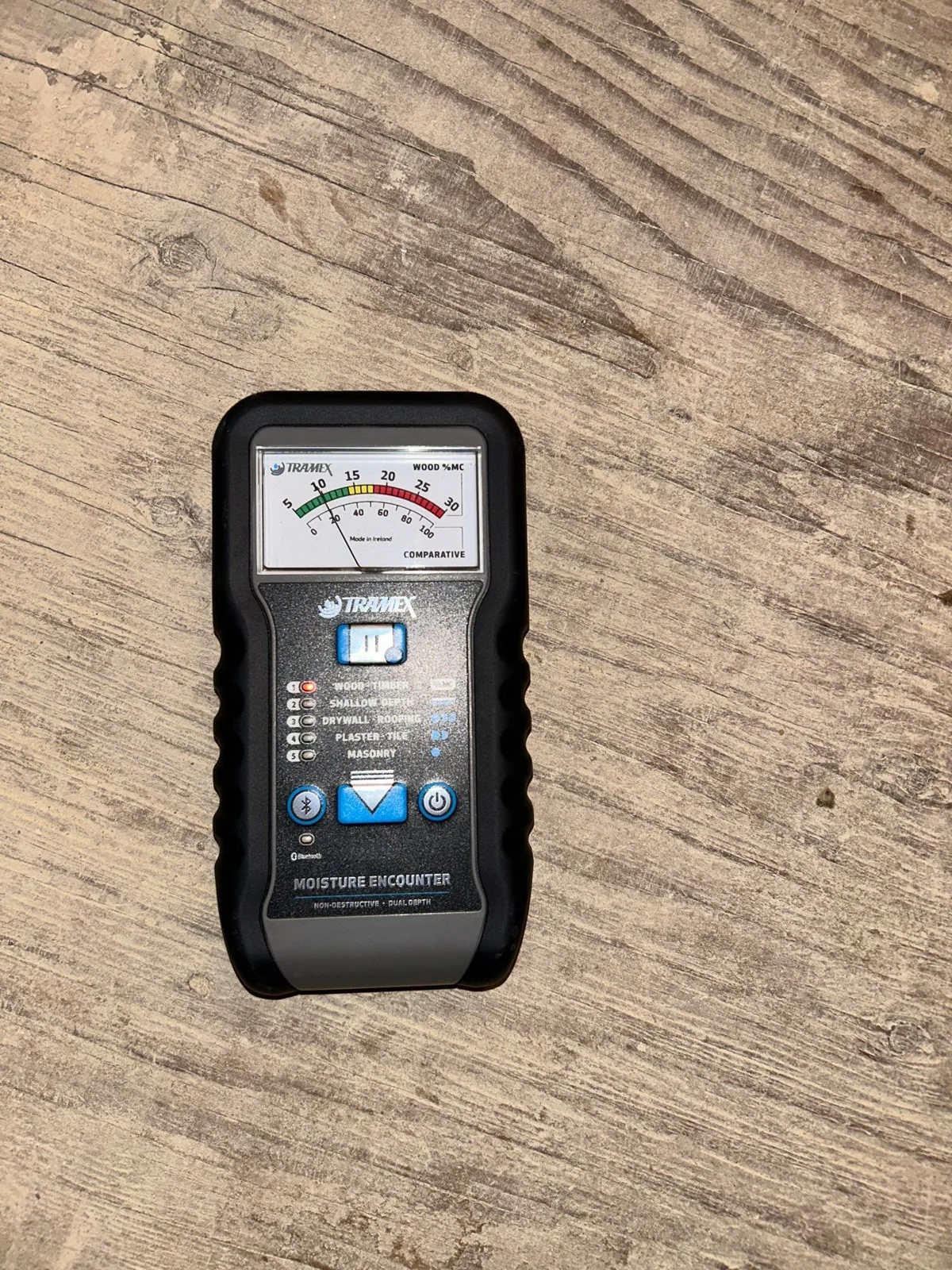
- A thermal camera shows temperature differences, not moisture. Every suspect spot gets confirmed with a moisture meter.
- Pinless meters scan wide areas fast. Pin meters confirm how deep the moisture goes.
- Upstairs, the tech checks the toilet base and wax ring, tub overflow, supply lines and any HVAC condensate line, then the wall around the plumbing stack.
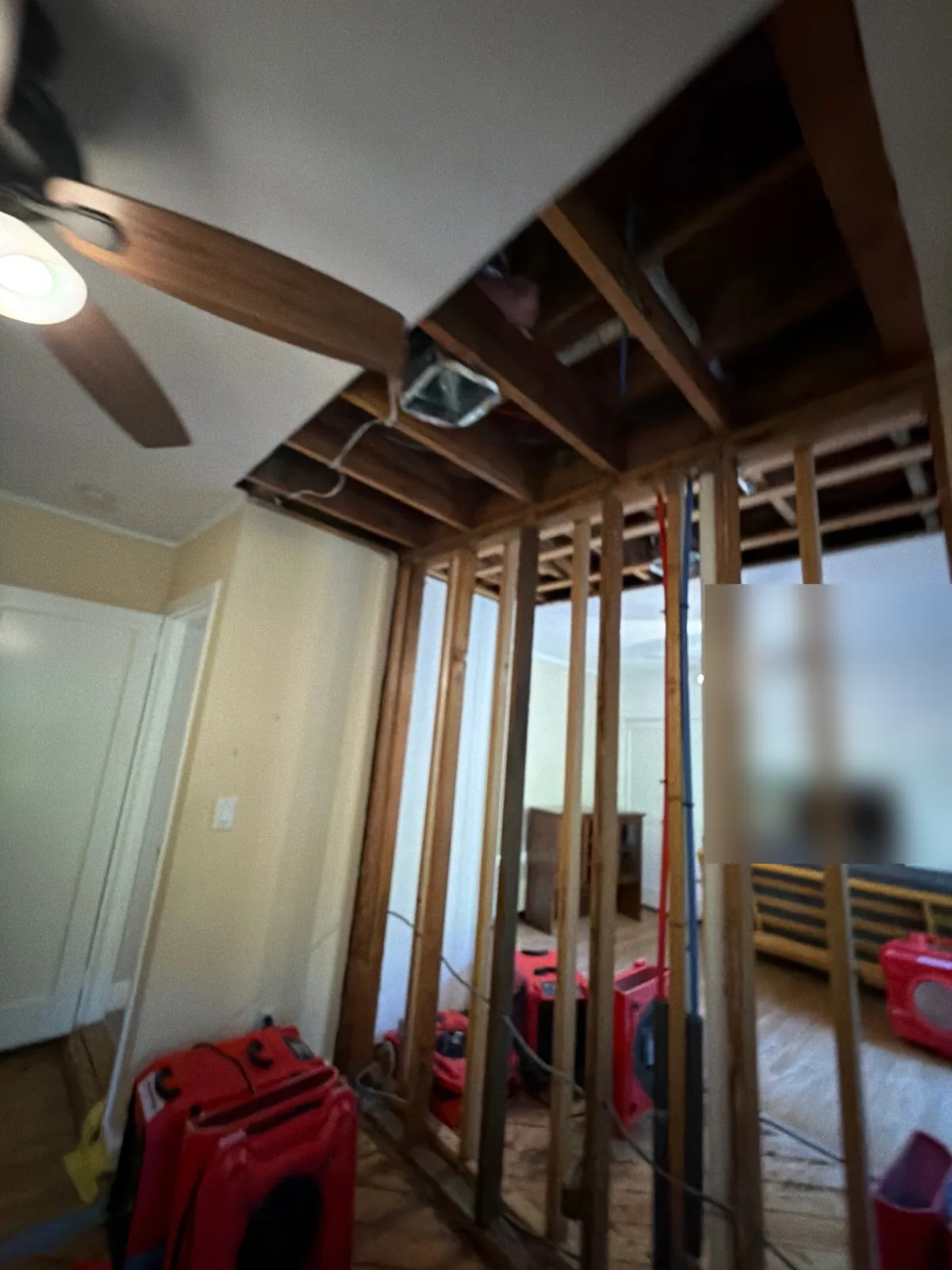
On a New York City job in August 2026, our crew set up extraction and drying from moisture readings, not from the visible staining. These warning signs of a ceiling leak mean an urgent visit.
Co-ops and Condos: Board vs Unit Owner
Here the proprietary lease or bylaws decide who repairs what. Water entering through the roof or facade is commonly the board's problem; fixtures and appliances inside a unit are commonly the owner's. If you rent from a unit owner, go to that owner first; they deal with the board.
Mold After Water Damage in an Apartment: What Tenants Should Expect
Mold can start growing on wet drywall, insulation and carpet pad within 24 to 48 hours, which is why the EPA advises drying water-damaged materials within that window. In apartments it often grows out of sight inside the ceiling or wall cavity, so ask for moisture readings before anything is closed up or repainted.
The CDC says mold can cause a stuffy nose, sore throat, coughing or wheezing, burning eyes or a skin rash, and people with asthma or mold allergies may react severely. If someone at home has asthma, allergies, lung disease or a weakened immune system, ask a doctor whether to stay elsewhere until the work is done.
What Proper Remediation Looks Like, and What Isn't Enough
- Remediation means removing contaminated porous materials (drywall, insulation, carpet pad) inside containment, so spores do not spread. We follow IICRC S520 procedures.
- Antimicrobial goes on after removal, never instead of it.
- Painting over a stain, or "bleach and paint," is not remediation. The moisture is still there.
On a Harrisburg ceiling job in August 2026, moisture had sat in the ceiling cavity long enough that wet drywall and insulation had to come out to the framing, inside full containment with HEPA air scrubbers. Caught early, a leak like that is a dry-out. Left to sit, it becomes a mold job.
Before anything is closed back up, the framing and subfloor should read dry; that reading is what separates a finished job from a covered-up one.
New York City: Local Law 55
NYC's indoor allergen law covers buildings with three or more apartments. Per HPD, owners must inspect yearly, respond to complaints, fix the underlying cause such as a leak using safe work practices, and clear vacant apartments of mold and pests before new tenants move in. In buildings with 10 or more units, mold over 10 square feet must be handled by a New York State-licensed assessor and a separate, independent licensed remediator. Tell your landlord first; if nothing happens, report it through 311.
Statewide, New York Labor Law §936 bars one licensee from doing both the assessment and the remediation on the same property. New Jersey renters can read about NJ rental mold responsibilities. For removal work, see our mold remediation service.
Your Rights as a Tenant in NY, NJ, PA and CT
General information, not legal advice. Statutes and official agency guides checked on October 24, 2026. Rules vary by lease, building type and city; check your lease and talk to a tenant attorney or legal aid office before acting.
The Right to a Habitable Apartment
All four states recognize a landlord's duty to keep a rental fit to live in. New York's RPL §235-b covers the apartment and common areas and cannot be waived. New Jersey's courts set it in Marini v. Ireland (1970) and Berzito v. Gambino (1973), Pennsylvania's Supreme Court in Pugh v. Holmes (1979), and Connecticut wrote it into CGS §47a-7. For the duty side, see state-by-state landlord repair duties.
Tenant remedies after water damage, by state (general information):
| Rent or abatement | Can I leave? | Where to complain |
|---|---|---|
| New York | ||
| If you stay, seek a rent reduction for the habitability breach (§235-b). It does not cover conditions you caused. | Under RPL §227, only if the unit became untenantable through no fault of yours and your written lease does not say otherwise. | NYC: 311 (HPD) or an HP case in Housing Court. Rent-stabilized: decreased-services complaint with NYS HCR. |
| New Jersey | ||
| Abatement, withholding and repair-and-deduct exist under case law, only for "vital facility" defects you did not cause, after written notice and time to repair (NJ DCA). | Constructive eviction, under the same strict conditions. | Local code enforcement; buildings with 3+ units, the DCA Bureau of Housing Inspection. |
| Pennsylvania | ||
| Pugh v. Holmes allows abatement and repair-and-deduct after notice and a reasonable chance to repair. Get advice before withholding. | Only if the defects make the unit unlivable (constructive eviction). Give written notice and get legal advice before you move out. | Local code enforcement; disputes go to magisterial district court. See apartment building water damage in Harrisburg. |
| Connecticut | ||
| Sue in housing court and pay rent into court (CGS §47a-14h), after complaining to the local code agency at least 21 days earlier. | If the landlord fails to restore running water or another essential service within 48 hours of the breach, §47a-13 lets you give notice and move to reasonable substitute housing; rent abates for that period. | Local housing code enforcement. Local help: Hartford water damage restoration. |
Do You Still Pay Rent While the Apartment Is Unlivable?
Under New York Real Property Law §227, if the apartment becomes untenantable through no fault of yours, and your lease does not say otherwise, you can move out and owe no rent after you surrender it. Check your lease for a fire or casualty clause first. If you stay, ask for an abatement under §235-b. Elsewhere, abatements are negotiated or court-ordered. In New York City, our water damage restoration crew can document the unit's condition for an abatement request.
Never simply stop paying. In New York, a habitability breach is a defense you raise if the landlord sues for rent, not a safe self-help step. Hotel bills are separate: renters insurance pays additional living expenses only when a covered loss, such as a burst pipe, forces you out.
Can You Break Your Lease If the Apartment Keeps Flooding?
In New York, §227 is the clearest path, with the same two conditions. Elsewhere it is a constructive-eviction claim built on dated notices and photos of repeated, unrepaired flooding.
Does a Landlord Have to Tell You the Apartment Flooded Before?
New York: yes. Under RPL §231-b, a residential lease must state whether the property is in a FEMA floodplain or the 100- or 500-year flood zone, any natural-flood damage the landlord knows or should know about, and that renters can buy NFIP flood insurance.
New Jersey: landlords must tell prospective tenants whether the rental is in a FEMA Special or Moderate Flood Hazard Area and whether they know it has flooded, tenant parking included (NJDEP flood disclosure law). The rule applies to leases signed on or after March 20, 2024. Buildings with two or fewer units, owner-occupied buildings with three or fewer, and seasonal or transient rentals under 120 days are exempt.
Getting Reimbursed (With or Without Renters Insurance)
Start with your renters policy. Without one, claim against the at-fault party, landlord or neighbor, in small claims court if needed. Either way, photos, written notices and drying records are your evidence.
What You Should See Happening in Your Unit
Signs the drying in your unit is being done right:
- Readings before equipment. Moisture is measured before any fan goes in.
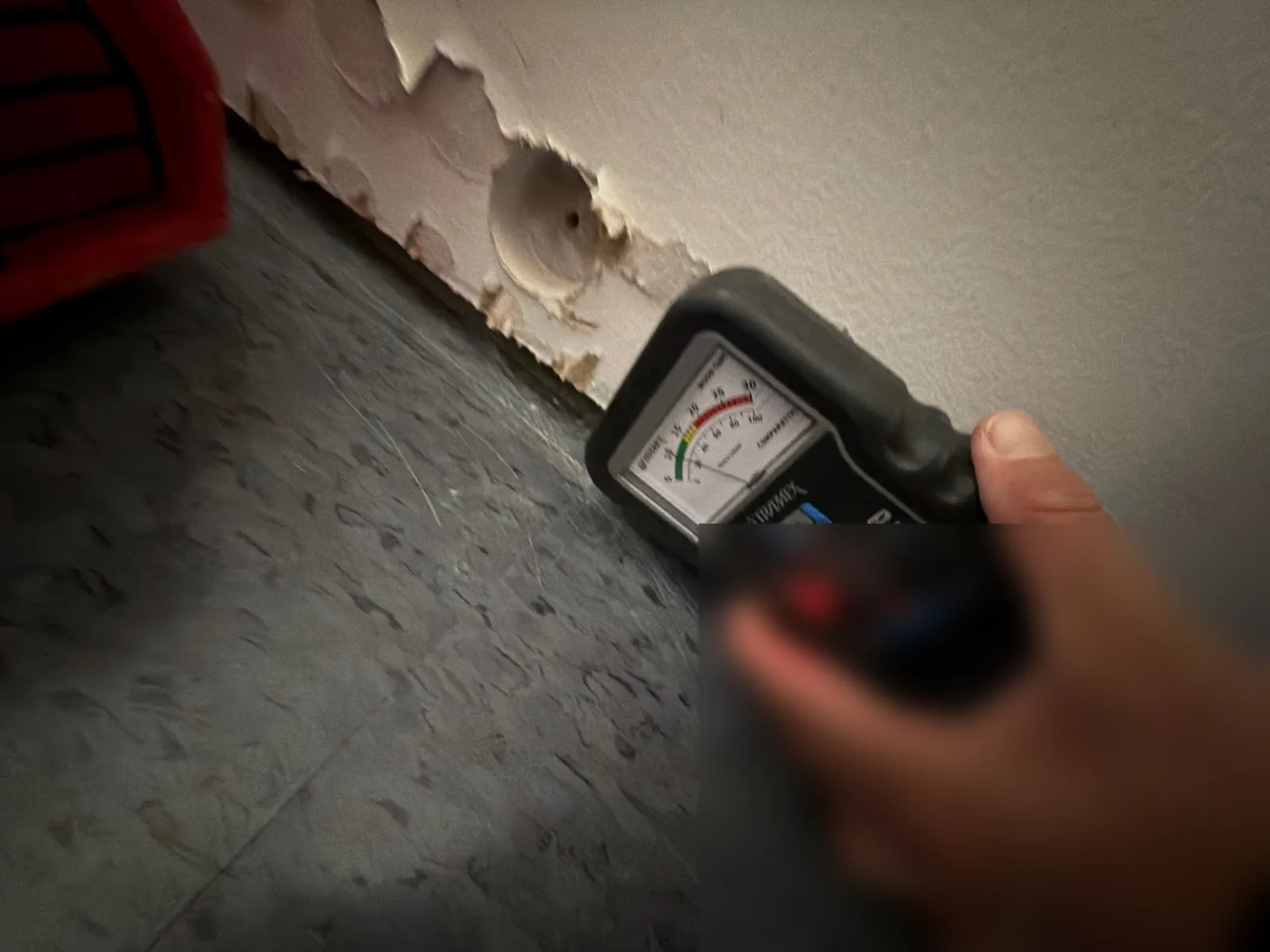
- A dry standard. Readings are compared with unaffected material of the same type in the same building, the reference IICRC S500 uses.
- Equipment placed by the readings, not just aimed at the stain.
- Walls opened only where they are wet, and readings repeated daily until materials hit the dry standard.
- Category is not Class. Category is how contaminated the water is (1 to 3); Class is how much water there is to evaporate (1 to 4).
On a River Edge, NJ water loss in August 2026, our crew mapped every wet wall and floor before drying began, placed equipment by those readings, opened drywall only where needed and documented each step for the insurance claim.
What a Drying Record Shows
Location, material, reading, date and the dry standard it is measured against. Ask your landlord for a copy before the walls or ceiling are closed; if there is a dispute later, here is how drying records settle landlord–tenant disputes.
Who Can Authorize the Work
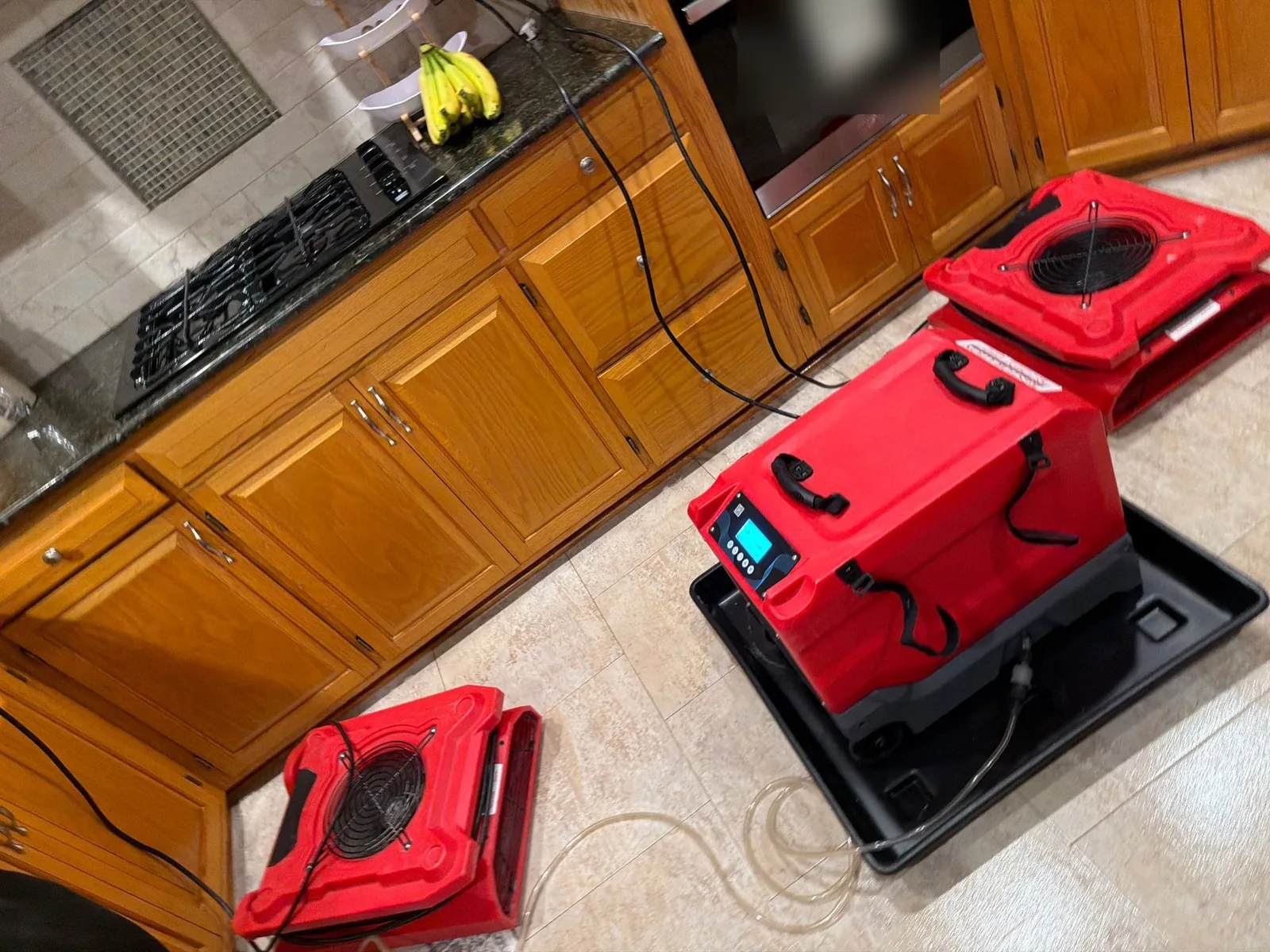
If the landlord cannot be reached, a tenant can call for emergency extraction and protection of their own belongings. Structural work, such as opening ceilings and rebuilding, is the building's decision. Keep every receipt; reimbursement is not guaranteed.
If you rent, here is what we can do for you directly: protect and pack out your belongings, clean them through contents restoration for your renters claim, and give you photo and moisture documentation.
Structural water damage restoration is arranged with your landlord or building, and we can call them for you. If ceilings or walls had to come out, the same records carry into reconstruction after water damage.
For Property Managers and Supers: Multi-Unit Water Losses
When flooding hits several units, the owner or manager coordinates the loss for the building, and each tenant's belongings go to their own renters policy. One vendor and one adjuster for the whole loss keep the records consistent unit to unit.
- Isolate the riser or zone, then check every unit below and beside the source.
- Protect common areas, elevators and electrical rooms. For rain intrusion, tarp or board the entry point first.
- Notify the insurer, then residents in writing, then occupants of adjacent units.
- Ask the vendor for moisture readings and a photo log per unit, so each claim has its own record.
In September 2026, our NYC crew handled an HVAC leak in a Manhattan high-rise: mitigation of the affected units and remediation of wet materials. Prevention at building scale means leak sensors with automatic shutoff valves, water heater pans with drains, regular cleaning of HVAC and PTAC condensate lines, and a freeze plan for vacant units and stairwells.
We work with multifamily and commercial properties across NY, NJ, PA and CT. One call covers every affected unit: (845) 294-8919, 24/7.
Frequently Asked Questions
Can a landlord evict you for water damage?
Not for reporting a leak. New York, New Jersey and Connecticut bar retaliation for good-faith complaints (RPL §223-b, with exceptions for small owner-occupied buildings and tenant-caused conditions; N.J.S.A. 2A:42-10.10; CGS §47a-20); Pennsylvania has no comparable general statewide statute. Damage you caused is a lease issue that still goes through court, and in New Jersey only intentional or grossly negligent damage is a specific eviction ground.
Can I break my lease if my apartment keeps flooding?
Possibly, but get advice first. In New York, Real Property Law §227 lets you leave and stop owing rent only if the unit became untenantable through no fault of yours and your written lease does not say otherwise. In New Jersey, Pennsylvania and Connecticut it is a constructive-eviction or habitability claim, built on dated notices, photos and repair history.
Do I have to pay rent if my apartment flooded?
In New York, if the apartment becomes untenantable through no fault of yours and your lease does not say otherwise, Real Property Law §227 lets you move out and stop owing rent from that date. If you stay, ask for a rent abatement (RPL §235-b). Elsewhere, abatement is negotiated or court-ordered, and renters insurance pays hotel costs only when a covered loss displaces you.
Is it safe to live in an apartment with mold after a leak?
It depends on who lives there and how much mold there is. The CDC says people with asthma or mold allergies may react severely, and people with weakened immune systems or chronic lung disease face added risk; they should talk to a doctor and may need to stay elsewhere during remediation. The landlord must fix the moisture source; in NYC, report problems through 311.
Can I claim compensation for a water leak in my apartment?
Yes. Belongings and hotel costs go through your renters policy, if you have one and the cause is covered. If the landlord or a neighbor was negligent, you or your insurer can pursue them, and uninsured tenants can use small claims court.
How long does a landlord have to fix water damage?
Outside a few specific rules, the standard is a reasonable time for the severity, and an active leak should be handled right away. New York City sets deadlines for mold violations, counted from HPD's violation notice, not your first call: 90 days for under 10 square feet in a room (Class A), 30 days for 10 to 29 square feet (Class B), 21 days for 30 square feet or more (Class C).
Does renters insurance cover water damage in an apartment?
Usually, for sudden and accidental damage such as a burst pipe or an overflow upstairs. It covers your belongings, your liability if you damage someone else's property, and additional living expenses if a covered loss forces you out. It does not cover outside floodwater; renters can buy NFIP contents-only coverage, which typically has a 30-day wait. Sewer backup needs a separate endorsement.
Get Help With Apartment Water Damage
Our crews answer 24/7 at (845) 294-8919 and typically arrive within 90 minutes in nearby service areas. Tenants get their belongings protected and documented while we coordinate with the building; owners and boards get every affected unit handled under one set of records. Our New York City office is at 776A 6th Avenue, 2nd Floor, New York, NY 10001, (917) 781-1944.
Categories
Need Restoration Services?
Our team is available 24/7 for emergency response. Call us today for a free phone consultation.


Questions About Restoration?
Our experts are ready to help. Contact us for a free consultation.