
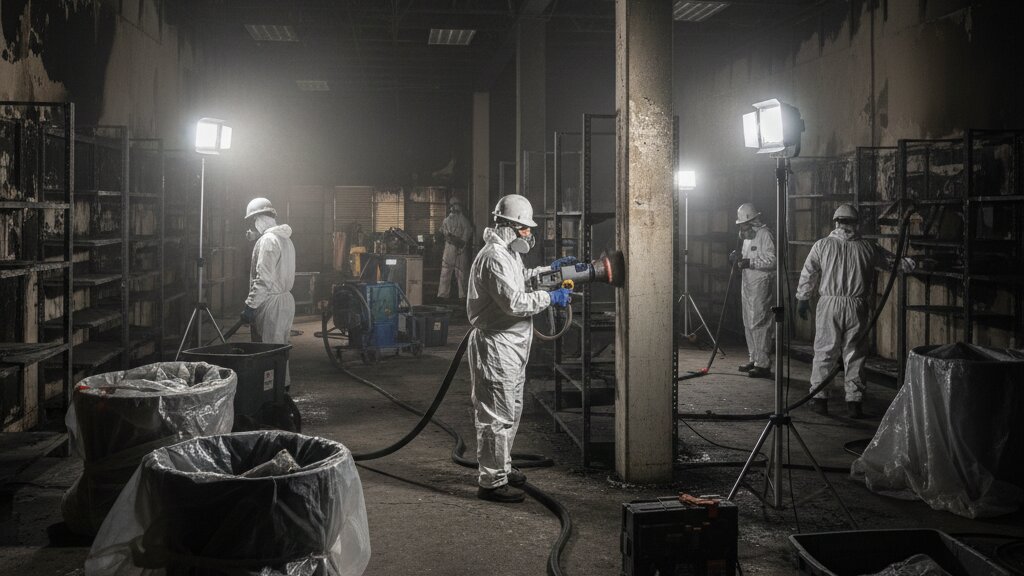
Unique Challenges of Commercial Fire Recovery
Commercial fire damage presents challenges that don’t exist in residential settings. Understanding commercial fire recovery requirements helps business owners prepare for the restoration process.
Business Interruption Costs
Fire damage business interruption creates costs that every day a business remains closed means:
- Lost revenue and sales
- Ongoing fixed costs (rent, utilities, loan payments)
- Employee payroll or unemployment claims
- Customer defection to competitors
- Supply chain disruption
- Contractual penalties and missed deadlines
These fire damage business interruption costs often exceed the physical damage itself, making rapid business fire restoration critical.
Complex Facility Requirements
Commercial spaces have specialized needs:
- Industry-specific equipment requiring specialized restoration
- Health and safety compliance requirements
- Building code requirements for commercial occupancy
- Accessibility compliance (ADA)
- Fire suppression system restoration
- Commercial HVAC systems
Multiple Stakeholders
Commercial fire recovery involves more parties than residential:
- Property owners and landlords
- Business owners (often different from property owners)
- Insurance companies (multiple policies possible)
- Employees with concerns about jobs
- Customers expecting service continuity
- Suppliers and vendors
- Regulatory agencies
The Commercial Fire Recovery Process
Commercial fire damage restoration follows structured phases designed to minimize business disruption.
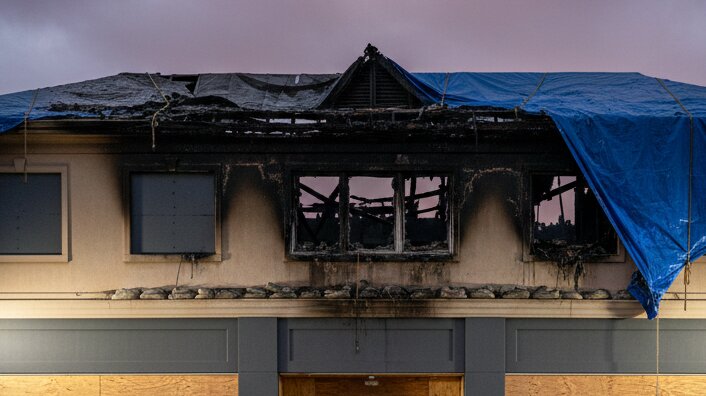
Emergency Response and Securing
Immediate response addresses urgent concerns:
Emergency services begin with:
- Property securing and board-up
- Roof tarping if damaged
- Water extraction from firefighting efforts
- Initial ventilation of smoke
- Inventory and asset protection
Board-up services protect commercial properties from theft, vandalism, and weather during restoration.
Damage Assessment
Comprehensive assessment documents:
- Structural damage extent
- Smoke and soot spread throughout facility
- Water damage from suppression systems and firefighting
- Equipment and inventory damage
- Contents requiring restoration versus replacement
This assessment informs business fire restoration scope, insurance claims, and timeline projections.
Prioritization Planning
Commercial fire recovery prioritizes based on business needs:
- Critical operations areas restored first
- Revenue-generating spaces prioritized
- Essential equipment addressed early
- Phased reopening when possible
Pro Tip: Communicate priorities clearly to your restoration team. They can’t know which areas are most critical to your business operations without your input.
| Recovery Phase | Activities | Business Focus |
|---|---|---|
| Emergency (24-48 hours) | Securing, extraction, initial mitigation | Damage prevention, safety |
| Assessment (1-3 days) | Documentation, scope development | Insurance, planning |
| Mitigation (1-2 weeks) | Drying, cleaning, smoke removal | Partial operations if possible |
| Restoration (weeks-months) | Repairs, reconstruction | Phased reopening |
| Final (completion) | Finishing, final cleaning | Full operations resume |
Smoke and Soot Remediation in Commercial Settings
Commercial fire damage remediation addresses larger scales and specialized concerns in fire and smoke damage restoration.
Industrial-Scale Cleaning
Commercial facilities require industrial cleaning approaches:
- Large-scale HVAC cleaning and decontamination
- Warehouse-scale surface cleaning
- Commercial kitchen decontamination
- Production equipment cleaning
Industry-Specific Concerns
Different business types have unique business fire restoration requirements:
Food Service: Health department clearance, equipment sanitation, inventory disposal
Healthcare: Infection control protocols, medical equipment decontamination, regulatory compliance
Manufacturing: Production equipment restoration, product contamination assessment
Retail: Inventory assessment, display restoration, customer area prioritization
Office: Document restoration, electronics cleaning, workstation recovery
Odor Elimination
Persistent smoke odors affect businesses beyond mere discomfort:
- Customer perception of professionalism
- Employee health and comfort
- Product quality concerns
- Regulatory requirements in some industries
Professional deodorization ensures facilities are truly ready for occupancy, not just visually restored.
Water Damage in Commercial Fire Recovery
Fire suppression and firefighting introduce significant water during commercial fire recovery:
Sources of Water Damage
- Sprinkler system activation
- Fire hose water from firefighting
- Broken water lines from fire or structural damage
- Weather intrusion through fire-damaged openings
Commercial Water Damage Concerns
Water damage restoration in commercial settings addresses:
- Large floor areas requiring extensive extraction
- Multi-story water migration
- Equipment and inventory water exposure
- Subfloor and concrete moisture
- Mold prevention across large areas
Structural Drying at Scale
Commercial drying deploys extensive equipment:
- Multiple industrial dehumidifiers
- Numerous high-velocity air movers
- Specialized drying systems for commercial flooring
- Continuous monitoring across large facilities
Inventory and Contents Management
Commercial properties often contain valuable inventory and equipment requiring careful handling during business fire restoration.
Inventory Assessment
Professional assessment determines:
- What inventory can be cleaned and sold
- What requires disposal
- Documentation for insurance claims
- Contamination concerns affecting salability
Equipment Restoration
Contents restoration for commercial equipment includes:
- Specialized cleaning procedures by equipment type
- Electronics decontamination
- Mechanical equipment assessment
- Professional testing and certification
Document and Records Recovery
Business records may have irreplaceable value:
- Document drying and restoration
- Digital data recovery
- Archive and records protection
- Compliance documentation preservation
Warning: Don’t dispose of damaged inventory or equipment without proper documentation. Insurance claims require evidence of damage and professional assessment of restoration viability versus replacement necessity.
Insurance Considerations for Commercial Fire
Commercial fire damage insurance is often more complex than residential coverage.
Multiple Policy Types
Commercial fires may involve:
- Property insurance: Building and contents
- Business interruption: Lost income during closure
- Extra expense coverage: Costs to maintain operations
- Inventory coverage: Stock and materials
- Equipment coverage: Machinery and technology
Documentation Requirements
Commercial claims require extensive documentation:
- Pre-loss inventory records
- Financial records showing revenue baseline
- Damage documentation (photos, video, written)
- Restoration scope and cost documentation
- Business interruption calculations
Working with Adjusters
Commercial claims often involve:
- Multiple adjusters for different coverage types
- Public adjusters representing business interests
- Restoration company documentation support
- Extended negotiation periods
Maintaining Business Continuity
Strategies exist to maintain some business operations during business fire restoration and minimize fire damage business interruption.
Temporary Location Options
- Relocating to temporary commercial space
- Operating from alternative facilities
- Remote work arrangements where applicable
- Partner facility sharing
Phased Reopening
Large facilities may enable phased approaches:
- Restoring critical areas first
- Operating from restored sections while others are completed
- Prioritizing customer-facing versus back-office spaces
Communication Strategy
Maintaining stakeholder communication is essential:
- Customer notification about temporary changes
- Employee updates on timeline and jobs
- Supplier coordination for resumed operations
- Social media and public communication management
Regulatory and Compliance Considerations
Commercial facilities face regulatory requirements during commercial fire recovery.
Building Permits and Inspections
- Permits for structural repairs
- Electrical and mechanical inspections
- Certificate of occupancy requirements
- Fire system recertification
Industry-Specific Requirements
- Health department clearance (food service, healthcare)
- OSHA compliance verification
- Environmental regulations
- Professional licensing requirements
Fire Prevention Upgrades
Restoration may trigger code upgrade requirements:
- Updated sprinkler systems
- Enhanced fire alarm systems
- Egress improvements
- Fire-rated construction upgrades
Frequently Asked Questions About Commercial Fire Recovery
How long does commercial fire restoration typically take?
+
Commercial fire recovery timeline varies significantly based on damage extent, facility size, and restoration scope. Minor damage may allow reopening within weeks. Major damage requiring reconstruction can take months. Phased approaches may enable partial operations earlier. Your restoration team provides timeline projections after completing damage assessment.
Can I continue operating during restoration?
+
Sometimes. Large facilities may allow operations in unaffected areas while damaged sections undergo restoration. Safety, air quality, and accessibility determine feasibility. Discuss operational priorities with your business fire restoration team—they can often structure work to accommodate continued operations where safely possible.
What about my employees during restoration?
+
Options include temporary layoffs, reduced hours, remote work where applicable, or temporary reassignment. Business interruption insurance may cover ongoing payroll costs. Clear communication with employees about timelines and job security helps maintain workforce stability for reopening.
Will business interruption insurance cover all my losses?
+
Coverage depends on policy specifics. Fire damage business interruption insurance typically covers lost income and some ongoing expenses during restoration. Policies have coverage limits, waiting periods, and specific covered expenses. Review your policy carefully and work with your insurance representative to understand coverage extent.
Should I hire a public adjuster for my commercial claim?
+
Public adjusters can be valuable for complex commercial fire damage claims. They represent your interests in negotiations with insurance companies. Consider their fees (typically a percentage of the claim) versus potential claim improvement. For large or complicated claims, professional representation often recovers significantly more than their cost.
How do I protect customer relationships during closure?
+
Proactive communication is essential. Notify customers promptly about the situation and expected timeline. Offer alternatives if possible—temporary locations, online ordering, or referrals to trusted partners. Stay visible on social media with updates. Customers who feel informed and valued typically return when you reopen.
Professional Commercial Fire Restoration
Commercial fire damage requires restoration expertise combined with understanding of business continuity needs. Professional business fire restoration addresses physical damage while minimizing operational disruption and supporting comprehensive insurance recovery. Effective commercial fire recovery strategies help reduce fire damage business interruption and get businesses back to full operations as quickly as possible.
When fire damages commercial properties in Northern New Jersey, Pennsylvania’s Capital Region, New York’s Hudson Valley, Connecticut’s Capital Region, or the South Jersey Shore, commercial restoration teams understand that getting your business operational quickly matters as much as physical restoration—and structure their response accordingly.