
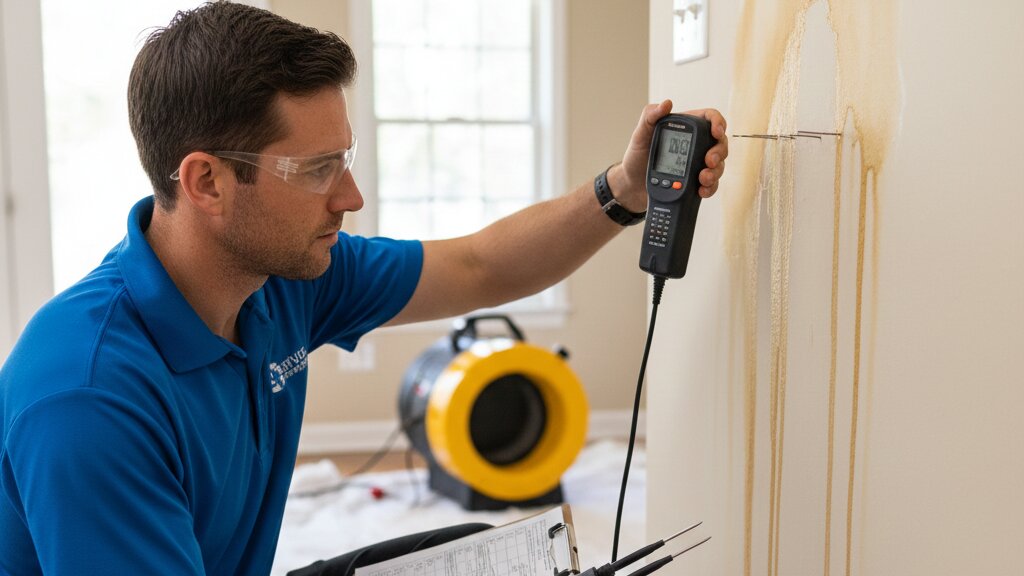
How Water Damages Drywall
Understanding water damage drywall issues helps property owners recognize when professional intervention is needed. Drywall water damage repair decisions depend on understanding how water affects these materials.
Drywall responds to water exposure through several damage mechanisms, each affecting restoration decisions.
Absorption and Wicking
Drywall absorbs water through direct contact and draws moisture upward through capillary action. This wicking effect means water damage drywall extends beyond visible wet areas—often 12-24 inches above waterlines. The paper facing absorbs first, followed by the gypsum core.
Swelling and Warping
As drywall absorbs moisture, it swells. This causes:
- Bulging or bubbling surfaces
- Warped or bowed sections
- Separation from framing
- Joint compound cracking
Structural Weakening
Saturated drywall loses structural integrity. The gypsum core becomes soft and crumbly, unable to hold fasteners or support its own weight. Severely damaged drywall may sag or fall from walls and ceilings.
Mold Growth Susceptibility
Drywall paper facing provides ideal food for mold. When moisture remains in drywall longer than 24-48 hours, mold growth becomes likely, often starting on the hidden backside where detection is difficult.
| Damage Level | Visual Signs | Typical Treatment |
|---|---|---|
| Minor | Slight discoloration, no swelling | Drying, possible paint touch-up |
| Moderate | Visible staining, minor warping | Drying, stain blocking, possible spot repair |
| Significant | Swelling, sagging, soft areas | Section replacement, thorough drying |
| Severe | Structural failure, mold visible | Complete removal, cavity drying, new installation |
When Drywall Can Be Saved
Many water damage drywall sections can be successfully dried and retained when conditions are favorable. Professional drywall water damage repair begins with assessing whether materials can be saved.
Favorable Conditions for Saving Drywall
- Rapid response: Drying begins within 24-48 hours of water exposure
- Clean water source: Water from supply lines or rain without contamination
- Limited saturation: Moisture hasn’t penetrated the entire thickness
- No structural damage: Drywall remains firmly attached without sagging
- No mold growth: No visible mold and no musty odors
Drying Water-Damaged Drywall
Professional drying techniques can restore drywall to safe moisture levels:
Surface Drying: Air movers direct airflow across wet surfaces, accelerating evaporation from the paper facing.
Wall Cavity Drying: Specialized equipment forces dry air into wall cavities through small holes or base-of-wall vents, drying insulation and the backside of drywall.
Dehumidification: Commercial dehumidifiers remove moisture from the air, creating conditions that pull moisture from drywall into the atmosphere.
Monitoring: Moisture meters track drying progress. Drywall is considered dry when moisture content returns to normal levels (typically under 1% for gypsum).
Pro Tip: Don’t assume drywall is dry because the surface feels dry. Moisture trapped in the core or behind the drywall requires professional measurement to verify complete drying.
When Drywall Must Be Replaced
Some conditions make drywall replacement after water damage necessary regardless of drying efforts.
Contaminated Water Exposure
Drywall exposed to Category 2 (gray water) or Category 3 (black water) often requires removal:
- Sewage backup contaminates drywall beyond cleaning
- Flood water containing soil, chemicals, or pathogens
- Stagnant water that has developed bacterial growth
Contaminated water permeates the porous gypsum core, making complete disinfection impossible and requiring drywall replacement after water damage.
Prolonged Moisture Exposure
Drywall wet for more than 48-72 hours faces high mold risk. Once mold begins growing in drywall—particularly on the hidden backside—removal is typically more practical than remediation in place.
Structural Damage
Drywall that has lost structural integrity cannot be restored:
- Soft, crumbly gypsum core
- Sagging sections
- Separation from studs
- Fastener failure
Visible Mold Growth
Mold visible on drywall surfaces typically indicates more extensive growth behind. Removing affected drywall allows proper inspection and treatment of wall cavities.
Warning: Never paint over mold or attempt to seal it in with primer. Mold continues growing and releases spores regardless of surface treatments. Proper remediation requires removal of affected materials.
The Flood Cut Technique
One common approach to water damage drywall involves partial removal rather than complete replacement. The flood cut drywall technique is a standard practice in professional drywall water damage repair.
What Is a Flood Cut?
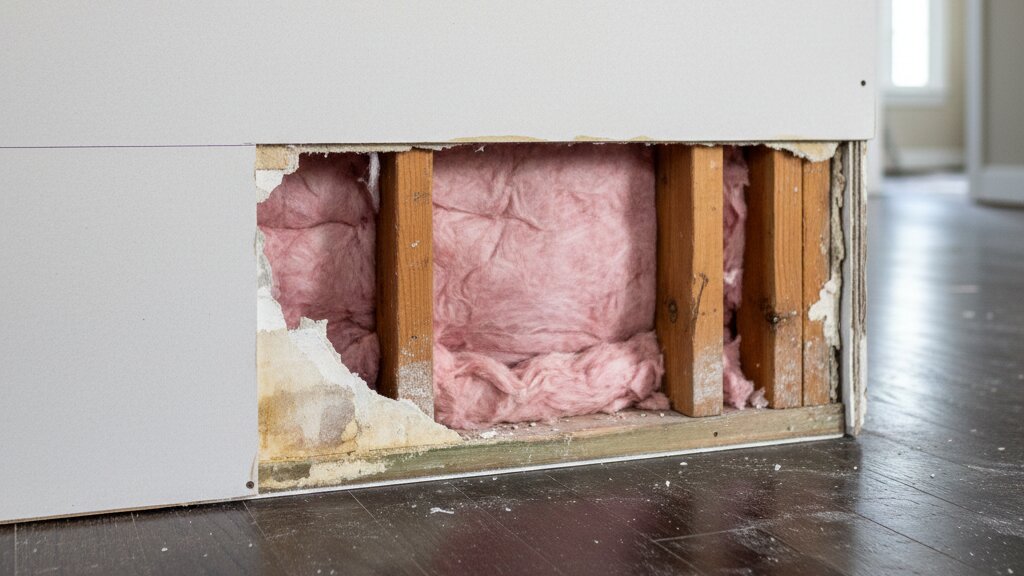
A flood cut drywall approach removes drywall from floor level to approximately 12-24 inches above the visible waterline. This exposes the wall cavity for drying and inspection while preserving upper wall sections.
Benefits of Flood Cuts
- Exposes insulation and framing for proper drying
- Allows inspection of structural members
- Reduces material replacement costs compared to full removal
- Enables verification that wall cavity is completely dry
- Makes mold inspection possible before closing walls
When Flood Cuts Are Appropriate
The flood cut drywall method is appropriate when:
- Standing water or flooding from below
- Significant moisture in wall cavity
- Need to verify cavity conditions
- Insurance requires documentation of hidden areas
Flood Cut Height Determination
The cut height depends on how high moisture traveled. Professional moisture readings determine the actual extent of moisture migration—not just visible waterlines. Cuts are made above the highest point of moisture penetration.
Drywall Repair After Drying
Once drywall is verified dry, several drywall water damage repair approaches restore appearance.
Cosmetic Repairs for Saved Drywall
Stain Blocking: Water stains often bleed through regular paint. Stain-blocking primer prevents this before final painting.
Texture Matching: Textured ceilings and walls may need texture repair to match existing finishes after water damage.
Joint Compound Repair: Cracked or loose joint compound requires scraping, re-taping, and refinishing joints.
Section Replacement
When portions of drywall require replacement:
- Cut damaged sections along stud centers for solid backing
- Install new drywall with proper fastening
- Tape and finish joints to match existing walls
- Prime and paint to blend with surrounding areas
Full Wall Replacement
Extensively damaged walls may require complete drywall replacement after water damage. This ensures consistent appearance and eliminates any concerns about hidden damage in retained sections.
Ceiling-Specific Considerations
Water-damaged ceilings present unique challenges compared to walls in drywall water damage repair.
Safety Concerns
Water-saturated ceiling drywall can collapse without warning. Sagging or bulging ceilings should be approached with extreme caution. Professional assessment determines whether ceilings are safe before anyone works below them.
Water Source Investigation
Ceiling water damage often indicates problems above—roof leaks, plumbing failures, or upstairs water issues. Identifying and addressing the source prevents recurring damage after repairs.
Insulation Complications
Attic insulation above ceilings absorbs and retains moisture. Wet insulation must be removed for ceiling drying and typically requires replacement.
Access Requirements
Ceiling repair often requires scaffolding or lift equipment for safe work at height. This adds complexity compared to wall repairs.
Professional vs. DIY Drywall Repair
Property owners often wonder whether drywall water damage repair requires professional assistance.
When DIY May Be Appropriate
- Small areas of cosmetic damage only
- No water contamination concerns
- Drywall confirmed completely dry by professional measurement
- No mold present or suspected
- Homeowner has drywall repair experience
When Professional Repair Is Advisable
- Large or multiple affected areas
- Ceiling damage (safety concerns)
- Contaminated water exposure
- Any mold concerns
- Insurance claim involvement
- Uncertainty about moisture or damage extent
Pro Tip: Even if you plan to DIY cosmetic repairs, have professionals handle moisture assessment and drying. Improper drying before repair leads to mold problems and repeat repairs.
Frequently Asked Questions About Water-Damaged Drywall
How can I tell if drywall needs replacement?
+
Signs that water damage drywall needs replacement include: soft or crumbly texture when pressed, sagging or separation from framing, visible mold growth, persistent musty odors, and failure to dry to normal moisture levels with professional equipment. If drywall was exposed to contaminated water, drywall replacement after water damage is typically necessary regardless of physical condition.
Can I just paint over water stains?
+
Only after the drywall is confirmed completely dry and undamaged. Water stains require stain-blocking primer before painting—standard paint allows stains to bleed through. Never paint over drywall that hasn’t been properly dried, as this traps moisture and promotes mold growth behind the paint.
How long does drywall take to dry after water damage?
+
With professional drying equipment, water damage drywall typically reaches safe moisture levels within 3-5 days. Without professional drying, drywall may take weeks to dry—if it dries at all—and mold growth likely occurs during that time. Drying time depends on saturation extent, wall cavity conditions, and equipment used.
Why do restoration companies cut drywall instead of just drying it?
+
Flood cut drywall techniques serve multiple purposes: they expose wall cavities allowing faster drying of framing and insulation, enable inspection for hidden damage and mold, allow verification that all moisture is removed, and are often required for insurance documentation. Using the flood cut drywall approach costs less than complete replacement while ensuring thorough restoration.
Does water-damaged drywall always grow mold?
+
Not always, but the risk is high. If drying begins within 24-48 hours and reaches complete dryness, mold may be prevented. Longer exposure dramatically increases mold likelihood. Even drywall that doesn’t develop visible mold may have mold on its hidden backside if moisture persisted.
Will insurance cover drywall replacement after water damage?
+
Most homeowner policies cover drywall replacement after water damage from sudden water events like burst pipes. Coverage includes necessary replacement when drywall cannot be saved through drying. Documentation of damage extent and professional recommendations support insurance claims. Coverage varies by policy and water source, so review your specific policy.
Professional Water Damage Drywall Services
Proper treatment of water damage drywall requires accurate assessment, appropriate drying techniques, and skilled repair or replacement work. Professional drywall water damage repair ensures moisture is completely removed, mold risks are addressed, and repairs restore properties to pre-damage condition. Whether through flood cut drywall techniques or complete drywall replacement after water damage, professional restoration provides efficient solutions.
When water damages properties in Northern New Jersey, Pennsylvania’s Capital Region, New York’s Hudson Valley, Connecticut’s Capital Region, or the South Jersey Shore, professional assessment determines which drywall can be saved and which requires replacement—providing efficient restoration that protects against future problems.