
The Mold Timeline After Flooding
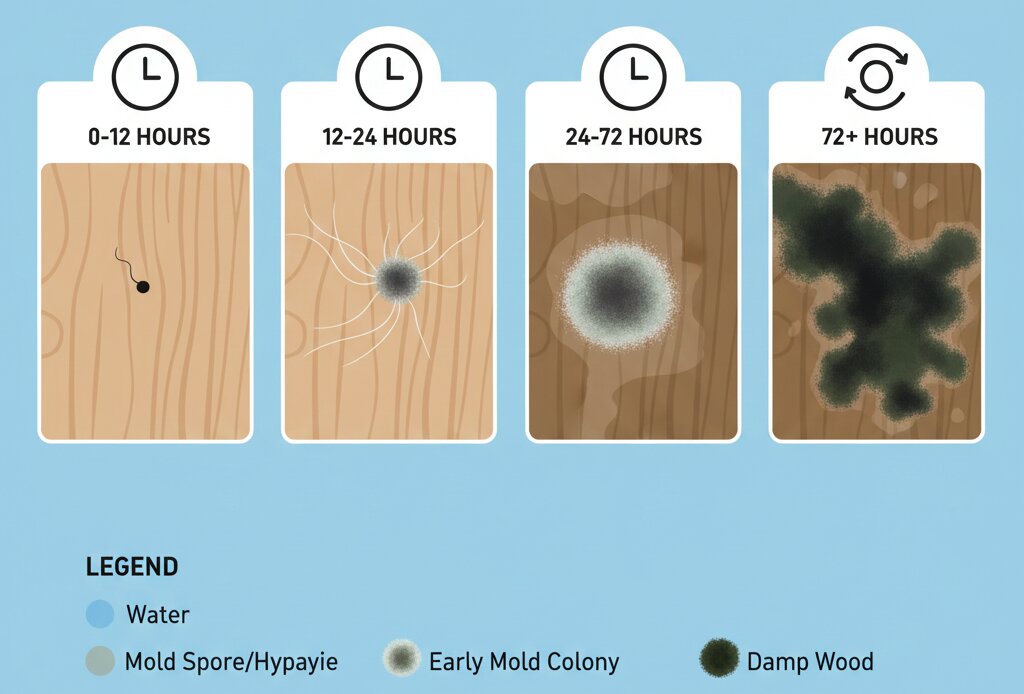
Understanding mold prevention after flooding starts with knowing how quickly mold develops. Effective post-flood drying must begin within hours to prevent mold after water damage.
Mold spores exist everywhere—in outdoor air, indoor dust, and on surfaces throughout buildings. They remain dormant until conditions support growth. Flooding provides those conditions instantly.
24-48 Hours: Germination Begins
Mold spores begin germinating within 24-48 hours of water exposure. At this stage, growth isn’t visible but biological processes have started. This window represents the critical period for mold prevention after flooding through rapid post-flood drying.
48-72 Hours: Visible Growth Possible
By 48-72 hours, mold may become visible on surfaces if conditions remain favorable. Once visible growth appears, prevention transitions to mold remediation—a more complex and costly process. Successful mold prevention after flooding requires intervention before this stage.
Beyond 72 Hours: Established Growth
After 72 hours of continuous moisture, mold colonies establish and begin reproducing. Growth accelerates, spreading to additional materials. Health impacts and property damage compound with time. At this stage, flood mold growth has transitioned from preventable to requiring professional remediation.
| Timeline | Mold Status | Prevention Opportunity |
|---|---|---|
| 0-24 hours | Spores dormant or just activating | Excellent—rapid drying prevents germination |
| 24-48 hours | Germination beginning | Good—aggressive drying can still prevent growth |
| 48-72 hours | Growth may become visible | Limited—some growth may require remediation |
| 72+ hours | Established colonies | Prevention shifts to remediation requirement |
Warning: These timelines assume typical indoor conditions. Warm temperatures and high humidity accelerate mold development. Summer flooding may see visible growth within 24 hours, making mold prevention after flooding even more time-critical.
Immediate Actions to Prevent Mold
Actions taken in the first hours after flooding determine whether flood mold growth becomes a problem. These steps form the foundation of effective mold prevention after flooding and are essential to prevent mold after water damage.
Remove Standing Water Immediately
Standing water is the primary moisture source. Remove it as quickly as possible using:
- Pumps for significant water volume
- Wet vacuums for smaller amounts
- Mops and towels for residual water
Every minute of standing water increases absorption into building materials, accelerating flood mold growth risk.
Increase Air Movement
Moving air accelerates evaporation from wet surfaces. Before professional equipment arrives:
- Open windows if weather permits
- Run ceiling fans
- Position portable fans to move air across wet areas
- Keep interior doors open for air circulation
Air movement is crucial for post-flood drying and helps prevent mold after water damage.
Remove Wet Materials When Possible
Some materials can be moved to facilitate drying:
- Remove area rugs and lay flat outside to dry
- Pull up carpet edges to expose pad (pad is highly absorbent)
- Move wet furniture away from walls
- Remove wet items from enclosed spaces
Reduce Humidity
High humidity prevents drying and supports mold growth. If available:
- Run dehumidifiers in affected areas
- Use air conditioning if weather allows (AC removes humidity)
- Avoid activities that add moisture (cooking, showering) near affected areas
Pro Tip: Don’t use heat to speed drying. While tempting, high heat can damage materials and create conditions that favor rapid mold growth once temperatures normalize.
Call Professional Restoration Services
Emergency restoration services bring industrial drying equipment and expertise that household efforts cannot match. Professional response within hours dramatically improves mold prevention after flooding outcomes.
Professional Mold Prevention Techniques
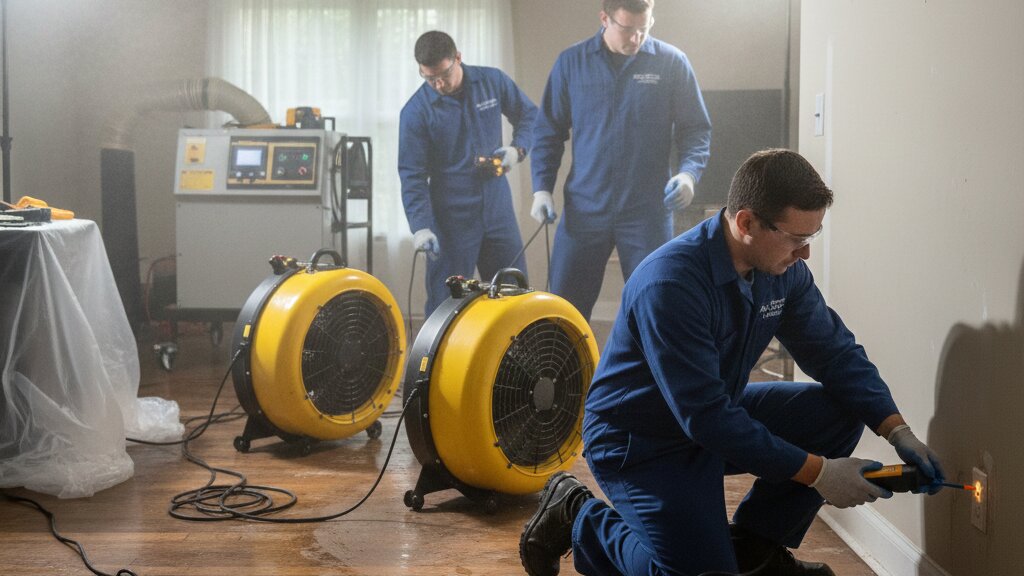
Restoration professionals use methods and equipment specifically designed to prevent mold after water damage. Their expertise in post-flood drying ensures comprehensive mold prevention after flooding.
Comprehensive Moisture Assessment
Professionals assess moisture levels throughout affected areas:
- Moisture meters measure content in building materials
- Thermal imaging identifies hidden moisture
- Hygrometers monitor atmospheric humidity
This assessment identifies all moisture requiring treatment—including hidden moisture that would support mold growth if missed.
Industrial Drying Equipment
Professional equipment provides drying capacity far beyond household tools:
Commercial Dehumidifiers: Remove many times more moisture than residential units. Multiple units may be deployed based on area size and moisture volume.
Air Movers: High-velocity fans direct air across wet surfaces, accelerating evaporation. Strategic placement maximizes effectiveness for post-flood drying.
Specialty Drying Systems: Wall cavity drying systems, floor drying mats, and other specialized equipment target moisture in difficult-to-access areas.
Environmental Control
Professionals establish conditions that inhibit mold while promoting drying:
- Temperature controlled for optimal drying
- Humidity maintained at levels preventing mold growth
- Air flow patterns designed for complete coverage
This controlled environment is essential for successful mold prevention after flooding.
Controlled Material Removal
Some materials absorb water excessively and cannot dry before mold grows:
- Carpet padding (typically removed after flooding)
- Wet insulation
- Drywall below flood lines (often removed 12-24 inches above water level)
- Materials with contaminated water exposure
Removing these materials eliminates moisture sources while allowing wall cavities and structural materials to dry properly, preventing flood mold growth.
Factors Affecting Mold Risk
Several factors influence how quickly mold develops and how aggressive mold prevention after flooding must be.
Water Category
The type of water involved affects mold risk and response requirements:
Clean Water (Category 1): From supply lines or rain—lowest immediate mold risk but still requires rapid drying.
Gray Water (Category 2): Contains some contamination (washing machines, dishwashers)—moderate mold risk with added bacteria concern.
Black Water (Category 3): Sewage or floodwater containing pathogens—highest risk requiring extensive material removal and specialized treatment.
Temperature
Mold grows fastest between 77-86°F. Summer flooding accelerates timelines significantly. Winter flooding provides slightly more time for response but still requires urgent attention for effective mold prevention after flooding.
Affected Materials
Different materials support mold growth differently:
- Paper-faced drywall: Highly susceptible
- Wood: Moderate susceptibility
- Carpet and pad: Very susceptible
- Concrete: Lower susceptibility but still possible
- Metal, glass, plastic: Not directly susceptible but can harbor mold if organic material present
Prior Mold History
Properties with previous mold issues may have elevated spore levels, accelerating new growth after flooding. Prior remediation areas should be monitored carefully during post-flood drying.
Hidden Areas Requiring Attention
Effective mold prevention after flooding must address hidden moisture, not just visible wet areas.
Inside Wall Cavities
Water wicks up drywall through capillary action, often reaching 12-24 inches above visible waterlines. Wall cavity moisture supports mold growth on framing, insulation, and backside of drywall.
Beneath Flooring
Subfloor materials absorb water that penetrates through flooring seams. Mold can grow extensively beneath intact-appearing floor surfaces.
Behind Cabinets
Kitchen and bathroom cabinets trap moisture against walls. The enclosed, dark space creates ideal mold conditions.
HVAC Systems
Flooded ductwork or equipment can harbor mold growth that spreads throughout buildings when systems operate. HVAC systems require inspection and possible cleaning after flooding.
Crawl Spaces and Basements
These lowest areas retain moisture longest and often lack adequate ventilation. Persistent moisture in these spaces supports mold that can affect entire buildings.
Signs Prevention Wasn’t Successful
Despite best efforts, mold sometimes develops. Recognizing early signs allows rapid response before extensive flood mold growth occurs.
Musty Odors
Musty or earthy smells often indicate mold presence before visible growth appears. These odors from previously flooded areas suggest investigation is needed.
Visible Growth
Any visible mold—even small spots—indicates conditions supported growth. Small areas can expand rapidly and should be addressed promptly.
Health Symptoms
Occupants experiencing allergy-like symptoms, respiratory issues, or headaches in flooded areas may be reacting to mold that isn’t yet visible.
Elevated Moisture Readings
If moisture readings remain elevated despite drying efforts, materials may require removal before mold establishes.
Warning: Don’t assume small amounts of visible mold are insignificant. Visible growth indicates conditions support mold—additional hidden growth may exist. Professional assessment determines actual extent.
Frequently Asked Questions About Mold Prevention After Flooding
How long do I have to prevent mold after flooding?
+
The critical window for mold prevention after flooding is 24-48 hours. Mold spores begin germinating within this timeframe if moisture conditions persist. Professional response within hours provides the best prevention outcomes. By 48-72 hours, visible mold growth becomes possible, and beyond 72 hours, established growth typically requires remediation rather than prevention.
Can I prevent mold myself or do I need professional help?
+
Minor water incidents affecting small areas may be manageable with immediate homeowner response. Significant flooding typically requires professional equipment and expertise to dry materials quickly enough to prevent mold after water damage. If water affected wall cavities, subfloors, or large areas, professional restoration provides the best mold prevention after flooding.
Should I use bleach to prevent mold after flooding?
+
Bleach is not recommended for mold prevention on porous materials. It doesn’t penetrate effectively and adds moisture. For hard surfaces like tile, disinfecting may help, but the priority should be moisture removal through proper drying. Drying is far more effective at preventing mold than surface treatments.
Does running air conditioning help prevent mold after flooding?
+
Air conditioning can help by removing humidity from indoor air, but it shouldn’t be used if ductwork was flooded or contaminated. Have HVAC systems inspected before use after flooding. AC alone is insufficient for proper drying—professional dehumidification and air movement are typically needed for effective mold prevention.
Will insurance cover mold prevention after flooding?
+
Most policies covering the water damage also cover reasonable mold prevention efforts as part of damage mitigation. Insurance typically expects property owners to take reasonable steps to prevent additional damage. Professional drying that prevents mold is generally covered. Document all actions and expenses for claim purposes.
How do I know if mold prevention was successful?
+
Professional restoration includes moisture verification confirming materials reached safe levels. After drying, monitor previously affected areas for musty odors, visible growth, or health symptoms over the following weeks. If any concerns arise, professional mold inspection can confirm whether mold is present.
Professional Flood Response and Mold Prevention
Mold prevention after flooding requires rapid, thorough response that addresses all affected materials before mold establishes. Professional restoration combines immediate emergency response with proper drying techniques to protect properties from mold damage.
When flooding threatens properties in Northern New Jersey, Pennsylvania’s Capital Region, New York’s Hudson Valley, Connecticut’s Capital Region, or the South Jersey Shore, emergency restoration teams respond within hours with the equipment and expertise needed to dry properties before mold becomes a problem.