
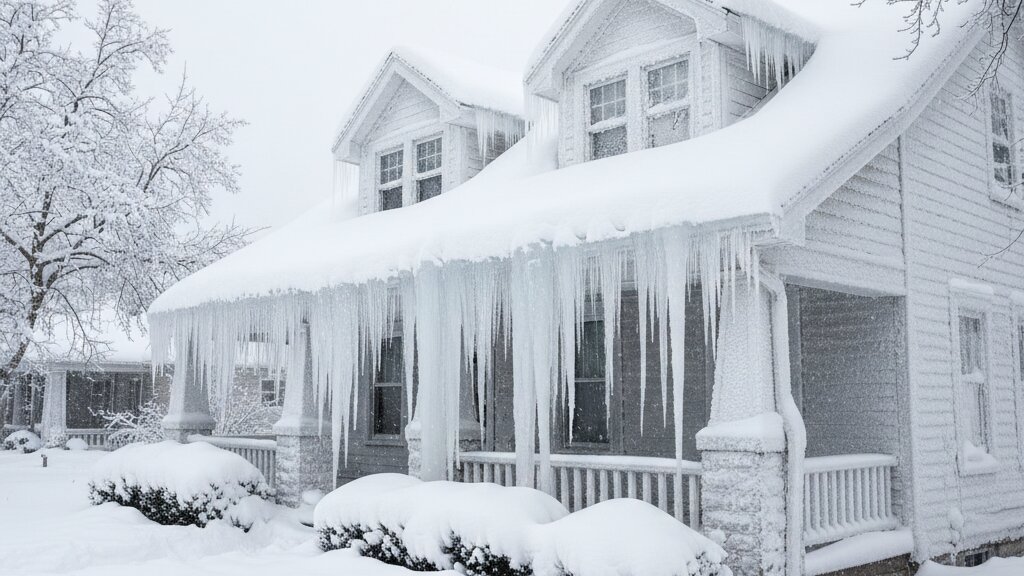
Understanding winter storm damage and implementing effective winter property protection measures helps property owners prepare for and respond to cold weather emergencies. Frozen pipe prevention and addressing ice dam damage rank among the most critical aspects of winter preparedness. Professional winter storm damage response and proactive winter property protection strategies minimize losses and protect properties throughout the cold season.
Common Winter Storm Damage Types
Understanding winter storm damage mechanisms helps property owners prepare effectively.
Frozen and Burst Pipes
Frozen pipes rank among the most common and costly winter storm damage types. When water freezes inside pipes, it expands with tremendous force—enough to burst copper, PVC, and even steel pipes. A single burst pipe can release hundreds of gallons of water per hour, causing extensive damage quickly.
| Pipe Location | Freeze Risk Level | Prevention Priority |
|---|---|---|
| Exterior walls | High | Insulation, heat tape, cabinet opening |
| Unheated spaces (garages, crawl spaces) | High | Insulation, heat, or draining |
| Attic spaces | High | Insulation, rerouting if possible |
| Foundation/basement | Moderate | Heating maintenance, insulation |
| Interior walls | Lower | Maintain heat during cold snaps |
Ice Dams
Ice dams form when heat escaping through roofs melts snow, which refreezes at cold eaves. This ice barrier traps water that backs up under shingles, causing leaks into walls, ceilings, and insulation. Ice dam damage often goes unnoticed until staining appears or mold develops months later.
Roof Damage from Snow Load
Heavy snow accumulation stresses roofs, particularly flat or low-slope designs. Excessive loads can cause structural damage, leaks, or in extreme cases, collapse. Wet, heavy snow poses greater risk than fluffy powder—wet snow can weigh 20+ pounds per cubic foot.
Wind Damage
Winter storms often include high winds that damage roofing, siding, and trees. Wind-driven snow and rain penetrate openings that might resist normal precipitation. Falling branches and trees cause structural damage and can trigger additional water intrusion.
Power Outage Effects
Extended power outages during winter create secondary damage risks:
- Heating failure leading to frozen pipes
- Sump pump failure causing basement flooding
- Refrigerator/freezer failure with food spoilage
- Security system failure
Pre-Winter Property Preparation
Fall preparation before cold weather arrives prevents many winter storm damage events. Comprehensive winter property protection includes multiple prevention strategies.
Plumbing Protection
Frozen pipe prevention requires multiple protective measures:
Insulate vulnerable pipes: Add insulation to pipes in unheated spaces, exterior walls, and attics. Foam pipe insulation is inexpensive and easy to install.
Seal air leaks: Cold air infiltration near pipes increases freeze risk. Seal gaps around pipes where they penetrate exterior walls. Address drafty areas near plumbing.
Heat tape for high-risk pipes: Electric heat tape provides active freeze protection for pipes that can’t be adequately insulated or relocated.
Know your shutoffs: Locate main water shutoff and individual fixture shutoffs. Being able to quickly stop water flow limits damage if pipes do burst.
Pro Tip: Let faucets drip during extreme cold snaps. Moving water freezes at lower temperatures than standing water. Opening cabinet doors beneath sinks allows warm air to reach pipes in exterior walls.
Roof and Attic Preparation
Clean gutters: Clogged gutters contribute to ice dam formation. Clear debris before freezing weather arrives.
Check attic insulation: Inadequate attic insulation allows heat to escape, melting snow and creating ice dams. Ensure proper insulation levels for your climate.
Ensure attic ventilation: Proper ventilation keeps attic temperatures closer to outside temperatures, reducing ice dam risk. Clear any blocked soffit or ridge vents.
Inspect roofing: Address damaged or missing shingles before winter. Vulnerable areas are more likely to fail under winter weather stress.
Exterior Preparation
Disconnect and drain hoses: Disconnect garden hoses and drain exterior spigots. Consider installing frost-proof sillcocks.
Trim trees: Remove dead branches and trim limbs overhanging structures. Winter storms bring down weakened branches.
Check drainage: Ensure proper grading and drainage to direct water away from foundations before ground freezes.
Heating System Readiness
Service heating systems: Professional maintenance before heating season ensures reliable operation when you need it most.
Check fuel supplies: Ensure adequate heating fuel (oil, propane) before winter. Delivery schedules tighten during cold snaps.
Test backup heating: If you have backup heating sources, verify they work before emergencies arise.
During Winter Storm Events
Active steps during winter storms prevent damage and enable rapid response to problems.
Monitor Critical Systems
- Check that heating systems are operating
- Monitor areas with freeze risk during extreme cold
- Watch for signs of ice dam formation
- Check sump pump operation if thaw occurs
Snow Management
Excessive snow accumulation requires action:
- Monitor roof snow depths, especially on flat or low-slope roofs
- Consider professional snow removal for dangerous accumulations
- Clear snow from around foundations before it melts and infiltrates
- Keep emergency exits clear
Warning: Roof snow removal is dangerous work. Professionals have proper equipment and safety measures. DIY roof snow removal risks falls and injuries.
Power Outage Response
During extended power outages in freezing weather:
- Maintain some heat source to prevent pipe freezing (fireplace, generator, etc.)
- If heat cannot be maintained, drain water systems to prevent freeze damage
- Open faucets to relieve pressure if freezing begins
- Monitor basement for flooding if sump pump loses power
Responding to Winter Storm Damage
When winter storm damage occurs despite preparation, proper response limits extent and cost.
Frozen Pipe Response
If you discover frozen pipes despite frozen pipe prevention measures:
- Keep faucets open to relieve pressure and allow flow when thawing begins
- Apply gentle heat to frozen sections (hair dryer, heat lamp, warm towels)
- Never use open flames or high heat—this risks pipe damage and fire
- Be prepared to shut off water if pipes have burst
- Check all fixtures—if one pipe froze, others may have too
Burst Pipe Response
If pipes burst:
- Shut off water immediately at main shutoff
- Call professional water extraction services immediately
- Turn off electricity to affected areas if water may contact electrical systems
- Begin water removal if safely possible while waiting for professionals
- Document damage for insurance purposes
Ice Dam Response
If ice dams form and cause leaks, addressing ice dam damage promptly limits losses:
- Address interior water intrusion to limit damage
- Professional ice dam removal can prevent additional damage
- Don’t attempt to break ice dams with tools—this damages roofing
- Plan for proper attic insulation and ventilation improvements
Roof Damage Response
For roof damage during winter storms:
- Emergency tarping and board-up prevents additional water intrusion
- Document damage before temporary repairs
- Plan permanent repairs when weather permits
- Monitor for continued leaks during freeze-thaw cycles
Insurance Considerations for Winter Damage
Understanding insurance coverage helps with winter storm damage preparation and response.
Typically Covered
- Burst pipe damage (sudden and accidental)
- Ice dam water damage
- Wind damage to structures
- Falling tree damage
- Snow/ice weight damage causing collapse
Coverage Limitations
- Gradual damage from poor maintenance may be excluded
- Vacant property rules may limit coverage
- Failure to mitigate ongoing damage affects coverage
- Flood damage requires separate flood insurance
Documentation
Document winter damage thoroughly:
- Photograph damage before cleanup begins
- Keep records of temperatures and weather conditions
- Save damaged materials until adjuster inspects
- Document mitigation efforts and expenses
Frequently Asked Questions About Winter Storm Damage
At what temperature do pipes freeze?
+
Pipes can begin freezing when temperatures drop to about 20°F, though this varies based on pipe location, insulation, and exposure to cold air. Proper frozen pipe prevention measures become critical when temperatures will remain below 32°F for extended periods. Pipes in exterior walls or unheated spaces face higher risk. Extended cold periods create greater risk than brief temperature drops.
How much snow is too much for my roof?
+
Most roofs can handle 20-25 pounds per square foot. Fluffy snow weighs about 3 pounds per cubic foot; wet, heavy snow can exceed 20 pounds per cubic foot. As a general guide, 4 feet of fresh snow or 2 feet of packed snow approaches concerning levels. Flat roofs face higher risk than pitched roofs. Signs of stress include unusual sounds, sagging, or difficult door/window operation.
Can I prevent ice dams?
+
Ice dams result from heat escaping through roofs, so prevention focuses on keeping roofs cold. Increase attic insulation to prevent heat transfer. Ensure adequate attic ventilation to remove any heat that does escape. Seal air leaks between living space and attic. These improvements prevent ice dam damage and reduce heating costs year-round.
Should I shut off water if leaving home during winter?
+
For extended absences during winter, shutting off and draining water systems provides the best frozen pipe prevention. At minimum, maintain adequate heat (55°F or higher), arrange for someone to check the property regularly, and know how to shut off water remotely if problems arise. The longer the absence and colder the weather, the more precaution is warranted.
How quickly should I respond to a burst pipe?
+
Immediately. A burst pipe can release hundreds of gallons per hour. Shut off water at the main shutoff as soon as you discover the burst. Call emergency restoration services immediately. Minutes matter—rapid response can mean the difference between minor damage and catastrophic loss.
Does homeowner insurance cover frozen pipe damage?
+
Most homeowner policies cover sudden water damage from burst pipes, including freeze damage. However, policies may require reasonable care to prevent freezing. Vacant property provisions may limit coverage if the home is unoccupied. Review your policy for specific terms and maintain documentation that you took reasonable precautions.
Professional Winter Storm Damage Response
Despite best preparation, winter storm damage can still cause significant property damage. Professional restoration services provide rapid response to winter emergencies, from burst pipe water extraction to ice dam damage repair, minimizing damage and restoring properties quickly.
When winter storms damage properties in Northern New Jersey, Pennsylvania’s Capital Region, New York’s Hudson Valley, Connecticut’s Capital Region, or the South Jersey Shore, 24-hour emergency teams respond throughout the winter season to address storm damage and protect properties from ongoing harm.