
Why Quick Action Matters for Document Recovery
Water-damaged documents deteriorate rapidly. Paper fibers weaken, inks bleed, mold grows, and pages bond together—all processes that accelerate with time. The recovery window for water-damaged documents is measured in hours, not days.
The Document Deterioration Timeline
| Time After Exposure | Document Condition | Recovery Implications |
|---|---|---|
| 0-24 Hours | Papers wet but structurally sound, inks beginning to migrate | Best recovery outcomes, most options available |
| 24-48 Hours | Paper weakening, pages bonding, mold beginning to germinate | Good recovery possible with immediate professional treatment |
| 48-72 Hours | Active mold growth, severe ink migration, pages stuck together | Recovery more difficult, some documents may be unsalvageable |
| 72+ Hours | Extensive mold, paper disintegration, permanent damage | Limited recovery options, many documents lost |
Temperature and Contamination Effects
Environmental conditions affect deterioration rates. Warm conditions accelerate mold growth and ink migration. Contaminated water (sewage, floodwater) introduces additional degradation factors. Professional water damage restoration prioritizes document recovery within overall mitigation efforts.
Types of Documents and Recovery Potential
Different document types respond differently to water damage and recovery attempts.
Paper Documents
Standard printed documents: Modern laser-printed documents often recover well because toner is heat-fused to paper and relatively water-resistant. Inkjet prints are more vulnerable to ink migration.
Older documents: Historical papers, especially those with water-soluble inks, require extremely careful handling. Some historical inks dissolve completely when wet.
Carbon copies: Carbon paper documents are particularly vulnerable to smearing and often difficult to recover legibly.
Photographs
Photograph recovery depends on photo type:
- Modern color prints: Generally recoverable if treated quickly before emulsion degrades
- Polaroids: Extremely vulnerable; recovery is often limited
- Black and white prints: Often more durable than color
- Historical photographs: Require specialized treatment based on processing type
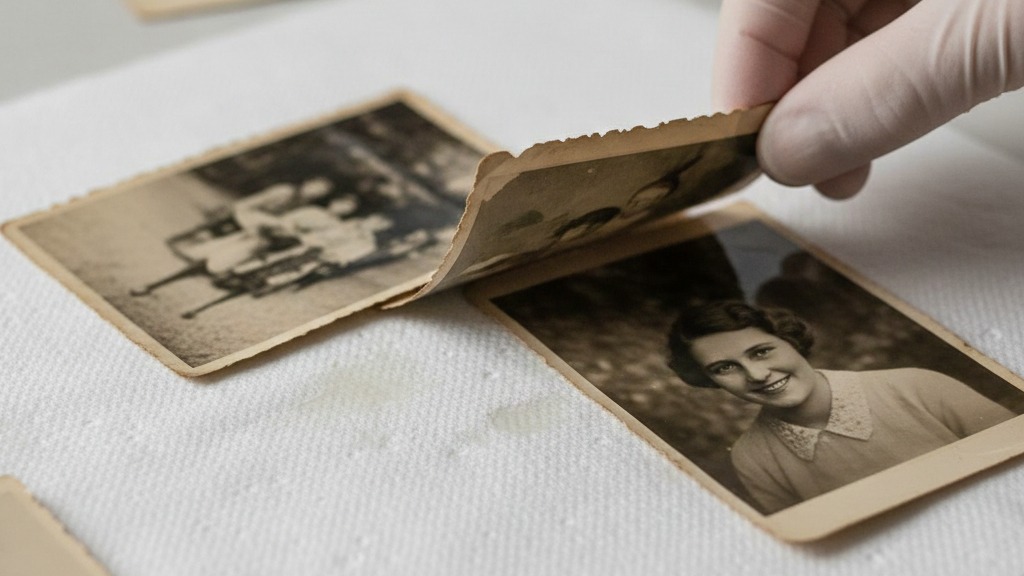
Pro Tip: Wet photographs should never be stacked together. The emulsion layers bond, destroying images when separated. Keep wet photos separated and face-up until professional treatment.
Books and Bound Documents
Bound materials present unique challenges:
- Covers trap moisture against pages
- Binding adhesives may dissolve or fail
- Pages swell, distorting binding
- Mold grows readily in closed, wet book environments
Recovery approaches depend on book value, binding type, and damage extent.
Digital Media
While not traditional documents, digital storage media often contains irreplaceable records:
- Hard drives: Professional data recovery sometimes possible
- USB drives: May survive brief water exposure if dried properly before use
- CDs/DVDs: Often survive if cleaned and dried carefully
- Memory cards: Generally water-resistant but should be professionally evaluated
Immediate Steps for Water-Damaged Documents
Property owners can take steps to protect water-damaged documents before professional help arrives.
Prioritization
Not all documents warrant recovery effort. Prioritize:
- Legal documents (titles, deeds, contracts)
- Irreplaceable family documents and photos
- Financial records needed for taxes or business
- Medical records and prescriptions
- Identity documents
Documents easily replaced (utility bills, magazines, common books) may not warrant recovery costs.
Safe Handling
Wet documents are fragile. Handle carefully to prevent additional damage:
- Support wet papers from below with rigid backing
- Don’t pull pages apart if stuck—this tears paper
- Avoid touching wet ink or photo surfaces
- Don’t shake water from documents
- Keep wet documents flat, not folded
Freezing for Stabilization
When professional treatment cannot occur immediately, freezing stabilizes water-damaged documents:
- Freezing stops mold growth
- Frozen documents don’t continue deteriorating
- Freezing buys time for organized recovery
How to freeze documents:
- Wrap documents loosely in freezer paper or plastic wrap
- Place in zip-lock bags if available
- Don’t stack frozen documents heavily
- Label packages with contents
- Freeze as quickly as possible—use a chest freezer if available
Frozen documents can remain stable for months while arranging professional recovery.
What NOT to Do
Warning: Well-intentioned but improper handling destroys salvageable documents. Avoid these common mistakes:
- Don’t use heat: Hair dryers, ovens, and direct sunlight cause paper to warp, curl, and become brittle. Heat permanently sets some stains.
- Don’t press wet pages together: This transfers inks and causes permanent bonding
- Don’t attempt to separate stuck pages: Let professionals handle separation with proper technique
- Don’t discard without assessment: Documents appearing destroyed may be recoverable
Professional Document Recovery Methods
Professional document recovery employs specialized techniques unavailable to consumers.
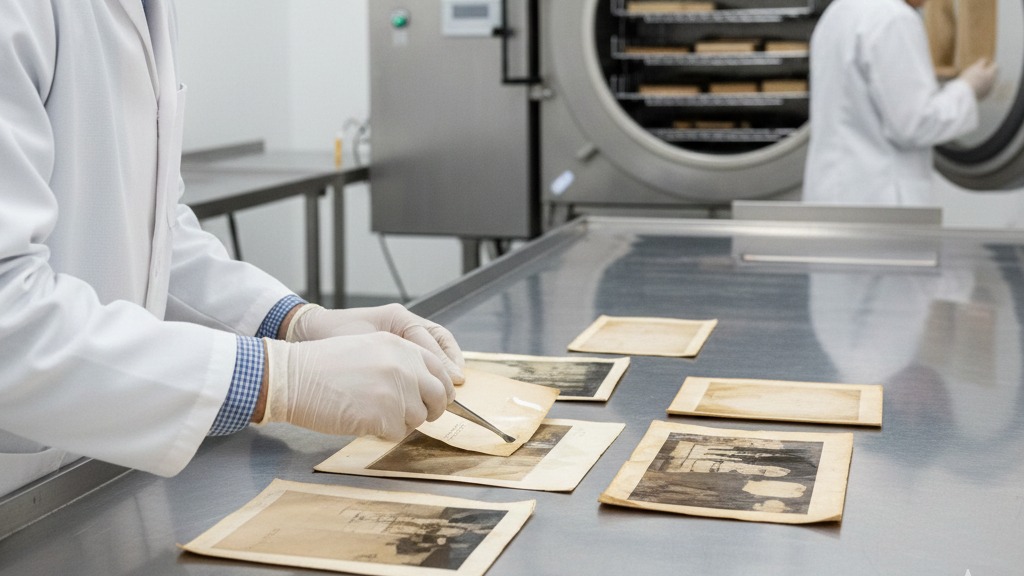
Freeze-Drying (Vacuum Freeze-Drying)
Freeze-drying is the gold standard for water-damaged document recovery. The process works by:
- Freezing documents to solidify water
- Creating vacuum conditions around frozen documents
- Sublimating ice directly to vapor (skipping liquid phase)
- Gradually drying documents without wet conditions that cause damage
Freeze-drying prevents the ink migration, page bonding, and distortion that occur during conventional drying. Documents emerge flat, legible, and structurally sound.
Air Drying (Controlled Environment)
For less critical documents or when freeze-drying capacity is limited, professional air drying uses:
- Controlled temperature and humidity environments
- Proper document spacing and support
- Interleaving with absorbent materials
- Gentle air circulation
Professional air drying achieves better results than DIY attempts through controlled conditions and proper technique.
Dehumidification Drying
Small quantities of documents may be dried using dehumidification chambers that remove moisture gradually without heat stress.
Photograph-Specific Recovery
Wet photographs require specialized handling:
- Gentle water rinsing to remove contaminants
- Face-up drying on absorbent surfaces
- Prevention of emulsion contact with anything
- Sometimes re-processing in professional photo labs
After Recovery: Document Preservation
Recovered documents remain vulnerable. Proper post-recovery care preserves restoration results.
Handling Recovered Documents
Even successfully recovered documents may be fragile:
- Handle gently with clean, dry hands
- Store flat in archival-quality folders or boxes
- Avoid paper clips, rubber bands, and adhesive notes
- Keep in climate-controlled, stable environments
Digitization
Following recovery, consider digitizing important documents:
- Creates backup copies unaffected by future physical damage
- Reduces handling of fragile recovered originals
- Enables storage of originals in archival conditions
- Provides shareable copies for legal and practical purposes
Archival Storage
For irreplaceable documents, archival storage options include:
- Acid-free folders and boxes
- Climate-controlled storage facilities
- Fire-resistant safes (rated for documents)
- Bank safe deposit boxes
Insurance and Document Recovery
Document recovery costs and coverage deserve attention during restoration.
Coverage Considerations
Standard homeowner policies may not specifically cover document recovery. Coverage typically depends on:
- Whether documents are considered “contents” under your policy
- Policy limits for “valuable papers” coverage
- Whether recovery is part of overall contents restoration claim
Review your policy or ask your adjuster about document recovery coverage.
Replacement Cost Considerations
Some documents can be replaced (for fees) from issuing agencies:
- Birth certificates from vital records offices
- Marriage licenses from county clerks
- Property deeds from recording offices
- Vehicle titles from motor vehicle departments
Insurance may cover replacement fees rather than recovery costs for replaceable documents.
Irreplaceable vs. Replaceable Documents
When evaluating recovery options, consider whether documents are truly irreplaceable:
- Family photos and historical documents are often truly irreplaceable
- Legal documents can usually be replaced through official channels
- Financial records may be available from institutions
- Sentimental items’ value may justify recovery costs regardless of insurance
Preventing Future Document Loss
Recovering from document damage provides motivation to prevent future losses.
Physical Protection
- Store important documents elevated, not in basements or flood-prone areas
- Use waterproof containers for critical documents
- Consider fire-rated and waterproof safes
- Keep copies of critical documents off-site
Digital Backup Strategies
Digital copies provide protection against physical document loss:
- Scan important documents and photos regularly
- Store digital copies in cloud services
- Keep backup copies in multiple locations
- Use encrypted storage for sensitive documents
Frequently Asked Questions About Document Recovery
Can all water-damaged documents be recovered?
+
Not all documents are recoverable. Success depends on damage extent, time before treatment, water contamination level, and document type. Some documents may be partially recoverable—legible but with some staining or damage. Professional assessment determines recovery potential for specific documents.
How much does professional document recovery cost?
+
Costs vary based on document volume, damage severity, and recovery method required. Freeze-drying typically costs more than air-drying methods. Professional assessment provides specific cost estimates. For irreplaceable family documents, recovery costs often prove worthwhile regardless of exact figures.
Should I try to dry documents myself before calling professionals?
+
DIY drying attempts often cause additional damage. If professional treatment is available within 24-48 hours, keep documents wet but stabilized (or freeze them) rather than attempting DIY drying. Improper drying causes ink migration, page bonding, and distortion that professionals could have prevented.
Can wet photographs be saved?
+
Many wet photographs can be saved if treated quickly and properly. Keep wet photos separated (never stacked), face-up, and get professional help quickly. Modern color prints often recover well; older or specialized photographs require expert assessment. Never let wet photo surfaces contact anything.
How long can documents stay frozen before recovery?
+
Properly frozen documents can remain stable for months while arranging professional recovery. Freezing buys time without causing additional damage. Keep documents frozen until ready for treatment—repeated freeze-thaw cycles cause damage. Once thawed, documents must be treated immediately.
What documents should I prioritize for recovery?
+
Prioritize truly irreplaceable items: family photographs, historical documents, personal journals, and one-of-a-kind records. Many legal and financial documents can be replaced through official channels (though this takes time and money). Recovery costs may exceed replacement costs for replaceable documents.
Professional Document Recovery Services
Water-damaged documents often seem lost but may be recoverable with professional treatment. Quick action, proper handling, and professional techniques can preserve family memories, important records, and irreplaceable documents that would otherwise be destroyed.
When water damage threatens documents in properties throughout Northern New Jersey, Pennsylvania’s Capital Region, New York’s Hudson Valley, Connecticut’s Capital Region, or the South Jersey Shore, professional restoration teams provide comprehensive contents recovery services including specialized document recovery that preserves what matters most.