
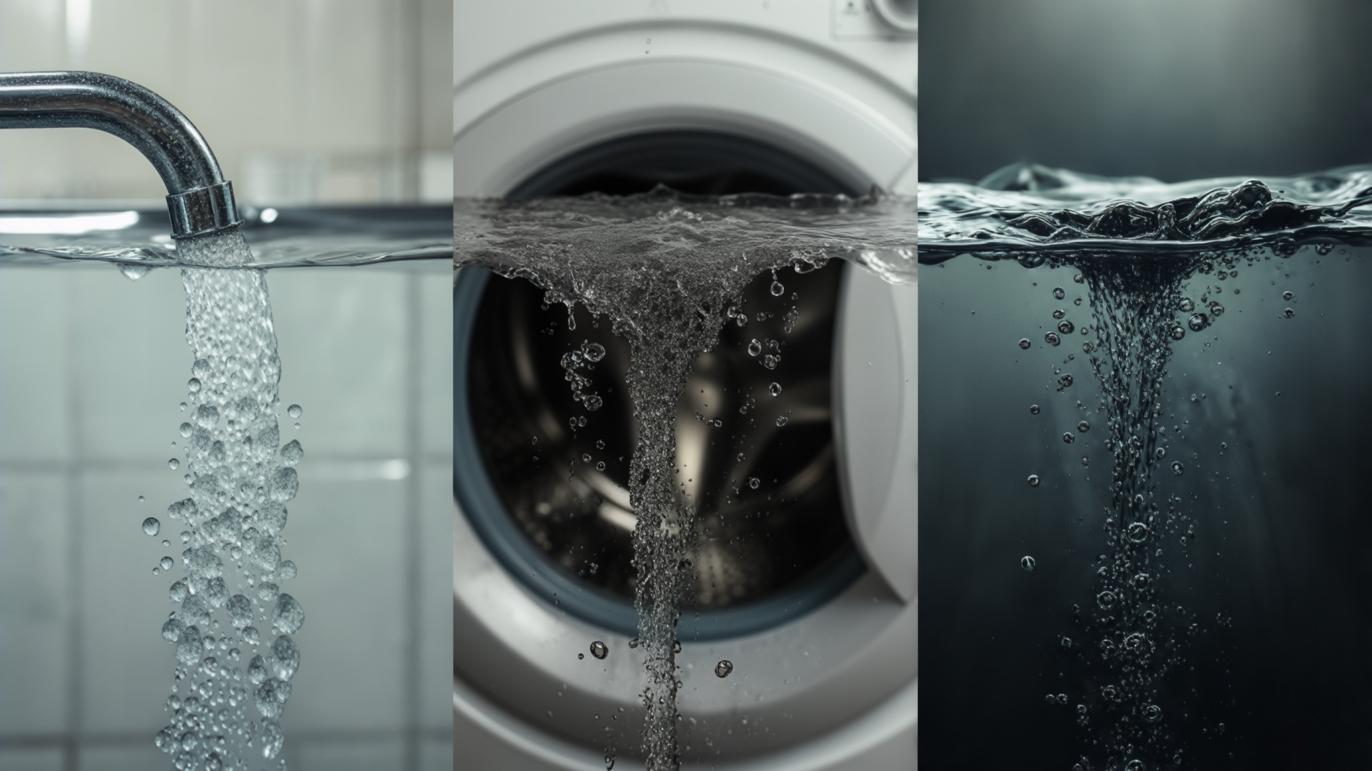
Understanding water damage categories is essential for property owners facing water emergencies. Professional water damage classification determines appropriate restoration protocols, safety measures, and material salvageability. The industry recognizes three distinct water contamination levels—clean gray black water categories—each requiring different restoration approaches. Knowing these water damage categories helps property owners understand why specific protocols and costs apply to their situations.
The Three Water Damage Categories
The Institute of Inspection, Cleaning and Restoration Certification (IICRC) establishes the industry standard S500 that defines water damage categories. These categories guide restoration professionals in determining appropriate safety measures, cleaning methods, and material salvageability based on water contamination levels.
| Category | Also Called | Contamination Level | Health Risk |
|---|---|---|---|
| Category 1 | Clean Water | No significant contamination | Minimal when addressed promptly |
| Category 2 | Gray Water | Significant contamination | Moderate; can cause illness if ingested |
| Category 3 | Black Water | Grossly contaminated | Severe; pathogenic organisms present |
Category 1: Clean Water
Category 1 water originates from sanitary sources and poses minimal health risk at the time of loss. Within the clean gray black water classification system, this is the least serious contamination level, though it still requires proper professional restoration.
Common Category 1 Sources
- Broken water supply lines
- Tub or sink overflow from faucets (without contaminants)
- Falling rainwater (direct intrusion, not groundwater)
- Melting ice or snow
- Water heater tank failure (water portion only)
- Toilet tank (not bowl) overflow
Category 1 Restoration Approach
Category 1 water damage allows the most restoration options. Porous materials contacted by clean water can often be dried in place if response occurs quickly—typically within 24-48 hours. Carpet, pad, drywall, and other porous materials may be salvageable with prompt professional drying.
Standard personal protective equipment (PPE) suffices for Category 1 work. Antimicrobial treatments may be applied preventively but aren’t required by contamination level alone.
Pro Tip: Category 1 water damage allows the most cost-effective restoration if addressed immediately. The longer clean water sits, the greater the chance it degrades to Category 2 through bacterial growth and material deterioration. Rapid response protects both health and budget.
Category 2: Gray Water
Category 2 water contains significant contamination that may cause discomfort or illness if contacted or ingested. This intermediate water damage classification requires more extensive safety protocols and limits material salvageability.
Common Category 2 Sources
- Washing machine discharge
- Dishwasher discharge
- Toilet bowl overflow (urine only, no feces)
- Sump pump failures
- Aquarium water
- Waterbed leaks
- Category 1 water that has remained stagnant (typically 24-48+ hours)
Category 2 Contamination Concerns
Gray water contains microorganisms and organic matter that can cause illness. Detergents, soaps, food particles, and human waste (urine) contribute to contamination. While less dangerous than Category 3, gray water still poses genuine health risks requiring professional handling.
Category 2 Restoration Approach
Category 2 restoration requires enhanced protocols:
- Enhanced PPE including eye protection and possibly respiratory protection
- Antimicrobial treatment of affected materials
- Limited porous material salvageability (carpet pad typically requires removal)
- Decontamination procedures for salvaged materials
- Air scrubbing during restoration
Restoration costs increase compared to Category 1 due to additional safety measures and reduced material salvageability. However, professional restoration remains feasible for most building materials with appropriate treatment.
Category 3: Black Water
Category 3 water is grossly contaminated and contains pathogenic organisms capable of causing severe illness or death. This most serious of the three water damage categories requires extensive safety protocols and significantly limits restoration options.
Common Category 3 Sources
- Sewage backups and overflows
- Toilet overflow containing feces
- Floodwater from rivers, streams, or storm surge
- Groundwater intrusion
- Standing water supporting microbial growth
- Category 1 or 2 water that has degraded over time
Warning: Category 3 water presents serious health hazards. Never attempt cleanup of sewage or floodwater without proper training and equipment. Professional sewage cleanup services use specialized protocols protecting both workers and occupants.
Category 3 Contamination Hazards
Black water contains bacteria, viruses, parasites, and other pathogens including:
- E. coli and other enteric bacteria
- Hepatitis A virus
- Giardia and cryptosporidium parasites
- Various harmful bacteria from decomposing organic matter
These organisms cause diseases ranging from gastroenteritis to potentially life-threatening infections, particularly in vulnerable individuals.
Category 3 Restoration Approach
Category 3 restoration involves the most extensive protocols:
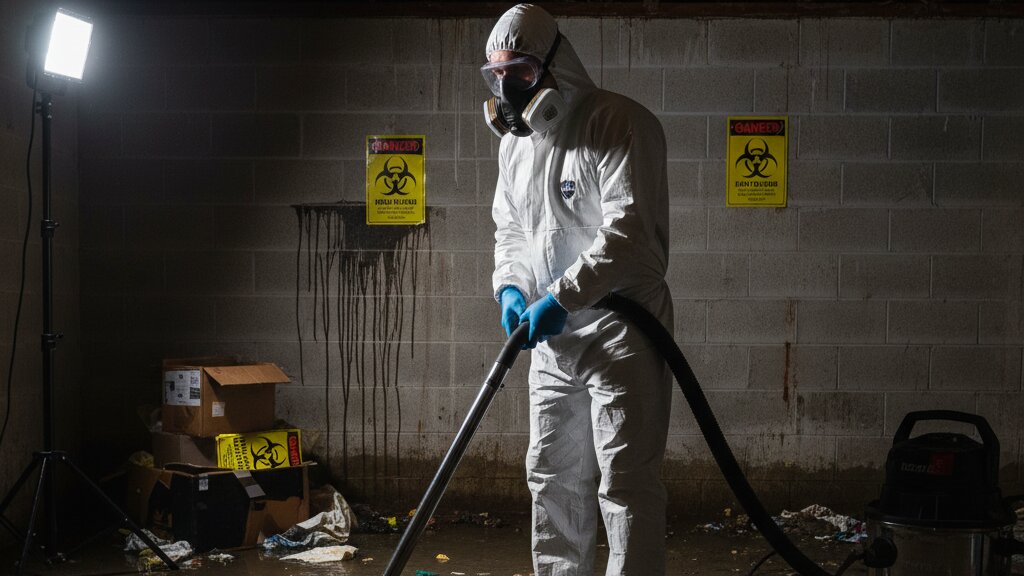
- Full PPE including coveralls, respirators, eye protection, and multiple glove layers
- Containment preventing contamination spread
- Removal of all porous materials contacted by black water (carpet, pad, drywall, insulation)
- Disinfection of remaining structural materials
- HEPA air filtration throughout restoration
- Proper biohazard waste disposal
Category 3 restoration costs significantly exceed Categories 1 and 2 due to extensive material removal, safety requirements, and specialized disposal needs.
Category Progression: How Water Damage Worsens
Water damage categories aren’t static—contamination levels increase over time. Understanding how water contamination levels progress emphasizes the importance of rapid professional response.
Time-Based Degradation
Category 1 water doesn’t remain clean indefinitely. As water sits:
- Bacteria begin multiplying within 24-48 hours
- Organic materials in contact with water deteriorate
- Environmental contaminants accumulate
- Mold growth may begin
Industry standards recognize that Category 1 water progresses to Category 2 within 48 hours under most conditions. Category 2 can progress to Category 3 with continued degradation.
Contact-Based Degradation
Water contacting contaminated materials may immediately progress to higher categories:
- Clean water flowing across dirty floors picks up contaminants
- Water contacting pet areas, trash, or chemicals becomes contaminated
- Water mixing with soil carries microorganisms
Implications for Response Timing
Category progression makes rapid response critical for multiple reasons:
- Faster response often means Category 1 rather than Category 2
- Lower contamination allows more material salvage
- Reduced contamination means lower restoration costs
- Less health risk with prompt clean water treatment
A broken supply line addressed in 4 hours likely remains Category 1. The same water discovered after 48 hours may have progressed to Category 2, dramatically changing restoration requirements and costs.
How Professionals Determine Water Category
Restoration professionals assess water damage categories and apply proper water damage classification through multiple factors during initial evaluation.
Source Identification
Identifying the water source provides initial category indication. A supply line break suggests Category 1; a sewer backup immediately indicates Category 3. However, source alone doesn’t determine final category.
Time Assessment
Duration of water presence affects category determination. Professionals ask when water was discovered, when it likely began, and whether the source has been active continuously.
Environmental Factors
Building conditions influence contamination:
- What materials has water contacted?
- Are there sources of additional contamination (pet areas, chemicals)?
- What is the ambient temperature (warmer = faster degradation)?
- Is there visible microbial growth?
Testing When Necessary
In uncertain cases, laboratory testing can determine contamination levels. However, testing takes time, and restoration often can’t wait for results. Professionals typically default to higher-category protocols when contamination level is uncertain.
Category Impact on Restoration Costs
Water damage classification significantly affects restoration expenses.
| Cost Factor | Category 1 | Category 2 | Category 3 |
|---|---|---|---|
| Material Salvage | Most materials salvageable with prompt response | Some porous materials require removal | All porous materials require removal |
| PPE Requirements | Standard protection | Enhanced protection | Full biohazard protocols |
| Cleaning Protocols | Standard extraction and drying | Antimicrobial treatment required | Disinfection and decontamination required |
| Disposal Requirements | Standard waste disposal | Some materials may need special handling | Biohazard waste disposal required |
| Relative Cost | Baseline | 20-40% increase typical | 50-100%+ increase typical |
Insurance and Water Categories
Insurance coverage may vary based on water damage categories and source.
Covered Sources
Most homeowner policies cover water damage from internal, sudden sources regardless of resulting category. A broken pipe causing Category 1 or Category 3 (if sewage is involved) damage typically falls under coverage.
Excluded Sources
Flood insurance, separate from homeowner policies, covers exterior water intrusion from rising water (typically Category 3). Groundwater, surface flooding, and storm surge require flood insurance rather than standard homeowner coverage.
Documentation Importance
Professional documentation of water category supports insurance claims by demonstrating why specific restoration protocols were necessary. This documentation justifies costs associated with higher-category restoration.
What Property Owners Should Know
Understanding water damage categories helps property owners make informed decisions during water emergencies.
Don’t Assume Clean Water Is Safe
Even obviously clean water from a supply line can cause problems if left standing. Prompt professional response prevents category progression that increases health risks and costs.
Trust Professional Assessment
Category determination requires professional judgment considering multiple factors. What appears clean may be contaminated; what seems minor may be serious. Professional assessment protects your health and ensures appropriate restoration.
Understand Material Limitations
Higher contamination categories limit material salvageability. While frustrating, removing contaminated materials protects occupant health. Attempting to save grossly contaminated materials creates ongoing health hazards.
Frequently Asked Questions About Water Damage Categories
How can I tell what category my water damage is?
+
Source provides initial indication: supply lines suggest Category 1, sewage indicates Category 3. However, accurate water damage classification requires professional assessment considering source, time, environmental factors, and contamination indicators. When uncertain, treat water as higher category until professionally evaluated.
Does Category 1 water damage require professional restoration?
+
Yes, for anything beyond truly minor spills. Even clean water absorbs into building materials requiring professional extraction and structural drying. Attempting DIY drying with household equipment typically results in incomplete drying, hidden moisture, and eventual mold growth. Professional equipment and monitoring ensure complete restoration.
Why does category affect restoration costs so much?
+
Higher categories require more extensive safety protocols (specialized PPE, containment), more material removal (contaminated porous materials can’t be saved), additional treatment (disinfection, antimicrobial application), and special waste disposal. Each factor adds cost. The increased expense reflects genuine additional work required for safe, complete restoration.
Can Category 3 water damage be fully restored?
+
Yes, properties with Category 3 damage can be completely restored to safe, sanitary condition. However, restoration requires removing all contaminated porous materials and thoroughly disinfecting remaining structural elements. The building can be fully restored, but significantly more material replacement is necessary compared to lower categories.
How long do I have before clean water becomes contaminated?
+
Industry standards recognize degradation from Category 1 to Category 2 within approximately 48 hours under typical conditions. However, factors like temperature, material contact, and environmental conditions can accelerate or slow degradation. The safest approach is responding to any water damage as quickly as possible.
Is flood water always Category 3?
+
Yes, exterior floodwater (from rivers, storm surge, surface flooding, or groundwater) is always classified as Category 3 regardless of appearance. Floodwater contacts soil, sewage infrastructure, chemicals, and numerous contamination sources. Even clear-looking floodwater contains harmful microorganisms requiring Category 3 protocols.
Professional Water Damage Assessment and Restoration
Water damage categories determine appropriate restoration protocols protecting health while achieving complete recovery. Professional assessment identifies water contamination levels accurately, and appropriate protocols ensure safe, effective restoration regardless of category.
When water damage affects properties in Northern New Jersey, Pennsylvania’s Capital Region, New York’s Hudson Valley, Connecticut’s Capital Region, or the South Jersey Shore, certified restoration professionals assess contamination accurately and apply category-appropriate protocols that protect occupants while restoring properties to safe condition.