
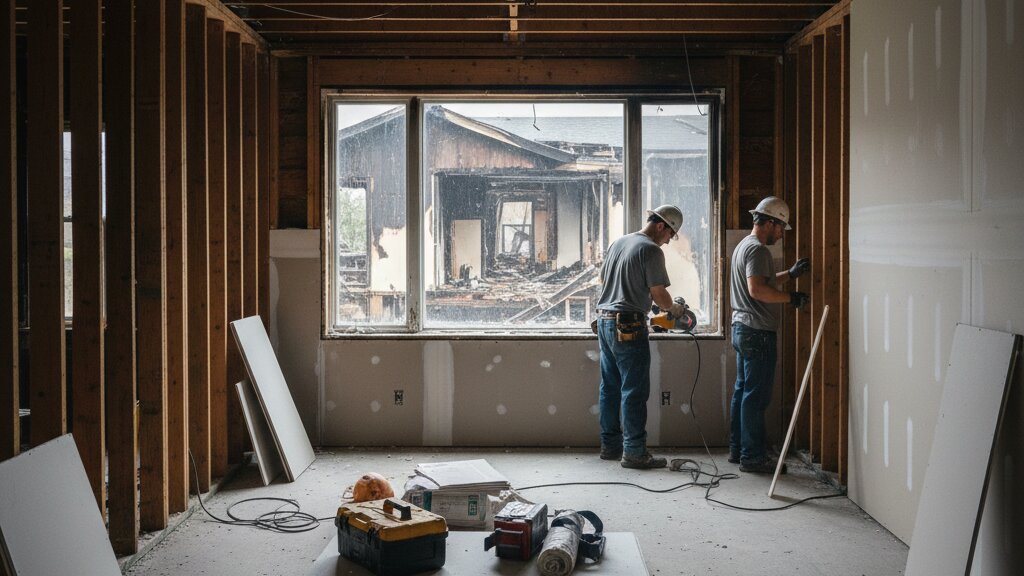
Understanding the fire restoration service timeline is essential for property owners facing fire damage. Complete fire damage recovery involves multiple phases, each with specific activities and timeframes. Professional fire restoration service providers guide property owners through every stage, from emergency response through final completion. Knowing what to expect during the fire cleanup process and restoration duration helps property owners plan effectively during this challenging time.
Overview: Fire Restoration Timeline Phases
Complete fire restoration service typically follows a predictable sequence of phases, though timelines vary based on damage extent.
| Phase | Typical Duration | Key Activities |
|---|---|---|
| Emergency Response | Hours to 1 day | Safety assessment, board-up, tarping, initial mitigation |
| Assessment and Planning | 1-3 days | Damage documentation, scope development, insurance coordination |
| Cleanup and Demolition | 3-7 days (minor) to 2+ weeks (major) | Debris removal, smoke/soot cleaning, water extraction |
| Structural Repairs | 2 weeks to several months | Framing, systems (electrical, plumbing, HVAC), drywall |
| Finish Work | 1-4 weeks | Painting, flooring, fixtures, final details |
| Final Inspection | Days to 1 week | Code compliance verification, walk-through, completion |
Total restoration time ranges from a few weeks for minor fires to six months or more for severe structural damage. Most residential fire restorations fall in the 2-4 month range.
Phase 1: Emergency Response (Hours to 1 Day)
Emergency response begins immediately after fire department clearance. This initial phase of fire damage recovery focuses on safety and preventing additional damage.
Safety Assessment
Before any work begins, professionals assess structural safety. Fire can weaken structural elements, and water from firefighting may create additional hazards. Electrical systems require evaluation before power restoration. Only after safety verification can restoration work proceed.
Property Securing
Board-up services secure openings created by fire damage or firefighting access. Broken windows, damaged doors, and structural openings allow weather intrusion and security breaches. Roof damage requires emergency tarping to prevent water damage from rain or snow.
Initial Mitigation
Emergency mitigation addresses ongoing damage:
- Water extraction from firefighting efforts
- Initial ventilation to reduce smoke concentration
- Climate control to prevent secondary damage
- Content protection and relocation from severely damaged areas
Rapid emergency response significantly impacts overall restoration timeline. Faster mitigation prevents secondary damage that would extend restoration scope.
Phase 2: Assessment and Planning (1-3 Days)
Thorough assessment before fire restoration service begins ensures accurate scoping and prevents surprises during work.
Comprehensive Damage Documentation
Restoration professionals document all damage systematically:
- Structural damage from flames and heat
- Smoke and soot contamination throughout the property
- Water damage from firefighting
- Content damage and restoration potential
- Hidden damage in walls, attics, and concealed spaces
This documentation serves dual purposes: guiding restoration planning and supporting insurance claims.
Scope Development
Based on assessment findings, restoration companies develop detailed scopes of work specifying all restoration activities, materials, and labor required. Accurate scopes prevent change orders and delays during restoration.
Insurance Coordination
Insurance adjusters inspect damage and review restoration scopes. This coordination typically occurs during the assessment phase, with adjusters and restoration professionals discussing scope and pricing. Resolution of scope questions before work begins prevents delays later.
Pro Tip: Experienced restoration companies communicate effectively with insurance adjusters, speaking the same technical language and using industry-standard pricing. This communication efficiency speeds approval processes and prevents scope disputes that delay restoration.
Phase 3: Cleanup and Demolition (Days to Weeks)
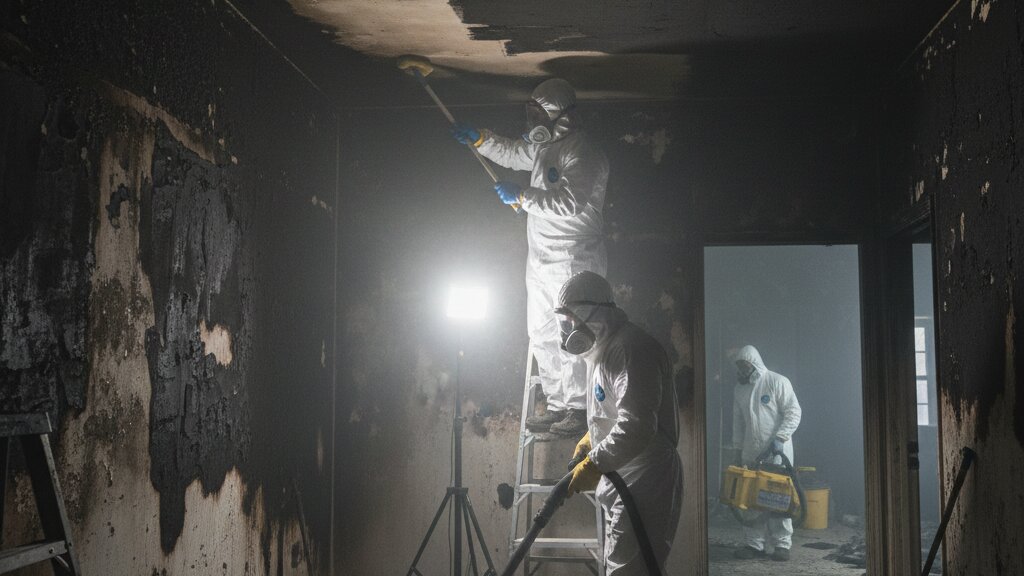
Before reconstruction begins, the fire cleanup process requires all fire-damaged materials to be removed and remaining structures cleaned. This phase duration depends heavily on damage severity and is a critical part of fire damage recovery.
Debris Removal
Fire-damaged and destroyed materials require removal. This includes:
- Burned structural materials and finishes
- Smoke-damaged materials beyond cleaning
- Water-damaged insulation and soft materials
- Contents designated as total losses
Proper debris handling includes sorting for hazardous materials, salvageable items, and general debris. Disposal follows environmental regulations for fire debris.
Smoke and Soot Cleaning
Smoke and soot affect areas well beyond visible fire damage. The fire cleanup process addresses:
- Surface cleaning using appropriate methods for each material
- HVAC system cleaning to remove smoke contamination
- Air quality restoration through filtration and cleaning
- Odor source treatment preparing for deodorization
Cleaning must reach completion before reconstruction covers surfaces. Soot left beneath new materials causes persistent odors and potential staining.
Water Damage Mitigation
Firefighting efforts introduce substantial water into fire-damaged structures. Professional water extraction and drying must complete before reconstruction. This process typically requires 3-5 days of drying with professional equipment.
Contents Processing
Contents cleaning and restoration occurs parallel to structural work. Salvageable items are inventoried, cleaned, and stored for return after restoration completes. This process varies in duration based on content volume and damage severity.
Phase 4: Structural Repairs (Weeks to Months)
Reconstruction of fire-damaged areas constitutes the longest fire restoration service phase. Duration depends on damage extent and required repairs.
Structural Framing
Fire-damaged framing requires replacement. This includes:
- Wall studs and plates in affected areas
- Roof framing and sheathing
- Floor joists and subfloor materials
- Any structural elements compromised by fire or water
Framing typically requires building department inspection before being covered with finishes.
Systems Restoration
Building systems damaged by fire require repair or replacement:
Electrical: Fire often damages wiring through heat exposure or water intrusion. Electrical restoration requires licensed electricians and inspection before energizing.
Plumbing: While less commonly fire-damaged, freezing after heating system damage or direct heat exposure may require plumbing repairs.
HVAC: Smoke contamination and potential heat damage typically require HVAC professional assessment. Systems may need cleaning, component replacement, or complete replacement.
Insulation and Drywall
Following framing and systems, insulation installation and drywall hanging proceed. Drywall finishing—taping, mudding, and sanding—requires multiple coats with drying time between applications, adding several days to the timeline.
Permit and Inspection Coordination
Most fire restoration requires building permits, with inspections at various stages. Inspection scheduling can affect timeline if inspectors aren’t available promptly. Experienced restoration contractors understand local permit processes and maintain relationships that facilitate efficient inspections.
Phase 5: Finish Work (1-4 Weeks)
Finish work transforms bare reconstruction into completed living or working space.
Painting
Interior painting follows drywall completion. Quality results require primer plus multiple finish coats, with appropriate drying time between applications. Painting often overlaps with other finish work to maintain schedule efficiency.
Flooring Installation
New flooring replaces fire-damaged or smoke-contaminated materials. Flooring selection affects timeline—carpet installs quickly while hardwood may require acclimation time before installation and finishing time after.
Fixtures and Details
Final-phase work includes:
- Light fixtures and electrical devices
- Plumbing fixtures (sinks, toilets, faucets)
- Cabinetry and countertops
- Trim, doors, and hardware
- Appliance installation
Final Deodorization
After construction completes, final odor treatment addresses any remaining smoke odor as the last step of the fire cleanup process. Thermal fogging, hydroxyl generation, or ozone treatment neutralizes lingering odors. This process typically requires 1-3 days depending on severity.
Phase 6: Final Inspection and Completion
The final phase verifies restoration quality and ensures property readiness for occupancy.
Code Compliance Verification
Building inspectors verify all work meets code requirements. Final electrical, plumbing, and building inspections must pass before occupancy. Any deficiencies require correction before final approval.
Walk-Through Inspection
Property owners conduct walk-through inspections with restoration contractors, identifying any items requiring attention. Punch list items receive correction before final completion.
Contents Return
Restored personal belongings return from off-site cleaning and storage. Placement assistance helps property owners reset their spaces.
Factors Affecting Fire Restoration Timeline
Several factors influence restoration duration for specific fire restoration projects.
Damage Severity
More extensive damage requires longer restoration. A small kitchen fire might restore in weeks; a fire destroying most of a structure requires months of reconstruction.
Property Size and Type
Larger properties require more time for both cleanup and reconstruction. Commercial properties may involve complex systems requiring specialized contractors.
Material Availability
Matching existing materials (specific flooring, custom cabinetry, unique finishes) may require special ordering with lead times. Supply chain issues can affect standard material availability as well.
Insurance Processing
Insurance approval processes affect restoration duration. Scope disputes, supplemental approvals, and payment delays can extend timelines. Working with experienced fire restoration service providers helps navigate insurance efficiently.
Permit and Inspection Schedules
Building department processes vary by jurisdiction. Some areas schedule inspections quickly; others have backlogs causing delays. Experienced contractors anticipate these factors in timeline planning.
Weather Conditions
Weather affects exterior work and can delay interior work if the building envelope isn’t secure. Winter conditions may require additional protection and heating during restoration.
Frequently Asked Questions About Fire Restoration Timeline
Can I stay in my home during fire restoration?
+
Typically no, at least during active cleanup and much of reconstruction. Smoke residue, air quality concerns, and construction activity make occupancy unsafe and impractical. Minor fire damage with isolated affected areas might allow partial occupancy. Your restoration company and insurance adjuster can advise based on specific conditions.
How can I speed up fire restoration?
+
The most impactful action is rapid initial response—calling professional fire restoration service providers immediately after fire department clearance. Beyond that, prompt decisions on material selections, quick insurance communication, and flexibility on temporary housing arrangements help maintain momentum. Working with experienced restoration companies who manage projects efficiently makes significant timeline differences.
Why does fire restoration take longer than I expected?
+
Common causes for extended timelines include: hidden damage discovered during work requiring scope expansion, insurance scope disputes delaying approval, material availability issues, permit and inspection delays, and weather interruptions. Quality fire damage recovery requires completing each phase properly—rushing creates problems requiring later correction.
Should I get my own contractor or use the restoration company’s services?
+
Full-service fire restoration service companies handling both cleanup and reconstruction often complete projects faster because of seamless phase transitions and established insurance relationships. Using separate contractors requires coordination between parties and may introduce delays at phase transitions. Evaluate experience, qualifications, and project management capabilities when deciding.
What happens if restoration takes longer than my insurance’s additional living expense coverage?
+
ALE coverage has time and dollar limits. If restoration duration legitimately exceeds normal expectations due to damage severity, document circumstances and communicate with your insurance company about extensions. If delays result from contractor performance, the contractor may bear responsibility. Understanding your policy limits helps with planning.
How do I track restoration progress?
+
Professional fire restoration service companies provide regular progress updates—often weekly for longer projects. Request a schedule showing planned phases and milestones. Site visits let you observe progress firsthand. Ask questions if progress seems slower than planned; legitimate explanations should be readily available.
Professional Fire Restoration Services
Understanding fire restoration timelines helps set realistic expectations during recovery. Professional fire restoration service providers guide property owners through each phase, providing timeline estimates, regular updates, and efficient project management that minimizes restoration duration while ensuring quality results.
When fire affects properties in Northern New Jersey, Pennsylvania’s Capital Region, New York’s Hudson Valley, Connecticut’s Capital Region, or the South Jersey Shore, experienced restoration professionals provide comprehensive services from emergency response through final completion, keeping property owners informed throughout the recovery journey.